
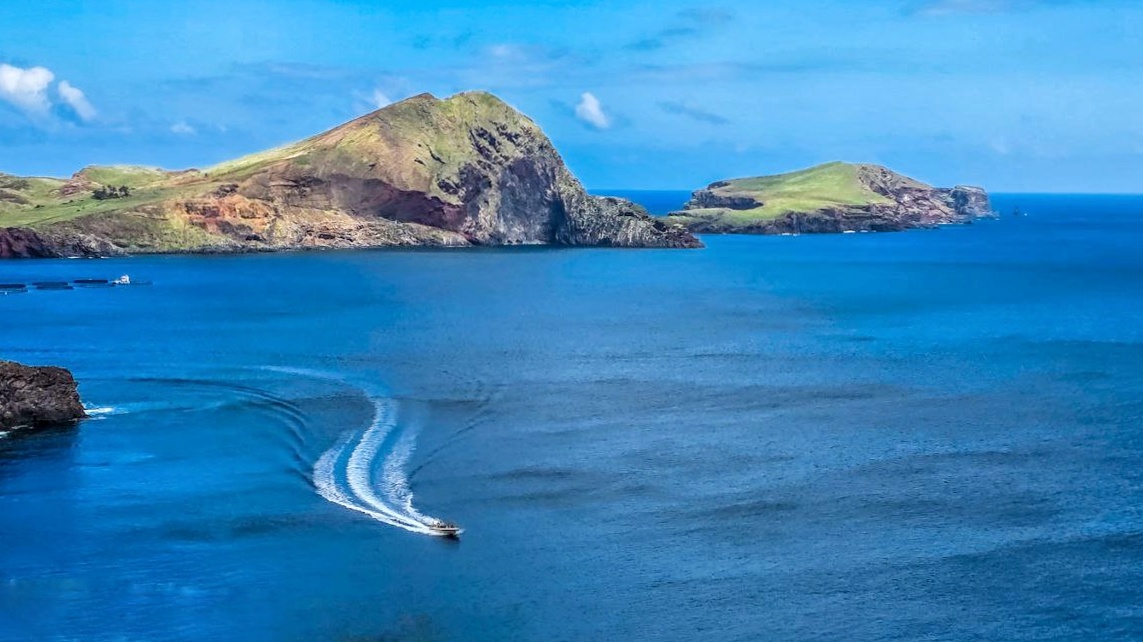
We live on Kauai. Hawaii is home. So when another island keeps getting compared to Hawaii, we can’t help but pay attention. Recently, the island of Madeira (aka the Hawaii of Europe) was ranked the No. 1 Trending Destination in the World for 2026 by TripAdvisor and received Europe’s Leading Island Destination 2025 from the World Travel Awards.
We also ventured to Madeira last year, walking levada trails, eating in neighborhood snack bars, driving roads that make parts of Kauai feel tame, and paying close attention to what travelers actually experience once they arrive and what the trip really costs on the ground.
This is not a theoretical comparison or a recycled press release. It is firsthand reporting about an island destination that keeps winning accolades. We wanted to know why. And we wanted to know how this tiny island off the coast of North Africa could handle this onslaught of tourism without becoming jaded.
After that, the rankings almost feel beside the point. Madeira keeps surfacing because travelers keep talking about it, returning to it, and recommending it to others. The buzz does not come from a single list or award. It comes from repetition. The same island keeps showing up in the same conversations, year after year, while Hawaii increasingly does not. That compelled us to visit and report back.
What matters more than the trophies is that this has been going on for a decade. At some point, it stops being novel and starts demanding explanation. Not because Madeira is better than Hawaii in some abstract way, but because it seems to be achieving something Hawaii is struggling with right now.
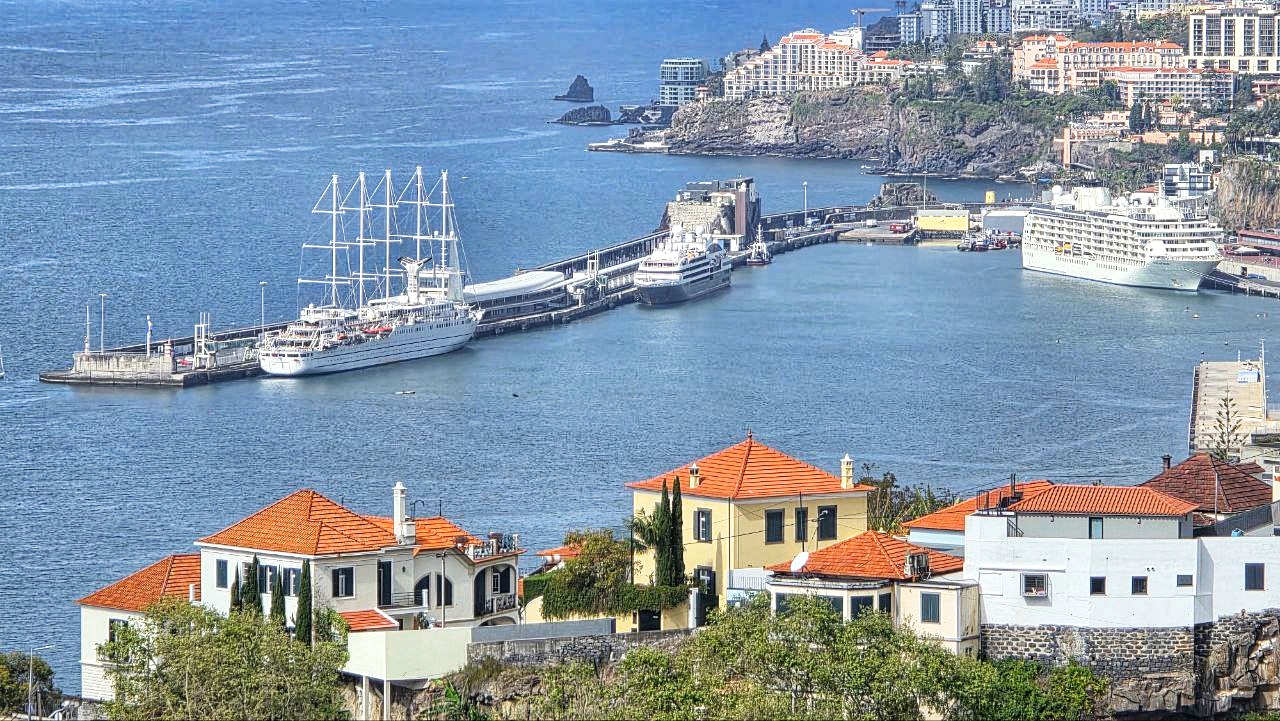
What we kept noticing on Madeira was not a single standout moment or attraction. It was how little friction there was between planning to be there and actually being there. Getting around was straightforward. Parking was a challenge, but usually functional despite overtourism. Trails were very busy but not yet entirely chaotic. Restaurants felt very used, but adequately staffed, and not quite overwhelmed. Prices felt very reasonable everywhere, rather than punitive. None of it was flawless, but very little of it felt over-complicated.
The entire experience stood out because it is increasingly rare in today’s travel world, just in relation to Hawaii. Many destinations that succeed in attracting visitors eventually start pushing back, sometimes subtly and sometimes loudly. And we’ll be visiting more of those in 2026 to share more contrasts and learn about managing overtourism.
Madeira has not avoided pressure or notoriety. Flights are full. Roads are very crowded in places. Too many cruise ships arrive daily. Yet the tone has not shifted toward exhaustion or frustration, as Hawaii’s often does.
We heard that difference repeatedly, not just from officials or tourism campaigns, but from residents. Conversations were frank, sometimes critical of mass tourism, but rarely resentful. Tourism was treated as something Madeira must manage, not something to endure or eliminate. That distinction struck us more than any award ever could.
Cost plays into this in a way that Hawaii travelers will immediately recognize. Madeira is not just reasonable, it still feels fair. Visitors are not yet constantly reminded of what they are paying for or what they are not allowed to do. Fees exist, but they do not dominate the experience. The trip does not feel like a series of costly transactions layered on top of scenery.
The balance is fragile, not unlike Hawaii. Madeira is already testing its limits, and there are signs of strain if you look closely enough, which we did. But for now, it has managed to hold onto something Hawaii has struggled to keep. It still feels welcoming without feeling exploited. Busy yet not completely overwhelmed. Popular without feeling burned out.
That is the comparison worth paying attention to. Not about winning another ranking. Or which island looks better in photos. But which place still feels demonstrably like it wants you there, even as more people keep coming.
And once you notice that difference on the ground, it becomes hard to forget it now back home in Hawaii.
Hawaii wins the flight, then loses on many other points.
Here is the paradox that makes these rankings sting. A February 2026 round-trip flight from Los Angeles to Maui can be found for about $297. It is nonstop and takes roughly six hours. A flight from Los Angeles to Madeira costs about $486, requires two stops, and takes about 19 hours.
By every practical measure, Hawaii should win this comparison on access alone among visitors from North America. Hawaii is cheaper to reach and dramatically easier to get to and be in. That should matter a lot to travelers, and it still does.
But then you land on the runway overlooking the Atlantic off the coast of Africa, and much of that advantage evaporates fast.
Where Hawaii loses is the moment you start spending money.
In Madeira, we routinely paid $15 to $20 per person for dinner at small, family-run restaurants. These are not compromised meals or stripped-down experiences. They are full plates, local wine included, served in places where residents actually eat alongside visitors.
In Hawaii, comparable dinners now start at $40 per person, if you are lucky, and climb quickly. For many visitors, $75 or more is no longer unusual once tax and tip are added. That gap is not subtle, and it repeats itself across nearly every category of daily spending. In Madeira, tipping is not expected, and tax is included in the price.
Accommodation tells the very same story. In Madeira, we stayed in a well-located apartment in Funchal with a full kitchen and water view for less than $100 per night. In Hawaii, similar accommodations routinely run $300 (again, if you are lucky) or more per night, often before resort fees, cleaning fees, 19% tax, and assorted add-ons are factored in.
Groceries in Madeira cost roughly one-third as much as in Hawaii. Rental cars, when needed, were also far less expensive and straightforward. Even simple conveniences like espresso or pastries never triggered the consternation that has become second nature for Hawaii visitors.
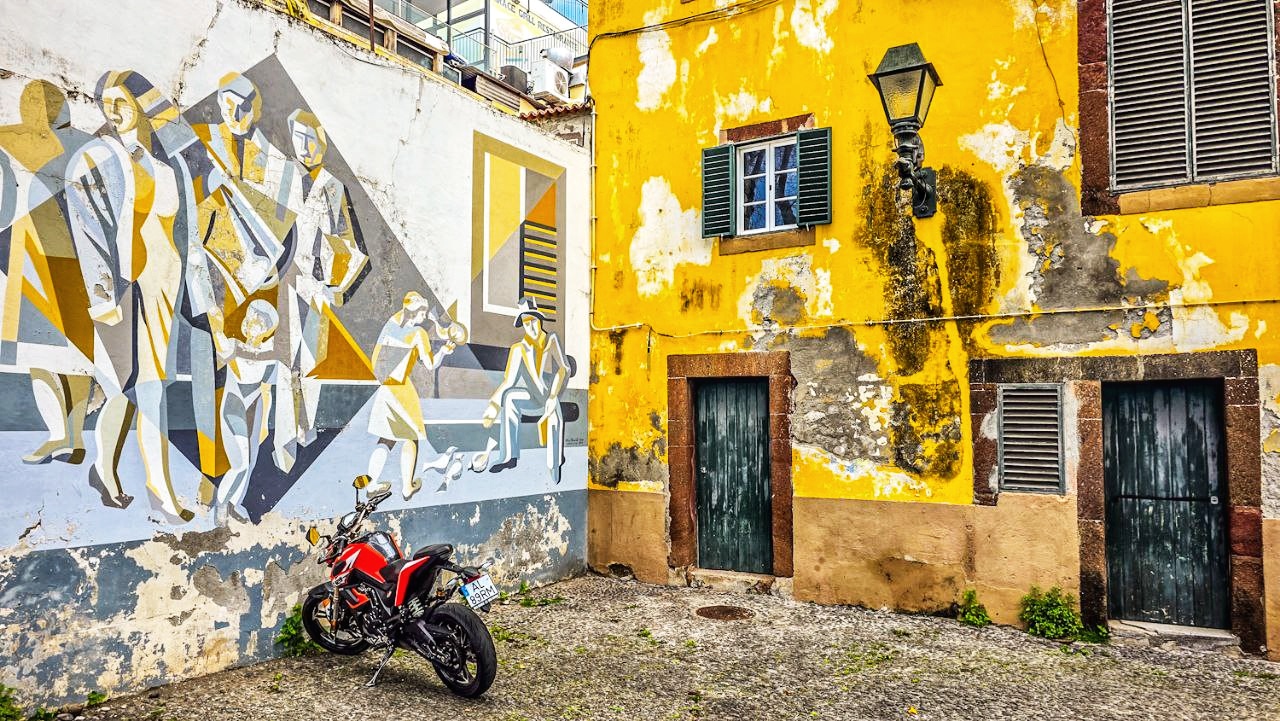
Access is important, too, and Madeira has not locked things down.
Hiking is one of Madeira’s biggest draws, and access remains relatively straightforward. Popular levada trails charge a modest €3 fee, and reservations are generally not required. Trails feel maintained, viewpoints are developed, and basic infrastructure like restrooms and parking is consistently present.
Hawaii faces similar pressures, but the response has increasingly been permits, timed entry, shuttle systems, and closures rather than improved infrastructure. Some of that is understandable given environmental strain and visitor volume. Madeira faces the same growing pressures, too. The difference is that Madeira has not made the experience feel adversarial or exhausting to plan, at least not yet.
We have already covered these contrasts in depth, including how Madeira feels like Kauai decades ago, what the “Hawaii of Europe” label gets right and wrong, and the startling similarities and differences that only become obvious once you are on the ground. Those earlier pieces do the heavy lifting on the place and our experiences. This one is about what the numbers say now in light of the latest awards.
What Madeira gets right, and what it still lacks.
Madeira works because it does not price normal travelers out of daily life. It still feels possible to arrive, explore, eat well, and move around without feeling like every decision requires financial planning.
It also has limits. There are simply no sandy beaches to speak of. The weather is decidedly not as tropical as Hawaii. There is no Hawaiian culture or history to engage with. The travel day from the mainland U.S. is very long and inconvenient, and that matters more to Americans than it does to Europeans, who can reach the island in just a few hours.
Hawaii should win this comparison on experience, access, and emotional pull. The fact that it does not win the awards says far more about how Hawaii is handling tourism than about Madeira’s appeal.
The rankings are just a symptom, not the cause.
The world is not choosing Madeira because it is “better than Hawaii.” It is choosing Madeira because Hawaii has become so expensive that even a 19-hour journey to the Atlantic feels like a reasonable tradeoff.
These rankings are not an insult to Hawaii. But they are a signal. Travelers see what Hawaii costs once they arrive, and they are voting with their attention, their wallets, and their willingness to return. The lists simply reflect that startling reality.
The harder question is whether Hawaii’s tourism industry is paying attention, or whether this is just another ranking that gets dismissed by them while the underlying visitor costs keep getting worse. Visitors have already noticed the extreme difference. And the world clearly has too.
Have you considered a trip to Madeira?
All Photos by Beat of Hawaii.
Get Breaking Hawaii Travel News


Two comments: 1) What’s the travel comparison from the EAST Coast? We go to Hawaii too, or used to. Time & Cost? 2) The Hawaii Experience has become a Comp to visiting Walt Disney World in terms of cost/complexity/frustration/crowds. This is not a good thing for the future of either travel icon. We’re swearing off both until something significantly positive happens (not holding my breath). Might give Madiera a try for sure though!
We love Hawaii and have been coming 2 sometimes 3 times a year from San Diego for the past 15+ years. While the flights are more reasonable, I agree, everything else has become expensive. I will be in Maui in 2 weeks and a car is $1000+ for 7 1/2 days. Food has become beyond expensive and the experience is not great–we have a kitchen in our place and eat in with the exception of Paia Fish Market and maybe Sansei for their Happy Hour (if we can get in!). It is very sad, as so many people who have never experienced Hawaii will chose not to come. We took our 4 kids each summer and I cannot fathom how people can afford to bring kids now, go snorkeling or whale watching, rent a van (which for a family of 6 is essential) or eat! Obviously it is not just Hawaii, as we are experiencing crazy costs in CA as well and no longer dine out as a result. Not sure what the answer is…just sad….
Unfortunately for Hawai’i, it is being left out for a lot of people. My daughter went to the Islands of Croatia and had a wonderful time. Cost 1/3 of a Hawai’i trip and could do things spontaneously. Water was beautiful, people were spectacular and were always asking what their reason for picking Croatia was and were so happy they did. Said even the small Mom and Pop restaurants served unbelievable food and she said the wines and cheeses were to die for. So she is giving up the land of our origin for places we are welcomed. Sad state of affairs.
” Visitors have noticed the extreme difference”. It’s called the “Vibe”. Something that no tourist destination can hide.
Really sad how a trip to Hawaii is not what it used to be. Went to Hawaii a year ago . Stayed at the Grand Wailea on Maui & the Sheraton on the Big Island. Prices have become exorbitant & the Aloha Spirit has disappeared. Had to pay to visit Iao valley state park & was not able to visit due to overcrowding. Restaurants were ridiculously priced & difficult to visit. Service everywhere was terrible.
Will probably visit the Caribbean next year.
I haven’t thought of going there, but I live on the west coast. It’s about 12 – 13 hours to Hawaii from the east coast, though, and I assume about the same to Madeira from there too. So for those people the travel part is a 50 – 50 toss-up depending on cost.