
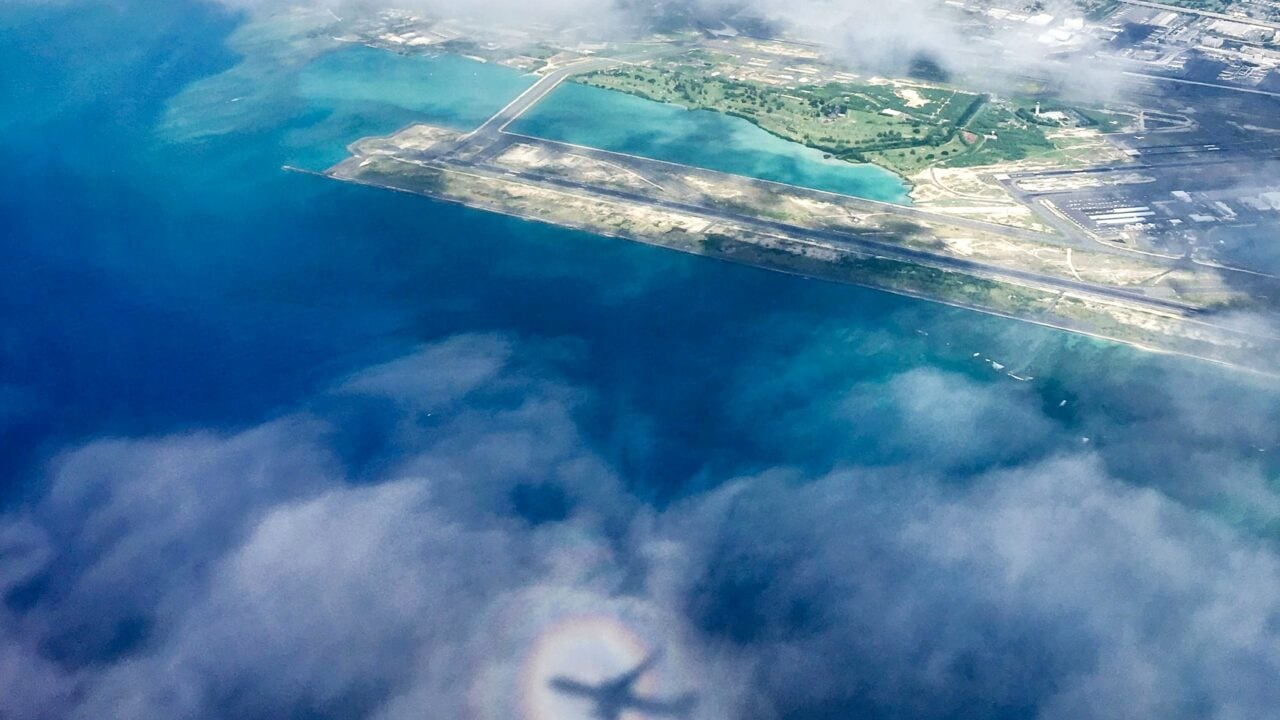
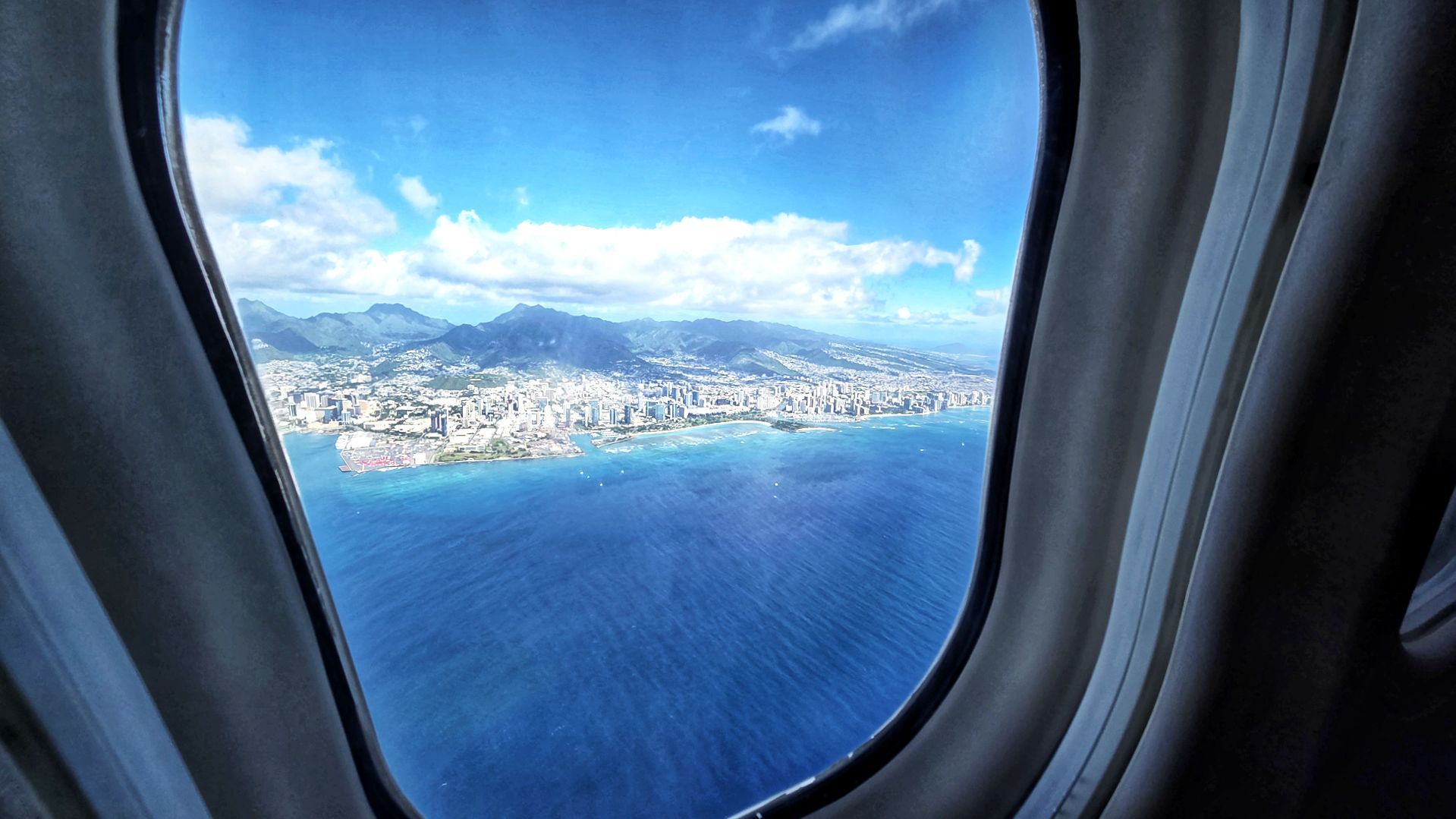
Somewhere over the Pacific on a recent flight to the mainland from Hawaii, I had my phone in hand and was dictating notes, trying to capture an article idea before cabin noise or falling sleep swallowed it. A flight attendant came by, polite but direct, and asked whether I was on a call. She could not have been nicer, and it turned out to be her first day working on the new 737 MAX 8 with Starlink.
I was not on a call, and once I explained that I was dictating notes, we all laughed. That was the whole point. From three rows away, dictation looks a lot like a phone call, and on Hawaii flights now, the cabin is being watched and listened to differently than it was five years ago.
What just changed across the Atlantic, and why it stops at the US border.
British Airways just extended voice and video calls to its entire WiFi equipped fleet, including flights to and from the United States. The airline’s reasoning is straightforward: travelers are paying for connectivity, and the technology now supports live calls, whether crews want to police them or not. British Airways appears to have decided that trying to stop every call would create more conflict than allowing them to make low-volume calls with headphones.
That is where the issue changes for Hawaii travelers. The FAA Reauthorization Act of 2018 included a ban on voice calls on US commercial passenger aircraft, and the FCC later moved further away from expanded cellphone use in 2020. Those rules apply specifically to US airlines, not to every foreign carrier flying into the country.
British Airways can arrive at LA or SF with someone on a video call near the back of the aircraft, while a Hawaiian or Alaska flight parked nearby still operates under the older rule set. The technology is the same, but the rules governing the cabins is not.
We asked this question 18 months ago, and now we have the answer.
Back in October 2024, we asked the question in Video Calling On Hawaii Flights: Game-Changer Or Worst Nightmare? That was when Hawaiian’s new Starlink connectivity raised the obvious next issue.
If the Wi-Fi is suddenly strong enough for streaming, work meetings, and real-time video, would voice and video calls eventually become normal on Hawaii and other US flights too, especially once Alaska took control and the two airlines started operating Starlink together?
The article drew strong reactions from readers in Hawaii and on the mainland, and most of them did not want that line crossed. One BOH reader wrote in October 2024 that Hawaii flights should stay peaceful, and that sentiment has not shifted much since. Hawaiian and Alaska still prohibit voice and video calls onboard, and the merger integration has not changed that position.
The Association of Flight Attendants opposed expanded in-flight calls in 2018 on the grounds of cabin noise, emergency authority, and security concerns, and the union’s position has held steady since. The question that felt open when Starlink first arrived on Hawaiian now looks much more settled, at least for now.
Why the crew is now the audio police.
Phones seem louder than they used to be, and so do tablets, games, and videos, with people forgetting they’re playing through speakers instead of headphones. Even headsets can leak enough sound to irritate the rows nearby. Bluetooth speakers still occasionally appear onboard even though no one nearby asked to hear them. Passengers FaceTime in the boarding area and sometimes forget to end the call before the aircraft door closes. Add dictation into the mix, and from the aisle, it can all look exactly the same to a crew member walking through the cabin.
That is why flight attendants increasingly end up acting as the audio police, whether they wanted that role or not. The polite first ask has become part of modern cabin enforcement. Crews would rather check on a passenger who turns out to be dictating notes into a phone, like I was, than miss the passenger holding a live conversation with the volume carrying halfway down the cabin. The rule only exists if someone onboard is willing to enforce it, and on Hawaii flights, that responsibility falls directly on the crew walking the aisles.
The enforcement issue has been growing for years. Crews now monitor charging devices far more aggressively, deal with far more onboard filming than they used to, and spend more time stepping into situations that once would have resolved themselves through basic passenger courtesy. Hawaii flights are especially difficult because of their length, and on a six-hour crossing, especially an overnight one, even a short call can feel much longer to nearby passengers trying to sleep. A cabin full of normalized phone calls would arguably completely change the atmosphere onboard.
What Hawaii travelers should expect on a flight tomorrow.
If you are dictating notes into your phone, it probably helps to hold it where the crew can easily see you are not talking into it like you are on a call. If you are finishing a conversation before departure, end it before the aircraft door closes. If someone near you starts taking a live call during the flight, you probably do not need to confront them yourself, as a flight attendant will eventually.
Crews would rather hear about the situation early than deal with an argument several hours into a dark redeye cabin where nobody around the conversation can escape it. This is specifically about audio calls and live conversations, not about filming or recording, which we have covered separately. Hawaii flights are already long, crowded, and exhausting enough without adding a cabin full of overlapping phone conversations into the experience.
The line will probably hold here longer than elsewhere.
British Airways made a commercial decision that may fit parts of its long-haul network, especially on routes served by business travelers seated behind privacy doors in premium cabins. On Hawaii flights, much of the flying experience still revolves around dense economy cabins, overnight schedules, families traveling together, and passengers trying to sleep for at least part of the crossing.
US airlines also have something foreign carriers do not have: a clear domestic regulatory line backed by crew unions that never wanted in-flight calls normalized in the first place. Other airlines will absolutely watch what British Airways does next, especially if passengers stop resisting the idea. But on Hawaii flights, the reasons the rule still holds go far beyond technology.
Have you been asked by a flight attendant on a Hawaii flight whether you were on a call or had seen a passenger nearby get told to end one? Tell us what happened in the comments.
Get Breaking Hawaii Travel News


It’s already irritating as all hell that some clueless clown will listen to their phone on speakerphone, switch to youtube, netflix or whatever and flight attendant’s just walk by. That is Twice as frustrating, since none of us want the sound pollution. I encourage the enforcement, and basically require it – especially when I’m usually the profit center.
I still don’t understand why some people don’t get being aware, polite and conscious of others.
Dictating notes is just as disruptive. Stop it.
There’s no common sense anywhere, anytime, anymore !!
Everybody just shut up, and put down the phone! Sit back, relax and watch the clouds go by. If you don’t want to do that, go to sleep. Can’t we all just stop for a while, take a deep breath and relax. Airplanes are not the place for telephone conversations, ever!
Is there really a difference between talking on a phone and dictation? Neither should be allowed.!
It seems one of the main problems is that everyone has a different “noise” tolerance … just like some of us are light sleepers while others can sleep through anything and all those in-between … make it impossible to please everyone. And am sure flight attendants would prefer the no wifi talking rule because it really sucks to have to police some people … especially those for which the entire world resolves around their demands … and no one else’s needs matter but theirs. IMO, no calls allowed … only live steaming could be allowed and only if headphones or earpods are used. I think flight attendants could go with that and it will please most folks.
Aloha,
Interesting that this article closely follows your previous article on random uninvited video and photography in a confined aircraft space and without permission. My response to this article will be identical, although perhaps more fitting: “Most people in possession of a cell phone seem to demonstrate an IQ approximating room temperature. Unacceptable.” I foresee the inflight equivalent of a bar brawl occurring if this stupidity is allowed to proceed.
Mahalo
As a survivor of post 911 the ban on calls makes zero sense. If verizon didn’t offer phone service on planes we would never have known al quadia was hijacking planes.
Let alone give a last opportunity to say good bye to loved ones.
And yeah no shocker that USA fas trear passengers with less compassion then terrorists. Blue hairs will always be pushing bad ideas
based on emotions not facts.
4 yrs ago on a max death plane to Koa got a call from my nephew who I had to remind speaker Ryan passed a law banning phone calls on planes.
Another reason to have 5th freedom so foriegn airlines can offer flights to hi.
Thanks BOH for another interesting article. I have been on flights where a passenger is on a call but they were not asked to end the call. However, they haven’t been loud so it wasn’t really a big deal. That being said, there are passengers who have loud conversations with their travel companion during the entire trip. They don’t shut up from wheels up to wheels down. That’s even more annoying than a phone call. What happened to common courtesy?