Peter Greenberg’s planned four-part Hidden Hawaii television series comes with a remarkable audience projection: 103 million viewers watching it over three years. The Hawaii Tourism Authority has selected his production company for up to $584,000 in taxpayer support without any competitive bidding, although the contract wasn’t finalized as of October 30. We found that same audience number attached to an earlier mainland Greenberg production, along with a 2023 interview in which he said his shows took no government money.
We found the audience number was for Napa Valley.
In June 2025, Visit Napa Valley announced that Greenberg’s Hidden Gems of Napa Valley would be available on PBS and streaming services for three years, with an estimated 103 million views. According to an October 30 investigation by Honolulu Civil Beat, HTA’s justification for Hidden Hawaii also projects the same 103 million unique viewers over the same period, across outlets including PBS, Amazon Prime, YouTube and CBS. The Napa production was one episode of The Travel Detective, whereas the proposed Hawaii series has four installments, yet both carry the exact same audience projection.
For Greenberg’s September 2024 production America’s Hidden Coast: Mississippi, Coastal Mississippi Tourism projected a worldwide audience of more than 100 million for the one-hour program. These recurring estimates might reflect the potential reach of the television networks and streaming platforms rather than the number of people expected to watch each show. That is not clear.
We found some much smaller numbers that could actually count as audiences. On Greenberg’s verified YouTube channel, his Napa Valley preview had 933 views when we checked, while his Mississippi sneak peek had 1,949. Both have been online for well over a year, and his channel has roughly 37,000 subscribers.
Bizarrely, the Napa preview isn’t even playable right now, having been replaced by a notice that PBS blocked it on copyright grounds. In any event, that’s a modest response to two videos promoting productions associated with audience projections exceeding 100 million.
These are previews, not the complete television programs, and their view counts don’t measure audiences on PBS or other streaming services. But they do show how little attention these particular productions attracted through Greenberg’s own YouTube posts. We couldn’t find verified viewing totals for either finished show to show how many people actually watched.
Greenberg once said he wouldn’t take government money.
In a 2023 interview with Los Angeles public television station KLCS, Greenberg was asked about the challenges of financing his programs. He described strict rules intended to protect their credibility and editorial independence. “We take no money from any government,” he said, adding that his productions also rejected money from tourist boards. He explained that funding generally came from private businesses or foundations.
That statement followed his 2022 Hidden Gems of Kauai production. Civil Beat interviewed former Kauai Visitors Bureau director Sue Kanoho, who said the bureau partnered with Greenberg using $50,000 in county government funds. She said she suggested potential storylines while leaving him to decide what appeared in the program. We haven’t seen actual payments establishing whether that money went directly to Greenberg’s company or covered other production expenses.
In his October 2026 interview, Greenberg described his productions as financed through combinations of sponsors and public-private partnerships. He distinguished HTA’s role as a funder rather than a sponsor, saying the agency would have no editorial control over Hidden Hawaii. He also declined to say whether the series could even proceed without government funding.
That distinction addresses editorial control, but his earlier statement ruled out government money entirely. He has not explained whether his financing policy changed or whether he is making another distinction between types of public contributions.
HTA plans to contribute up to $584,000 from its Regenerative Tourism Development budget, with another $250,000 expected from private tourism-industry partners. Together, that’s $834,000 in reported contributions, although the state procurement listing shows an estimated $760,000 award to Greenberg’s company, Check Six Productions. The difference hasn’t been publicly reconciled, and we haven’t seen a confirmed list of private contributors.
HTA did not invite competitive bids. Instead, it used a procurement exemption. Its justification acknowledged that other companies could produce travel programming but argued that Greenberg’s name recognition made his production different. That prompted objections from Hawaii filmmakers, including Moana co-writer Jordan Kandell, who questioned why qualified producers here weren’t at least given an opportunity to compete.
Greenberg told Civil Beat he had already contracted Hawaii-based production and post-production crews and was consulting with approximately 80 people across four islands. Hiring people here would support the local industry, although the decision about who would develop and lead the series had already been made.
We covered his earlier Kauai program.
Greenberg’s previous Hidden Gems of Kauai episode aired in 2022, when visitors were still adjusting to reservations and restrictions at Haena State Park. We covered the controversy at Beat of Hawaii, including the frustration of returning visitors who couldn’t obtain reservations and others who supported the changes.
Before those controls, nearly 3,000 cars a day reached the area, overwhelming the roads and making access increasingly difficult. We’d given up on going there. The restrictions weren’t popular with everyone, but we knew firsthand what the crowds had become.
Greenberg’s Kauai episode, documented in the PBS transcript, explained why access to Haena had changed and included the people working to protect the area. The state’s Department of Land and Natural Resources welcomed the coverage as a way to tell travelers about the new reservation requirements before they arrived.
That earlier program was addressing a visitor problem already unfolding on Kauai. The new series has a much broader promotional goal, although its locations and subjects haven’t been announced.
Who is supposed to watch Hidden Hawaii?
Tourism (DBEDT) director James Tokioka told Civil Beat the project is intended to attract the “more experienced and high net traveler,” mentioning people in the Northwest and on the East Coast who might see Greenberg’s show and decide to visit Hawaii. On the other hand, we have not seen any demographic breakdown of Greenberg’s actual television audience, or evidence establishing how many viewers are likely to be first-time visitors versus those who have already vacationed in the islands.
First-time visitors may be discovering Hawaii as a destination, while returning travelers already have experiences and memories that draw them back. Showing them something unfamiliar could help encourage another trip.
Rob remembers returning to Pennsylvania after visiting Hawaii decades ago and being glued to anything about the islands on television, including the old Magnum, P.I. Hawaii music had a similar appeal. He didn’t need to be persuaded to love Hawaii; those reminders helped keep the islands close between travels here.
We’ve heard from many BOH readers who have returned for decades, sometimes visiting the same island, beach or accommodation year after year. A series about less familiar experiences could speak to that audience, but we don’t know whether those loyal Hawaii travelers are the people Greenberg actually reaches or the ones HTA expects to attract.
The last time Hawaii spent big on a marketing campaign was 2024’s The People. The Place. The Hawaiian Islands, a four-island marketing deal featuring local food, music, lei making, and other cultural experiences. The Honolulu agency that produced the campaign subsequently reported that 43% of people aware of it said they were likely to visit Hawaii within a year, compared with 23% of those unaware of it. Their survey responses did not establish any additional bookings, but merely a measure of traveler interest. As of now, HTA hasn’t publicly provided comparable performance targets for Hidden Hawaii beyond its projected audience.
What visitors can actually experience.
In that same 2023 KLCS interview, Greenberg described his Hidden programs as featuring unfamiliar places and experiences that were “totally accessible” to travelers. His earlier Kauai episode included activities ordinary visitors could arrange, such as visiting a cacao farm, alongside encounters that involved being invited into someone’s work or cultural practices.
Greenberg joined farmer Lyndsey Haraguchi in a Hanalei taro field to help with the harvest. He also filmed an early-morning cultural ceremony at Lydgate Beach. Those experiences can be interesting to watch, but they aren’t necessarily activities travelers can arrange for themselves.
Greenberg expects filming to begin in January 2027, but no detailed itinerary or premiere date has been announced. We don’t yet know whether the four new episodes will focus on places visitors can independently explore or encounters arranged largely for the cameras.
With up to $584,000 in public funding proposed, we’d like to hear what readers think a new Hawaii travel series should accomplish. Might it introduce first-time visitors to places they’d otherwise miss, give longtime visitors new reasons to return, or focus on the people and communities that make Hawaii special without encouraging more crowds?
If you were deciding what belongs in Hidden Hawaii, what would you want millions of viewers to see, and what would you rather they leave alone?
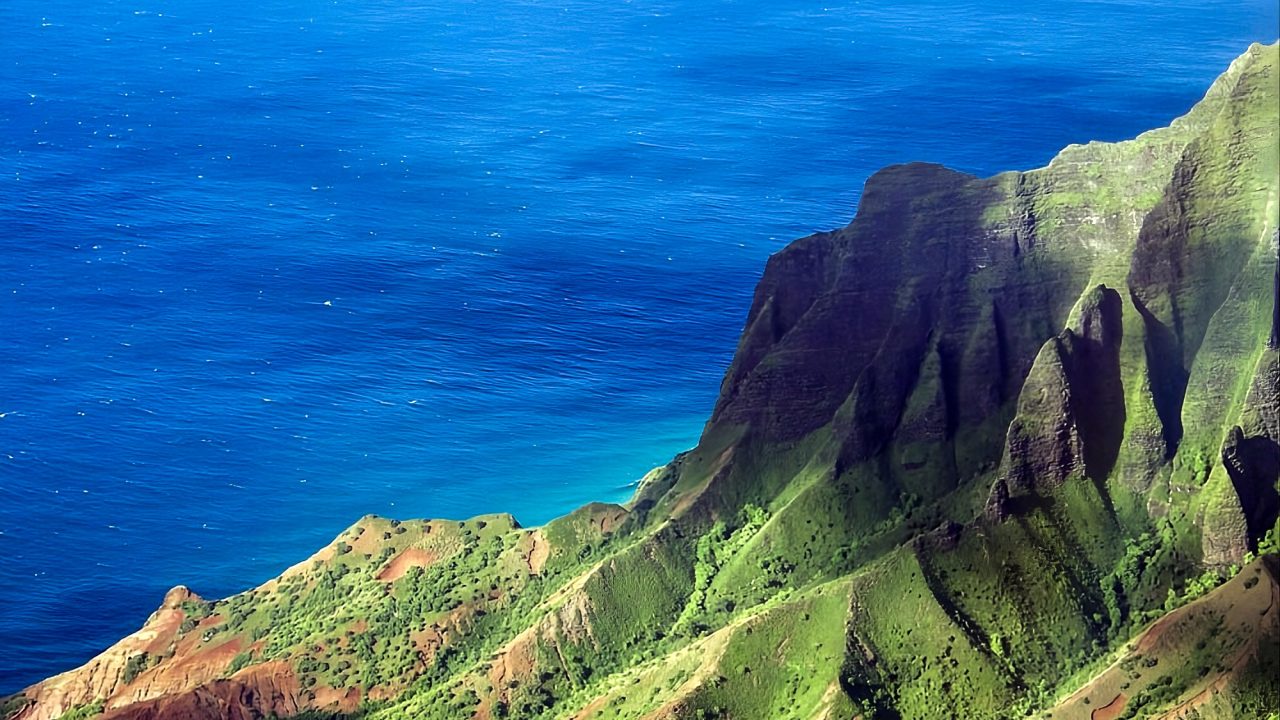
Photo Credit: © Beat of Hawaii at Kokee overlooking the Kauai Na Pali Coast.
By Rob and Jeff, Beat of Hawaii.
Some of Hawaii’s most meaningful parts are the ones visitors walk right past without knowing they are there. We’ve spent nearly 20 years finding them firsthand for BOH as full-time Hawaii residents reporting on travel, culture, and island life, and telling you what they mean for your trip. Join us →
Get Breaking Hawaii Travel News