
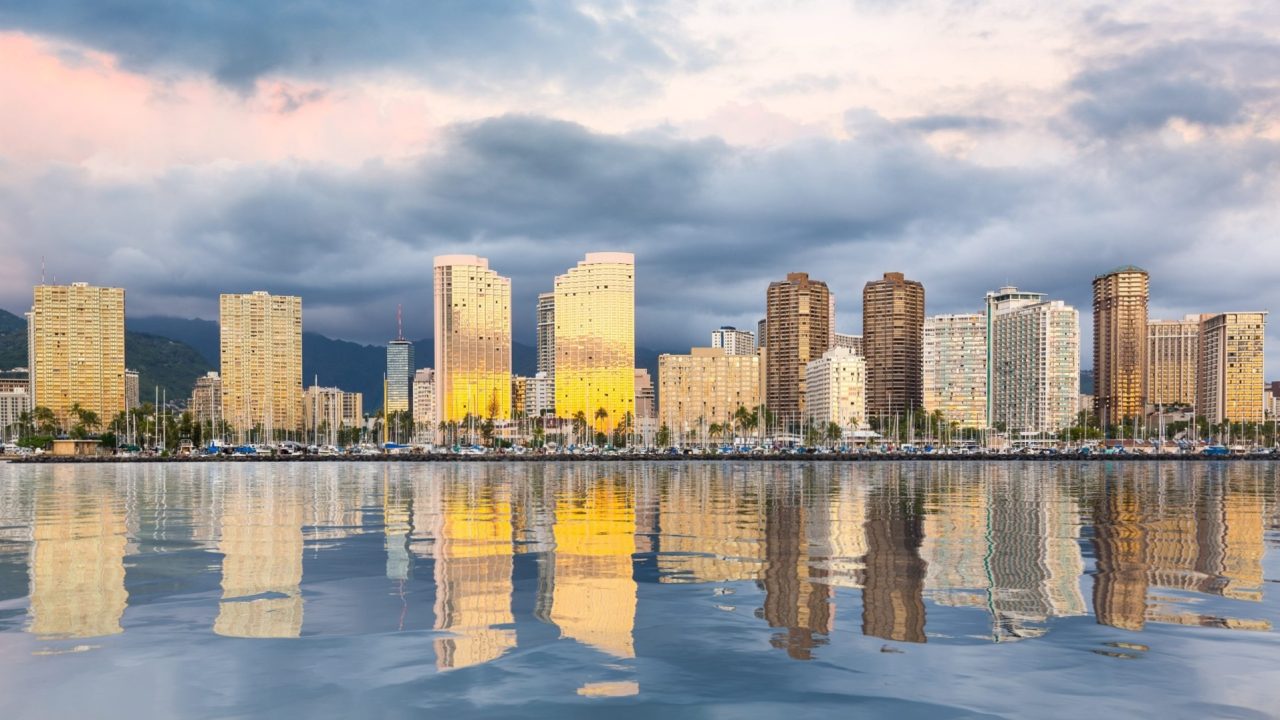
Honolulu just hit two illegal vacation rentals in Hawaii with $40,000 in fines, and the city is working through other unpermitted listings in the same way. Here is what Hawaii’s short-term rental enforcement means for visitors who have already booked, and how to check whether the rental in your name is actually legal.
If you booked an Airbnb on Oahu months ago and have not thought about it since, the legal status of that property may have changed since the day you reserved. That risk just became very public again, prompting questions from readers, after two Oahu vacation rental properties were fined $40,000 by the city for operating illegally as short-term rentals.
The reason this resurfaced is a connection to the HGTV show Renovation Aloha, but the celebrity angle is not the point. Honolulu has become far more aggressive in enforcing short-term rental rules, and the city has the ability and tools to shut down a listing between when a visitor books and when they arrive.
The fine that should concern every Hawaii Airbnb visitor.
One of the two properties sits on Kamehameha Highway. The other is in Mililani, a residential neighborhood where short-term vacation rentals are clearly not permitted without special approval. Together, the penalties are reflected in Honolulu Department of Planning and Permitting records.
That number has gotten attention because of the star connection, while similar enforcement actions have been happening across Oahu for years. This is a reminder that travelers may still be booking rentals they assume are legal simply because the listings appear on Airbnb or Vrbo.
A surprising number of visitors to Hawaii assume that booking platforms verify whether a vacation rental is fully legal before listings go live. In practice, that responsibility still falls largely on the host and the traveler.
Airbnb and Vrbo require hosts to enter a Hawaii tax ID and, where applicable, a county permit or registration number, and those numbers often appear on the listing. But a listing appearing online does not guarantee the property sits in a zone where short-term rentals are actually allowed, or that the permit remains valid and enforceable.
It is still possible for a house tucked inside a neighborhood with beach decor and hundreds of reviews to sit entirely outside the legal short-term rental framework.
How Honolulu defines an illegal short-term rental.
Honolulu restricts short-term rentals outside resort-zoned areas. The city’s land use ordinance has long used 30 consecutive days as the minimum rental period in residential neighborhoods, and Bill 41 later tried to raise that minimum to 90 days, a change that remains tied up in court challenges.
The practical line for visitors is the same either way. A house in a residential neighborhood, outside Waikiki, Ko Olina, or other resort zones, almost certainly cannot legally operate as an Airbnb-style vacation rental. Waikiki and Ko Olina are the obvious resort zones, but large residential sections of Oahu are not allowed to host Airbnb-style short-term stays at all.
The city strengthened enforcement under Bill 41 in 2022, tightening restrictions, raising fees, and increasing fines for operators who continued to rent illegally outside the resort zones. Some hosts shifted to longer-term rentals, others left the market entirely, and a smaller group continues to operate while risking escalating fines.
What Honolulu enforcement looks like now.
For years, many Hawaii visitors treated illegal vacation rental rules as loosely enforced or mostly symbolic, and that assumption no longer fits reality. Honolulu’s Department of Planning and Permitting has expanded enforcement, and the fines can continue to grow quickly once a property is under scrutiny.
Enforcement records tied to the recent Oahu case show violation notices, accumulating penalties, and unpaid balances attached to properties operating without proper authorization.
The city also has far more public pressure behind enforcement than it did a decade ago. Residents across Oahu have pushed back hard against neighborhoods turning into unofficial hotel districts, especially where housing costs keep climbing, and illegal vacation rentals have become tied to broader frustrations over disruption, parking, noise, and the dwindling housing supply.
Visitors don’t need to know all the details of the debate to feel its consequences. If a listing gets shut down before arrival, the disruption lands directly on the Hawaii visitor holding the reservation.
Maui and Hawaii Island are moving in the same direction.
Maui is approaching the issue differently, but the direction is the same. Bill 9 phases out roughly 6,000 vacation rentals in apartment-zoned districts, with West Maui properties required to stop operating on January 1, 2029, and the rest of the county on January 1, 2031, reshaping a large share of the island’s existing rental inventory.
Hawaii County’s own short-term rental rules continue to expand as well, with new registration requirements taking effect July 1, 2026, and a broader operational rulebook in Bill 147 advancing through the council. Under Bill 47, effective July 1, 2026, rentals of less than 180 days on the Big Island will require registration with Hawaii County, and operating without registration will be subject to fines up to $10,000.
Bill 147 would consolidate hosted rentals (B&Bs) and unhosted rentals (STVRs) under a single umbrella term, transient vacation rental, or TVR, with both sharing the 180-day short-term threshold and a new set of operational standards and enforcement rules.
No matter the island, counties are shrinking the space where short-term rentals can legally operate, intensifying enforcement pressure, and subjecting properties that once operated with relatively little oversight to greater scrutiny.
How to check if your Airbnb in Hawaii is legal.
The safest move is to ask the host directly for the property’s permit number and verify it independently before your trip. Honolulu maintains a public database through the Department of Planning and Permitting, and Maui runs its own permit verification system.
Hosts who refuse to provide a permit number, are unable to answer questions, or imply these rules do not apply to them are all warning signs. The same goes for listings buried inside residential neighborhoods far from recognized resort areas.
Reader Teebs put it this way today in a comment on our recent piece about a Hawaii resort adding a $350 access charge on top of $829 room rates: “This is why I opt for a rental condo. I can still do some food, drinks, and beach/pool access at my own cost/leisure, and I am also able to spend my money on local businesses.”
Airbnb and Vrbo are, in the end, booking platforms rather than enforcement agencies, and a property appearing online does not guarantee it complies with today’s county laws. That distinction is very important when Honolulu, for example, begins actively pursuing illegal listings instead of simply issuing warnings.
Some travelers may lean toward hotels partly because of these issues. Others still decidedly prefer vacation rentals for the kitchen, the family space, or the non-hotel, neighborhood feel. Either choice is fine, but visitors to Hawaii booking short-term rentals need to be aware of the issues and do their homework more than they did even a few years ago.
What happens if the city shuts down your booking?
If a vacation rental loses the ability to operate legally, the host typically cancels the reservation proactively. Airbnb should refund the original payment and sometimes help locate replacement lodging, but that does not solve the bigger problem the traveler then faces.
A family that booked a vacation rental months earlier at a favorable rate may suddenly be hunting last-minute lodging in peak Hawaii seasons of summer or holidays, at much higher prices and with fewer choices. A refund covers the canceled booking. It likely does not help with the cost difference, the scramble, or the disruption to a carefully planned Hawaii vacation.
That is why the recent viral Oahu enforcement case deserves attention beyond the television connection. Hawaii’s short-term rental rules are no longer minor or in the background, and visitors booking vacation rentals need to treat permit verification as an essential part of trip planning.
Have you booked a Hawaii Airbnb or vacation rental and wondered whether it was operating legally? Tell us in the comments what you learned when you asked.
Note: The post has been updated to reflect changes to short-term vacation rentals on Hawaii Island.
Get Breaking Hawaii Travel News





We arrived on Maui 10 days ago. When we got off the plane there was nobody waiting to board. We walked through the terminal and there was nobody waiting to get on a plane.
When we went to pick up our luggage we were the only flight picking up luggage.
Restaurants that used to take a week to reserve a table are now half full. The Hotel/condo complex is 25% full.
More people will have to move to the Mainland and those people will be the ones who lose their jobs.
All of the efforts to make Hawaii travel more difficult and expensive are working.
We have been on the islands for a month now and our favorite restaurants no longer need reservations or waiting in line.
Vacancies in shopping areas like Kona, Maui, Waikoloa, Kappa a’ on Kaui have large numbers of vacant retail and restaurant spaces.
We spent thousands on hotel and condo taxes.
Spending may be up, but not on the street where local shop and restaurant operators make a living.
Parts of Kona is a ghost town, dilapidated buildings, we haven’t seen a fresh coat of paint or any repairs in 15 years of Tavel to the big island.
Vacancies have very little to do with tourist volume and far more to do with affordability and availability of workers who can’t afford to live where they work. Many of my younger friends are moving back to the mainland because they can’t find jobs that will pay a livable wage or places to live they can afford.
Developers are quick to build multimillion dollar luxury homes by the dozens for folks who might use them 2 weeks out of the year, but little to no affordable homes for those who live and work full time in the islands.
It’s not always about the tourists.
So Drew,
How much “affordable housing” has been built in Lahaina since the fires?
What is the amount of money. per month, you and the politician’s think is “affordable”?
Could it be that building “affordable” housing is heavily restricted by zoning, rules and regulations imposed by the government?
Tourism is all you have and many are trying to discourage it.
After 20 years on Maui what was once “unspoiled” beauty is now becoming an Island of abandoned and residential cars.
There are more than 16,000 units (i.e., apartments, condos, houses) that are legally eligible to operate as short-term (less than six months) rentals without requiring a Bed & Breakfast Permit or Conditional Permit. These
units are generally located in districts zoned for hotel use, but some are also located in apartment districts, or are covered by other pre-existing situations. The operation of short-term rentals in these zoning districts is
consistent with current County of Maui zoning ordinances, Community Plans, General Plan, and State law. All short-term rentals are also required to pay State of Hawaii General Excise Tax (GET) and Transient
Accommodation Tax (TAT). It is recommended that you inquire with the owner as to whether they are operating in compliance with all current laws
I wrote the above comment because that’s what you find when you follow the “Maui runs its own verification system” link in the article. I thought it would take you to a government site where you could search by condominium complex’s name or Transient Accommodation Tax number to find which were legal vs. illegal Short Term Rentals.
Sounds good but the city and county is trash at actually collecting anything. I’m probably not remembering right but a couple years back there was some article about there were hundreds of violations sent out and they collected like $200. Total.
I’ll believe it when I see it but not keeping my hopes up. It’s just like the folks who make what are pretty much private beach modifications.
I wonder if that’s why more people are using home exchange platforms to have a holiday ?
Hi Katherine, Home exchange was great until HE adopted Guest Points which are seen by the counties as a form or currency and now regulated and taxed the same as vacation rentals 🙁
What is so frustrating is that we all know who’s behind all of it. It’s the hotel lobbyists. They are the ones with the money. They will continue to squeeze out the short-term vacation rentals because it threatens their business model. The consumers don’t always want to stay in a hotel. The hotels are pricing everybody out except for the ultra wealthy. Sure there are mainlanders that own vacation rentals but there are lots of locals here that they’re just trying to cover the increasing cost of living. Not just living here but living anywhere. The Big Island just has a geography issue. We are so large. People can’t just be staying in Kona and in Hilo. It makes the driving too far to go places. People want to see more of what Hawaii is all about, not just the tourist destination.
And what’s gonna happen as a result is that the booking platforms will go underground.
My wife and I have been traveling to Hawaii, from the east coast) 3 times a year since 1989. We never stay in a hotel. We like to feel like we are home not a resort. Guess Hawaii doesn’t want us to spend money with them, so now starting to look at Tahiti & Fiji.
Important clarification. You write:
“If you booked an Airbnb on Oahu months ago and have not thought about it since, the legal status of that property may have changed since the day you reserved.”
To be clear, none of these situations you cite are related to a change in legal status, only of the enforcement of existing laws. These rentals were illegal before, but overlooked. The county is stepping up their enforcement but have not eliminated any legal rentals.
Let’s be realistic about this situations. If they have to turn their properties to long-term rentals property owners will have to charge at least $5000 a month. Although I am not sure that will cover Home owner insurance cost property taxes and mortgage.
And locals may not afford to pay that much monthly rentals fees. At the end, local still will not have enough affordable housing that it will reduce available short term rental units with reduce revenue for local businesses.
At the end, visitors May choose to go to Hotels with
High rental fees. Ultimately Hotel industry will be the winner, which in turn is going to donate more money to politicians.
Absolutely. Especially for larger homes. Locals can’t afford rent on a $1.5m home.
Ummm … No. If I can’t find an affordable rental … I’m Not going to “choose to go to Hotels with High rental fees”. Nope, just not going to Hawaii. So Hawaii will lose my money. It will go somewhere else. My restaurant, food truck, zipline, state park, kayaking, horseback riding, whatever activities money goes somewhere else. It is simple math as it is finite money. Hawaii has always been on the high end of the expensive vacation … and now increasing rates … yeah … who loses. I don’t lose … I will still have a great vacation … somewhere.
Early on … we did rent an illegal rental (Maloa’a Beach) … a decade or so ago. Didn’t know about legal and illegal. We do now, and make every effort to rent legal. I understand the reason for legal and illegal … makes perfect sense.
All of the efforts to make Hawaii travel more difficult and expensive are working.
We have been on the islands for a month now and our favorite restaurants no longer need reservations or waiting in line.
Vacancies in shopping areas like Kona, Maui, Waikoloa, Kappa a’ on Kaui have large numbers of vacant retail and restaurant spaces.
We spent thousands on hotel and condo taxes.
Spending may be up, but not on the street where local shop and restaurant operators make a living.
Parts of Kona is a ghost town, dilapidated buildings, we haven’t seen a fresh coat of paint or any repairs in 15 years of Tavel to the big island.
Exactly. We moved here eight years ago. Kona is almost a Ghost Town sometimes. There’s not very many people there. We don’t need reservations to eat anywhere. It’s really quiet. When people come into town, having to pay for parking now, that’s just more money that’s not going into the local economy. It’s going to a parking company. That’s not even on the island. It’s so frustrating. But that’s what the county is looking for to price out everybody except the Uber wealthy
The previously free lot now charges and has maybe 10% of the cars compared to when it was free. Those hundreds of customers are gone.
Fish Hopper and Papa Kona’s had just a few customers.
Locals are commenting on how slow it has been.
Vacation rentals, especially the illegal ones, are making it impossibly expensive for the people who live and work in Hawaii to afford to keep doing so. Vacation rentals should be completely banned outside of designated resort zones. Tourists can just stay in hotels- better yet, in Mobile Alabama.
So you say “especially the illegal ones”. You must not live here. How are they making it more expensive? Why don’t you go stay in a hotel and see how expensive it is with all of the taxes, all of the fees, the cost of parking, etc. And honestly, local individuals here have plenty of properties that are not conforming.
I have illegal vacations rentals on either side of my property. You must not live here. Go stay in a hotel.
What after the 40,000 fine the resident or rental person don’t have the money or income to pay such tennant back or refund? You may not receive funds to repurchase somewhere else because the money could have been used to pay the fine. How does the tourist solve this problem? Go after VRBO or air B and B or what? This solution works only if you are rich and can afford to rebook using your own funds or lucky enough to get a refund. What part of illegal denotes you will even get your money back?
Airbnb holds 100% of money until the guest checks in. So all future guests will get full refunds.
VRBO has 2 payment methods:
1. VRBO charges the guest card, and pays the host after guest checks in. In this case, guests should expect a full refund.
2. The host charges the guest’s credit card. If the host does not promptly refund all money paid, the guest can initiate a chargeback on their credit card – and since the accomodation was not available, all money will be refunded by the credit card company.
It’s important to distinguish what’s happening on Oahu, Maui, and the Big Island from the situation on Kauai. I understand rules are being updated in light of SB-2919 signed on May 3, 2024.
In 1982, Kauai Ordinance 436 established Visitor Destination Areas (VDAs) permitting short-term rentals in Princeville and parts of Poipu, Wailua, and Kapaa while protecting other areas for local housing. STRs continued to spread island-wide leading to Ordinances 864 and 876 (2008–09) which halted further expansion. Kauai STRs (TVRs) fall into two categories: those within VDAs plus ~450 operating in other areas under grandfathered non-conforming use permits (TVNC).
In summary, vacation rentals on Kauai are specifically allowed in designated areas or by special permit under laws that have been in place for many years and unlikely to change for the foreseeable future. Verification and due diligence are still recommended.
It’s the same for the Big Island for those who have permits. Nothing has indicate that any of those permits are disappearing. They’re just expanding the net for who needs permits.
Author stated:
“A family that booked a vacation rental months earlier at a favorable rate may suddenly be hunting last-minute lodging in peak Hawaii seasons of summer or holidays, at much higher prices and with fewer choices. A refund covers the canceled booking. It likely does not help with the cost difference, the scramble, or the disruption to a carefully planned Hawaii vacation.”
This is correct. And this is why the service fees charged by these platforms are a joke. They tell part of what the service fee covers is finding you a replacement property if need be. What they don’t get is the Hawaii market, for popular locations in Hawaii, fill up early and the best properties go fast. What you might be left with are the dogs.
So I would add in a warning that the “service” you might expect to get from these platforms will not hold up.