

Living and working on Kauai, we still hear the rescue helicopters more often than we would like to. They head toward Na Pali Coast, Waimea Canyon, or Hanakapiai, often for situations that have become all too familiar. These do not follow the path of visitor helicopters, so we know immediately that a rescue is underway. After nearly twenty years of covering Hawaii travel, the rescue drumbeat feels louder than ever.
One of the recent rescues that brought this home actually happened on Oahu to a Hawaii resident. A woman in her twenties slid off the narrow Olomana Trail and became stuck on a ledge as daylight faded. Fire crews climbed toward her while Air 1 hovered over the ridge after sunset, holding position in gusty wind as she and her two companions were lifted out one by one. It was a vivid reminder that small mistakes on specific Hawaii trails can quickly turn into high risk operations.
The same pattern is playing out on Kauai. On the Kukui Trail in Waimea Canyon, a 50-year-old visitor from North Carolina could not climb out after an ankle injury and had to be short-hauled from deep inside the valley. Soon after, a 65 year old visitor from Utah was airlifted near Hanakapiai Falls with a serious head injury. This past weekend a 23 year old hunter was airlifted from the Makaha Ridge at Waimea Canyon. And the Kalalau corridor remains the island’s biggest pressure point. By December it had already logged 70 rescues this year, with helicopter costs expected to exceed a quarter million dollars.
We wrote about one of these cases in Kalalau hiker with pre-existing ankle injury air rescued, refuses treatment, which sparked strong reader comments about preparation and personal responsibility.
Different islands. Different hikers. The same strain on Hawaii’s limited rescue resources, and on the firefighters and flight crews who risk their own safety every time they fly into those narrow canyons and shifting winds.
Existing rescue laws are rarely, if ever, used.
Kauai adopted a cost recovery law that allows the county to seek payment for rescue costs when someone ignores clear warnings or locked gates. Other islands have similar authority. In practice, these tools are seldom used. County officials say it is difficult to prove that someone knowingly took a prohibited risk and that they do not want to create hesitation about calling for help. That gap is why readers keep asking us about something different.
This refundable deposit idea keeps resurfacing.
Some residents have suggested a new approach. Instead of billing people after a rescue, what if certain high-risk trails required a refundable rescue deposit up front? You would pay a deposit when securing a permit. If you complete the hike and return safely on your own, the full amount is automatically refunded. If you require a rescue, some or all of the deposit would help offset the cost.
Supporters say this is not a fine and not a penalty. It is simply an upfront reminder that certain trails come with real consequences when things go wrong. They also point out that a deposit applies equally to residents and visitors, which many feel is the only fair way to approach it.
It is also important to note, as the rescues above make clear, that Hawaii residents are involved too. Preparation and judgment are not limited to one group of people. That perspective helps keep this conversation grounded in reality rather than resentment or us vs. them.
What other states have tried.
New Hampshire offers a clear example of how rescue funding can work without discouraging emergency calls. The state bills hikers found to be negligent in a small number of cases, but most people buy a $25 Hike Safe card that both supports search and rescue operations and generally protects the holder from being charged unless their behavior was reckless.
Colorado takes a different path with its $5 Colorado Outdoor Recreation Search and Rescue card. It does not bill hikers at all. Instead, the card helps fund rescue teams statewide so they are not absorbing mission costs out of pocket.
Both systems acknowledge that rescues are expensive without putting a price tag on the moment someone calls for help.
Why some people support the idea.
People who like the refundable deposit concept say it might discourage casual or unprepared hikers from tackling trails that demand more experience. They see Kalalau’s annual rescue numbers as proof that something is seriously out of balance. Some also believe a deposit could relieve pressure on county budgets and create a more predictable way to fund equipment, training, and helicopter use.
They also argue that it could help first responders who fly into narrow canyons, strong winds, and fading light for rescues that, in many cases, could have been prevented with better planning or more realistic expectations.
Why others think it could make things worse.
The biggest concern is hesitation. If someone is afraid of losing a substantial deposit, they might wait too long to call for help. A delayed call can turn a manageable situation into a dangerous one. Critics also ask how Hawaii would separate unavoidable accidents from poor judgment. Trails like Olomana, Kukui, and Kalalau can change quickly with weather and footing. Bad luck can still happen to anyone.
Others question whether adding another cost to Hawaii hikes makes access unequal. And there are logistical concerns as well. Who holds the deposit. How are refunds handled. Who decides whether a rescue was preventable. And what is the cost of managing this. These questions matter because they determine whether people trust the system.
Where Hawaii might go next.
If Hawaii decides to rethink how rescues are handled, several options are possible. The state could enforce existing laws in rare, clear cut cases. It could test a voluntary rescue card similar to Colorado. Or it could pilot refundable deposits on a very small number of high risk trails and study what actually happens.
Should Hawaii try refundable deposits on specific trails, or keep rescues free and focus on better enforcement and education?
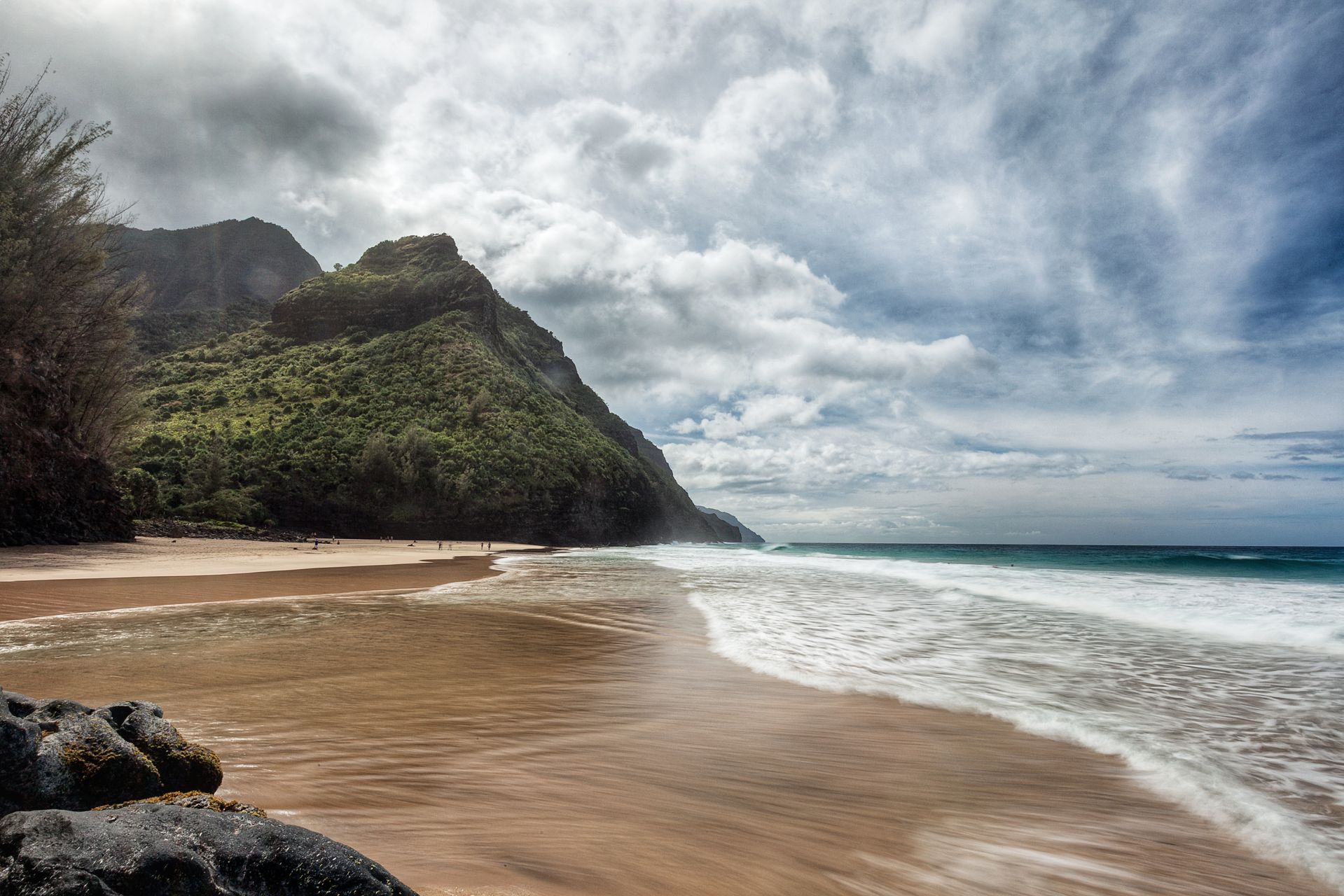
Photo Credit: © Beat of Hawaii Flying Over Na Pali Coast, Kauai.
Get Breaking Hawaii Travel News




I think that you bill the person for all emergency services that didn’t heed to the sign and decided to hike anyways. Why should everyone pay for others that are not responsible?
The reservation system is unintentionally promoting hiking in inappropriate weather conditions. Before reservations, one would observe the weather prior to commiting to a hike, hopefully going on a dry trail. I have observed people standing in the pouring rain for the shuttle to hike the Kalalau trail because that was their only permitted day and time to do so. This adds so much danger to that hike, even a day hike in and out to the creek.
Good point. The county should add an inclement weather option in those cases for hikers to choose a safer day. Cheers
I live in NH and am also and experienced hiker. The Hike Safe card seems to work well here, and Fish and Game (agency responsible for rescues) has fined some grossly negligent hikers. It’s been very clear that the people who were fined hefty sums deserved it.
NHFG is self-funded and too much of their resources goes to getting idiots out of trouble, so Hike Safe helps offset that. Most of our hikers here are from New England and adjacent states/provinces so they get regular exposure to the program.
Where Hawaii is concerned, I doubt the tourons who would need it (the negligent ones) would fork over $25 because of their hubris to begin with. I like the idea of a deposit, for a system where you require a permit. Perhaps only for non-residents.
In reference to whether rescue expenses should be a taxpayer responsibility or a hiker’s responsibility, here is a possibility. When any rescue is performed by a government-funded entity, the hiker or hikers should be required to agree with their signature (if possible) to be taken to, and checked into, a medical facility for treatment and release. Such a facility could be a hospital, emergency room, urgent care, or other licensed medical facility. If the person or persons refuse to agree to treatment, they must be billed for the extraction costs. No free transport for reasons such as “tired” or “just do not feel good.”
The folks who want a free ride will also tell the doctor very calmly that their pain level is a 10. Not that that’s hard to see through. 🙂
When someone needs an ambulance for example at home or if they have an emergency outside of home their insurance is billed . They must pay whatever cost is not covered by insurance. Most times these are unforseen circumstances. But in the case of these hikers they chose a possible risky adventure and yet they do not pay anything? So the rest of us taxpayers foot the bill. Not to mention the unnecessary risk to our first responders and the limited resources we have.
The Kalalau Trail is not maintained and often deadly.
The trail should be closed to all hikers except Hawaiians.
Just watch YouTube videos of the dangers and you will agree.
First responders should not respond to tourists.
Aloha~ I think the Maine $25 Hike Safe card is the optimal solution. Allows responsible hikers to contribute to rescues and keeping trails safe and identifies the risk takers who need to be charged for the risks they take. One caveat, the rescuer team should have the final call if someone is to be charged. Put it in the hands of the professionals. Cheers
One of the problems is the ridiculous high cost of providing “medical services” following the actual rescue. It is very easy to understand why someone would decline to get in an ambulance at the PV airport unless it was truly necessary to get to hospital immediately, which is typically not the case, since will be $7K (I hear on the wireless) to Wilcox, and then several thousand from Wilcox. We drove by the PV airport late last week while a crew of uniformed providers were standing there waiting for the copter. I think was at least 3 (maybe 4) of them with a “wheel-chair-gurney.”
A hiking pass will not work, because people will hike anyway, without purchasing a pass. A refundable deposit would probably be a better solution.
I like Colorado’s idea. But maybe charge $15-25 for a card that’s good for a year. Residents and tourists can choose to purchase. If you need rescuing, it’s covered unless you blatantly go for a Darwin Award. The card would become void if they hike a closed trail or purposely enter with a preexisting condition that would make the hike extra risky for them (like the idiot who hiked with an already injured ankle). If a hiker chooses not to purchase the card, whether it’s their fault or not, they should be charged the full cost of the rescue. As a tax payer I’m tired of footing the bill for idiots. I choose to hike using good old common sense and knowing my limits. The trails listed, I will never hike. While I would love to, I’m smart enough to know there’s a 100% chance I’m gonna need airlifting out of there. And if I chose to go anyway, I would fully expect to receive a bill for those services.
I think there should be a $25 fee for every trail hiker, kids too. Purchased online in advance, and displayed to (volunteer/park employee) at trail head. Over time, it could add up to help funding.
But, bottom line, I don’t like our rescue personnel risking their lives in known dangerous conditions. I would really rather the trail was closed except to screened, permitted, experienced hikers, like in nat’l parks.
Kate says:
“I would really rather the trail was closed except to screened, permitted, experienced hikers, like in nat’l parks”
Not sure which nat’l parks do any sort of physical screening when issuing overnight back-packing permits. Certainly this was not the case when I was younger and backpacking. I can say that nothing prevents anyone from day hiking anywhere in Yellowstone and Grand Teton NPs. You just park and walk. And there is trail access from outside the park boundaries.
Between the climate and soil, and the chronic under investment in trail maintenance rescues are a given. Maybe spend $250k on trail crew salaries and see how it goes?