
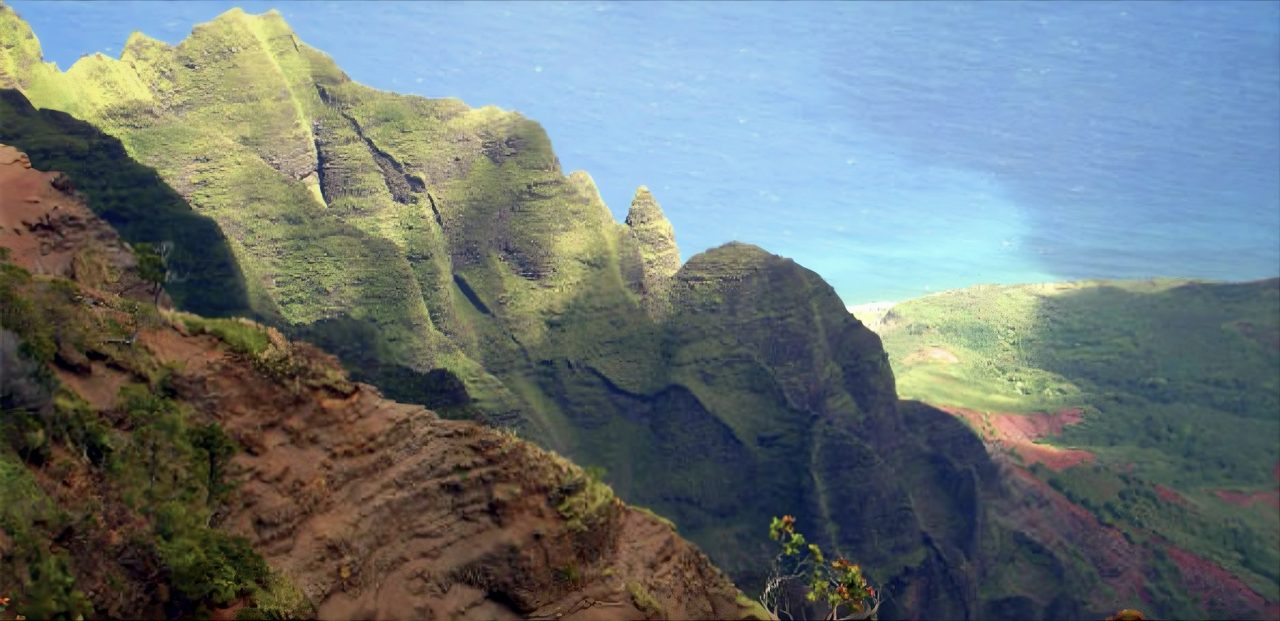
Two days after a California visitor died on the Kalalau Trail, Hawaii invited the public to weigh in on its first hiking trail plan update in 35 years. The plan does not address what killed him. But it does hold up that very park as the success model at the trail’s gateway.
The 37-year-old California visitor had been found unconscious near Crawler’s Ledge on Tuesday afternoon and died at Kauai’s Mahelona Hospital before the state’s notice ever went out late Thursday. The draft Na Ala Hele Program Plan, released by Hawaii’s DLNR, runs 119 pages and is intended to guide every public trail and access point in the state going forward, including the one where he died.
The release describes the updated plan as a reflection of current trail needs, desires, and best management practices, and it frames Na Ala Hele as providing important recreational and cultural opportunities. The public comment window runs through July 31, 2026. What isn’t mentioned is Tuesday’s death, rescues, fatalities, or safety. What it also does not do is link directly to the draft plan it is asking the public to read.
The plan points to Haena State Park as its success story. Haena is the gateway to Kalalau and the Na Pali Coast State Wilderness Park. Tuesday happened well past that gateway, on the part of the trail the state has never been able to fix.
Hawaii has spent years trying to solve the Haena problem. Parking reservations, shuttle access, camping permits, signage, stewardship, and visitor controls changed what happens before people start the trail. But it’s the Kalalau trail that keeps asking a harder question: what happens after hikers pass the gate?
What we know about Tuesday afternoon at Crawler’s Ledge.
According to Kauai authorities, the 37-year-old California visitor was found unconscious near Crawler’s Ledge at approximately 4 p.m. Tuesday. Bystanders began CPR before Kauai Fire Department personnel and Air 1 responded to the scene. The hiker was airlifted out and transported to the hospital, where he was pronounced dead. Authorities said foul play is not suspected, and autopsy results are pending.
Those are the only confirmed facts so far, and they do not match the usual Kalalau story. Most Kalalau fatalities have been falls. Officials have not publicly described a fall or cliff accident this time. That does not mean one did not occur, but the known facts may point toward a broader question about distance, heat, exhaustion, and rescue limits on the trail.
Kalalau has been a warning for years.
For many visitors, Kalalau still lives in the imagination as one of the most beautiful hikes on earth. It is the crown jewel of Kauai, a bucket-list trek along the Na Pali Coast, and a place travelers plan around long before they get on a plane.
It is also one of Hawaii’s most persistent rescue and fatality zones. Matthew Wu died after a fall on the Hanakapiai Falls trail, which witnesses described in horrifying detail. Zachary Rose died after falling near Mile Marker 7. Daniel Foster died following a fall into Kalalau Valley near the end of the 11-mile trail. In 2013, Norka Villacorta drowned at Hanakapiai during a flash flood event that stranded 121 hikers over two days.
Other deaths do not fit the public image as cleanly. A 61-year-old German visitor died near Mile Marker 8 after collapsing on the trail. Heat, conditioning, dehydration, and underlying medical issues have surfaced repeatedly in rescue reports on Kalalau, especially during the heat of summer and crowded hiking periods.
Hawaii’s access controls were aimed mostly at crowding, overuse, illegal parking, unmanaged camping, and inexperienced visitors entering dangerous terrain. The rescue history points to something much broader: people fall or get injured, get swept away, collapse, and get stranded.
Kauai’s rescue system is out of room.
Kauai has one primary rescue helicopter serving a wide range of emergencies. Air 1 handles ocean rescues, medical evacuations, cliff incidents, missing hikers, and other emergencies across the island. When it is already committed elsewhere, Kalalau does not have a second helicopter waiting.
Earlier this year, a 51-year-old German hiker at Kalalau Beach waited roughly six hours for help because Air 1 was responding to another emergency. That case involved minor stomach issues, which is part of why it drew attention here. A non-catastrophic call still tied up the same system everyone else depends on when the next emergency comes in.
Many Kalalau rescues are not dramatic cliff falls. Officials have described exhausted hikers, heat-related distress, dehydration, panic, and rescued individuals who later refused medical treatment following complicated and resource-intensive extraction. Those cases consume time, people, equipment, and flight capacity. That’s why Kalalau looks less like a series of isolated bad incidents and more like an overload on Kauai’s emergency system.
What Hawaii has already tried.
Hawaii has spent years tightening access around Haena. That has either been successful or not, depending on the point of view. Parking reservations changed how visitors reach the trailhead. Shuttle systems reduced roadside congestion and illegal parking. Camping permits beyond Hanakapiai became mandatory. DLNR expanded signage, warnings, and visitor education efforts.
The new Na Ala Hele draft plan points directly at Haena as its model. In it, the state describes the Haena system as an example of how reservations, parking management, community engagement, and on-site stewardship can restore environmental conditions, improve safety, and enhance visitor experience while maintaining access.
That’s the state’s own description of what worked at entry to Kalalau. What happened Tuesday was beyond it, on the trail that starts there and then becomes something else entirely.
DLNR posted the public-comment notice two days after the Kalalau death. The release invites community input on the first hiking trail plan update in decades, but it does not mention the death, rescues, fatalities, or safety. It also does not link directly to the draft plan; instead, it sends readers to the Na Ala Hele website, where the document feels buried.
Medical questions change the policy answer.
The draft is built around the trailhead, while reservations cap who can reach it and if they can park. Shuttles move those who arrive without a parking reservation. Permits track who passes beyond Hanakapiai. All of those tools together help manage the front of the trail.
But Tuesday happened six miles in. So did the death near Mile Marker 8. So have the heat-illness rescues, the exhaustion calls, the conditioning failures that have surfaced repeatedly in rescue reports. None of them happened at the beginning of the trail. None of them would have been prevented by the tools the plan currently emphasizes. The harder questions are about who is capable of finishing the hike.
A plan from before the world changed Kalalau into what it now is.
The plan being updated now was written when Instagram and cell phones did not exist. The Haena State Park reservation system, which launched in 2019 and which the new draft holds up as the success model, did not exist either. Hawaii saw millions fewer visitors in 1991. The trail Hawaii is writing rules for today is a different trail, attracting different visitors, in a different information environment, placing a load on our small island rescue system nobody ever projected.
The stricter hiking plans Hawaii just put in writing.
The draft plan lays out the state’s visitor-use management tools. Those include reservation or permit systems to regulate daily or hourly use, timed entry, visiting hours, rest days, periodic closures, resident-priority parking, parking limits tied to daily use, commercial-use controls, education and stewardship presence, trail hardening, reroutes, and infrastructure improvements.
That list tells visitors where Hawaii is headed. It can manage crowding, parking pressure, resource damage, commercial use, cultural impacts, and overuse near access points. It is the familiar Haena toolkit applied statewide, and at Haena, much of it worked.
What is missing from the list is the harder part of the problem. There are no mandatory full-trail permits for hikers continuing past day-use boundaries on any state trail. There are no required satellite emergency devices, no check-in and check-out systems, no conditioning standards or experience thresholds, even though the draft separately says trailhead sign-in and sign-out sheets can help when search and rescue becomes necessary. There are no section-specific restrictions for known high-risk segments like Crawler’s Ledge or the comparable spots on other islands. The state doesn’t yet carry the sign-in and sign-out into the visitor-management tools, where it could become a real requirement.
What Hawaii visitors are asking.
Every visitor planning Kalalau today is running new calculations, from pushing ahead as planned to scaling back to Hanakapiai or skipping the trail entirely, especially for those traveling with older family members, less experienced hikers, or anyone who has not tested themselves on long, exposed, and dangerous trails in the heat.
That is, in fact, the decision-making Kalalau should help to force more often. The trail remains spectacular, but the online version often strips away the conditions, hazards, exposure, and the reality that help is not nearby.
The state has been able to treat most Kalalau deaths as separate events, divided by cause, location, or circumstance. When you put them next to the rescues, helicopter limits, and repeated warnings, Kalalau is no longer a trail with occasional trouble.
Where this goes from here.
The plan being written now will govern Hawaii’s trails for the decades ahead. The question is not what Hawaii will eventually do about Kalalau. The state has had thirty-five years to answer that question and has produced a draft that only points at Haena. The question is what the public says back during the next ten weeks, because that is the only window readers have before the plan becomes perhaps the next thirty-five years of how Hawaii manages this iconic trail.
Public comment on the Na Ala Hele Program Plan is open through July 31, 2026. The draft plan and the public comment information are on the Na Ala Hele website, though you may have to scroll to find them: https://dlnr.hawaii.gov/recreation/nah/na-ala-hele-program-plan/.
Comments can be sent directly to [email protected], the email address listed by the state’s planning consultant. Mandatory communicators, conditioning requirements, section-specific closures, and sign-in or sign-out enforcement are not part of the current proposal. The window to ask for them is open.
Tell us in the comments what you think Hawaii’s hiking trail plan should include before it becomes final.
Photo Credit: © Beat of Hawaii.
Get Breaking Hawaii Travel News

Wife and I hiked the short trail last year and the weather was perfect. This year my wife and son were on trail for the rain on June 18 and both were stunned with the amount of rain and difficult stream crossings. They saw young kids and older people struggle in these areas. We are from the SW and last year we didn’t consider it overly technical, but this year was a shock.
We do hope that changes are made. The trail and hike are beautiful and worth the effort on the good days, but frightening on the bad days.
I went to Kalalau three times in the 1979 to 81. The last time I went with a couple. It was raining. We had to camp that night. We almost got swept away from the river! And this when we were going back. So the problems are there! I was young and healthy. But I didn’t know what I was getting into. I had a friend who came before me and we went back to Kalalau.
First off the ones requiring rescue should pay unless it was an unavoidable accident. The there should be a sign that tells anyone over a certain age or who are not serious hikers that it is extremely dangerous and that they will pay costs if they need rescue. It is time to make the entitled pay.
Aloha – we got married in ’84 at Coco Palms – back many times & other beautiful islands with our keikis now in their 30s. Fun times pics, memories. Hardly thought of Na Pali Coast hikes(HAena) due to difficulty & rumors & warnings. Did love boat tour of Coast! Hiking then seem formidable but beautiful with serious danger warnings. Hikers sh be accountable for being prepared to hike & aware they are partly responsible (except for accidents) for associated costs of rescue or attempted rescue(if not already). Maybe tours would cut down accidents And rescue attempts. Breakup tours into segments. Good Luck – Mahalo..
I think for a bare minimum, check-in/out should be required. Would the cost of a staff person at the TH be less than what’s spent on SAR? (Not that you’ll never need SAR).
Living in the SW desert, we regularly see SAR rescue hikers who make bad choices, whether it’s their confidence (or lack thereof) in their abilities, disregarding the weather and going into slot canyons anyway when there’s storms up canyon, or being generally stupid on a trail (see Angel’s Landing in Zion for examples of that – and they’ve gone to a reservation system for hikers there.)
It’s a tough choice for the state/park system – become a “nanny” to ensure safety or just let people make dumb choices. The Wave is pretty remote from any close town, but they have volunteers who patrol the trail (3 miles each way, and it gets HOT) for both permits and hikers who didn’t bring enough water. That might not be feasible here, but it’s an idea.
I found it strange too that the state’s release never mentioned safety or rescues considering what had just happened just a few days earlier. There’s some disconnect.
My wife turned around halfway to Hanakapiai because the trail scared her. The online videos did not prepare us for it. I suspect a lot of other visitors decide not to finish once they actually experience it in person.
We came from Germany specifically to hike Kalalau and honestly we’re shocked by how physical it was compared with how people describe it online. The photos flattened everything.
I’m in my late 60s and there’s no way I would attempt the full length of the trail now even though I hike regularly at home. We did have a great but muddy time!
Why does the county respond with the helicopter for non-life-threatening medical conditions? Someone can hike out with a stomach ache. Also maybe they should respond with a boat for some of these… cheaper.
I do agree that they should not need to respond to minor problems like stomach ache but the problem for SAR is that they do not know how severe it is until they get there. The only information hey may have is from someone with the victim saying that the victim is injured and can’t move ( or even being more dramatic and saying they are dying) so they need to get there as fast as they can. Maybe people just need to take more responsibility for themselves and say “I need to go back” instead of thinking that it is going to be like a Disneyland type of adventure.
Thank you very much for the needed essay on the Kalalau Trail. The elephant in the room (or really the whale in the swimming pool) is the water deaths. Kalalau Trail (KT) was listed in Backpacker Magazine as the #1 trail in Hawaii (#2 was 4 days in Haleakala Crater and #3 was Mauna Loa Summit from the strip road.) Years later Backpacker Magazine delisted the trail as being too dangerous. The two river crossings should have been bridged 126 years ago. Visit New Zealand to see trail bridges. What should be done now? I suggest:1. $100 for overnight use for All persons for up to 4 days; $50 for All persons for day use. This probably means a 24 hour watchman at the beginning. 2. Bridging the two rivers. 3. A 10 minute film for all users available online. 4. Bringing the trail up to international standards. 5. Eventually, long term, life guard at Hanakapiai. Is the list of deaths at the beach still there? I believe it was very thoughtful.
Dave Brown
Kalalau may be reaching the point where Hawaii has to decide whether unlimited access can still make sense or not. Too many rescues, injuries and death.
I agree with the state that social media changed this trail more than anything else. And other Hawaii trails as well. Too many people show up with a bucket-list Instagram energy instead of respect for what hiking actually is.
I went looking for the actual draft plan after reading this and it’s surprisingly buried for something so important that the public is supposedly being asked to comment on. Shouldn’t it be front and center?
Crawler’s Ledge is one of the most scary places, but honestly the heat and exhaustion surprised me the most. The return hike is way harder than people expect when they start.
I completely agree, I have backpacked the Kalalau trail twice and each time the return hike was harder than hiking in.
I’ve hiked Kalalau many times over the years and the people on that trail today feel completely different from what we saw even 10 years ago. Way more social-media hikers, way less preparation. Bad combination.
Yes Haena solved the parking disaster, the illegal roadside camping, the clogged roads. Once you get six miles in, however, none of that matters anymore.
It’s a wonderful thing that the hiking plan is being updated.
It seems really wise to have a check-in and check out system, probably online but reception? Maybe at the front gate? There should also be ratings, maybe 1 to 5 or 1 to 10 about your current physical condition.
Most people who are good hikers can go to the first valley, which is a short hike… but really only experienced hikers, people who are young enough, in shape enough and have been prepared for the journey should be going into Kalalau.
One more thought… Is everybody who hikes in pays a fee in a certain percentage of that fee goes towards a rescue fund. The State and the Hawaii taxpayers should not have to pay for all these helicopter rescues. This should get paid for by the hikers in a fund.
I shouldn’t wonder if many local people regard tourists’ problems on the Kalalau Trail as something that’s on them, even if they necessitate a relatively large expenditure of county assets. It’s an interesting contrast between individual and gov’t responsibility.
I can’t see making the tourists pass a PT test. Maybe the hiking permits should require a rescue fee or posting a rescue bond substantial enough to give pause to the dilettantes.
I would be interested in knowing how much of the taxes that visitors pay go to the rescue fund.
Another consideration is that even though rescue is expensive, Hawaii and locals would likely not have the rescue equipment and funds that are largely supported by visitors and benefit locals as well.