Today is Statehood Day in Hawaii, 67 years since Hawaii became the 50th state on August 21, 1959. It is also being promoted as Hawaiian Shirt Day, observed on the third Friday of August. We tried to find out how Hawaiian Shirt Day came to be but couldn’t find a credible historical trail.
Statehood Day itself has long been complicated in Hawaii, where statehood, annexation, and the overthrow of the Hawaiian Kingdom remain sensitive subjects. We’re not trying to resolve any of that here. As Hawaii moved into statehood and modern jet travel opened the islands to the world, the aloha shirt was already taking on two very different personalities.
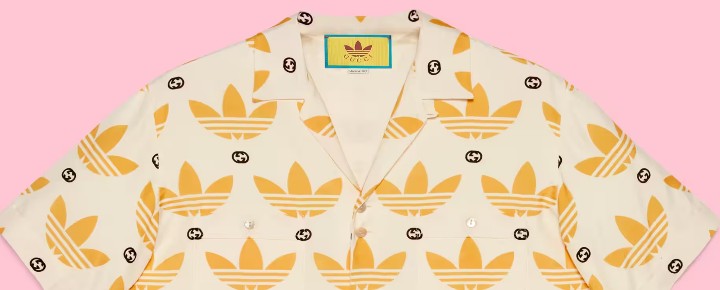
Here it’s an aloha shirt.
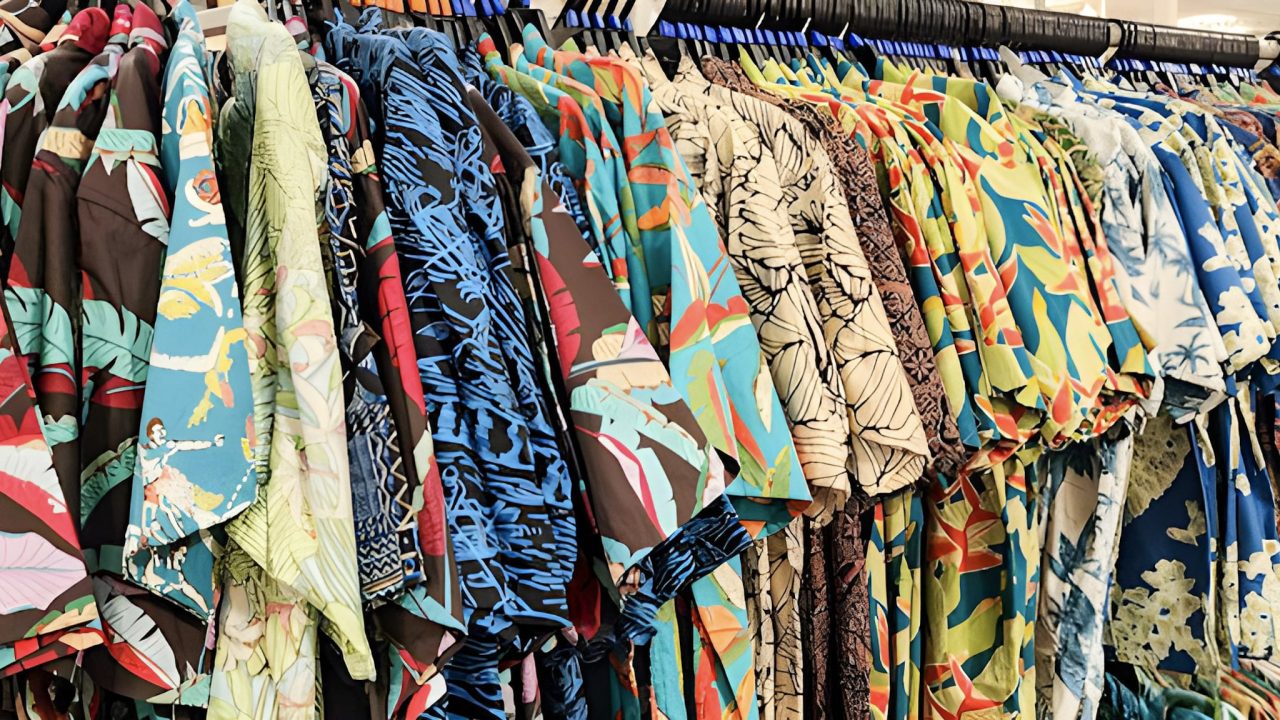
Calling it a Hawaiian shirt isn’t strictly wrong, and visitors certainly won’t get chastised for saying that. But aloha shirt is the name you’re far more likely to hear in the islands, where the clothing has never been limited to vacations or tropical-themed parties by any measure.
We’ve both worn aloha shirts for much of our lives. Jeff has worn them as regular business attire throughout his career, while Rob has also collected them for decades. That’s completely unremarkable here, where an aloha shirt can show up at an in-person business meeting, restaurant, wedding, government office, or almost anywhere else a collared shirt would be appropriate. On Zoom too.
That makes the internet observance calling it Hawaiian Shirt Day sound a little odd if you live in Hawaii. On the mainland, putting one on for a special Friday can seem like an event. Here, plenty of people will put one on today because it’s Friday, because they’re going to work, or simply because that’s what they normally wear.
Nobody really invented it.
When we wrote about aloha shirts after 100 years, we told the familiar story of Japanese kimono fabric being adapted for use in men’s shirts. That’s part of the history, but subsequent research convinced us that the origin is actually more nuanced.
University of Hawaii fashion historian Linda Arthur traced shirts made from imported Japanese kimono silk and kabe crepe to the 1920s. Shirtmaker Musa-Shiya used the words “aloha shirts” in a 1935 advertisement, while Ellery Chun, whose family ran King-Smith Clothiers in Waikiki, helped commercialize ready-made versions and later even trademarked the term.
Aloha shirt historian Dale Hope documented other competing accounts of people making and selling similar designs in those early years. Japanese fabric and tailoring were one part of the mix, but so were Chinese, Filipino, Hawaiian, and Western influences. Even something as familiar as wearing the shirt untucked has been linked by Hawaii fashion scholars back to Filipino clothing traditions.
Instead of having just one inventor, aloha shirts evolved as a garment shaped by Hawaii. Different immigrant cultures, local customs, imported materials, and varying ideas were coming together here long before anyone could have imagined the aloha shirt becoming a global symbol.
America wanted this piece of Hawaii long before statehood.
The aloha shirt was already traveling the Pacific decades before Hawaii ever became a state. A fascinating Smithsonian Magazine history of the Hawaiian shirt found that it reached mainland stores as early as the 1930s, when most Americans were only dreaming about travel to Hawaii. By 1940, aloha shirts were selling at the equivalent of more than $11 million in 2020 dollars.
During the Depression, Hawaii represented an escape, and Smithsonian found that wealthy visitors and celebrities further helped to sell that image. Duke Kahanamoku and Bing Crosby lent their names to shirts, allowing someone on the mainland to buy for about a dollar then, something associated with people who could actually afford a Hawaii vacation.
World War II saw major design changes as Japanese imagery temporarily receded, while returning military personnel helped spread the shirts even further than before. Long before today’s mass tourism made Hawaii accessible, people still wanted to wear a version of the place they aspired to visit, Hawaii.
Statehood arrived just as Hawaii went everywhere.
Then several important things happened at once. First, Hawaii became a state; then Pan Am began Boeing 707 jet service to Honolulu that same year. Suddenly, far more Americans imagined Hawaii as somewhere they could actually visit. We looked at that extraordinary period in how America’s obsession with Hawaii accelerated after statehood.
The shirt went right along with Hawaii aspirational travel. Elvis Presley wore an Alfred Shaheen aloha shirt in “Blue Hawaii” in 1961, as Hawaii imagery spread through movies, TV, restaurants, advertising, and fashion. Smithsonian says that by the 1960s the shirt had become ubiquitous, worn by everyone from Elvis to Richard Nixon.
Its mainland identity kept evolving too. Bright flowers, palm trees, hula dancers, surfers, and tropical scenes could represent a vacation without the wearer having to travel at all, and eventually the “Hawaiian shirt” could be anything from high-end fashion to suburban wear. Smithsonian describes its journey from desirable escape to kitsch and eventually back to high fashion.
Hawaii took the aloha shirt in another direction.
While that was happening elsewhere, Hawaii was making the aloha shirt more acceptable for everyday and professional wear. University of Hawaii fashion history says that by 1960 a state proclamation allowed a plain version in the workplace, followed later by more subdued reverse-print fabrics.
Then the Hawaiian Fashion Guild pushed the idea further. A campaign aimed at freeing workers from mainland-style business clothes included giving shirts to Hawaii legislators and securing support from business leaders. The Aloha Friday tradition followed.
Some of the aloha shirts worn for business in Hawaii today don’t look much like the stereotypical “Hawaiian shirt” at all. Reverse prints, muted colors, and designs that reveal themselves only when you look closely can be about as far from loud vacation wear as you can get.
What you’re buying in Hawaii isn’t frequently made here.
Aloha shirts remain one of Hawaii’s most recognizable things to bring home, although we’ve already covered the enormous range from thrift-store finds to longtime local labels and luxury fashion in our earlier guide to aloha shirts in Hawaii.
“Made in Hawaii” has a specific meaning. A product using that claim generally must be manufactured, assembled, fabricated, or produced here, with at least 51 percent of its wholesale value added in Hawaii. A shirt can have a Hawaii brand, be designed here, or be covered in Hawaii imagery without necessarily being made here at all.
Whether that influences what visitors buy is up to them, but it’s helpful to know what the label actually means. Nearly a century after mainland Americans first discovered they could buy a small piece of Hawaii without ever coming here, the aloha shirt is still doing what it did then: carrying an idea of Hawaii and aloha far beyond the islands.
Photo Credit: © Beat of Hawaii.
By Rob and Jeff, Beat of Hawaii.
Some of the most meaningful parts of Hawaii are the ones visitors walk right past without knowing they are there. We’ve spent nearly 20 years finding them firsthand for BOH as full-time Hawaii residents reporting on travel, culture, and island life, and telling you what they mean for your trip. Join us →
Get Breaking Hawaii Travel News