
Kauai’s only rescue helicopter flew into Kalalau twice in two days. Thursday, a 46-year-old from California. Friday, a 63-year-old from New York. Same trail. Same helicopter. Two days apart during a very busy spring break period.
The Friday rescue is the one that stays with us. A 63-year-old visitor from New York went in, got hurt, and came out by helicopter. That happened the same week Google was coincidentally serving up an AI answer telling people in their 60s that Kalalau is “absolutely doable.” So what gives?
Two rescues, two days, one helicopter.
On Thursday, Kauai Fire Department crews rescued a 46-year-old male visitor from California from the Kalalau Trail after an apparent ankle injury. Rescue 3 aboard Air 1 responded shortly before 12:30 p.m., reached the Hanakapiai Falls landing zone, medically assessed him, loaded him into the helicopter, and flew him to Princeville Airport. He was then transferred to American Medical Response and taken to the hospital. The scene was cleared shortly before 3:05 p.m.
On Friday, the same rescue system was back on the same trail, attending to another Kauai visitor. This time, it was a 63-year-old female from New York with an apparent wrist injury. Rescue 3 aboard Air 1 responded shortly after 3:40 p.m., reached the Hanakapiai Beach landing zone, medically assessed her, loaded her into the helicopter, and flew her to Princeville Airport. She was transferred to AMR and then to the same hospital on Kauai. The scene was cleared shortly before 5:20 p.m.
Same trail. Same helicopter. Same airport handoff. One island. One rescue helicopter. One extremely limited medical system.
What Google told her before she got to Kauai.
This week, someone searching whether Kalalau is realistic at age 63 got an AI Overview describing the 11-mile trail as “epic,” “life-altering,” and “treacherous,” but also “absolutely doable” with enough preparation. It highlighted leg strength, aerobic conditioning, trekking poles, a light pack, and examples from hikers in their 60s and early 70s who called it magical, unforgettable, and the hardest hike they had ever done.
It also accurately described the trail. Muddy. Narrow. At times, just a foot wide beside drop-offs. Roughly 5,000 feet of total elevation change (albeit not accurate). Crawler’s Ledge intimidating but manageable in dry conditions. Split it over two days. Bring poles. Keep the pack light. Plenty of people in their 60s do make it and come back, calling it one of the best days of their lives.
But the same week that those words were leading online search results, Air 1 flew two rescues into the same trail in under 24 hours, including one for a 63-year-old visitor, exactly the type of person mentioned by Google.
The numbers behind the dream.
By last December, Kalalau had logged 71 rescues in 2025 with helicopter costs on track to far exceed $250,000, and the record only gets worse as the months go by.
In late January, a 51-year-old German visitor at Kalalau Beach called for help over minor stomach issues. Air 1 did not get there for six hours because it was already committed to a missing-person search for a 19-year-old local fisherman near Kahili Beach. After finally being flown out, the visitor refused medical care anyway.
Before that, a 40-year-old Oahu woman with a pre-existing ankle injury entered the trail despite her problems, texted 911 from the trail, was found walking without assistance near Red Hill landing zone, was flown to Princeville, and then refused any further treatment there too. Reader comments on that one hit a nerve because they captured what many residents were already thinking. One wrote that it was “probably not a trail you should attempt if you have a preexisting injury.” Another said, “It isn’t just their life on the line, it’s the lives of first responders too.”
Then there are the people who are not reckless or careless and still get trapped. Last spring, about 50 hikers were stranded overnight after Hanakapiai Stream flooded. A flood advisory had been issued, but once hikers were far enough in, their phones could no longer help them. One stranded hiker later wrote that they had only stopped for a quick snack above Hanakapiai Beach when the flash flood hit, cutting them off from returning.
In June, three more hikers were airlifted from Kalalau, two for leg injuries and one for severe fatigue, in clear weather. In July, heat illness began triggering more rescues, including a Wisconsin visitor who collapsed from heat stroke barely 1.5 miles in. In September, a 59-year-old Texas woman was airlifted out simply because she was too tired to climb back, not injured, just done.
What the photos never reveal.
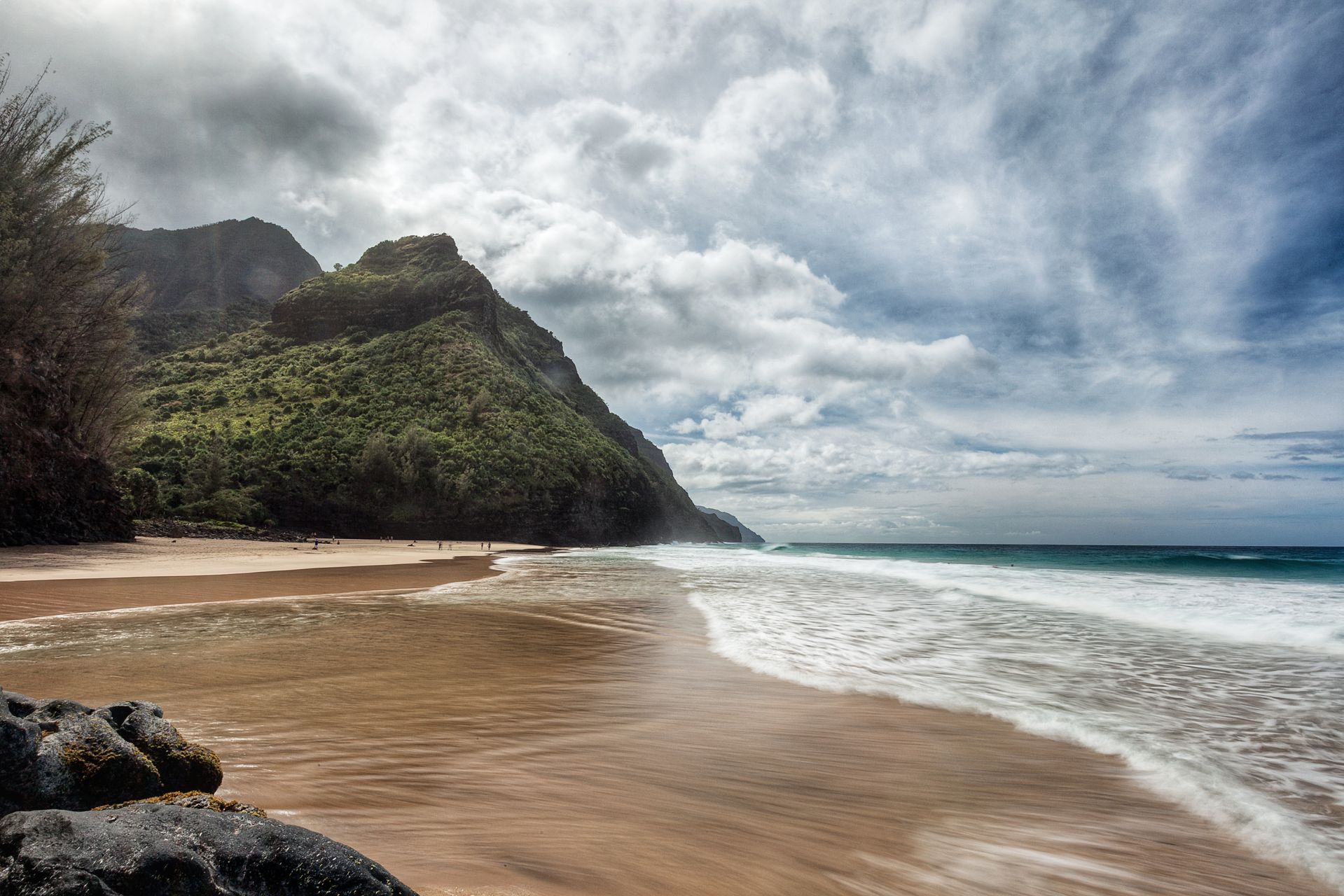
Part of what makes Kalalau so deceptive is how normal it feels at the start. The trail begins near Ke’e Beach, and no permit is required to reach Hanakapiai Beach.
That visual lie has always been part of Kalalau, and in our look at how it compares with some of the world’s challenging hikes, we noted how often people arrive in shorts, sneakers, and sometimes even slippers, treating the start of the trail like beach access instead of a very serious wilderness route.
One hiker told us, “We thought we were just going to the beach in sneakers. That red Kauai mud felt like ice, and I nearly slid off the edge more than once.” Another said, “Don’t be fooled by the views. This trail will kill you if you stop paying attention.”
We have personally hiked to Hanakapiai Beach for decades. We know how quickly the footing changes, how that red dirt turns into what locals call Hawaiian ice, how a section that seems manageable on the way in can feel entirely different once your legs are tired and you’re coming back out and nearing a panic. Some stretches narrow down to a balance-beam width with nothing forgiving below if you continue beyond Hanakapiai. Light rain is enough to loosen the surface even more. Heat from the Kauai sun sneaks up faster than visitors expect, and Hanakapiai Stream is not just a scenic crossing.
People have died here. A 30-year-old New York visitor, Matthew Wu, fell to his death at Hanakapiai Falls. Others have fallen deeper in the corridor or collapsed along the way. Visitors have drowned crossing Hanakapiai Stream after rain. Jeff has personally watched a visitor drown after a hike at Hanakapiai Beach. Last summer was the first time he stayed completely off this trail because it was simply too hot to justify.
What Kauai is running out of.
Kauai has Bill 2910 on the books, allowing the county to recover rescue costs when someone acts with intentional disregard for safety. It has barely been used, if at all. The county does not want people to hesitate to call when they truly need help, and that position is understandable.
What is harder to wave away is how often the island’s only rescue helicopter gets pulled into calls that do not look anything like a true life-or-death emergency. Some BOH readers have taken to calling it an “Air Uber.”
Fire Chief Michael Gibson said it directly after the January backlog: “When Air 1 is used for situations that do not involve a medical emergency or imminent danger, it can delay our response to life-threatening incidents elsewhere on the island.” When Air 1 is busy on something avoidable, something else on Kauai is not being cared for.
What to know if you’re still going to hike Kalalau.
If you are still planning to hike Kalalau, you’ll need camping permits beyond Hanakapiai Valley, which include entry to Haena State Park, and can be made up to 90 days in advance. If you are a day hiker, you’ll need reservations to visit the state park. Those can be made 30 days in advance at GoHaena.
The question most hikers ask is whether they can make it in. The one worth asking is whether they can make it back out after the heat, the climbs, the stream crossings, the mud, and the fatigue have all had their turn.
Check the weather before you leave Ke’e, not just the sky over the trailhead. Seriously consider hiking poles. Assume cell service will fade. Do not confuse Hanakapiai with the full Kalalau Trail, and do not confuse good vacation shape with trail readiness. If you are over 50 or 60, be more honest with yourself about your limits rather than what the success stories encourage you to be.
Kalalau is still one of the most beautiful hikes on earth. It is also one of the easiest places in Hawaii to mistake beauty for permission.
Have you hiked any part of the Kalalau Trail, or does the rescue record change how you’re thinking about it?
Get Breaking Hawaii Travel News


Visitors need to be extremely mindful of this trail. It is disrespectful to assume you will be rescued when you are not ready to hike this trail. Be prepared.
Another Kona low heading to Hawaii this week- Kauai expected to suffer the worst flooding!
Close the trail to tourists, allow Hawaii residents only: the problem of out-of-state rescue costs will be solved.
The Kalalau Trail was rated the #1 trail in Hawaii by “Backpacker Magazine” a few years ago. It was taken off the list a short time later as being “too dangerous”. Although I live on Maui, I have hiked it 4 times. I have mountain climbed on all continents except Antarctica, but the Kalalau Trail was the most dangerous time I have ever had. (That is another story). The trail has two river crossings that should have been bridged in 1900 (New Zealand would have). I would suggest a $100.00 bond for each hiker to get a permit. State sponsored insurance would better but would never happen.
Been traveling to Hawaii for over 60 years. Have never hiked the Kalalau Trail, and never will. Even when I was in my twenties it was off limits, as I wasn’t trained or athletic enough to even give it a thought. I’ve seen the Na Pali Coast many times from boat trips, helicopter rides and air tours. For 90% of the people, that’s the only thing they should consider. To even think about attempting the trail if you’re over 40 or 50 is ridiculous. This Trail is dangerous and not for amateurs! See the beautiful Na Pali Coast by air or sea, and if you’re not an experienced Olympic athlete, forget about hiking it!!!!!!
11 miles you say. I just walk 11 steps to get another Maui Blonde out of the frig. I’m bushed. Might need the wife to grab the next one for me.
Aloha!
I’ve lived here since Fall 2001 and was in my mid 50s. I’d had issues w/my R knee for years and in 2006 had a knee replacement. Well before that I realized it would be a risk for me to try to hike Kalalau. I knew it was beautiful, but didn’t want to put myself or others at risk.
for those who refused medical care, or were simply to tired to get out on their own, they should absolutely be charged for the cost of their “rescue”.
I wish I could have hiked Kalalau but there are many things in life we can’t experience. It’s important to focus on nature’s work that we can do.
It’s way past time for the County or State to institute a mandatory waiver and insurance requirement for anyone tackling that trail. “Air Uber” has to end. If enforced the air lifts, injuries and deaths would drop.
This could generate a nice revenue for the island. First, make permits mandatory. Second, buy the insurance right on the spot also mandatory. One office, one or two clerks, mucho dollares.
My wife and I hiked to the Beach and then the Waterfall about 15 years ago
We are now 72. We had hiking shoes, food, and lots of water. I also had Trek Sticks. We spend about 30 to 45 minutes at the Beach. Then we headed for the Waterfall. We went slow. We came on a young couple that had no supplies and were not dressed for the hike. We showed them how to use the juice from the Ginger Flower as Sunscreen and bug repellant. Luckily they gave up and turned around. We were passed by a group of about 5 young men in their young 20’s. At the next water crossing we caught up with them. They tried jumping from rock to rock. One slipped and injured his knee. It was very bloody and had skin torn off. They headed back helping their friend. We would just walk carefully through the stream. We got to the Waterfall. I swam in the Pool. We ate lunch, rested, and then headed back. Round Trip from the Parking Lot to the Waterfall was about 8 miles and 8 hours.
What I have seen are completely different ranking systems for hikes in Hawaii vs. the mainland. A moderate hike in Hawaii is what would be considered a difficult trail on the mainland.
Much of that comes from trail maintenance. the bulk of hikes on the mainland are on US government land; forest service, BLM and national parks. They do better trail planning and trail maintenance. If there is mud, they bring in gravel. If the tread of the trail becomes eroded or sloped, they’ll re-level, add water bars, and address the mud. That’s not my experience in Hawaii. Trails are far steeper, have more mud, side sloped track, and little concern for places where a single slip can send you off a drop off that can kill.
Maybe they can use some of those “Green Fees” for these rescues since the tourists pay anyway!
I have done the hike to the falls many times, and the longer trail to the Kalalau beach once. But that was many years ago. Before there were cell phones and rescue helicopters. Both hikes were beautiful and both hikes seemed potentially risky. I suspect that the trails are much more dangerous now than they were back in the day, due to overuse and more violent weather. It sounds like they should be issuing hiking permits and using the revenue to fund safety and maintenance operations.
Just a thought…a Permit and Doctor’s note for any non-Hawaiian resident stating you are in prime shape for this trek. And, a fee to the helicopter company prior to rescue that is non refundable.
In Mexico if you are hurt and taken to a hospital you are basically held hostage until you give your payment in full. The police are called if you try to leave without payment.
Why is Hawaii & the cimpany responsible for situations like this? Who is risking their lives?
If your idea of a long hike is walking to the mail box at the end of the driveway, or you haven’t at least semi regularly hiked 2-3 miles with some hills thrown in, then this is not a hike for you. That said, yes it is doable in your 50’s, 60’s, or even in my case, 70’s, but you do need to be self aware and honest with yourself before trying it.
Yep, you nailed it. I have backpacked this trail twice, Kalalau trail to Kalalau beach is dangerous at any age if you aren’t prepared for it.
I would actually argure that people should really think twice about this trail if they have never hiked narrow mountain trails with exposure and at least 1000′ feet of elevation gain/loss. There is a reason that it has been ranked as one of the most dangerous trails in the world.
Regarding rescue services… the county really should consider charging if it is obvious that there was not a need for rescue, however, charging for rescue should not be a default approach to rescues. I have a feeling visitor tax dollars more than cover the cost of rescue operations.
This needs to be said: these people (especially in your prior coverage) are stupid. Bill every single one for helicopter and staff time, helicopter maintenance, and the Jet-A fuel used in the rescue. If they refuse to pay, sue them, seize their property.
Hawaii DNLR has videos, easily accessible, specifically warn about Kalalau risks. Been out for a decade. Similarly, civilian videos, scores of them, show exactly what you’re getting yourself into. And provide multiple warnings.
We regularly hike six and seven miles in urban areas; we know what 11 miles on the coast means. If you cannot comfortably hike seven or eight miles on pavement, you have no business event attempting this Trail.
Several years ago I did 6+ miles in and 6+ miles back in one day with 3 teenage sons. I tell people that I’m sure it is beautiful but I only remember looking down at my feet most of the way. Truly terrifying in spots. I have never been so tired in my life. By the way, what’s the deal with totally naked hikers? Met 2 of them along the way.
.
I think people who have tried this trail and then found it intimidating halfway through should absolutely have to pay to be “rescued.” If they refuse medical treatment, they pay. If they are obviously in over their heads, they pay. New subject: I’m 76 years old and use a walker. Is the trail wide enough for my walker? Just kidding!
As Forest Gump famously said in his best Hawaiian “Naʻaupō ka mea hana naʻaupō.”