
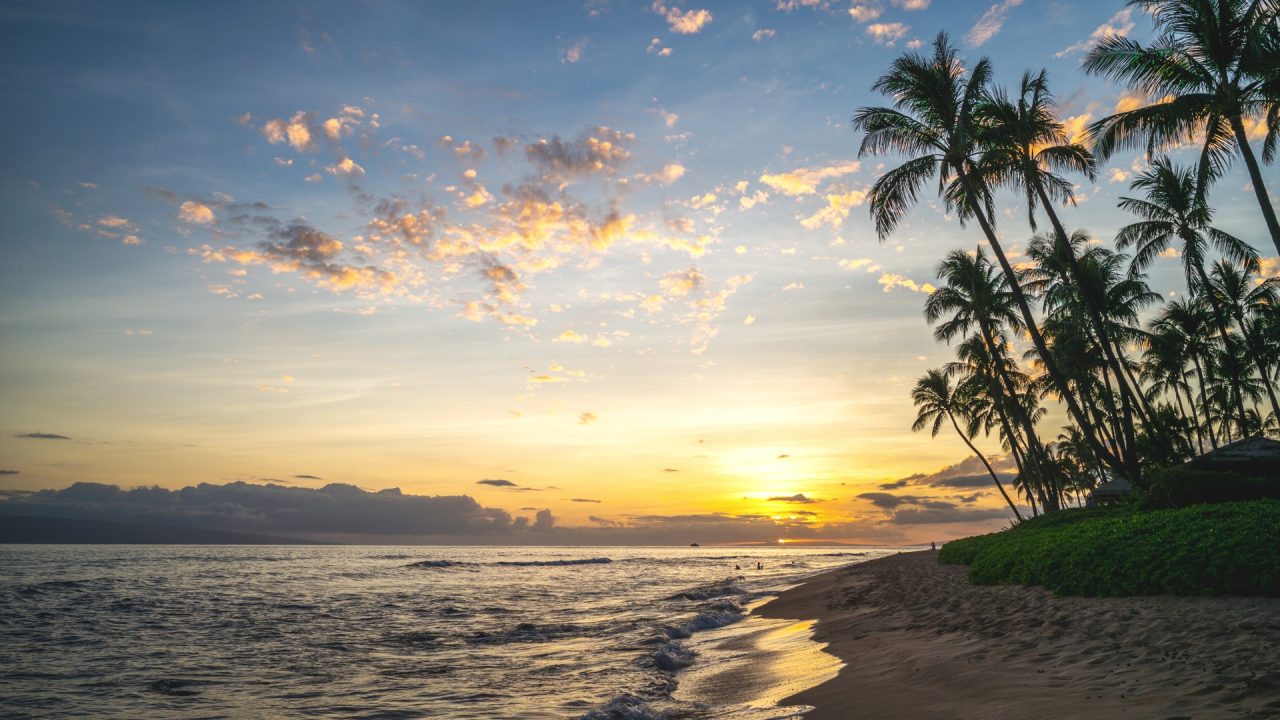
A Beat of Hawaii reader just back from Maui asked us the question that visitors have been asking aloud for the past few years. “What is happening to the beach at Kaanapali, and why hasn’t someone built a seawall to stop it?” The Pacific Ocean, he noted, is now lapping at the doorstep.
He is not the only one wondering. The March 2026 Kona storm undermined the beachwalk fronting the Hyatt Regency Maui, and the resort applied for an emergency permit to install a 360-foot protection barrier along the eroded shoreline. Community pushback paused the work in mid-April while state officials reviewed. A separate barrier the Hyatt installed just to the north in 2015 was originally approved for 180 days. State officials have granted extensions for more than a decade, and it is still there.
There’s been a series of recent updates to plans for Kaanapali Beach restoration.
What Maui visitors see now.
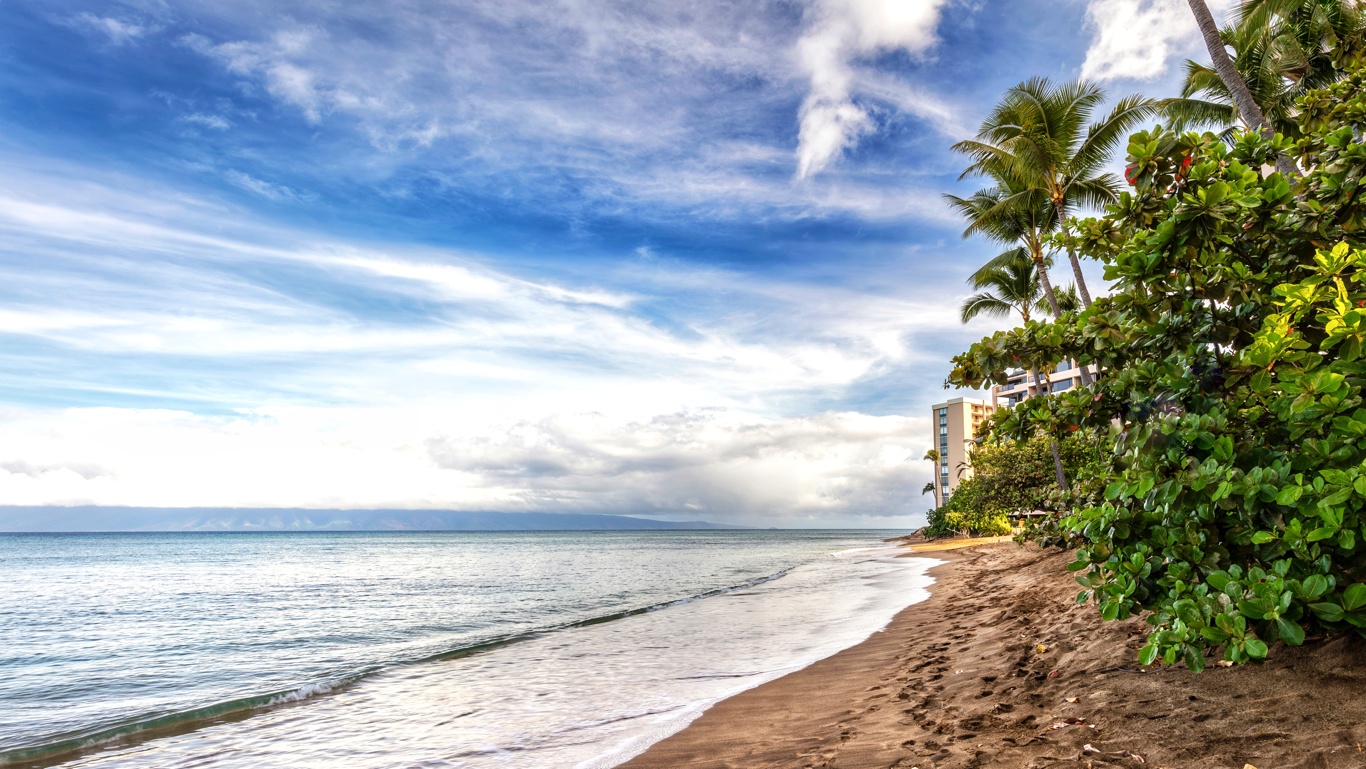
Kaanapali Beach still looks spectacular, but there is less of it. The south end, near Hanaka’o’o Point and the Hyatt Regency, is the tightest section, and sand-pushing work began in April to stabilize the slope along the undermined beachwalk. The new erosion barrier is on hold pending state review, but the emergency work area is now on the beach.
Other sections of the beach appear to be holding up better. North toward the Sheraton and Black Rock, the beach remains wide enough that visitors staying there may hardly notice any change. But anyone walking the full length of Kaanapali Beach this summer will see active work at the south end and a beachwalk that has been forced inland in places.
Erosion has been reshaping Kaanapali for decades.
The shoreline along the beach has been moving inland at up to two feet per year, according to the environmental impact statement filed for the long-stalled restoration project. Resorts, seawalls, and infrastructure nearby make it harder for the shoreline to recover after major storms and surf cycles.
A proposed $10 million beach replenishment plan once aimed to restore sand volume by dredging roughly 75,000 cubic yards from offshore deposits, returning the beach to closer to its 1980s width. In March 2023, the state Board of Land and Natural Resources unanimously rejected the cost-sharing agreement and returned roughly $400,000 to the resort association. The Kaanapali Operations Association has floated a scaled-down version, but no full-scale project has moved forward since.
Why a seawall isn’t the easy fix.
It is a reasonable question: “Why not just build a barrier?” The short answer is that hardening structures such as seawalls, sandbags, and rock revetments now require a variance from the Maui County Planning Commission under the shoreline rules adopted in November 2023, which became effective in August 2024. Those rules replaced fixed historical erosion rates with an Erosion Hazard Line based on projected sea-level rise. Hardening permits are not impossible to get, but they are no longer routine.
The reason policymakers resist structures is that hardened shorelines can accelerate sand loss in front of and along the sides of neighboring properties. State officials have already documented roughly 4 miles of beach loss along the West Maui coast, tied to seawalls, sandbags, and revetments installed at properties from Napili to Kahana.
The Hyatt’s existing 2015 erosion barrier, installed under a 180-day temporary authorization, is already in its eleventh year. Whether the new one ends up the same way is part of what the Maui community pushback is about.
Statewide trend of beach erosion.
In April 2025, University of Hawaii researchers at the Coastal Research Collaborative published modeling showing that 81% of Oahu’s sandy coastline is at risk of erosion by 2100, with 40% of that loss projected by 2030. The forecasts run nearly 44% above prior estimates, meaning more severe erosion is expected sooner. The team plans to extend the model to Maui next.
That should give Kaanapali visitors something to consider, given that Maui has historically eroded faster than Oahu. A 2012 USGS-UH study also found that 78% of Maui beaches are eroding compared with 52% on Oahu. Whatever Oahu is bracing for, Kaanapali is likely already further along.
What this means for West Maui travelers.
Kaanapali remains a quintessentially beautiful and worthwhile destination, but visitors arriving this year should come with adjusted expectations. The south end, fronting the Hyatt and Kaanapali Alii, is an active work zone, with the permit fight unresolved. The beachwalk has detours in places. The beach in this section is narrow at high tide and crowded at low tide. Sections farther north, especially toward the Sheraton and Black Rock, are holding up better and look much closer to how Kaanapali visitors remember them.
If you have stayed at Kaanapali this spring, what did you find? Did the construction at the Hyatt change your experience, or did you stay far enough north to miss it? Share your trip below.
Get Breaking Hawaii Travel News




I am staying on Kaanapali Beach as I write this. We are halfway between the Sheraton and the Hyatt in front of Whalers Village. The beach looks great, but erosion is noticeable compared to a few years ago, but still very good. The construction at the Hyatt does not affect us.
I guess we’ll find out what Hawaii is like without the beaches. What else isn’t disappearing? Lei flowers, loyalty programs, affordability, and much more. Maybe nature is telling us that nobody is welcome. Nature rules and nobody can argue that.
Beach and land erosion are problems all over the island. The county now wants any development on the west side to not replace/reinforce existing sewalls. I guess they would prefer the walls fail, and then erosion go right up to the existing buildings and eventually take them down too. They want the natural progression to occur, even at the cost of millions/billions in property. Is the Council and county supposed to protect the oceans and erosion, or the people that elect them?
I just arrived on Maui this week, and yes, there is definite and obvious additional beach erosion going on. This is not a regular ‘come and go’ situation as ‘Peter F’ suggests, it is an on-going deterioration of the same beaches I go to each year at the south end of Kananpali. It’s nature and hotels that are driving this deterioration. Beach supplements may help, but would be a temporary solution. Weather is also a major factor and unfortunately when a bad storm comes in typically the beaches take the brunt of the damage and what used to be the ‘natural’ restoration system is no longer available. Don’t know there is a long term solution. The beaches formed long before Kamehameha and his crew got here.
This isn’t really anything new, it’s based on the trades so beaches come and go. We own a waterfront home between Honokawai and Napili, the beach in front of our unit comes and goes throughout the year and year to year. All based on the trades and current flow. Putting barriers up just for tourist traffic and beach access creates other issues involving the movement of ocean waters, sea life, etc. Let nature take its course and let the big hotels notify their guests that there is no guarantee as to how much beach there will be access to, but that they have beautiful pools.
And when that erosion threatens or destroys a building people live in? I live in one of those buildings and have for 20 years. I’m glad your home is not affected, but this problem is not limited to the Hayatt, or Ka’anapali. Erosion exacerbated by county-permitted seawalls has left many properties, where people live full time, threatened, and the county’s and Kai Nishiki’s answer is now, “You shouldn’t have built there. Move the building or let it fall into the sea.” Still waiting to hear back from them on how to move a multi-story masonry building.