

Hawaii just rolled out Round 2 of its Destination Management Action Plans, which won’t come as any new discovery about beaches getting crowded. Round 1 ran from 2021 through 2023 and was later criticized in a May 2025 state audit that found the effort poorly planned and that results “took the form of meetings rather than mitigation.”
The state held more than 30 listening sessions last fall, including on Kauai where BOH attended, and says it listened more carefully this time around. Island plans now clearly separate locations into two buckets: sites getting targeted action and sites acknowledged as under strain but receiving no site-specific action in this go-around. On every island, the second list is longer than the first. It signals that Hawaii is openly stating that many of its most visited beaches, trails, and towns are stressed, and that most of them will not receive direct fixes right now due to resource limitations.
That tension between acknowledgment and action mirrors almost exactly what BOH readers have been saying for months in the comment threads on Kauai Residents Speak Out: Tourism’s Impact on Daily Life and Hawaii At Crossroads: Residents Seek Big Changes To Visitor Rules. Readers named the choke points, the parking chaos, the restroom failures, and the feeling that strain keeps rising while fixes move at a crawl.
Kauai: the list reads like the brochure.
On Kauai, the under-strain list without targeted action includes Haena Beach Park, Wailua Falls, Lumahai, Polihale, the Na Pali Coast and Kalalau Trail, Poipu and Koloa, Waimea Town, the Kalaheo intersection, and the Tunnel of Trees. That is not a marginal set of sites. It is largely the core of Kauai tourism.
Three Kauai hotspots receive defined action plans this cycle: Kapaa–Wailua, Hoopii Falls, and the Kokee–Waimea Canyon corridor, where the current language centers on a feasibility study for a shuttle and reservation system, with procurement not expected until FY2028. In practical terms, that means visible change sits in 2029 or beyond. Everything else on that list is acknowledged and deferred due to resource limitations.
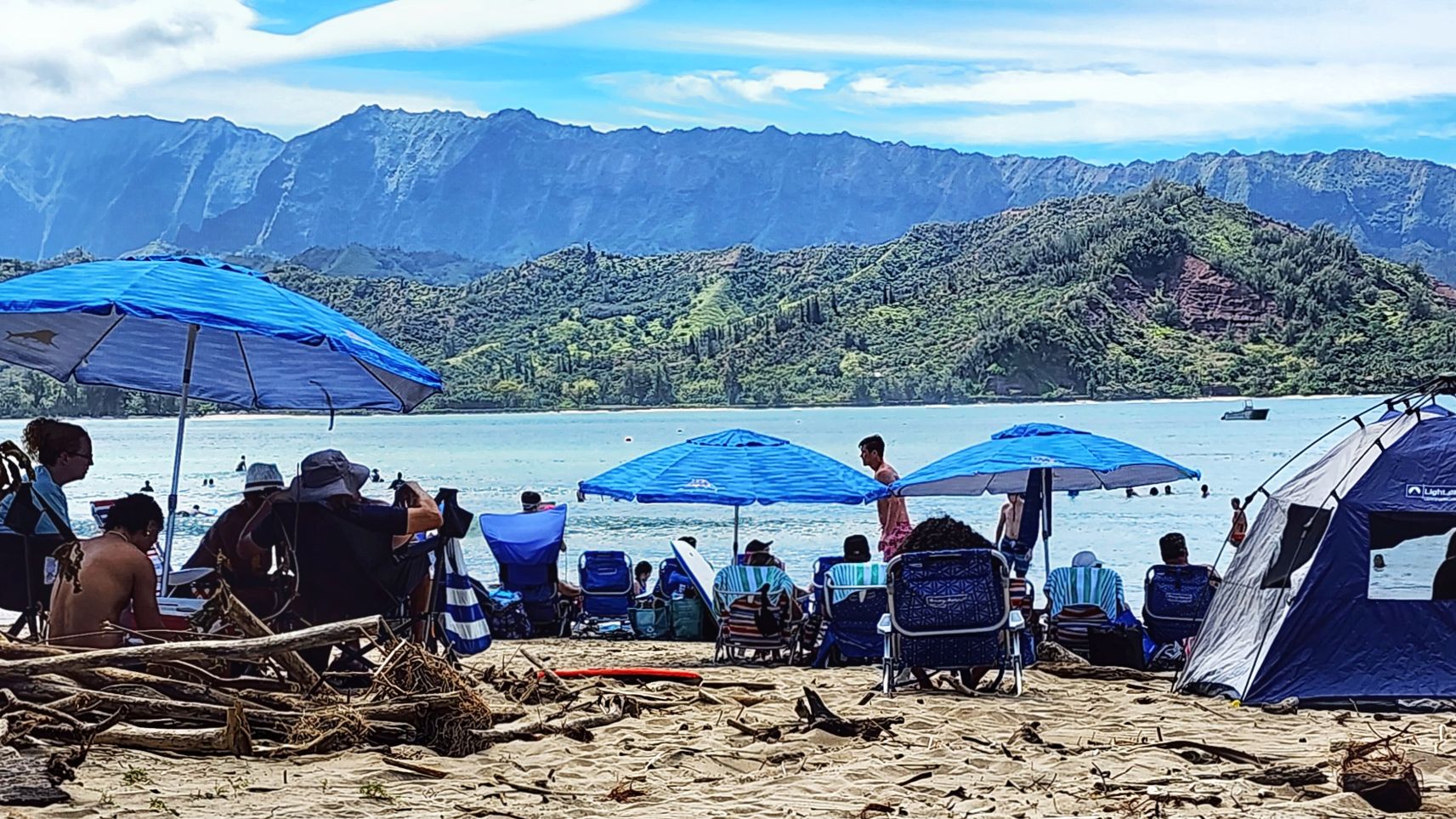
BOH readers were ahead of this months ago. Kauaidoug pointed directly to Wailua Falls and Opaekaa Falls and described how blocked views and overgrowth push visitors into unsafe behavior. Raj K called out Hanalei restroom conditions and infrastructure gaps that frustrate residents and visitors alike. Jeannie F described not being able to find a single open restroom during her trip. Those comments were not political; they were simply practical. Round 2 confirms those pressure points. It does not commit to fixing most of them.
Maui: strain confirmed, action narrowed.
Maui’s under strain list is just as broad. West Maui beaches from Puamana to Napili are flagged, along with Keanae Peninsula, Mala Wharf, Olowalu, Hookipa, Makena and Big Beach, the Kihei and Wailea shorelines, Paia, Baldwin Beach, Hana town, Hanakaoo, Kanaha Beach Park, Peahi and Jaws, and Haleakala at sunset. Haleakala sunset deserves context because it was a high-profile hotspot in Round 1 with targeted management attention and is federally managed by the National Park Service. In Round 2, it appears in the strain column without new targeted action this cycle.
The defined action areas on Maui focus on the Hana Highway corridor and Kaupo, the back road to Hana. The emphasis is on corridor-level coordination rather than site-by-site fixes, and the timeline language is stretched once again. If procurement in some areas does not begin until FY2028, meaningful implementation will begin in 2029 or later. That timeline contrasts with what residents and visitors are dealing with right now. For readers who followed the original Haleakala management debates, that change to no action is not subtle.
Oahu and Big Island: redirect and rebalance.
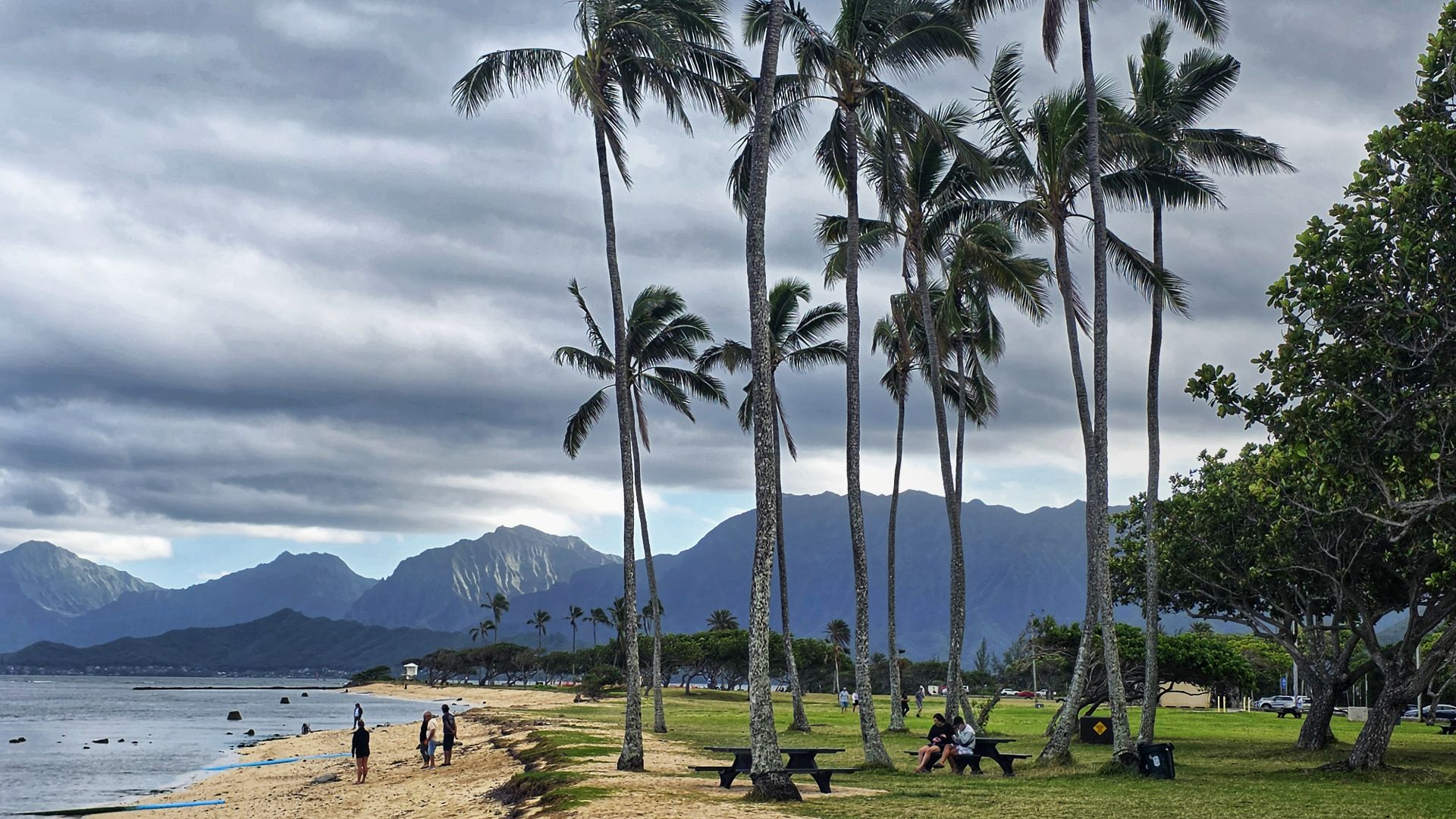
Oahu’s plan leans more into redistribution rather than restriction. It calls for redirecting visitors toward the Capital Historic District downtown while launching a beach stewardship pilot at Waimanalo, Kailua, and the North Shore. The strategy is to spread use and relieve chronic hotspots. Whether that actually shifts behavior depends on experience and convenience, not just changes in policy language.
Oahu names two priority hotspots for targeted action: the North Shore Corridor and Kaiwa Ridge, known as the Lanikai Pillbox trail. But the additional sites under strain with no targeted action include Laniakea, Haleiwa Town, Shark’s Cove, Kailua Beach Park, Waimea Bay Beach, Hoomaluhia Botanical Garden, Waimanalo Beach Park, Hanauma Bay, Manoa Falls, Keawaula, and Kaena Point. Several of those were hotspots in the Round 1 DMAP. They have since been downgraded.
Big Island’s draft promotes redirecting visitors towards Hilo in an effort to rebalance impact and economic benefit. That imbalance between Kona-side concentration and Hilo-side opportunity has existed for decades. Redirecting demand like this may be a straightforward concept, while changing visitor patterns takes a lot more than that.
Big Island names Keaukaha and Kealakekua Bay as its two priority hotspots for targeted action, with Ka Lae (South Point) as an additional site under strain receiving some attention. The no-action list runs to 23 locations, including Waipio Valley, Hawaii Volcanoes National Park, Maunakea, Hapuna Beach, Punaluu, Pololu Valley, Kahaluu Bay, Kailua Pier, and Honaunau. Fourteen of those 23 were hotspots in the Round 1 DMAP and have been downgraded to strain-only status without targeted action. That pattern of previous hotspots moving backward between rounds is not unique to Big Island. It shows up on Maui with Haleakala and on Oahu with Laniakea, Shark’s Cove, and Kaena Point.
The money and resource questions that refuse to die.
Across nearly 300 comments tied to this issue, the most consistent theme was not whether strain exists. It was where the money goes. Dee, Bob K, Deborah, Daryl H, T E, Deb C, AJ, Harvey, and others all circled the same concern in different words. With lodging taxes high, parking fees rising, and overall trip costs climbing, why do basics still look neglected?
The Round 2 DMAPs do not connect strained sites to transparent spending or clear timelines for basic improvements. They acknowledge the stress points and outline coordination strategies, but they stop short of connecting revenue to visible future upgrades. That gap between rising costs and stagnant infrastructure is exactly what readers have been pressing in BOH’s prior comment threads, and it remains unanswered here.
Meetings and comment access.
The Kauai virtual meeting is Thursday, Feb. 19, at noon, with Oahu, Maui, and Lanai meetings on Feb. 18, and Molokai on February 25. Online registration for each meeting is available on the HTA events page, with only an email address required to join. We are tracking what is presented and will report back on whether anything concrete emerges beyond what is already in the draft packages.
The draft plans are also posted for line-by-line public comment at hta.konveio.com. HTA’s press release directed residents to the events page for meeting registration, but did not mention the Konveio comment platform. We found it separately, and it allows readers to comment directly on specific sections of the draft documents rather than relying solely on meeting testimony.
Public comment is expected to close in early March. That leaves a short window to weigh in before these plans move forward in whatever form they ultimately take.
Hawaii has now put in writing which beaches, trails, and towns it considers to be under strain and which ones it plans to act on in the current cycle. The real question is whether separating sites into action and no-action categories changes anything in the near term, or whether it simply makes the delay easier to see and understand. Across every island, multiple sites that were hotspots in the first round now appear in the no-action column in Round 2.
If your favorite spot just landed in the acknowledged but not targeted column, is that good enough, or do you expect to see actual improvement before the next audit?
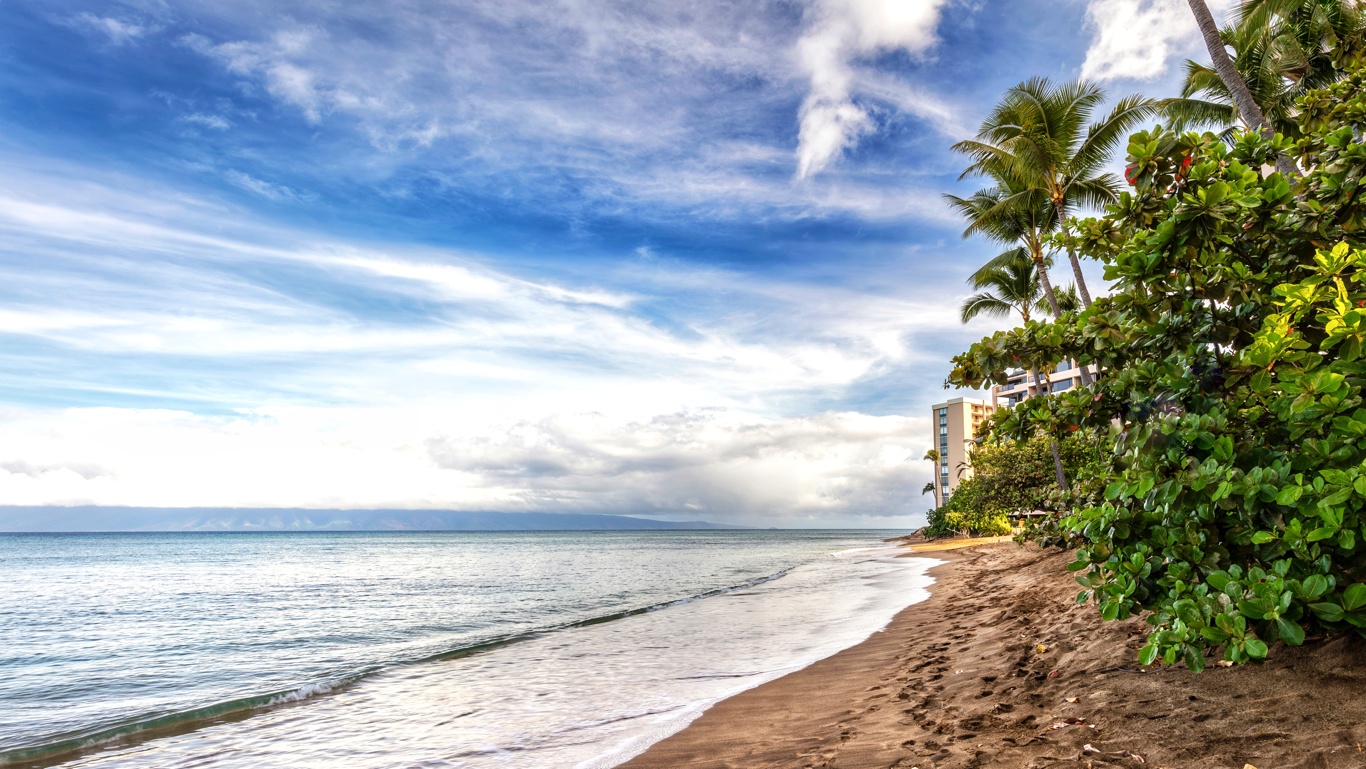
Lead Photo: © Beat of Hawaii at Punaluu Black Sand Beach on Big Island.
Get Breaking Hawaii Travel News

Meanwhile, HTA is continuing to market Hawaii and encourage more visitors. The entire DMAP effort is a farce.
Kudos on your reporting! I love your newsletter, factual, comprehensive and succinct. On Action Plan comments: I’d hope the Kalaheo intersection gets attention and Hanalei restrooms as well. We visit 3xs/year for a week each but we’re in our 80s and have a light impact.
IMO, this is just more kicking the can down the road as long as the old political game makes money who does not care. I grew up here in the 60’s and really sad to see how money has ruined everything for Hawaiians and the rest of us whom kokua however we can. The only solution is to limit how many visitors can come each day … that will never happen.
No can with the “tourist” beaches anymore. Tired of seeing entitled visitors harassing wildlife, turning their backs to the sea only to get slammed because they don’t understand that waves come in sets.
Now, it’s strictly local beach parks, pop-ups, coolers and jamming to Hawaiian tunes.
Hapuna Beach is (or was), consistently rated as one of the top beaches in the world. Not the state, the world.
As far as I know, the water pipe problem has still not been addressed.. it has gone on for years and still no water.
(If I’m mistaken please correct me, I’d love to be wrong!)..
Without water, the A-frames, (one of the best “deals” anywhere for million dollar views at camping rates), remain closed..
It’s a travesty that the State continues to ignore this most valuable resource..
Beware of the unintended consequences of “fixing” tourist locations. On Kauai government reduced the number of visitors at Ke’e, Napali Trail, from 3,000 to 900 a day, only to have them show up and overcrowd the beaches of Anini, Lumahai, Hanalei to name of few of the “newly crowded” beaches. Sad to say some of the beaches these visitors have been displaced to have no toilets or lifeguards. Now they want to shut down Makena (Tunnels) in the same way. Where will those tourists go? Probably to a beach or neighborhood near you.
I worry that by the time 2029 rolls around, some of these reefs and trails will be in much worse shape than they are today. The problems aren’t going to pause while more studies get completed.
Everything in Hawaii isn’t what it was years ago. The promotion of tourism in airline industry, movies, fancy beaches, Disney hotel and even the Superstars sporting event at the Royal Hawaiian lagoon on television promoted tourists. Money was made and the cash train was rolling. What did Hawaii really think when Diamond Head was the backdrop of everything that Hawaii was years ago on television. It all brought in tourists and big $$$$$. When you bring in tourists nature gets worn down and it takes nature to regrow and fix the problem. Not money. IMO Hawaii now just wants the money and tourist’s to stay only on their resort perimeter viewing the beach from some lanai. If Hawaii really wanted to fix the problem wouldn’t they just restrict the number of airlines that land per day? No because these people bring in $$$$ that Hawaii wants.
As someone who works in hospitality, I can tell you visitors notice and are bothered by the wear and tear. Broken showers, filthy or closed restrooms, confusing signs. It reflects on all of us.
Reservation systems worked at Hanauma Bay even if they aren’t totally popular. Why not expand that model to other sensitive sites instead of more endless studies?
You have an economic blessing: millions of people come to your islands, spend billions of dollars and leave. You have the highest “Fees” and taxes and you can’t figure this out? Wow.
What is the lack of resources? The manual labor to fix the problems. IMO just another more meetings then actions that thrive on paid lip service to drain financial funds and time. Steering away tourist’s to other locations won’t fix anything but deteriorate another spot. Lack of maintenance, man labor and such has been going on forever in Hawaii. IMO just another justification for the added Green Fee to be slapped on the tourist with the thought of something might be repaired or fixed. Maybe the real thought is Who’s fooling Who?
I guess it depends on the time of year you visit the islands. For 15 years, we have vacationing here yearly during January-February. Our trip always involves Oahu, Maui, and another in-between. We are here now. It does get crowded at some beaches, but we have not been “overrun” at any island. We have great experiences on Hawaiian Air, condo rentals, car rentals, etc. The major differences we noticed this trip was how expensive the cost of food at the grocery stores have become. It is less expensive to go out to a restaurant than stock up our condo. At many sites, costs have risen: $ per car and $ per person. We love the islands and will continue to adjust our costs to meet our needs. Not everything is changing to the detriment of visiting here.
I don’t want Hawaii to become a place where everything is restricted and ticketed. But I also don’t want to avoid my own favorite beaches and trails because they’re too crowded. There has to be a middle ground and how to get there is totally unclear.
I don’t think 2029 is unreasonable for some major infrastructure projects, but not overall. Big things take time and money. The real questions are whether the planning is realistic. And whether Hawaii can really afford to wait years before addressing these issues so critical to its only income source.
That’s CraZy to have Punalu’u in Kau on Hawai’i Island on the No Action List. Geez it’s the first photo in BOH’s article clearly showing hordes of people on the beach. A daily occurrence. Time to take a second look at this one!
The downgrade from hotspot to under strain is the hard part to accept. It feels like the state just reclassified the problems instead of fixing them. That’s not any real progress.
I’ve been to Ka Lae a couple of times and the area around the point itself is not that busy. The problem area is nearby where the unofficial parking lot for the multitude of people trying to get to the black and green sand beaches park their cars and then either walk and/or take one of the unofficial shuttles.
As a frequent visitor to Hawaii, I appreciate knowing what’s happening and that the state is at least thinking about doing something. In the end, with overcrowding, I’d rather deal with a challenging reservation system beforehand than chaos and overflowing parking once I’m there. But it all needs to be consistent and easy to navigate. That’s an area I’m not sure Hawaii can succeed in.
The problem isn’t the tourists. It’s very poor management. We’ve had studies and listening sessions forever it seems. At some point, someone needs to actually do something meaningful.
you got’em. And the “studies” cost a fortune and that money goes to “someone” and not the problem. And where is that “future money” going to come from? The ‘aina is crying out and they do another study.
We just came back from Maui and were shocked at how crowded everything still felt compared to say five years ago. I still love Hawaii, but it’s not the peaceful escape it always ways for me. Waiting until 2029 for basic upgrades that are already long overdue doesn’t inspire much confidence.
I live on Oahu’s North Shore and none of this surprises me. Traffic has been unbearable for years and the bathrooms at some beaches are embarrassing. If relief is really still years away (Ugg!), that feels like just another admission without a solution.
IMO Waimea Canyon does Not need a $40pp shuttle. You can’t compare it to Haena. It’s a massive area with many parking areas/lots.
Correct.