
Southwest is considering Boeing 787 Dreamliners, American is bringing Starlink and seatback screens back across its narrowbody fleet, and Hawaiian/Alaska are designing new aircraft, including some where those screens stop at premium economy.
Hawaiian’s A330 fleet is preparing for a significant transformation that removes 36 standard economy seats, while its familiar Boeing 717s are headed for retirement to be replaced by a well-used Alaska fleet of 737s. Some of these changes you know about and are already happening, while others are more obscure and will stretch into the early 2030s.
The airlines are all investing significantly, but they’re going in very different directions. Passengers willing to pay for premium cabins will have more options than ever, while ordinary economy travelers could see meaningful improvements on some airlines and fewer choices on others.
Hawaiian’s new cabins are changing the balance.
Beginning in 2028, Hawaiian will refurbish its 24 A330’s with 22 Leihoku business suites, 28 Premium Reserve premium economy seats, 48 Premium Class seats with extra legroom, and 156 standard economy seats. Total capacity falls from 278 to 254. As we reported when Hawaiian revealed the configuration, the new premium-economy cabin comes partly at the expense of regular economy capacity and today’s more generous extra-legroom seating.
Extra-legroom seat pitch drops from about 36 inches to 34, while the new premium economy offers 38 inches, wider seats, and leg rests. Main Cabin retains its 2-4-2 seating arrangement and gains 13-inch 4K entertainment screens, with Starlink connectivity already available free to Atmos Rewards members. Alaska will reveal the actual fares for travel in the new cabins later, so we don’t yet know what passengers will pay to move between them or whether they will be willing to do so.
Alaska’s 25+ future 737 MAX 10s are also slated for lie-flat suites and premium economy. Those specially configured narrowbodies are intended for select transcontinental routes, with no Hawaii deployment announced to date. On the ground, Hawaiian’s new Honolulu lounge is expected in early 2028, part of the larger airport lounge changes we’ve been following. Access will favor qualifying premium passengers, and the complete eligibility rules haven’t been released.
American and United are investing in the entire cabin.
American’s October 8 announcement expanded its planned Starlink installations to more than 1,000 mainline aircraft, including widebodies and narrow-bodies used on Hawaii routes. Installations begin in early 2027, while a separate program will bring 4K seatback screens to every narrowbody seat, though it will start with new aircraft deliveries in 2028. Retrofitting the existing fleet, by contrast, will continue into the early 2030s, so the improvements won’t arrive everywhere at once.
United already had Starlink operating on more than 560 mainline and regional aircraft by September, with seatback screens expected on as many as 1,000 aircraft before the end of 2027. It is also expanding live television and sports programming on equipped aircraft. That investment also applies to standard economy, not solely passengers buying more expensive seats.
Alaska has made a different decision for its future premium-configured MAX 10, as we recently examined. That includes built-in entertainment limited to Aurora Suites and Premium Reserve, leaving even extra-legroom and other economy passengers to use their own devices. Starlink makes that increasingly practical, but travelers who prefer an installed screen will find that American, United, and Hawaiian’s refurbished A330’s offer something Alaska’s new narrow-body configuration won’t.
Southwest could morph further into an entirely different airline.
Reuters reported October 8 that Southwest is seriously evaluating Boeing 787 Dreamliners for potential long-haul international expansion. Its pilots’ union has confirmed discussions about widebodies and longer-range narrowbodies, but it has not announced a decision on any aircraft.
Could Southwest eventually fly nonstop from Dallas or Chicago to Honolulu? A Dreamliner has the range, but airport constraints, particularly Chicago Midway’s short runways, and the economics of operating an entirely new aircraft type complicate that possibility. Southwest hasn’t announced those or other routes, any widebody order, or a lie-flat business-class cabin.
Southwest already abandoned several things that once made its Hawaii operation distinctive. Open seating is gone, checked bags now cost extra on many fares, and passengers encounter multiple seat and fare categories, developments we previously covered in Southwest Hawaii’s Golden Era Ended. Southwest is also developing its first airport lounge network, including Honolulu, with Chase credit card-backed access planned beginning in late 2027. The opening date for the Honolulu location remains unconfirmed.
For an airline that built its business around a single aircraft family and a relatively simple passenger experience, these changes are extraordinary. It remains unclear whether they will build a stronger Southwest presence in Hawaii or steer the carrier toward international markets.
Hawaii’s interisland airplanes are fast changing too.
The transition has already started. On October 3, Alaska introduced an Alaska-branded Boeing 737-800 on three daily Honolulu-Kahului round trips, supplementing Hawaiian’s 717 operation. Beginning in 2028, Hawaiian plans to replace its 717 fleet with rebranded legacy 737-800 aircraft based in Honolulu and operated by Hawaii-based crews.
The change eliminates the 717’s popular 2-3 seating arrangement in favor of conventional 3-3 seating. Passengers gain charging outlets, more premium seats, and free Starlink, but interisland passengers lose that two-seat side we’ve written about extensively. Alaska says it intends to maintain interisland capacity and frequency, although it hasn’t announced the final schedules for the permanent transition.
These replacement planes won’t be new. Alaska’s passenger 737-800 fleet averaged 17.7 years old at the end of 2025, putting those aircraft near 20 years old when the transition begins. Hawaiian’s A330 fleet averaged 12.5 years old at the same point and will be approaching 15 when that fleet’s refurbishment starts. Both investments involve extensively upgrading or repurposing existing airplanes rather than introducing new ones, which are costly and hard to come by.
For residents who depend on interisland flights, the new technology is welcome, but the number of departures and the cost of getting between islands are likely to remain the more important issues.
Alaska’s near-term strategy is clear. The longer term isn’t.
Alaska has completed three of its four major integration milestones, combining operating certificates, reservation systems, and loyalty programs while joint labor agreements remain unfinished. Those changes have already affected travelers, including new Atmos Rewards earning choices.
The next mid-term stage is also fairly specific: refurbished A330’s, reassigned 737-800s for interisland service, upgraded premium cabins, and new lounges. Yet Alaska hasn’t publicly identified what ultimately replaces either of those Hawaii fleets. Its broader plan calls for approximately 550 aircraft companywide by 2035, without a similarly detailed long-term breakdown for its Hawaiian operations.
The company continues to promise two distinct brands, but the future structure of that arrangement is less certain. The federal merger agreement provides six years of protections for specified routes and passenger benefits, running into 2030, but doesn’t require that the two brands remain indefinitely. Alaska has repeatedly said it intends to retain Hawaiian, though it hasn’t described how that commitment will work long term.
Its financial objectives are much more specific. Alaska expects premium revenue to exceed 40% of total revenue by 2030, up from 35% today, and says it has already captured roughly two-thirds of its targeted $1 billion in incremental profit.
Competition could still change the situation. Delta’s Seattle-Hawaii fare sale of up to 40% earlier this week demonstrated its willingness to challenge Alaska on price in Hawaii, while United has the extensive Hawaii network and aircraft resources to compete more aggressively if it chooses. Yet United’s recent investments are primarily fleetwide rather than Hawaii-specific, and Southwest’s future direction is similarly difficult to predict.
Of all the changes coming to Hawaii flights, which ones would make the biggest difference to you, and which, if any, would you actually pay more for?
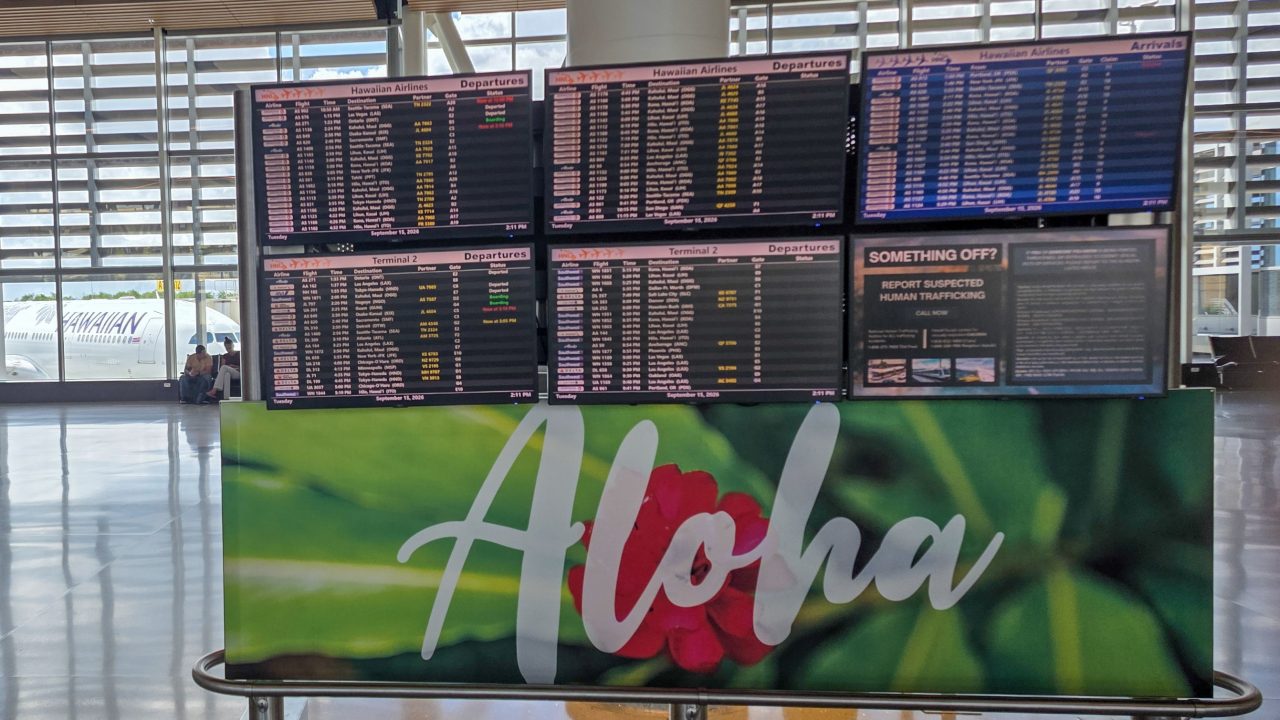
Photo Credit: © Beat of Hawaii at HNL Mauka Concourse.
By Rob and Jeff, Beat of Hawaii.
Some of Hawaii’s most meaningful places are the ones visitors walk right past without knowing they are there. We’ve spent nearly 20 years finding them firsthand for BOH as full-time Hawaii residents reporting on travel, culture, and island life, and telling you what they mean for your trip. Join us →
Get Breaking Hawaii Travel News




In answer to your question at the conclusion of the article, we will pay for premium economy on wide body flights from the mainland to Hawaii on any of the major airlines. Whoever has the best deal. However, our preference will be either American or United if possible. Thanks for the great article BOH, best regards and Aloha to all.
Hi Daryl.
Mahalo! We always appreciate your thoughtful comments and perspective. Premium economy seems like a particularly good fit for Hawaii flights, and having more airlines offer it should give travelers some welcome in-between priced choices.
Aloha,
Jeff and Rob
I love having free Starlink now on multiple airlines. Being able to message family and check things online makes the trip go so much faster at least for me. I’d gladly give up the seatback before giving up that.
A 20 year old 737 replacing the 717 isn’t exactly the exciting future I was expecting for interisland flights which included the E195 and the A220. I understand that aircraft can last a long time, and that this is smart and economical utilization, but I would also be interested in learning what Alaska plans to fly after those are retired too.
My husband and I used to take whichever airline had the best schedule to Maui. These days it feels like I spend as much time researching flights as hotels. I never thought I’d need to know this much about airlines and aircraft just to get to Maui.
I am a former 22 year Oahu Kamaaina, now in NZ. I would visit my local friends 2-3 times a year since 2012 flying HA until Hawaiian changed to a Nov.-Mar. schedule when many Kiwi’s regularly went to Hawaii during NZ’s wet/cold winters. The Alaska purchase & changes is cold hardline business with “No Aloha!” Sad!
The airlines are smart and wouldn’t keep adding premium seats if people weren’t going to be buying them. I know plenty of travelers who complain about the cost and then spend hundreds more to upgrade anyway. There’s clearly a market for this, especially to Hawaii.
We’ve flown Hawaiian for decades and have liked the A330 since they got them. I’m glad they’re keeping the two seat config by the windows. That’s a bigger deal to us than almost anything else that’s changing.
American putting screens back in economy is smart – finally. My phone is for communicating or short videos, it is not comfortable for watching movies on a six hour flight. I hope all the airlines follow suit.
I don’t need a lie flat or a fancy lounge for Hawaii. I’d be quite happy with a reasonably comfortable seat, a meal and a nonstop flight. Apparently even that’s becoming a rather expensive combination and not something to expect any longer.