Visitors staying in Waikiki might be able to ride TheBus across Oahu without paying a cent. A new proposal would eliminate fares for everyone, including tourists, offering another reason to reconsider expensive rental cars and hotel parking.
The Hawaii Appleseed Center for Law & Economic Justice released its report November 4, estimating that fare-free buses would cost $62.4 million annually statewide, including $59.2 million for Oahu. Nothing has been approved, and there’s no start date, but the proposal puts a specific price on something that could largely change how visitors get around Waikiki and Honolulu.
What free buses would actually save visitors – money and more.
Under TheBus fares effective July 2026, a cash ride costs $3.25 without transfers. Passengers using a HOLO card pay $3 for two hours of travel, with a $7.50 daily cap. Three-day passes cost $20, while seven-day passes are $45.
A couple buying weekly passes would save $90 if buses became free, while four adults would save $180. That’s worthwhile, although the bigger financial opportunity is avoiding a rental car and Waikiki hotel parking altogether.
Another benefit could matter even more than the fare savings: simplicity. Visitors wouldn’t need to figure out how to buy a HOLO card, whether to pay cash, how transfers work, or which pass makes sense for their stay. They could simply step aboard any bus without thinking about payment at all, making TheBus much easier to use on the spur of the moment. We’re on board with that ourselves.
We recently examined the surprising cost of Waikiki hotel parking, finding a $259 weekly rental car that would cost another $530 to park at Hilton Hawaiian Village. Readers told us they already rent cars only for selected sightseeing days, with one couple reporting savings of about $2,000 during a three-week stay by avoiding a full-time rental. Free buses could make that approach more appealing without requiring visitors to give up driving altogether.
When we stay in Waikiki, hotel parking is only part of the expense. Drive somewhere for coffee or head out for dinner, and you often pay another parking charge at the destination. The cost and hassle of finding parking every time you go somewhere can make having a rental car far less appealing than it initially seemed.
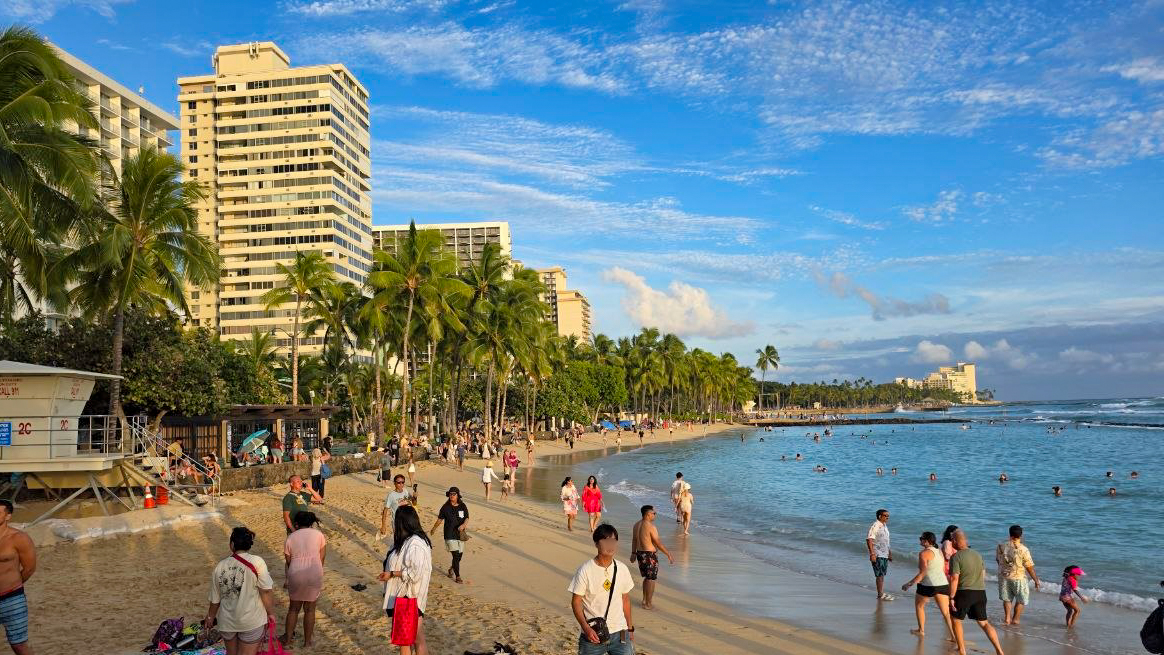
Waikiki already makes car-free vacations possible.
Oahu has something most Neighbor Island destinations don’t: an extensive bus network combined with a compact visitor district where restaurants, shopping, beaches, and entertainment are within walking distance. TheBus connects Waikiki with Ala Moana Center, downtown Honolulu, Pearl Harbor, and many other destinations. Some routes are longer and may not appeal to most visitors, while others are shorter and simpler.
The airport connection improved in October 2025 when Honolulu introduced the W Line between the airport and Waikiki. Its limited-stop service provides a relatively inexpensive alternative to taxis and rideshares, and under Appleseed’s proposal, that ride would also become free.
Luggage remains a bus consideration. Honolulu’s current guidance permits one medium suitcase and a smaller carry-on, provided passengers can manage both and keep them from obstructing aisles or occupying seats. Visitors arriving with several large bags may still need to find another option.
Exploring the North Shore or Windward Coast by bus can involve lengthy journeys, transfers, and waiting for connections. Visitors carrying beach equipment or planning several stops in one day may find that the time involved matters far more than the price of a ticket.
Who pays the $59.2 million Oahu cost?
Appleseed estimates that passenger fares cover only about 15% of TheBus operating expenses, with the remaining 85% already publicly funded. Its proposal would replace existing fare collections rather than finance an entirely new transportation system.
The report identifies potential funding sources including Hawaii’s barrel tax, Clean Fuel Standard revenue, and the State Highway Fund. These are existing or anticipated transportation revenues, but using them for fare-free buses would require legislative and budget decisions. Money redirected to bus operations could also mean less funding available for other transportation priorities.
The financial estimates assume a 10% increase in utilization on Oahu and 5% on the Neighbor Islands. Those figures are just projections, and additional ridership could also create pressure for more frequent buses and greater capacity.
The Legislature considered a related proposal earlier this year. HB2451 would have established fare-free public transportation supported by increased petroleum-related taxes, but it wasn’t enacted. Appleseed’s new report provides another funding approach, not an announcement that fares are going away tomorrow.
Why Skyline isn’t included in the proposal.
Although TheBus and Skyline share the HOLO fare system, Appleseed explicitly excludes Honolulu’s rail system from its current recommendations. The report cites Skyline’s ongoing construction and unsettled operating finances, meaning rail passengers would still pay fares even if the free bus proposal were adopted.
The Big Island provides some precedent. Its Hele-On buses have operated fare-free since 2022, and Appleseed reports ridership has since exceeded pre-pandemic levels. Oahu, however, operates on a much larger scale, with different commuting patterns and the potential for substantial visitor demand. Appleseed also recommends improving bus service alongside eliminating fares, but the report doesn’t establish specific new routes or schedules.
Have you used TheBus while visiting Oahu? We’d like to hear what worked and what didn’t. Would being able to simply step aboard without worrying about fares or a HOLO card make you use it more, or would you still prefer a rental car for your entire stay?
Photo Credit: © Beat of Hawaii at Waikiki.
By Rob and Jeff, Beat of Hawaii.
Some of Hawaii’s most meaningful parts are the ones visitors walk right past without knowing they are there. We’ve spent nearly 20 years finding them firsthand for BOH as full-time Hawaii residents reporting on travel, culture, and island life, and telling you what they mean for your trip. Join us →
Get Breaking Hawaii Travel News