
At Valley Isle Resort in West Maui, prospective guests are told they can walk from their ground-floor condo lanais to the beach just steps away. Yet in February, the resort’s owners association told Hawaii lawmakers that the beach in front of the property had virtually disappeared. High surf was causing flooding; guests and residents faced serious safety concerns, and portions of the shoreline could no longer be safely crossed.
Next, the state is reconsidering how long beachfront property owners can keep temporary barriers along the shoreline, under what circumstances they can replace them, and what they must do to eventually remove them. Hawaii’s Department of Land and Natural Resources (DLNR) is proposing changes to Hawaii Administrative Rules Chapter 13-5. Visitors who have been coming to these same beaches for years can weigh in, too, with mailed public comments still being accepted through Monday, November 30.
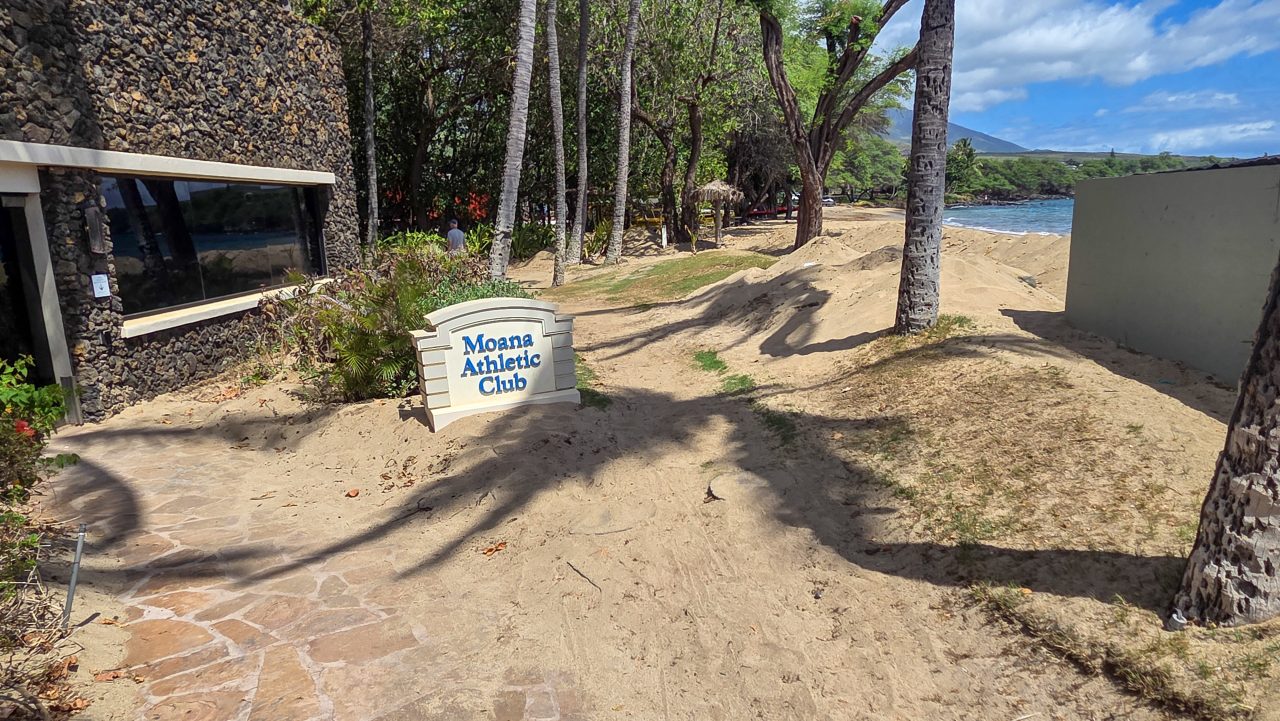
When we were on Maui in August, we spent time looking closely at what has happened to Kaanapali Beach in front of several major resorts. At Hyatt Regency Maui, where we had previously stayed, we found almost no usable beach along the frontage we inspected on August 25. The original erosion skirt there was approved in 2015 for just six months, but after replacements and repeated extensions, shoreline protection remains authorized through July 29, 2027.
What beachfront condo owners are saying.
Valley Isle Resort is a complex with 120 condo units between Kaanapali and Kapalua, and many of its individually owned units are available as vacation rentals. Last week, two of those owners reported very personal accounts of what is happening there.
“We are terrified that, very soon, we will lose our condo to the ocean,” wrote condo owner and resident Janice Kapchinsky in testimony she submitted November 18. She described damaged sandbags buried along the beach or floating in the ocean, leaving her corner unit exposed and vulnerable. Janice said she supports the proposed provisions allowing temporary erosion control and asked officials to visit the property themselves and replace the damaged bags while longer-term efforts continue.
Another owner, Gary Klebs, 74, lives in Alaska and purchased a one-bedroom condominium at Valley Isle with his wife twenty years ago. He believes most Kahana condo owners are working people who have saved and invested in their dream of enjoying Maui. He argues that Maui previously approved the construction of these buildings and should now allow owners to protect them. He wants to see Kahana’s beaches restored while maintaining the sandbags that are protecting the buildings.
A regional erosion mitigation and beach restoration proposal involving nine condo properties and one residential property at Kahana Bay was already the subject of a draft environmental impact statement in 2021. In its testimony earlier this year, Valley Isle’s owners association said that despite years of working with various agencies, it had been unable to secure the approvals needed to move forward.
How could temporary beach barriers be handled differently?
Under the proposed rules, emergency shoreline protection could remain in place for up to 18 months under an emergency permit. Eligibility would be limited to situations where erosion imminently threatens an “inhabited dwelling” or a public facility critical to public health and safety. The proposed rules don’t spell out how they would apply to conventional hotels or properties like Valley Isle, where residents and vacation renters share the same building.
There would, however, be a separate permit process for temporary protection beyond an emergency. Owners would have to demonstrate that they are working with professionals toward a longer-term solution, whether that involves restoring the beach, moving buildings, or eventually abandoning them. They may also be required to provide financial guarantees covering the removal of barriers, although those guarantees would not automatically be mandatory.
We haven’t found an overall time limit in that provision for how long temporary protection could remain, nor is it clear how the new rules would be applied to existing barriers like those we encountered recently at the Hyatt. The Surfrider Foundation has expressed similar concerns and wants clearer deadlines for removing existing barriers, as well as requirements for monitoring their effects on beaches and public access.
When a beach is eroding, a barrier can protect the building behind it while leaving the sand in front with nowhere to go as the shoreline retreats. For owners like Kapchinsky, however, removing that protection before any other solution is available could put their homes and investments at risk.
Hawaii visitors can join this discussion.
Following our recent Kaanapali article, BOH reader Cecilia recalled the long beach walks she enjoyed when her parents took the family there as children. She wants to return but said she’ll now check on beach conditions before deciding where to stay.
In our look at Waikiki beachfront hotels and where the sand actually remains, we included an earlier comment from a reader named Ani, who enjoyed staying at Outrigger Reef but wished it had a real beach again. During that visit, waves were hitting the walls at high tide, with no sand visible. We visited Outrigger Reef and found the same thing.
Those kinds of comments are an important part of the decisions being made now, including how changes in beach access affect where visitors choose to spend their Hawaii vacations. You don’t have to live in Hawaii, own property here, or have a technical understanding of coastal erosion to submit comments.
DLNR’s proposed rules and public participation page say written comments can be emailed at any time to [email protected]. However, its earlier public hearing notice specified November 19 as the email cutoff. To speak with DLNR and confirm whether emailed testimony is still being accepted, you can reach the department at 808-587-0377.
With the Thanksgiving holiday weekend ahead, mailed submissions must be postmarked by Monday, November 30, 2026. Send them to the Office of Conservation and Coastal Lands, P.O. Box 621, Honolulu, HI 96809. For either email or mailed comments, use “Chapter 13-5: Shoreline Protection” as your subject or reference.
The department may publish your comments online.
We’d also like to hear which Hawaii resort beaches you’ve watched change over the years, and what you think should happen when both the resort and the beach in front of it are threatened.
Photo Credits: © Beat of Hawaii at Hyatt Regency Maui, 2026.
By Rob and Jeff, Beat of Hawaii.
Some of Hawaii’s most meaningful parts are the ones visitors walk right past without knowing they are there. We’ve spent nearly 20 years finding them firsthand for BOH as full-time Hawaii residents reporting on travel, culture, and island life, and telling you what they mean for your trip. Join us →
Get Breaking Hawaii Travel News