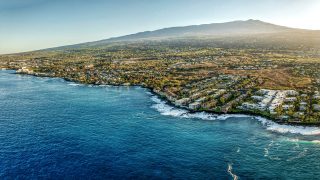
You picture Kaanapali a certain way long before you arrive. Most of us who have been coming here for years do. It is one of Hawaii’s most iconic postcard beaches, where long stretches of golden sand meet calm water, the beachwalk stays busy from morning until sunset, and every resort seems to open onto an endless shoreline. That is the expectation we carried in our memories too, but also knew it wasn’t what we would find.
We spent five days at Kaanapali recently, staying at Royal Lahaina Resort on the north side of Black Rock. The beach there was pristine, with the broad expanse of sand we remembered from earlier visits. Around Black Rock and the Sheraton, there was substantial beach, too. Yet when we visited the Hyatt Regency Maui at the opposite end of the resort area on August 25, we found almost no usable beach along the frontage we inspected (see our lead photo).
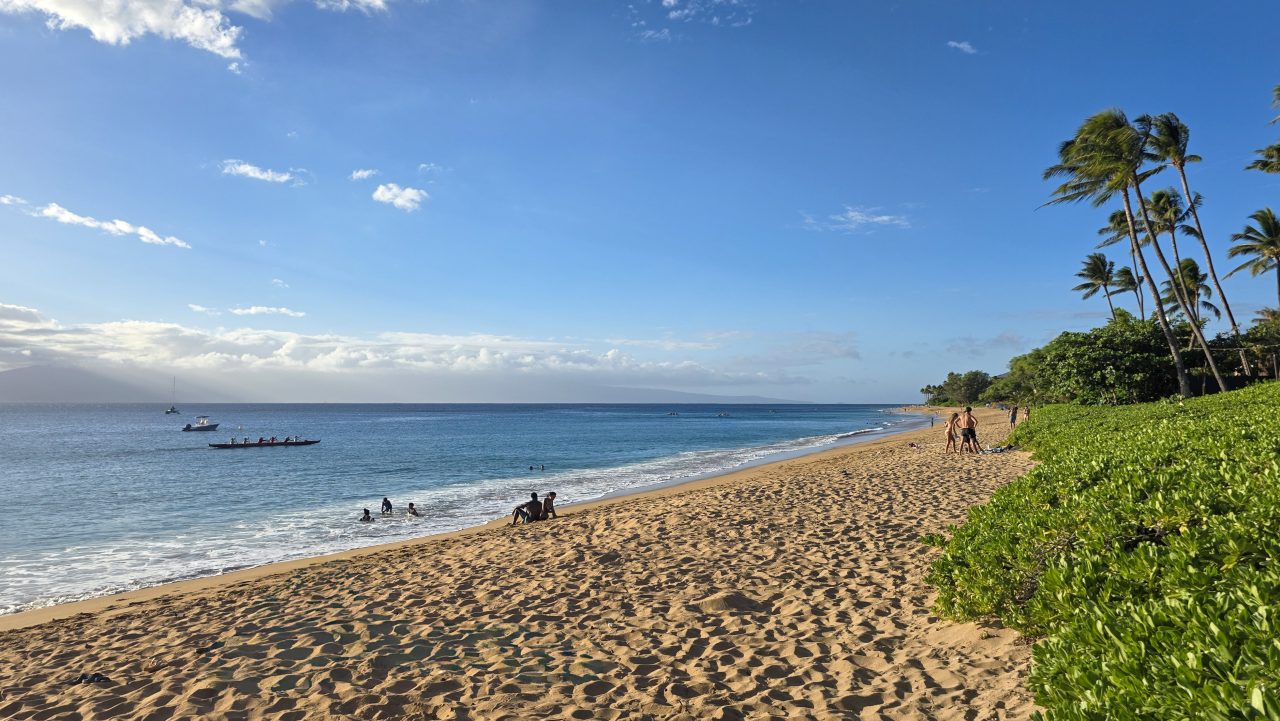
We know that erosion has been eating away at Kaanapali for decades. We’d reported the problems at the Hyatt and the proposed shoreline restoration before making this trip. But being there and closely checking the conditions, particularly after enjoying such a beautiful beach at north Kaanapali, left us with a very different impression of what staying in Kaanapali can still mean today.
Kaanapali’s missing sand isn’t just confined to one end.
Farther north of Royal Lahaina, Maui Kai has been without a sandy beach directly in front of the building for years. Its own website tells prospective guests there is no sand there and that ocean access depends on conditions. Concrete steps provide a way into the water, but that’s a very different experience from walking directly out onto a broad sandy beach as had once been true.
The erosion at Maui Kai is separate from the current problems at Hyatt, and the shoreline between them isn’t uniformly disappearing. Some stretches still have the sand that made Kaanapali famous, while others have lost much of their recreational beach. Even within North Kaanapali, conditions vary considerably.
We also found that the beachwalk kind of came and went as we explored. We remember it as a continuous part of the Kaanapali experience, connecting the resorts and making it easy to wander along the ocean. This time, it wasn’t always the straightforward waterfront walk we expected, although we didn’t document every interruption, where it was cordoned off, or why.
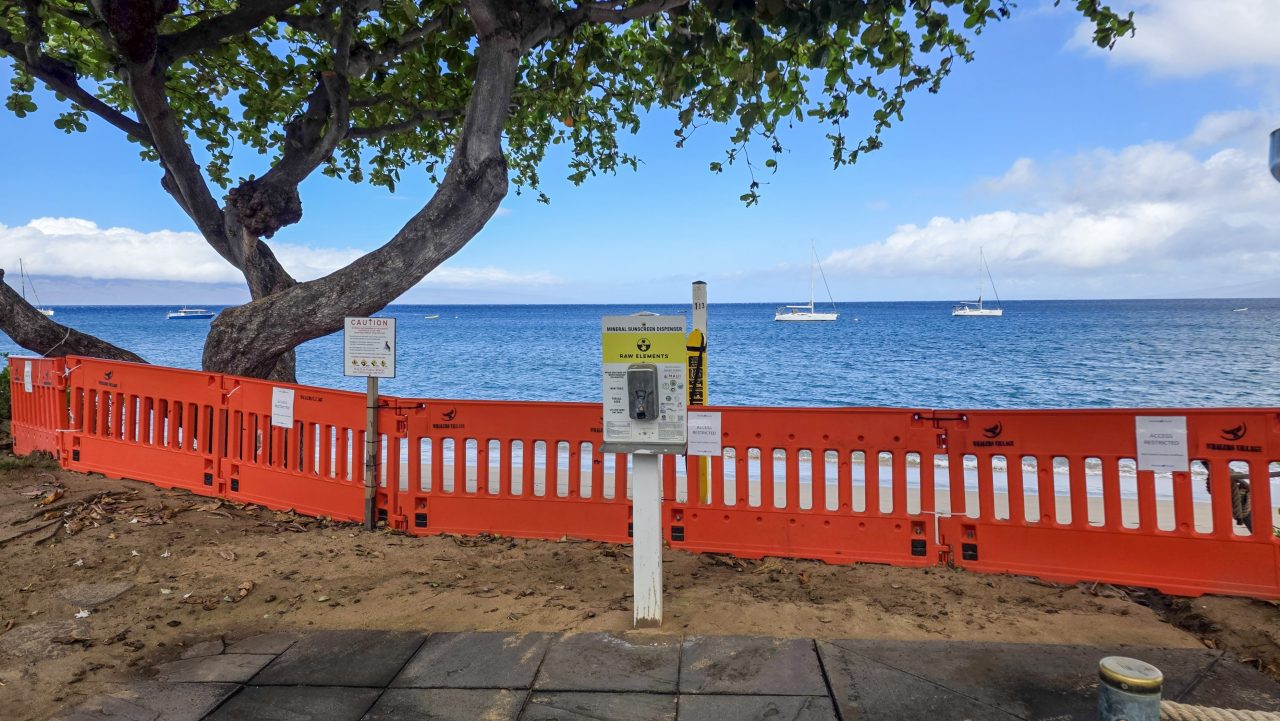
The conditions also don’t necessarily reflect what a resort’s oceanfront designation implies. Two properties can be relatively close geographically and offer very different access to the water. That’s especially striking when older photographs still show the wide shoreline visitors remember.
What we found at Hyatt Regency Maui.
The south end of Kaanapali has been losing sand for decades, especially around the Hyatt Regency, Kaanapali Alii and Marriott’s Maui Ocean Club. During our August visit, the section directly in front of Hyatt was in terrible condition, with almost no usable beach where we looked, and barriers attempting to hold the ocean at bay.
We had stayed at Hyatt before and enjoyed it, which made the current appearance more troubling. The southernmost hotel wing looked largely unused, although we couldn’t tell whether it was closed. We also saw what appeared to be concrete spalling on the exterior.

The Hyatt’s efforts to protect this shoreline began in 2015, when the resort installed what was approved as a temporary six-month erosion skirt. More than eleven years later, shoreline protection remains there after replacements and repeated extensions. What began as an emergency measure has become a longstanding, albeit unattractive, feature of this part of Kaanapali.
A powerful Kona storm in March 2026 undermined the beachwalk, prompting Hyatt to seek permission for another 360-foot protective skirt. We reported on that emergency proposal in May, when opposition over public access and shoreline protection halted the additional work.
The resort ultimately did not proceed with installation of the new skirt. According to an October report by the Hawaii Journalism Initiative, Hyatt instead pushed sand beneath the threatened sidewalk. The existing protection remains authorized through July 29, 2027, with the larger question of how to protect this shoreline still unresolved and contentious.
Another storm hit Kaanapali after we left.
Less than two weeks after our late summer inspection, Hurricane Lowell brought another round of damaging waves to Maui. On September 10, more damage occurred to the boardwalk near Hula Grill, where waves also toppled trees. Near Marriott’s Maui Ocean Club, erosion left a drop-off several feet deep beside the walkway.
The reports described fresh damage in areas beyond the Hyatt frontage that had concerned us during our stay. We haven’t returned to inspect the September damage or determine which sections have since been repaired, but it added another episode to an already challenging year for Kaanapali’s shoreline.
University of Hawaii Sea Grant coastal specialist Tara Owens explained in October that repeated storms had left Maui beaches with little time to recover. West Maui also has less sand available for natural replenishment than parts of South Maui, making recovery more difficult in some locations. Scientists were still assessing how much sand had moved offshore and how much might return through seasonal changes.
Maui beaches naturally gain and lose sand throughout the year, sometimes dramatically, but sections of Kaanapali have been experiencing chronic erosion that seasonal recovery alone does not reverse. Infrastructure built close to the water further complicates the process, particularly where the shoreline has no room to move inland.
A plan to restore the beach is back, but not soon.
The Pilikahakai Foundation and Kaanapali Operations Association submitted a revised Kaanapali Beach restoration proposal in July. The privately funded project would recover approximately 75,000 cubic yards of offshore sand and return it to two sections of the resort shoreline.
About 50,000 cubic yards would go between Hanakaoo Beach Park and Hanakaoo Point, potentially widening portions of the dry beach by 41 to 78 feet. Another 25,000 cubic yards would enhance the beach berm toward Black Rock. The proposed restoration would not extend north to Maui Kai, where the beach loss has been longstanding.
The sponsors have set fall 2027 as a possible construction start date, depending on county, state, and federal approvals. For now, the project remains in permitting, with environmental impacts, cultural protections, and public access among the issues under review. Community concerns about continued development along an eroding shoreline also remain.
Even if the project moves forward, adding sand won’t stop sea level rise or eliminate the need for longer-term decisions about buildings and infrastructure near the ocean. Maui has been trying to answer those questions for years, but the cost and practical difficulties of moving major resort structures make managed retreat a hugely complicated proposition.
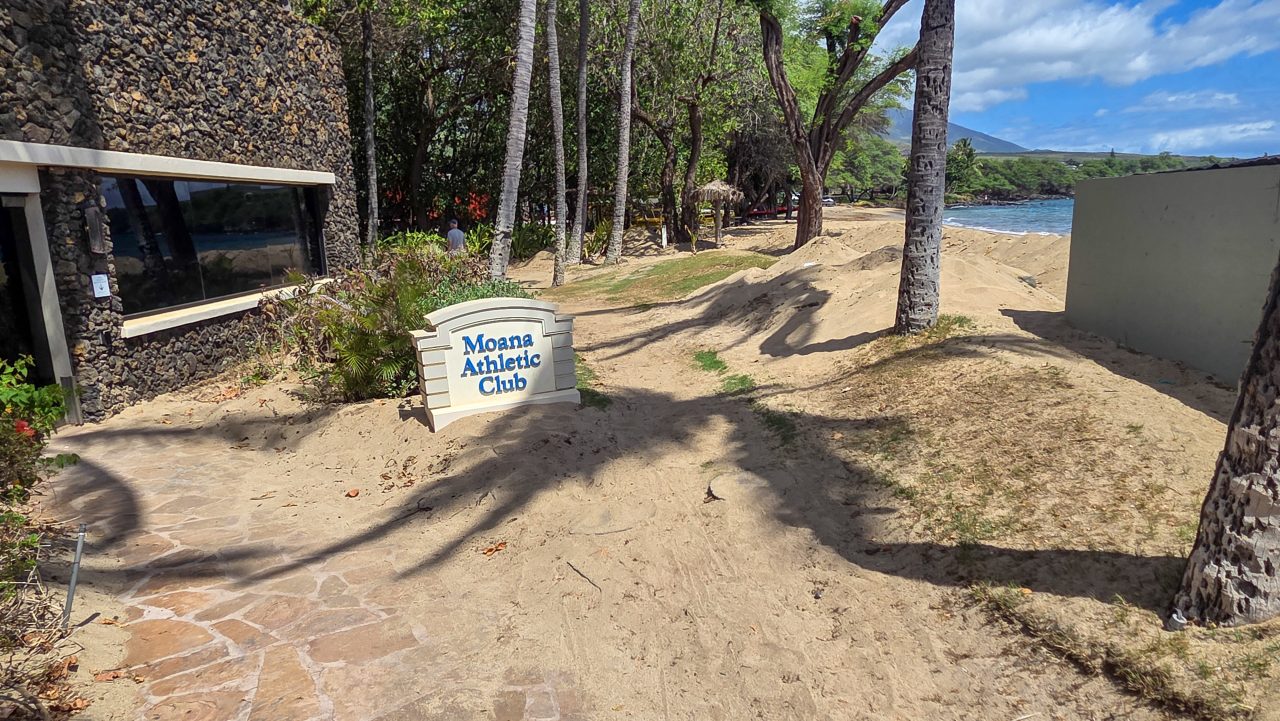
For now, we keep thinking about the southern end of Hyatt, where the building appeared partly unused, and we could see what looked like deterioration on its exterior and sand trying to enter the gym. Below it was the shoreline we had come to inspect, with almost no beach remaining in front of the resort. One of us looked at the scene and said, “What a mess.” We didn’t have much else to say.
If you’ve visited Kaanapali recently, what did you find along the beach, and how did it compare with what you remember from earlier visits?
Photo Credits: © Beat of Hawaii at Kaanapali, Maui, August, 2026.
By Rob and Jeff, Beat of Hawaii.
Some of the most meaningful parts of Hawaii are the ones visitors walk right past without knowing they are there. We’ve spent nearly 20 years finding them firsthand for BOH as full-time Hawaii residents reporting on travel, culture, and island life, and telling you what they mean for your trip. Join us →
Get Breaking Hawaii Travel News