
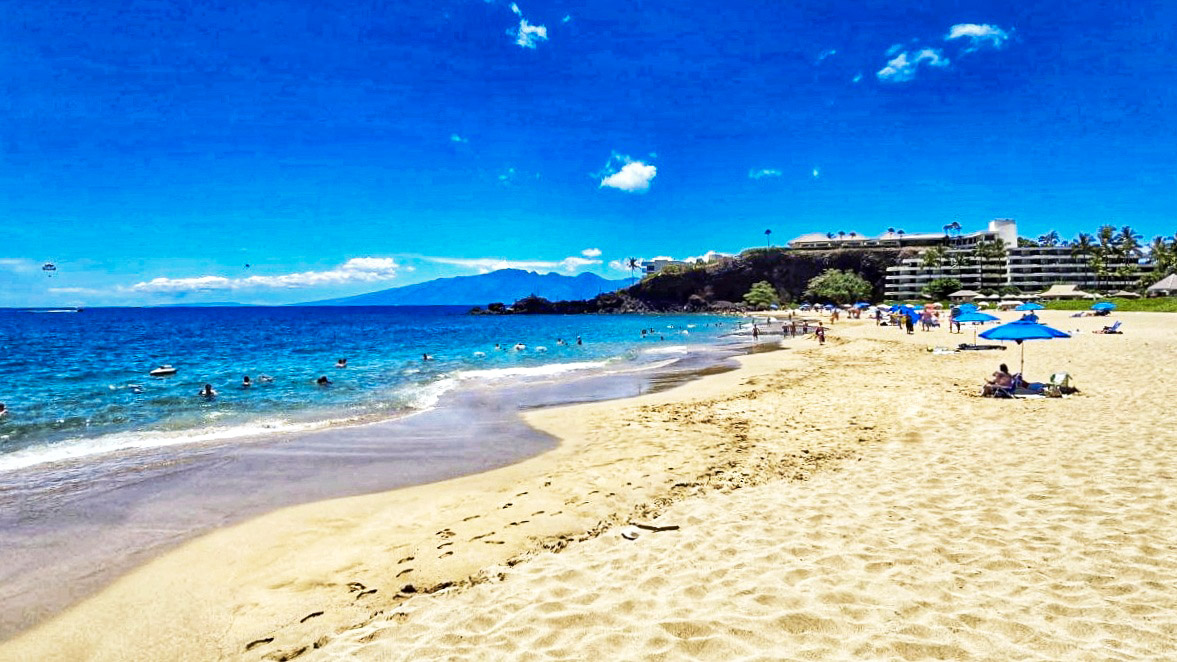
Most visitors assume Kaanapali Beach is simply there, always has been and always will be. They book an oceanfront hotel at the oldest resort community in Hawaii, picture the beach they will walk every morning, and rarely think about what’s happening on that shoreline as it changes from year to year.
But just a few months ago, we wrote about emergency erosion work after a March storm damaged the beachwalk near the Hyatt Regency Maui in Disappearing Kaanapali Beach May Get A Six Month Bandage. That story was about a temporary fix. Now that conversation has shifted, and a private resort group and a Maui nonprofit are moving forward with one of the largest beach rebuilding efforts yet for parts of Famed Kaanapali, using offshore sand to widen areas that have steadily been narrowing over time.
If you already have a Kaanapali vacation booked, there is no announced construction date and no immediate reason to expect any disruption. There is, however, a significant proposal moving through state review, and what it means depends partly on where along Kaanapali Beach you are staying.
Why Kaanapali keeps changing.
One of the most important things we learned while reporting the earlier story is that Kaanapali is not one uniform beach. Conditions near the Hyatt and Hanakaoo Point are very different from those farther north near the Sheraton and Black Rock, even during the same visit at the same time.
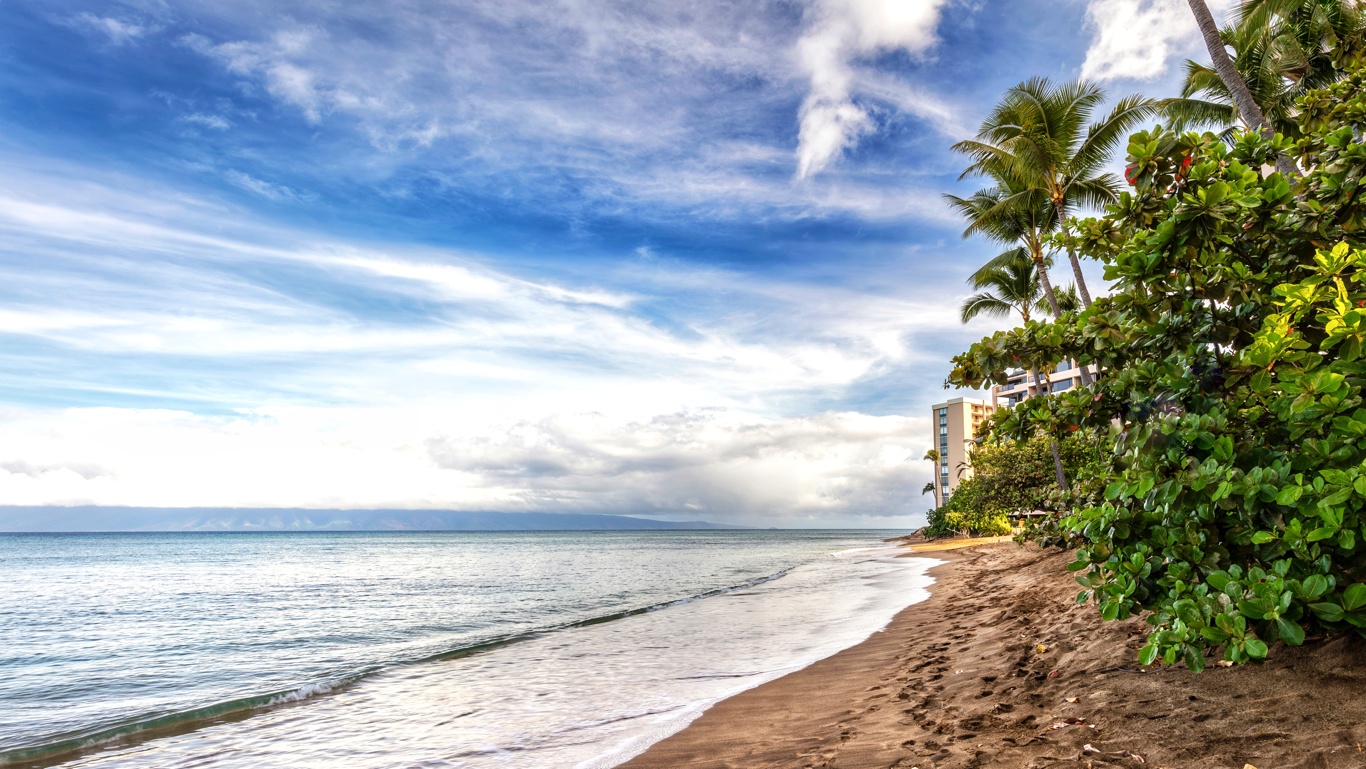
The south end near Hanakaoo Point and the Hyatt is the tightest and most visibly affected stretch. The beach narrows significantly in places, the shoreline has moved inland, and damage from the March storm forced part of the beachwalk away from its previous route.

Farther north, especially toward the Sheraton and Black Rock, parts of the beach have held up better. Visitors staying there may still see a beach that looks much as they expected, while someone walking the full length of Kaanapali will encounter a noticeably different shoreline at the south end. A visitor booked near Black Rock could have a very different experience from someone staying near the Hyatt, and that is before any larger rebuilding work begins.
What’s being proposed for Kaanapali Beach.
The Kaanapali Operations Association and Maui nonprofit Pilikahakai Foundation are pursuing a privately funded plan to rebuild parts of the beach using sand taken from offshore near Puu Kekaa, also known as Black Rock. Sea Engineering Inc. is the lead consultant, with Chris Conger serving as the project’s public-facing voice. The state’s original project documents, including the engineering plans and environmental review, are available through the Department of Land and Natural Resources.
The proposal calls for moving about 75,000 cubic yards of sand. Roughly 50,000 cubic yards would go near Hanakaoo Beach Park and Hanakaoo Point, widening portions of that stretch by about 41 to 78 feet. The remaining sand would build up the berm extending toward Puu Kekaa, returning parts of the shoreline closer to their 1988 width.
This isn’t any new idea. Work on Kaanapali erosion dates back to 2006, and an earlier version of the project stalled in 2023 when the state withdrew its share of the funding. The current privately funded plan responds to those years of concerns: the protective buffer around Puu Kekaa has been expanded from 150 to 280 feet, construction staging has been removed from Hanakaoo Beach Park, in-water work would be scheduled outside canoe paddling season, and a full-time cultural monitor would have authority to stop work if needed.
Those safeguards are part of what’s under review, not proof the project will be approved. The proposal is now under state review through the Department of Land and Natural Resources Office of Conservation and Coastal Lands. No approval has been reported, and no permitting timeline or construction date has been announced.
The disagreement over whether this is the right fix.
Supporters see a healthy Kaanapali Beach as essential to West Maui’s recovery and long-term economy. John Pele, executive director of the Maui Hotel & Lodging Association, has called Kaanapali the economic engine of West Maui, pointing to approximately $3 billion in annual resort revenue and the thousands of jobs tied to the area.
From that perspective alone, allowing one of Hawaii’s best-known beaches to continue narrowing is not a choice. The beach is part of what visitors believe they are booking when they stay at Kaanapali, and its condition affects resorts, workers, businesses and residents across West Maui and arguably the entire state.
Maui shoreline advocate Kai Nishiki argues that replacing sand does not resolve the underlying conflict between an eroding shoreline and development built close to it. She has compared the potential level of opposition to the Mauna Kea telescope protests and says managed retreat from the shoreline is the only real long-term solution.
Nishiki has also questioned whether beach rebuilding would remain a temporary bridge or eventually become a permanent cycle of replacing sand as it disappears. Supporters, meanwhile, face the practical question of what any retreat would mean for large hotels, condominiums, roads and other structures that cannot simply be picked up and moved inland.
That same tension appeared in comments on our May article. One longtime Kaanapali resident pushed back on the idea that buildings should simply be relocated or surrendered to erosion, asking how anyone realistically moves a multi-story masonry building.
There’s clearly no easy resolution between protecting the beach, protecting existing development, and avoiding shoreline structures that can worsen erosion nearby. The current proposal puts that argument back in front of Maui, this time with new sand rather than another seawall as the proposed answer.
What this means if you’re already heading to Kaanapali.
Construction is not about to begin, and no permitting or construction timeline has been announced. There are also no new beach closures or ocean-use restrictions tied to this proposal at this point. Visitors arriving now are more likely to notice the existing erosion and earlier emergency work near the Hyatt than anything connected to the proposed beach rebuilding plan that has yet to begin.
If the project is eventually approved, work would likely be staged rather than affecting the entire shoreline all at once. Exact areas of construction, access changes, and ocean-use restrictions have not been laid out. It is still too early to say precisely what a future visitor would encounter, but we do hope to learn more soon. For visitors booked at Kaanapali in the near future, the most accurate answer today is that the proposal creates questions, but not an expected Maui vacation disruption.
Why another wall isn’t the simple answer.
The Hyatt’s earlier erosion barrier shows how temporary shoreline fixes can become something else. That barrier was approved in 2015 as a 180-day emergency measure and remains in place more than a decade later.
Maui County shoreline rules that took effect in 2024 now require a variance for hardening structures such as seawalls. That is one reason the current proposal centers on adding sand rather than building another permanent barrier along the water.
State officials have already linked roughly 4 miles of beach loss along the West Maui coast to seawalls, sandbags and sloped rock barriers installed elsewhere from Napili to Kahana. Such hardened structures can help protect what sits behind them while accelerating beach loss directly in front of them or along neighboring properties.
Adding sand avoids some of those consequences, but it comes with another uncertainty. A rebuilt beach would still face seasonal waves, storms and the same long-term forces that narrowed it to begin with, which means nobody can promise the new shoreline would remain at its restored width in the long term.
What happens next at Kaanapali Beach.
As one of Hawaii’s signature resort shorelines, the outcome of what happens at Kaanapali could shape how West Maui and Hawaii handle erosion elsewhere along developed coastlines for years to come.
We’ll be back in Kaanapali shortly and are especially interested in hearing from readers with upcoming stays. If you’re wondering what this project could mean for your vacation, tell us where you’re staying and what questions you hope to have answered.
Lead Photo Credit: © Beat of Hawaii at Kaanapali Beach, Maui.
By Rob and Jeff, Beat of Hawaii.
Some of the most meaningful parts of Hawaii are the ones visitors walk right past without knowing they are there. We’ve spent nearly 20 years finding them firsthand for BOH as full-time Hawaii residents reporting on travel, culture, and island life, and telling you what they mean for your trip. Join us →
Get Breaking Hawaii Travel News



What does all this dredging do to the aquatic ecosystem? Or are we supposed to assume everything is dead in that area?
Sea walls were put up in front of the Sheraton many years ago and it took only one storm really to take away all the sand and break up the wall. For the many years that I have been coming, I see the sand wash out and I see a beach come back. Mother nature seems to look after Kaanapali Beach.
The Beach is receding badly in the area mentioned- it comes and goes with the tides. Did you know that the Proposed Lahaina Bypass Extension is proposing a connector road at this specific spot?
lahainabypassphase1c.org
This proposed connector off/on ramp (not the Bypass project as a whole) alongside Wahikuli Gulch is opposed for the following reasons:
“Canoe Beach” aka Hanaka’o’o congestions; Historical Cemetery disturbance; Hawaiian Pueo endemic Owl gulch habitat etc…
sign.moveon.org/petitions/petition-protect-our-sacred-spaces-no-connector-road-at-wahikuli-gulch-canoe-beach-kge-communities
More economical, shovel ready, Maui County owned options are available and proposed as an alternative connector road.
The beach here needs help but not more chaos, congestion and disturbance if indeed it will be rebuilt.
Maui averages 22 drownings a year, about 70% are tourist deaths.
Kaanapali and Black Rock still have no lifeguard tower and no lifeguards.
Maybe community organizer Kai Nishiki could try to Save Lives???
The explanation for no lifeguards is they really don’t care!
Shame, Shame, Shame on Maui residents.
One could say Kai’s objections, and those of some of her friends on the County Council, are more aimed at staying relevant and collecting donations than working toward reasonable, equitable solutions for bettering West Maui for everyone. One could say that.
Managed retreat does not always mean relocating a building, and that is not what she wants anyway. She just wants the buildings removed, period. There is no realistic way to relocate the buildings, and the hotels would never willingly remove them without a very long and expensive legal fight. Like too many political issues, the solution isn’t the goal. It is all about the performative fight.