
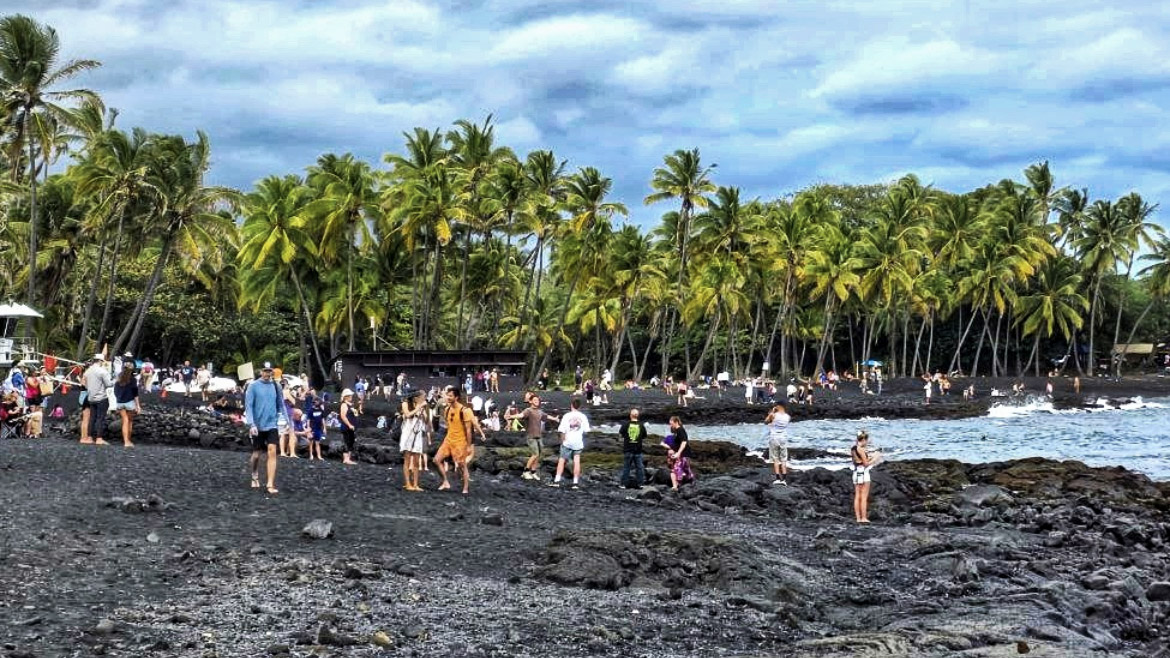
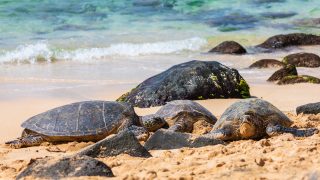
Punalu’u Black Sand Beach has been one of those Big Island places that always seemed permanent. Last December, we pulled off Highway 11, parked near the shore, walked onto the remarkable black sand and often found turtles resting there. For generations, there wasn’t much reason to even wonder who actually controlled the park or whether the familiar way of visiting it might someday change.
But that changes this weekend. The county’s lease for the 6.8-acre Punalu’u Black Sand Beach Park ends August 29 after negotiations with its private landowner failed to achieve a new agreement. County-managed park services will end, and the facilities and improvements will revert to the landowner.
The beach obviously isn’t disappearing. What is disappearing is something visitors have known for more than 70 years: Punalu’u as a county-run beach park, and perhaps more.
Over 70 years end this weekend.
Hawaii County says it has leased the Punalu’u property from successive private owners since the 1950’s, providing recreational use and shoreline access for residents and visitors. The current lease, executed in 1998, is for $1 and covers the parking, pavilions, bathrooms, and campground.
That arrangement was almost invisible over time. Punalu’u simply felt like another public beach park, one where generations of visitors arrived without thinking much about the fact that it was privately owned.
The county and the current owner, Black Sand Beach LLC, had been negotiating new terms for two years. The county says it ultimately offered a 10-year lease beginning at $159,300 annually with 3% yearly increases and also pursued buying the property outright, but no agreement was reached.
There are already differences over why this resulted in an impasse. The county says the landowner declined its offer and chose to terminate the existing lease, while an attorney representing Black Sand Beach LLC says the owner did not terminate it and recently offered another 30-day extension that the county itself rejected. Whatever actually happened in that dispute, county management ends tomorrow.
What happens next at Punalu’u isn’t clear.
County park services stop when the lease ends, while the improvements on the property revert to the owner. What hasn’t been established is what the day-to-day visitor experience will become afterward, including the parking, bathrooms, pavilions, and other facilities people have long associated with stopping here.
Hawaii law protects public rights along the shoreline and provides for public shoreline access, but that doesn’t answer all the practical questions at Punalu’u. How visitors will get there, where they will park, and what facilities will be available are separate questions now that the county lease will end.
The landowner’s attorney was quoted as saying that they remain committed to public access and are drafting a conservation easement to submit to the county. But for now, that remains a proposal rather than a settled replacement for the arrangement that’s ending.
Punalu’u was already part of a changing Hawaii.
We wrote last year about why Hawaii black sand beaches come with a catch, and Punalu’u stood out because it was so easy to visit. Unlike some of Hawaii’s volcanic shorelines, you didn’t need a difficult hike or detailed planning in order to see it.
That easy access had also become part of the problem. Earlier this year, when we wrote about Hawaii beaches becoming overrun, Punalu’u was among the Big Island locations identified as under strain. Our own photo from the beach showed just how many people could be packed onto that relatively small stretch of black sand.
The beach remains. Everything surrounding it may not.
There is a tendency with Hawaii access stories to jump immediately to whether something is open or closed. Punalu’u doesn’t fit neatly into either category right now, and that’s part of what makes this change so unusual.
The black sand, coastline, and turtles remain despite the lease having expired. What ends is a public arrangement dating back to at least 1954, with parking, facilities, and county management that became part of how generations of visitors understood Punalu’u.
For those of us who thought Punalu’u would simply always be there the way we knew it, that’s a surprisingly big change.
Lead Photo Credit: © Beat of Hawaii at Punalu’u Beach.
By Rob and Jeff, Beat of Hawaii.
Some of the most meaningful parts of Hawaii are the ones visitors walk right past without knowing they are there. We’ve spent nearly 20 years finding them firsthand for BOH as full-time Hawaii residents reporting on travel, culture, and island life, and telling you what they mean for your trip. Join us →
Get Breaking Hawaii Travel News


Been going there since ’66; a favorite destination primarily for Honu. My big questions are will there now be no lifeguard and who will oversee/protect Honu?
Sounds like something public might become private. Milk it for all the money possible. Maybe the property owner feels they can do better than the 162,000 a year offered by the county. To a billionaire this beach may be worth their owning outright. If it’s in Hawaii it’s all about the money or investment potential.