A Hawaii trip begins long before anyone reaches the airport. There are dates to coordinate, fares to watch, seats to choose, bags to pack, rides to arrange, and all the small decisions that have to be settled before departure.
For many travelers, that preparation once carried naturally into the flight itself. The trip had started, and the hours over the Pacific felt like part of it.
Hawaii flights once felt like part of the vacation.
Readers of a certain age often remember the flight itself as an event. It was not simply transportation across the Pacific. It was the first part of the trip.
People dressed differently for it. Families talked about the flight before they left home. Travelers wanted the window seat, not only for the view on arrival, but because watching the mainland disappear made the distance feel real.
The long hours over the ocean were part of the anticipation. You knew there was no road, bridge, or train connecting where you had been to where you were going. Hawaii was far away, and the flight made that separation feel important.
Even the routines onboard became part of the memory. A meal arrived, the cabin settled, and people watched the same movie or looked out at the same ocean. The flight created a pause between ordinary life and Hawaii. That pause seems harder to find now.
Hawaii flights feel different before they even leave.
Most travelers still feel excited about Hawaii, but that excitement does not always extend to the hours inside the aircraft. Boarding has become less about settling into the trip and more about getting through the process without a problem.
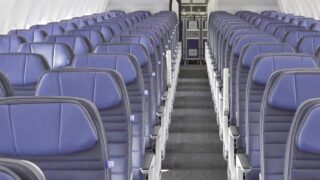
People watch the bins as they move down the aisle. They check who is sitting beside them, how far the seat ahead can recline, and whether the child behind them is already kicking the tray table. Phones, tablets, headphones, chargers, snacks, neck pillows, and water bottles all have to fit into a space that rarely feels large enough.
None of that makes today’s travelers worse than the people who flew twenty years ago. It means we arrive prepared to protect our space, our sleep, and our ability to endure the hours ahead. For many passengers, the flight has become something to manage rather than enjoy.
Hawaii cabins once carried more shared anticipation.
Memory can make the past look better than it was, and we doubt every Hawaii flight was calm or gracious. Still, the same memories come up whenever travelers compare flying then and now.
People remember passengers applauding after landing. They remember cabins that became calmer after meal service and boarding that seemed to move faster when fewer people carried nearly everything they owned into the cabin.
Some remember talking with the people beside them instead of disappearing behind headphones for the entire flight. Others remember children being taken to the window when the islands came into view, with several rows leaning over to see the same first glimpse of land.
The window seat carried a different meaning then. It was not simply the seat that made it harder to reach the restroom. It was the place where you watched the Pacific, searched for clouds breaking below, and waited for Hawaii to appear.
Now a traveler may choose the aisle because getting out quickly feels more valuable. On a red-eye, the shade may stay closed through sunrise because everyone is trying to preserve another hour of sleep. Those choices make perfect sense, but they also reveal how the flight has changed in our minds.
Hawaii flights carry more weight than ordinary routes.
A Hawaii trip can take months or years to plan. It can cost thousands of dollars, involve family members traveling from different places, and carry expectations that begin long before departure.
That emotional weight enters the cabin with everyone onboard. Some people are beginning a long-awaited vacation. Others are heading home. Some are already tired, anxious, overstimulated, or worried about everything that still has to go right after landing.
A minor irritation on a short flight may disappear after an hour. On a Hawaii flight, it can remain beside you for five, six, or eleven hours. A loud video, a reclining seat, a disagreement over the window shade, or someone repeatedly pulling on the seat in front can become the defining memory of the trip across the Pacific.
Behavior that might seem small elsewhere can feel much bigger on a Hawaii route. Everyone is sharing the same confined space for half a day while carrying unusually high expectations about what waits at the other end.
Frequent Hawaii flights can begin to feel like a commute.
We fly these routes constantly, often enough that the pattern has become impossible for us to miss. The flight no longer feels remarkable simply because it is headed to Hawaii.
Somewhere past the halfway point over the Pacific, we often feel a specific kind of relief. The mainland is far behind, Hawaii is still hours ahead, and there is nothing left to decide. The flight simply has to continue until it is over.
It is not excitement. It is the feeling of reaching the point of no return and accepting the remaining hours.
A frequent flier on a routine Los Angeles to Omaha trip might recognize it. The route becomes administrative. You settle in, watch the clock, manage your space, and wait for arrival. The destination may be different, but the process feels ordinary.
That is increasingly how much of a Hawaii flight feels to us now. We know the airport routines, the boarding sequence, the long stretch of water, the cabin sounds, the point when the service ends, and roughly how much time remains without checking the screen.
The flight has become something to survive, although not because every flight is bad. It is because familiarity has stripped much of the occasion from it.
The change became sharper after COVID.
This feeling existed before COVID, but it has become much more pronounced since. The flight did not suddenly lose all sense of occasion at once, yet the distance between anticipation and endurance has widened.
We notice it across repeated trips, not on one unusual flight. The cabins feel more inward, the routines more individual, and the hours more like time to be managed than part of a shared journey.
We do not think this is about one airline, one generation, or one change in service. It is simply the pattern we now recognize every time we cross the Pacific.
The volcanoes still change everything.
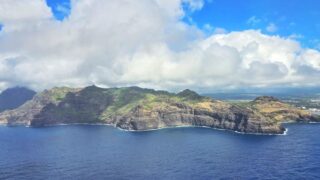
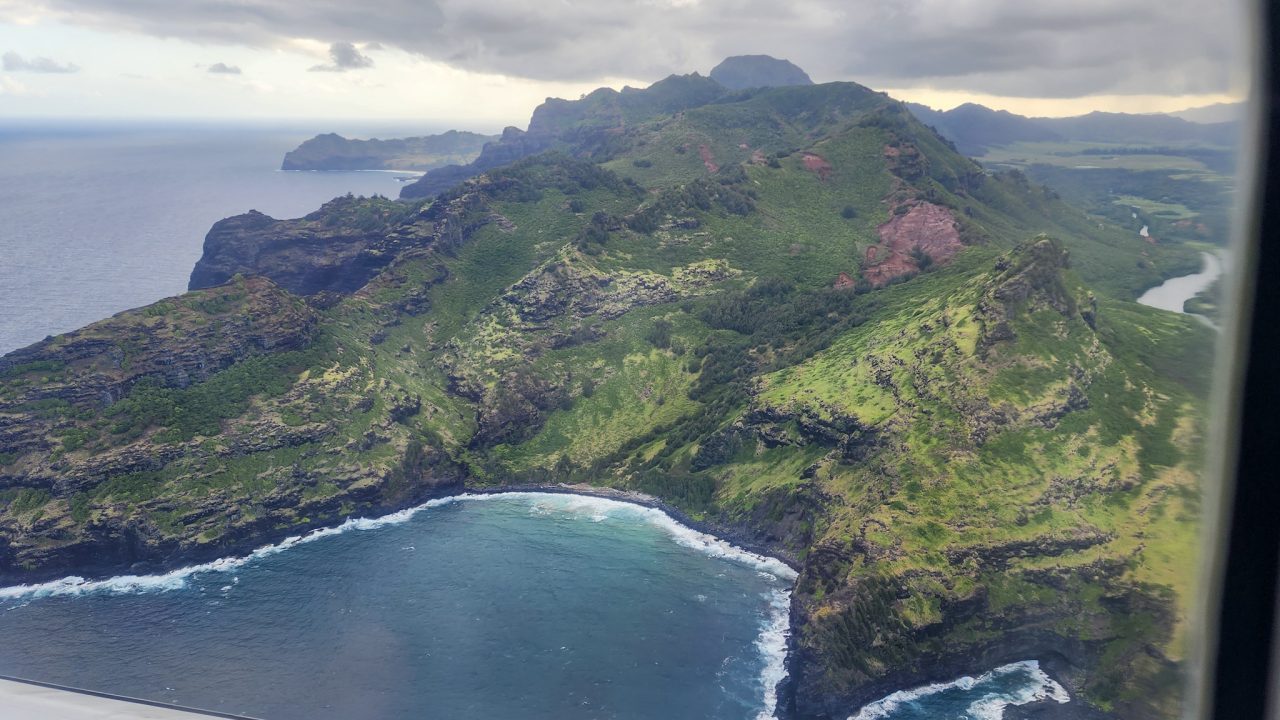
Then, close to an hour before landing in Lihue, the volcanoes come into view. The feeling changes instantly.
After hours in which the flight has felt ordinary, administrative, and almost detached from the destination, there they are below us. The shapes rise through the distance, the light changes, and Hawaii suddenly feels physically present again. Relief becomes joy.
It is immediate and familiar, and it happens no matter how many times we have flown the route. We may know exactly when to begin looking, but the sight still reaches us before we have time to intellectualize it.
For most of the flight, the journey can feel like nothing in particular. Then one view outside the window still feels like everything.
Hawaii flights have become more compressed too.
The physical experience has changed along with the emotional one. Flights are often full, personal space feels tighter, and overhead bins can be nearly gone before later boarding groups reach their seats.
Those conditions do not explain the whole shift, and we have written before about why Hawaii flights can feel unusually uncomfortable. Here, they are only part of the background. Passengers, airlines, and the travel experience all became more compressed and transactional at the same time.
We adapted gradually. We learned to board earlier, pack differently, protect our space, bring our own entertainment, and lower our expectations for the hours between departure and arrival.
Hawaii still appears outside the window.
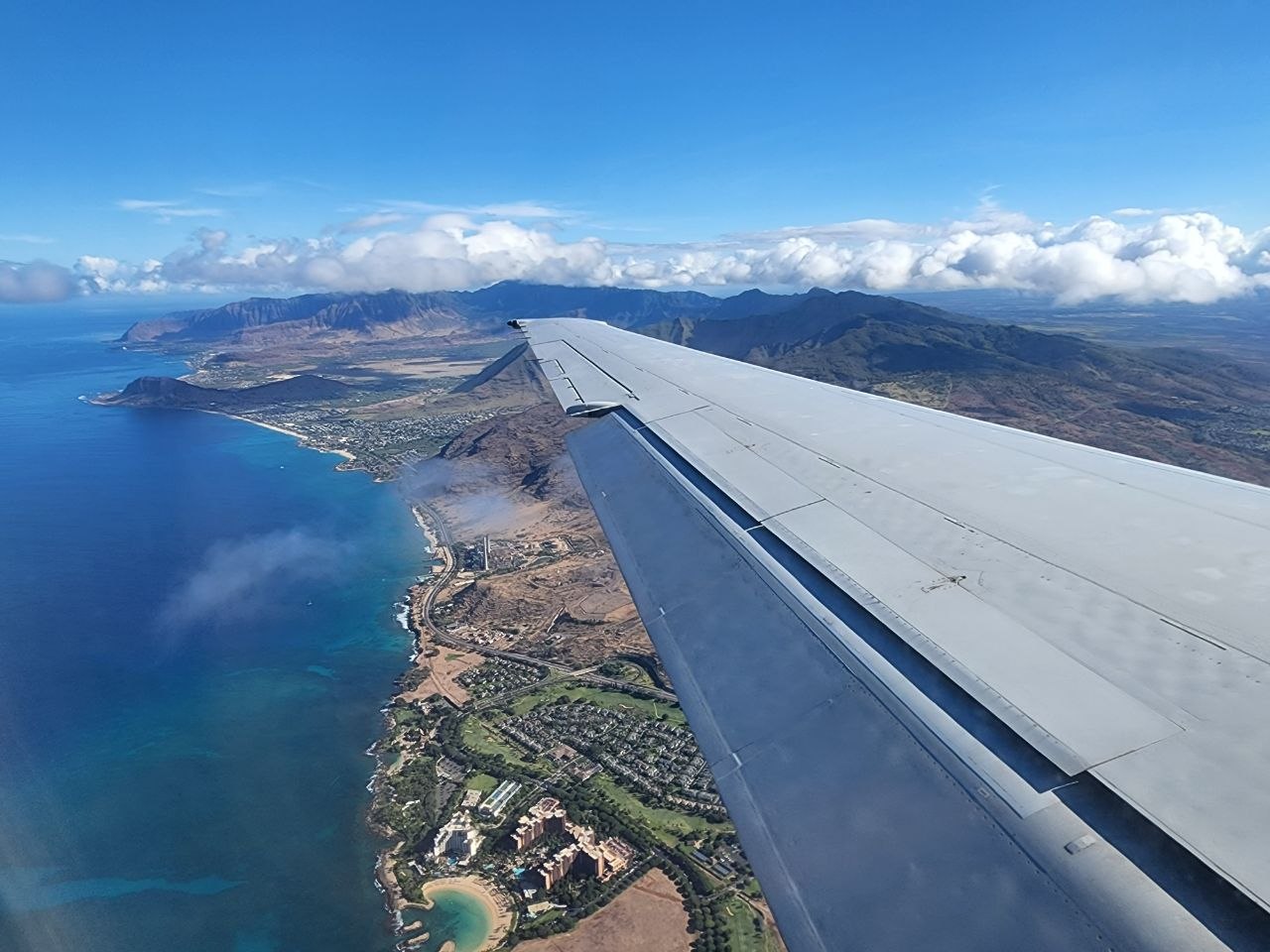
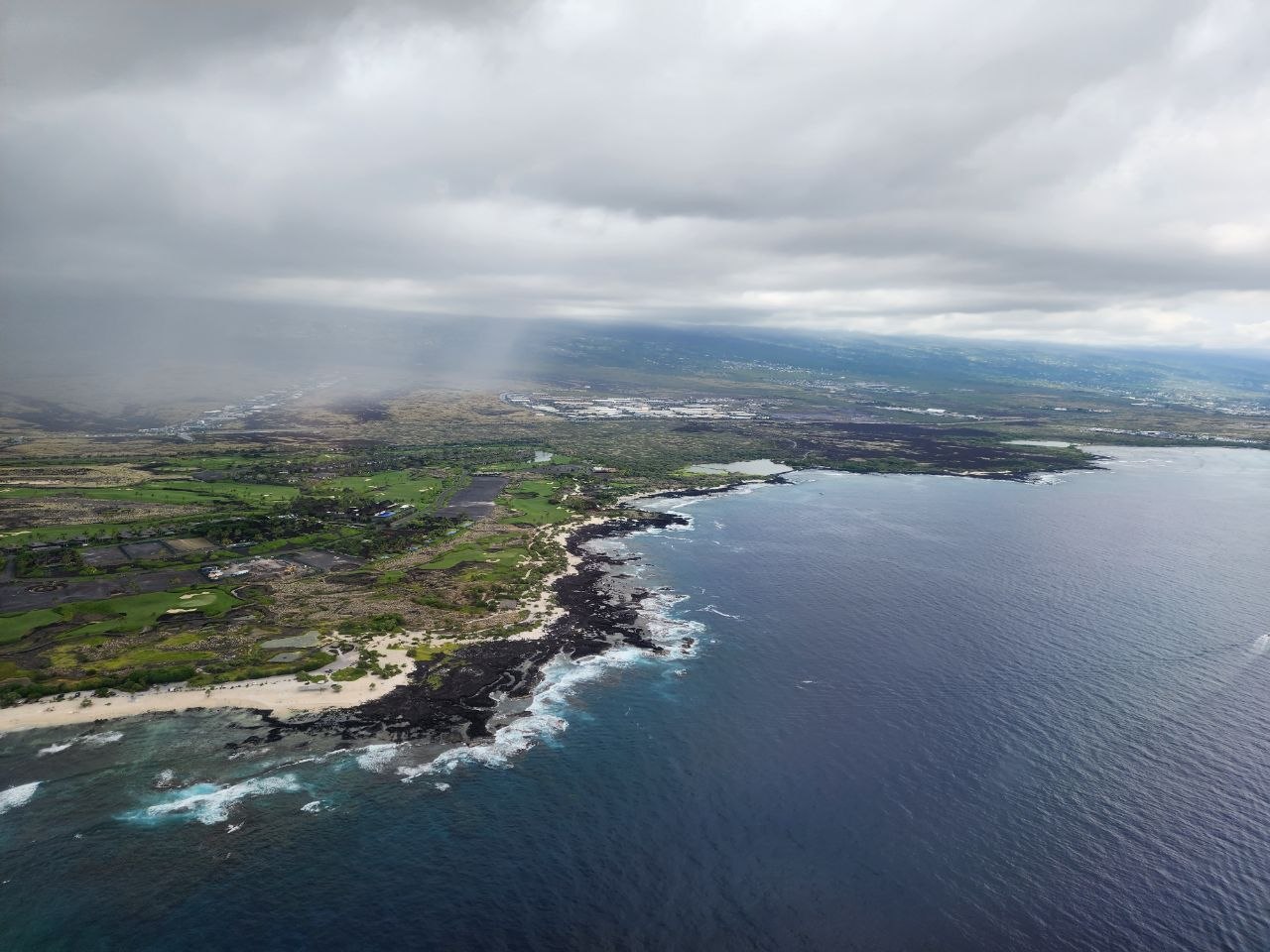
The strange part is that the final view has not lost its power. When the clouds break, and the islands appear below, people still lean toward the windows. The water changes color, the mountains take shape, and the flight suddenly feels connected to the place again. For a few minutes, the windows become the whole point.
Perhaps that is why the change feels so noticeable. The destination still creates the same anticipation, but the hours leading to it no longer feel like part of the reward for most travelers.
And the feeling doesn’t stay in the air. It returns again on the ground, even somewhere as ordinary as a jet bridge in Honolulu, stepping outside into the fragrant air itself. A reader described that same moment. Tony J. said, “It’s hard to put into words… All I know is that as soon as we reach the terminal and go outside and we breathe
in that Special Air, we feel we have returned to a land we are supposed to be in. It gives you a feeling of belonging. The Aloha spirit.”
What changed the most on Hawaii flights? When did you first notice it? And is flying to Hawaii still part of the vacation, or is it something you endure until you arrive?
Photo Credits © Beat of Hawaii. Lead Photo is Kauai.
By Rob and Jeff, Beat of Hawaii.
Some of the most meaningful parts of Hawaii are the ones visitors walk right past without knowing they are there. We’ve spent nearly 20 years finding them firsthand for BOH as full-time Hawaii residents reporting on travel, culture, and island life, and telling you what they mean for your trip. Join us →
Get Breaking Hawaii Travel News