

Leis have not disappeared from Hawaii. You can still buy them at Costco, Safeway, airport lei stands, and some flower sellers across the islands. What has disappeared are the farms that used to grow many of the flowers.
For decades, Hawaii quietly lost most of its commercial flower production. Plumeria, ginger, tuberose, orchids, and other lei flowers that once came from local farms were replaced by imports, especially orchids from Thailand. That shift kept lei affordable and widely available even as the farms themselves disappeared. Now the replacement system is under pressure too.
Go to a Kauai farmers’ market today and look for flower vendors. Not flowers growing in yards or along roadsides, but vendors selling flowers in quantity. Years ago, you could find multiple tables with plumeria, ginger, tuberose, orchids, and other flowers stacked up and priced for regular people. Today, many markets have no flowers. The growers are mostly gone. What replaced them was a global supply chain, and that supply chain is no longer as cheap as it used to be.
How Hawaii lost its flower farms.
This did not happen all at once. Land and labor got more expensive. Pests and weather made flower farming more challenging. The state did not protect this industry in any meaningful way, and the free market did the rest. Hawaii has been through this before. Sugar and pineapple followed largely the same arc, industries that seemed permanent until land and labor costs made them noncompetitive, and then the acreage moved on. Flower farming was smaller and less obvious, but the pattern was the same.
Over time, local flower farming stopped making financial sense for many growers. Some sold land. Some shifted to different crops. Some just closed up shop and retired because the margins were gone. That happened without much public alarm. Lei were still around. Airport greetings still happened. Florists still had flowers. On the surface, the tradition looked largely intact.
But the commercial base had already changed. By the time anyone really started talking about the damage, roughly 90% of the flowers used in Hawaii lei were already coming from overseas. The tradition stayed alive, albeit in decline, while the supply moved offshore. The farms have been disappearing faster than anyone is counting them.
How imports kept the tradition going.
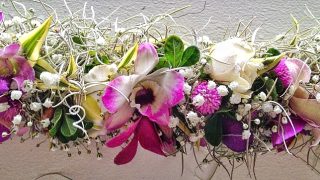
In a lot of ways, the imported flower is what kept the whole thing from getting expensive much sooner than it did. Thai orchids in particular became the backbone of Hawaii’s lei trade because they were dramatically cheaper than what local growers could produce. They ship well, last reasonably long, and arrive in the volume that florists and lei makers require. That allowed lei to remain something ordinary enough to buy for an arrival, a graduation, a performance, or a family celebration without every purchase feeling extravagant.
Without imported flowers, Hawaii probably would have arrived at this price problem years ago. The local growing base had already shrunk too far. Imports gave Hawaii a way to keep lei widely available even after Hawaii had already stopped growing enough flowers to support its own custom.
Why the replacement is getting expensive too.
Now the replacement supply is under pressure. Tariffs, shipping, and logistics costs have not helped. Imported flowers that used to come in at a huge price advantage are no longer as cheap as before. That does not mean local flowers will suddenly be abundant again. They’re not. It means the low-cost backup is getting weaker.
As lei prices move up to $100, $150, or even $200 or more, depending on the type, high prices are no longer theoretical. They are already here at the upper end, and pressure is building in below that.
What this looks like on the ground.
The visible reality has been there for years. The flower vendors have thinned out. The abundance is gone. The idea that Hawaii still has a broad local flower economy ready to fill the gap does not match what us residents have been watching happen for decades.
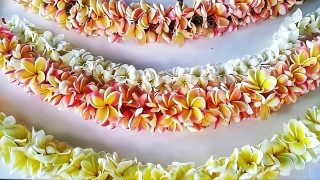
Flowers still grow in Hawaii. Individual lei makers still create beautiful work. People still grow plumeria and other lei flowers in yards and on small properties. There are even small farms still producing, like the family-owned Molokai Plumerias Farm, which ships directly to customers across the country via FedEx.
But the economics are brutal even at that scale. A $22 plumeria lei from Molokai Plumerias becomes an $80 purchase by the time packaging and shipping are factored in, leaving almost nothing for the grower. On Kauai, a flower farmer who has sold at local markets for decades recently described the same squeeze: not enough money in it, nobody willing to work for what the margins allow, and a business she is winding down rather than passing on.
But that is not the same as having a large commercial growing base that can supply airport stands, hotels, graduations, events, and daily lei demand across the islands at prices people can handle.
That commercial capacity is what Hawaii lost. Imports filled the gap so completely that many people barely noticed how dependent the system had become.
What the Hawaii legislature is doing now.
One House bill this session, now dead, would have required some state-purchased lei to include Hawaii-grown flowers and to label where the flowers came from. It failed. A Senate bill is still alive, but it does not rebuild the industry. It would create a work group to study whether local growers can meet demand and how to support them. This conversation is happening long after the farms disappeared and long after the import system became integral.
What Hawaii visitors will notice.
Most visitors are not going to track flower sourcing or legislative bills. They are going to notice the price. The lei waiting at the airport stand, the hotel greeting lei, the graduation lei, the special occasion lei, all of that is tied to the same problem. If the flowers cost more, the finished lei costs more. If labor is expensive and the cheaper imported supply gets squeezed, prices keep rising anyway.
That does not mean the Hawaii lei tradition will disappear tomorrow. It means one of Hawaii’s most recognizable finds is being pushed further toward a premium item rather than a regular gesture.
Where this could go next.
There is probably no quick fix. Rebuilding a commercial flower industry in Hawaii would take land, labor, water, training, and actual long-term support. It would also take buyers willing to pay more. None of that is impossible, but it is much more difficult than passing a labeling bill or launching a work group to study lei.
The bigger problem is that Hawaii had years to act while imports were still cheap enough and masked the damage. Instead, the state and the market let the local industry keep shrinking to near nothing, and now the replacement system itself is getting hit.
What do you think, is there a realistic path to rebuild flower farming in Hawaii, or has the industry already shifted too far toward imports to ever reverse it?
Lead Photo Credit: © Beat of Hawaii at Molokai Plumerias Farm.
Get Breaking Hawaii Travel News
Don’t forget that lower Puna on Hawai’i island lost a lot of flower farm land to lava in 2018. The road to that area is in the process of being rebuilt.
This is not surprising. The cheapest place to buy a pineapple in Hawaii is Costco and they are not local grown. The industries that sustained Hawaii for decades have collapsed in favor of global supply chains and poor “premium” product marketing. Hawaii has opted for the quick “sugar rush” of tourism as the only tent pole of their economy and are successfully rushing to destroy that through the neverending obstacles often discussed here on BOH. As a past resident and frequent visitor, I’m now resolved to sit back and watch the sad decline.
I sadly agree.
I would hope Hawaii would look at bringing back to its lands the sugar, pineapple, coffee, and lei farms – Hawaii needs to reinvest in itself otherwise its just becoming another state of the mainland.
Lei giving is in no danger of disappearing. We all give lei, but in true Hawaiian tradition, you learn to make them yourselves, as handmade leis are the most highly valued. I have plenty of ti plants, a plumeria tree and two weleweka trees from which I plan to make a 6-string lei for Merrie Monarch. With proper protocol, you can also forage for lei if you are pono. Wild kukui groves abound, and bougainvillea grow wild along the highways.
The mass market tourist industry can survive on cheaper bulk imported orchid leis from Thailand.
As a visitor for the past 17 +years I love to support the local economy. We often visit the farmers markets for fresh cut flowers. I would love to buy a lei from flowers grown on Kauai, made by local children and where proceeds go back to the community (preservation projects, schools etc.)
This is a bunch of hogwash. In 1968 a Hawaiian lady sat outside of the Royal Hawaiian Hotel and sold plastic lei’s which were $3 puka necklaces $8 and hand thread real lei’s in front of you from a big box of flowers with prices of $10-15 dollars depending on the flower type. Now lei’s are $100, $150,and over $200 dollars no wonder lei necklaces have slumped in sales. I understand inflation and such but if she could make a profit then then really why can’t someone make profit now. IMO I really think the son’s and daughters of the parents don’t want to venture in the same footsteps of their parents. Too much commercialization has taken over if these flowers have to be imported from Thailand and the Big Buck Profit Greed don’t settle good with the normal tourist. If Hawaiian’s can’t make a quick turn and burn buck then all in all it isn’t worth doing at all.