
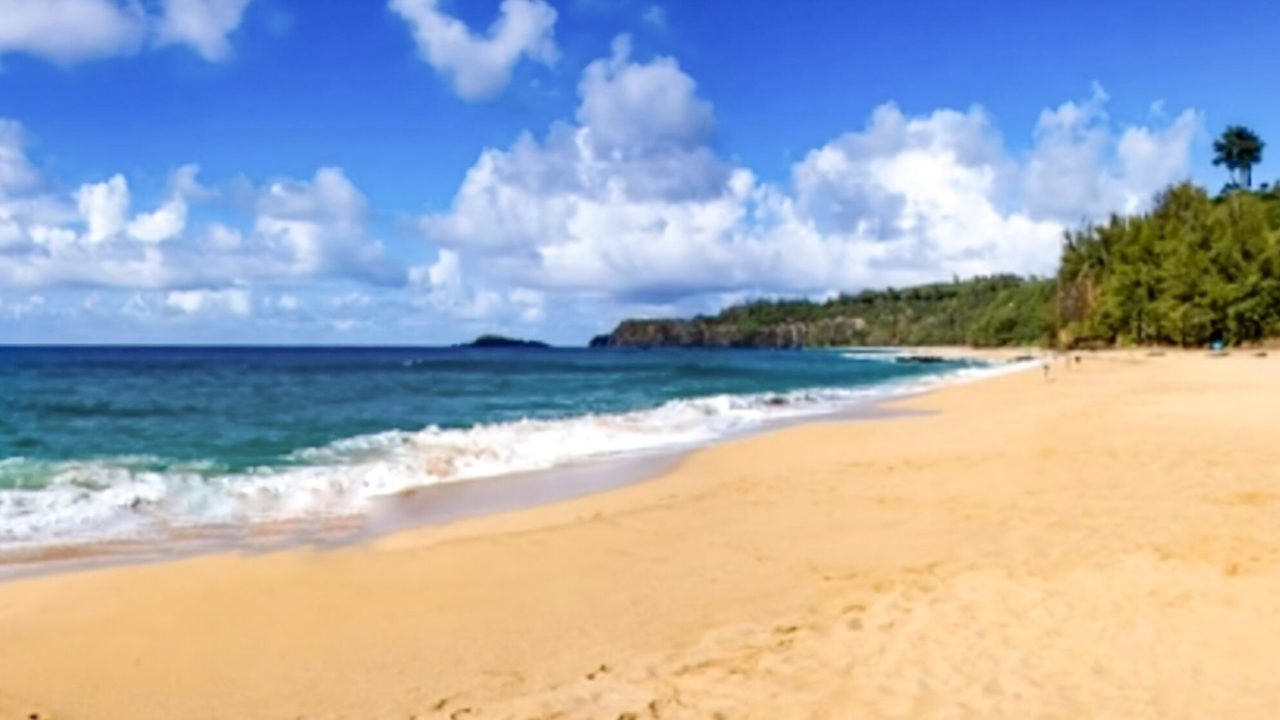
Three Hawaii beaches have just been named among America’s ten best clothing-optional beaches. Secret Beach on Kauai ranks fourth, Red Sand Beach on Maui seventh, and Kehena Beach on the Big Island ninth. That’s quite a showing for Hawaii, especially since none of these beaches is officially designated for nude sunbathing.
The new Travel + Leisure ranking, published November 4, puts all three among the country’s most popular places to go without a swimsuit. The magazine does acknowledge Hawaii’s legal restrictions, specifically warning readers about Kauai’s Secret Beach and Maui’s Red Sand Beach. But a warning tucked into a national ranking doesn’t change what visitors may encounter on arrival, including law enforcement, dangerous beach access, and rules that aren’t nearly as relaxed as the reputation may suggest.
Kehena Beach saw 123 citations during an earlier enforcement sweep.
Kehena, on the Big Island’s Puna coast, has one of Hawaii’s most established nude-sunbathing traditions. Its black-sand shoreline has attracted clothing-optional visitors and residents for decades. But that history hasn’t prevented authorities from taking action.
During four consecutive Sundays in April 2021, officers from DLNR’s Division of Conservation and Resources Enforcement, Hawaii County police, and state sheriffs conducted a coordinated operation at Kehena Beach and along the adjacent highway. They were responding to concerns involving public nudity, alcohol, drugs, traffic violations, and compliance with then COVID-era rules.
According to DLNR’s official account, state officers issued 123 citations. Violations on the beach included open lewdness, while dozens of tickets along the highway involved vehicle offenses. These were not 123 nudity citations, but public nudity was specifically among the activities officers addressed.
DLNR also reported a divided community opinion, with some residents welcoming enforcement and others objecting to the increased police presence. The department acknowledged how few accessible beaches remained along that stretch of the Puna coastline following decades of lava flows.
The operation took place five years ago and doesn’t establish that comparable enforcement will continue. Still, it’s a well-documented example of what can happen at a beach that national travel guides describe as clothing-optional. DLNR said at the time that officers planned to continue regular patrols and encouraged beachgoers to understand the law in order to avoid court appearances and potentially costly fines.
Red Sand Beach has a much bigger problem than nudity.
Red Sand Beach, also known as Kaihalulu, near Hana, is among Maui’s most unusual coastal settings. Its distinctive red shoreline has made it a destination for visitors seeking something unique, including those attracted by its longstanding clothing-optional reputation. But getting there involves a hazardous trail across steep, unstable terrain, with added concerns about trespassing on private property.
We’ve reported on the consequences before. In 2021, a 69-year-old Florida visitor fell while hiking toward the beach on marked private property. The following year, a 23-year-old Arizona visitor suffered foot and leg injuries in another fall and required an air rescue. Our earlier coverage of Hawaii visitor rescues examined both incidents and the problems associated with the trail.
More recently, on July 27, 2024, a 77-year-old visitor fell approximately 25 feet from Pu’u Kauiki while attempting to reach Red Sand Beach. He reportedly suffered facial and other injuries and was airlifted to safety before being transferred to Maui Memorial Medical Center.
None of these rescues were reported as involving nude sunbathing. The concern is that national promotion could give visitors another reason to seek out a location where access itself has already caused serious injuries, regardless of what anyone plans to wear once they arrive.
Secret Beach’s reputation has outlived its official welcome.
Back on Kauai, Secret Beach, also called Kauapea, has a longstanding reputation for nude sunbathing in its more secluded areas. Its name and relative isolation have helped maintain that reputation, although it is hardly a secret to residents, frequent visitors, or anyone researching Kauai beaches online.
We’ve followed the changes in Kauai’s unofficial nude-beach locations for years. In our 2024 article, Nude Beaches On Kauai: Myth Or Reality?, we explored the legal questions and how places such as Donkey Beach and Larsen’s Beach developed their clothing-optional reputations. Those histories are interesting but don’t establish permission to go nude today.
There’s also an official warning about Kauapea that’s particularly relevant today. The Kauai Visitors Bureau’s media guidance specifically advises travel writers against promoting Secret Beach as a nude or clothing-optional beach. It also warns against swimming and other recreational water activities because of dangerous offshore conditions.
The KVB states that Hawaii has no legal nude or clothing-optional beaches. That’s a remarkable contrast with a national ranking that places Secret Beach fourth in the country, although Travel + Leisure at least mentions the legal issue in its article.
Hawaii’s nude beach laws aren’t as simple as they sound.
Two different legal situations are at play. Within Hawaii state parks, nudity is expressly prohibited under administrative rule 13-146-38. That includes nude swimming, walking, and sunbathing, and the park regulations also restrict female toplessness.
Outside state parks, the applicable criminal statutes are more specific. HRS 707-734 addresses intentional exposure of the genitals under circumstances likely to cause affront. HRS 712-1217 concerns lewd acts in public places likely to be observed by people who would be affronted or alarmed. Both are petty misdemeanors, and neither statute makes every instance of public nudity automatically criminal. In a 2000 case, however, the Hawaii Supreme Court overturned an indecent-exposure conviction involving nude sunbathers because the circumstances didn’t establish the necessary likelihood of affront.
A more recent case went the opposite way. In June 2023, the Hawaii Intermediate Court of Appeals upheld a nudity conviction arising from a February 2022 incident at Little Beach in Makena State Park on Maui.
The district court had imposed a $200 fine, with $100 conditionally suspended, plus a $30 criminal injury fee for the nudity offense. The appeals court reversed a separate conviction involving park closing rules but upheld the nudity. Little Beach isn’t one of the three beaches in the new ranking, but the case demonstrates that nudity restrictions can be enforced even at Hawaii beaches with longstanding clothing-optional traditions.
Hawaii lawmakers raised this exact problem years ago.
The new national ranking highlights an issue Hawaii lawmakers raised back in 2018. A proposed Hawaii House resolution identified beaches being promoted as clothing-optional by travel guides and websites. It specifically named Kehena Beach, Secret Beach, and Red Sand Beach, the same three locations that appear in today’s Travel + Leisure ranking.
The resolution raised concerns about unsuspecting tourists potentially being arrested for public nudity, as well as hazardous access, sanitation, and the then absence of reliable emergency communications at secluded locations. It proposed a study of the issues and recommendations for protecting visitors while addressing Hawaii’s existing practices and restrictions.
Eight years later, those same three beaches just got another round of national publicity. Travel + Leisure deserves a nod for including a legal warning, something the 2018 proposal said was frequently missing from travel guides. The question remains whether beaches with unofficial clothing-optional traditions should be promoted alongside destinations where visitors have clear legal permission to go without a swimsuit.
We report on Hawaii from here, including beach access changes, safety concerns, and restrictions that don’t always make it into national travel guides. If you’d rather know what to expect before your next trip, join our free Beat of Hawaii newsletter.
What do you think about nude beaches in Hawaii?
Should Hawaii officially designate some clothing-optional beaches, or should travel publications stop promoting locations where nudity isn’t expressly permitted? We’d be interested to hear how visitors and residents see this, especially those familiar with the three beaches in the ranking.
Get Breaking Hawaii Travel News






“Should Hawaii officially designate some clothing-optional beaches, or should travel publications stop promoting locations where nudity isn’t expressly permitted?” I would probably say yes to both, but definitely yes to the 2nd part. The nice thing about some of those beaches were it’s secrecy so it was all word of mouth. Let’s keep those beaches “local” because I have seen tourists as “voyeurs” which is not the same than enjoying a couple of hours in the sun “topless” and swimming in the ocean without worrying ….
There are unofficial clothing optional beaches on each island. My wife and I find locals at each beach when we visited them. Of course weeks aren’t as crowded.
When at Big/Little Beach I met a local. He told me that during Spring Break that Big Beach is crowded and can see the same on beaches.
I’ll put these beaches on my bucket list of places to visit!
I’m not sure designating beaches is the answer to the larger question of freedom vs responsibility. The administrative rule 13-146-38 is sexist and should be
re-written. That’s a start. Beyond that, nudity shouldn’t be a crime. Neither should reporting on nude beaches. So there is the freedom. What about the responsibility? First and foremost, do not harass anyone with your nudity. Choose appropriate places to be nude. Read the room! “In pre-contact Hawaiʻi, going unclothed in the water was completely normalized and carried no moral stigma or shame. The tropical climate and aquatic lifestyle made going nude in the sea natural and practical.” ~hawaiianhistory.org