
Hawaii travel is pulling in different directions in ways that are hard not to notice. Yes, some visitors are cutting days or changing where they stay, others are cooking more meals and questioning what is still worth paying for, and yet others are buying a version of Hawaii where convenience, customization and even higher prices can remain part of the appeal.
New luxury travel data puts a striking number on Hawaii’s upper end. One high-end tour company, Kensington, says its luxury bookings, including Hawaii, jumped 196% from March through June 2026 compared with the same period last year.
That does show how differently one part of the market is behaving, and it gives us a better look at travelers who can afford to remove much of the friction that can now shape a Hawaii vacation.
Hawaii’s upper end is finding plenty of buyers.
Luxury Hawaii isn’t just charging more. It’s still finding more buyers at those prices. On Maui, high-end hotels were averaging close to $1,000 a night this spring, with occupancy rising at the same time.
The geographic split on Maui is especially revealing. Wailea hotels averaged $737 per night in April, compared with $442 across Lahaina, Kaanapali and Kapalua. Those aren’t necessarily comparable products, but they show just how wide the price range has become, even within a single island.
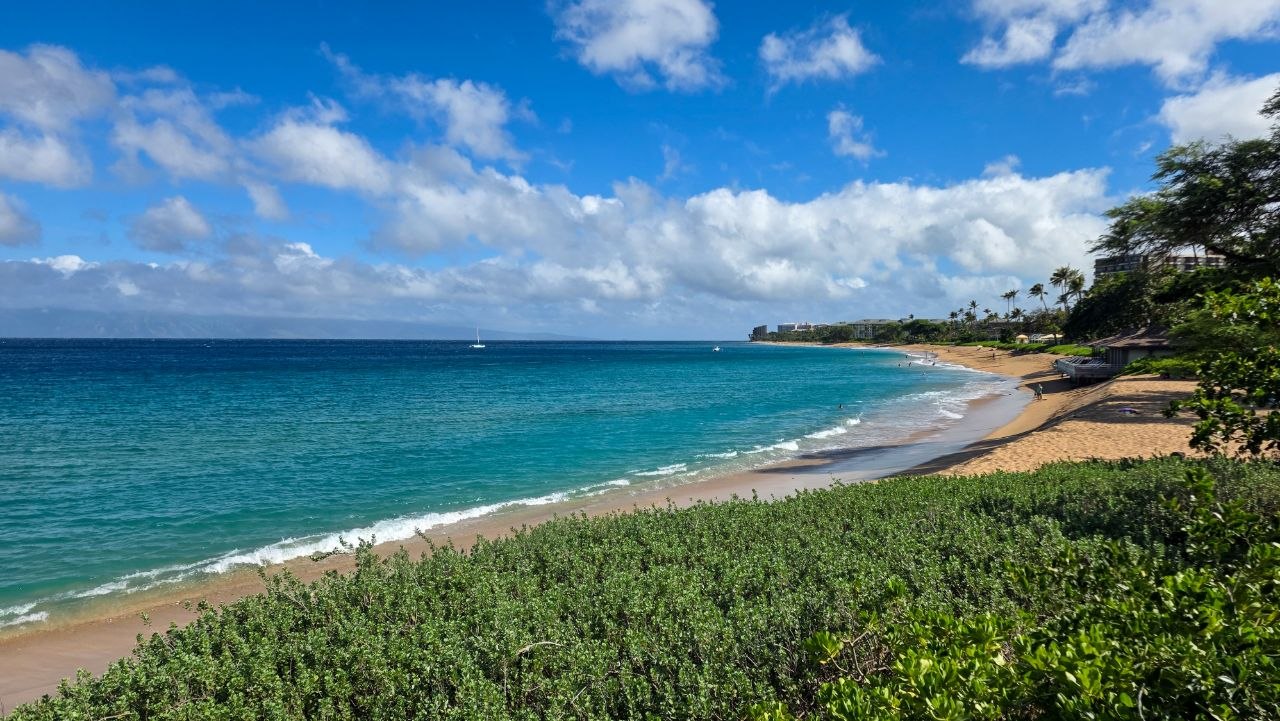
We’ve been seeing that difference ourselves this week. We spent this week in Kaanapali before moving down to Wailea, and the price gap is obvious. What actually surprised us is how much we preferred the value proposition in Kaanapali.
That observation also complicates any easy division between middle-class and wealthy travelers. Some people staying in Kaanapali may be stretching to make the trip work, while others could easily pay Wailea prices and simply see no reason to. Having the money to spend more doesn’t mean someone will, especially when the less expensive yet nonetheless excellent choice delivers an experience they may prefer.
More money doesn’t eliminate the search for value.
BOH reader Matthew put it well when he said, “There is a whole spectrum of wealthy.” Someone staying in Kaanapali instead of Wailea isn’t automatically a middle-class traveler, just as someone paying $900 for a hotel room isn’t necessarily indifferent to whether the experience is worth $900.
Kensington’s customers occupy a more specific niche in Hawaii travel. The company sells privately guided, customized trips where transportation, reservations, itinerary planning, and experiences can all be handled for the traveler. They’re not simply buying a more expensive vacation to Hawaii. They’re paying to remove work and complexity from the trip entirely.
That may help explain why Kensington’s 196% increase is more than another report showing expensive hotels doing well. Travelers with money can still be highly selective about where they spend it, but when convenience, access, or a particular experience delivers what they want, their ability to pay changes the game. In today’s Hawaii travel, ease itself has become something a traveler can buy.
Hawaii once made far more people feel affluent.
BOH reader Don captured the contrast when he wrote that “the middle class that felt rich came home feeling poor.” For generations, a Hawaii vacation allowed people who weren’t wealthy to step temporarily into something that felt luxurious, even if getting there required saving and planning.
The oceanfront hotel, rental car, restaurants, island hopping, and activities could fit together into a trip that felt abundant rather than constrained. Many visitors still make Hawaii work, but they’re doing it more selectively by reducing hotel costs, cooking more meals, using points and miles, shortening trips or concentrating their spending on the parts they value most. Those changes have been central to the vanishing middle class of Hawaii travel.
Reader Stuart later gave us perhaps the cleanest description of that longtime Hawaii traveler: “Not rich, not struggling, just what used to be normal.” That broad middle range tourist helped turn Hawaii from a once-in-a-lifetime splurge into a place families could return to again and again and build traditions around.
Today’s market is harder to sort into prior categories. Our own experience moving from Kaanapali to Wailea is a small reminder that spending less doesn’t necessarily mean getting less or even affording less, while spending more doesn’t even guarantee a better experience.
Kensington adds another piece we haven’t heard nearly as clearly before. Its customers are actively choosing a highly customized, upper-end version of Hawaii at a sharply increasing rate, even as other travelers become more deliberate about which parts of the trip deserve their money.
Hawaii may not be dividing as neatly between people who can afford it and those who can’t as it sometimes appears. The more interesting divide is between what different travelers believe is worth paying for, including how much they’re willing to spend to make their trip to Hawaii easier.
Are you spending differently on Hawaii now, even if you can afford not to, and what still feels worth paying more for?
By Rob and Jeff, Beat of Hawaii.
Some of the most meaningful parts of Hawaii are the ones visitors walk right past without knowing they are there. We’ve spent nearly 20 years finding them firsthand for BOH as full-time Hawaii residents reporting on travel, culture, and island life, and telling you what they mean for your trip. Join us →
Get Breaking Hawaii Travel News



We have been coming to Kaiai for over 40 years…its still beautiful, people are friendly and welcoming to tourists and you can still go to a beach and be alone. We have noticed this trip thst restarauants are less crowded and seems like overall less tourists as we come about the same time each year. In my opinion, theres no place quite like Kauai