
Sandra May is 83. She has lived in her Honolulu home for 56 years. One disputed online listing left Sandra facing nearly $590,000 in fines and a lien against her home.
May rents an apartment attached to her Kaimuki property to supplement her retirement income. Her attorneys say the unit was intended only for stays of at least 30 days but appeared online as available for shorter rentals because of an error involving the website on which it was listed. Honolulu treated the advertisement as a violation whether or not anyone actually completed a short-term booking.
The case has now ended in a settlement that sharply reduces the penalty. It also offers a striking look at the enforcement system behind Hawaii’s changing vacation rental market, and this time Oahu’s in particular, where legal accommodations outside resort areas have become harder for Hawaii travelers to both find and verify.
The illegal vacation rental fine grew $10,000 daily.
May said she did not know the city had begun issuing daily fines after finding the listing online. She was recovering from injuries suffered in a serious automobile accident at the time and didn’t see the city’s notices, according to the federal lawsuit filed on her behalf by Pacific Legal Foundation.
The penalties continued accumulating at $10,000 per day for 59 days. By the time May learned exactly what had happened, the total had reached nearly $590,000.
The dispute, however, did not arise from a single encounter with the city. Court records and earlier reporting now reveal that Honolulu cited the same listing in previous years over advertising that also appeared to allow stays of fewer than 30 days. May’s attorney told Aloha State Daily she struggles to use technology, while maintaining the listing continued to display incorrect information despite efforts to comply. The nearly $590,000 assessment resulted from the most recent enforcement action.
The city also placed a lien against her property. Her attorneys said she was also prevented from renewing her driver’s license and vehicle registration as a result of the outstanding fines. May sued the City and County of Honolulu, arguing that the penalty was grossly disproportionate and violated the Eighth Amendment’s prohibition against excessive fines.
Honolulu reduced the fine to $30,000.
Under the settlement formally accepted on July 24, Honolulu reduced the penalty by approximately 95%, from nearly $590,000 to $30,000. The city is to now retain a $30,000 lien against May’s home but has agreed not to foreclose during her lifetime. The amount would be collected through escrow if she sells the property or through foreclosure after her death. May dismissed her federal lawsuit against the city and has agreed to withdraw her pending administrative appeals.
The city said the settlement reflected her age, medical hardships, decades of residence at the property, and the fact that she had limited personal involvement in creating the online advertisement in question. Honolulu also defended the seriousness of its enforcement program, saying advertising an unpermitted short-term rental on Oahu is normally subject to the fine of $10,000 a day. The Department of Planning and Permitting acknowledged that officials may not have all relevant information when fines are initially assessed and can adjust the amount after learning more about an owner’s specific circumstances.
The listing couldn’t produce a short-term booking.
May’s attorneys said the property was never actually available for an illegal short-term stay. According to Pacific Legal Foundation, the online system did mistakenly allow prospective guests to inquire about dates shorter than 30 days. They could see apparent short-term availability but couldn’t actually complete such a reservation.
May has also explained that the advertisement showed a daily price together with a 30-day minimum stay. She said the daily figure was included so additional days beyond the initial required month could be calculated more readily. The city nevertheless considered what appeared in the advertisement sufficient to trigger this enforcement.
That distinction is significant because Honolulu’s ordinance does not require the city to prove illegal stays actually occurred. Advertising an unpermitted property for a stay shorter than 30 days in itself is enough to constitute a violation.
The case is about more than one homeowner.
Honolulu has pursued illegal vacation rentals as part of an effort to preserve residential housing and prevent properties outside approved visitor areas from operating as short term rental accommodations. Supporters say substantial penalties are necessary because smaller fines could become simply another cost of doing business for otherwise profitable illegal rentals.
May’s case clearly presents a more complicated situation. There was no allegation that visitors completed short stays at her property, and her attorneys maintain the disputed advertisement resulted from an online system error rather than an attempt on her part to evade the law.
The case also demonstrates the illegal vacation rental enforcement environment that has reshaped Hawaii’s visitor market over the past several years. Pacific Legal Foundation says Honolulu has assessed more than $90 million in fines involving similar advertising violations, while the city’s Department of Planning and Permitting separately reported it had issued over $90 million in vacation rental fines since Bill 41 took effect. However, only a small fraction of those assessments has ultimately been collected.
Travelers can also be caught in the uncertainty.
Visitors are unlikely to receive Honolulu’s enforcement citations themselves, but they can still feel the consequences when a property’s legal status is unclear. A rental can appear on a familiar booking platform without necessarily having permission to operate as a vacation rental. Listings can later disappear, become unavailable, or face enforcement after Hawaii visitors have planned around them.
May’s settlement does not change Honolulu’s vacation rental law or create any legal precedent. The lawsuit ended before a court decided whether the original penalty violated the Constitution.
In this case, 59 days transformed one disputed rental listing into a demand for nearly $590,000.
Do you think Honolulu’s original fine fit the alleged violation, or has Hawaii’s vacation rental enforcement gone too far?
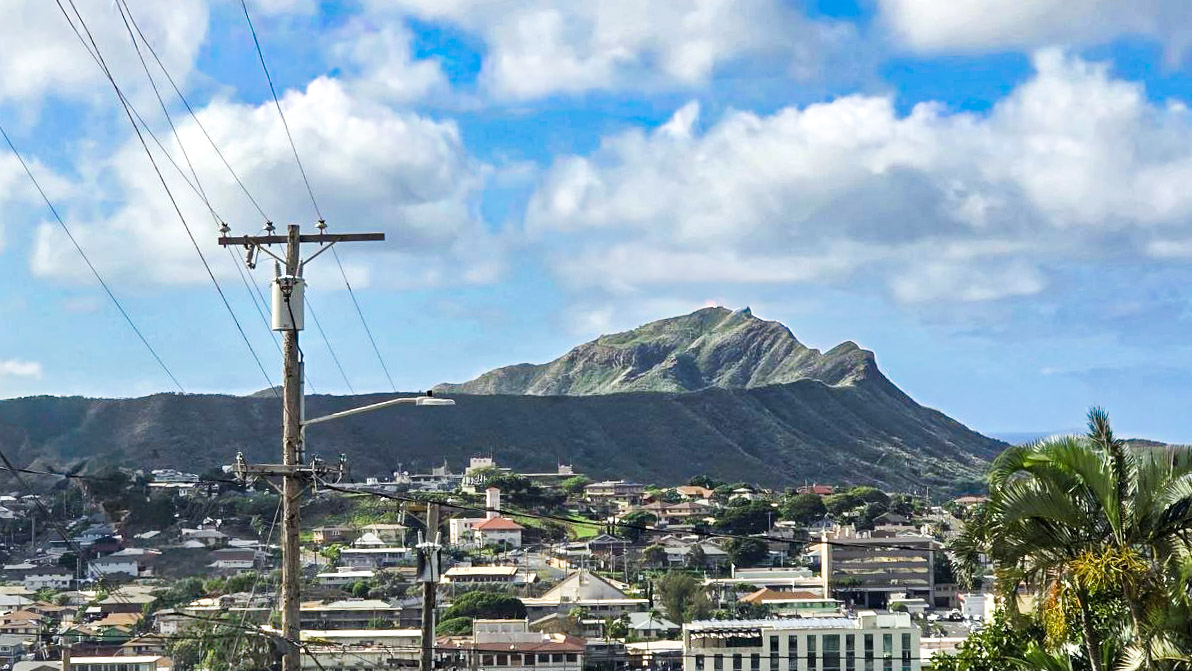
Lead Photo Credit: © Beat of Hawaii above Kaimuki.
By Rob and Jeff, Beat of Hawaii.
Some of the most meaningful parts of Hawaii are the ones visitors walk right past without knowing they are there. We’ve spent nearly 20 years finding them firsthand for BOH as full-time Hawaii residents reporting on travel, culture, and island life, and telling you what they mean for your trip. Join us →
Get Breaking Hawaii Travel News






Use a reputable rental agency to look for a renter.
It will be Safer and Trouble/headache free
Note that the DPP sends notices, and puts liens on property, but will not just call the owner – that’s why this fine got so big so fast.
They could have reached out through the listing – so that whoever was monitoring it would be made aware – but they never do.
They think & act like bullies.
This is horrible. It should not be who we are. Talk about no aloha. DPP doesn’t enforce major laws and then picks on an 83 year old who never actually did a short term rental. If there is a Go Fund Me for May, please post it.
These laws are ridiculous. I wish she wouldn’t have settled.
Hawaii has got to be one of the most corrupt places I’ve ever lived in.
The ban on short term rentals was such a con. They convinced the locals it was something they wanted all the while it was the Hotels that lobbied for it.
When Auntie has extra space because everyone has flown the nest, why not allow her to make an income? The ban took something huge away from the locals, while spinning a narrative that this is what they wanted. Where do the travelling backpackers and surfers go now? To the over priced hotels in Waikiki? So stupid, such a con.
And then they turned it into a huge making scheme, surprise surprise!
Hawaii boldly goes after the little guy, or in this case the little 83 year old lady. Why? Because they won’t go after the big time abusers or the rental listing services because they’ll fight back with teams of lawyers. Why do you think only a tiny fraction of the $90 million has been collected? They don’t have the willpower or expertise but boy will they threaten small time homeowners regardless of the circumstances.
As a visitor, the fact that this happened in three different years changes this for me. The original fine still seems wildly excessive, but at some point someone, either her or whoever was helping her with the listing, needed to make sure the listing was actually corrected so that visitors were not seeing the same less than 30 day rental problem over and over again.
Big government will do what it wants, until it decides not to.
I do feel for her, but homeowners also have a responsibility to make sure their listings are accurate no matter their age or health. Both things are true here.
Whether people agree with the enforcement or not, this case certainly shows Honolulu isn’t treating these violations lightly any longer.
The fine amount grabs your attention, but what stuck with me was an 83-year-old woman dealing with lawsuits and liens while recovering from a serious accident. That’s a sad situation no matter where you stand on vacation rental enforcement and the fact that this was an issue over multiple years. Weird story.
Another short-term housing speculator gets caught, then comes up with a bunch of excuses. Too bad.
In the meantime, local paper MauiNow had an article in June:
Hawaiʻi Ranks 2nd Nationally In Vacation Home Purchase Decline
“The pandemic-era vacation home boom has collapsed in Hawaii, according to a new analysis by SellMyTimeshareNow. Vacation home purchases financed with a mortgage fell 77.8% between 2021 & 2025 from 2,156 to just 478.”
Lots of housing gamblers getting roasted. Hawaii currently has record active listings on the market (FRED data).
That large decrease is not entirely attributable to the short-term rental regulations in Hawaii. Mortgage interest rates surely had a large impact on that decrease. The average mortgage rate for a vacation home in 2021 ranged from 3.15% to 3.98% while the average mortgage rate for a vacation home in 2025 ranged from 6.75% to 7.25%.
Hawaii’s government is corrupt and incompetent, period. No excuses.
I support strict enforcement, especially on repeat offenses. But penalties should still make sense. Almost $600,000 sounds more like punishment than compliance. And every time I read about Honolulu’s vacation rental rules they seem more confused than the last time.
The repeat notices caught my eye. If this wasn’t the first time the listing had been flagged, that changes the conversation somewhat for me, even if I still think the fine was excessive. It’s weird how this went on for years.
The government should have discretion. An elderly homeowner renting part of her own home as a 30 day rental and who doesn’t really understand technology, isn’t the same as someone running illegal vacation rentals.
As someone who always tries to book legal vacation rentals, stories like this make me wonder how anyone is supposed to know if a listing is truly compliant.
There has to be some middle ground between no enforcement and $10,000 a day.
You get what you elect. Honolulu is the most corrupt, nepotistic and inept/ incompetent state government in the US. It’s insulting to the residents and tax payers. Honolulu is a 1-way Black Hole for taxpayer money. Very sad.
The government is a bully that goes overboard against it’s citizens. When a politician gets a DUI nothing happens. I would be shocked if any of those indicated recently end up with a $30,000 fine for their crimes.
If no one could actually rent the unit for less than 30 days, I don’t understand how the fine ever reached this point to begin with.
Because the anti-vacation rental law (written by the hotels) targets advertising – not stays.
D
Airbnb, booking.com, vrbo.com, etc, in an effort to make rental costs understandable to guests, lists the daily rate, even when the minimum stay is 30 days.
The city cares verry little about actual rentals – just advertising. This is easier for the city to enforce, they say.
I understand why Honolulu wants to stop illegal vacation rentals, but this just feels completely out of proportion to what actually happened.
The punishment should fit the crime. This is sheer overkill and takes idiocy and lack of common sense to a whole new level.
Aloha So I wonder how the Dept. Of Planning and Permits use the money that they Have collected in fines to use in the infrastructure to maintain the cities. Are they using it to make repairs where they are desperately needed? $10,000 a day is way too much to charge especially when the economic factors in life today are challenging enough for even the residents who actually have a job that still doesn’t pay enough for a decent way of living there. I am happy she somewhat was able to resolve her situation, but look at what that still entails. She’s got that hanging over her head and her health is definitely going to be affected by this ordeal. And all because of a mistake in having an advertisement to rent her apartment to help her meet her needs after being injured in an accident.
A $30,000 fine is unacceptable in this situation.
A Kama’aina who lives in the home and rents out an ADU on their property should be 100% exempt. They should be able to rent it short term as well, to help them afford living in their property.
The City and Countynof Honolulu and the State of Hawaii are not the entities that should be getting paid, they just waste the money for numerous reasons.
Enough folks are already moving away, let’s make more friendly rules for the folks that live here. Especially for our Kapuna.
Shame Shame for making a local family have to pay $30k.
Based on the facts presented, their charging of fines in the first place appears to be a ridiculous technicality. Nobody could not actually book stay less than 30 days, and there were no stays less than 30 days. Hawaii’s government is out of control. This should never have gone this far, requiring attorneys and I’m sure, significant costs. They owe her an apology, not a $30,000 fine.
This government is extremely corrupt. Until the people there elect those that will govern for the people they will continue to be