
By the time most visitors arrive in Hawaii, it already feels familiar. Sunsets feel like the ones they expected. Even emotions can come pre-loaded. That does not come from just digital guidebooks or Instagram.
For decades, Hollywood has been teaching visitors what Hawaii is supposed to be like. Sometimes it nailed the feeling exactly. Sometimes it did not. These films did the most to shape what visitors think they are coming to Hawaii for. Some still hold up, while others mislead. All of them still travel with visitors.

The Descendants
This is the movie that most directly confronts the gap between postcard Hawaii and lived Hawaii. Land is not scenery here. It carries responsibility. Family is not sentiment. It carriesobligation.
Visitors often recognize this film more on a second viewing than on the first. It starts to make sense why Hawaii can feel welcoming but not easy, and why beauty does not automatically mean comfort.
Forgetting Sarah Marshall
Hawaii works here as an emotional reset button, and the movie depicts it. Characters arrive hoping distance will fix things. What they get instead is relief, not reinvention.
That honesty is what makes it land with so many visitors. Hawaii does not solve problems. It gives people space to breathe, even if just for a bit.

Jurassic Park.
Not really a Hawaii movie, but one of the most influential images of Hawaii ever created. Helicopters, scale, that overwhelming green. For many visitors, this becomes the mental picture of Hawaii.
The film compressed Hawaii into a state of awe. Visitors still arrive looking for that everywhere, and get frustrated when reality feels smaller, busier, or simply more managed. See Visiting 13 Jurassic Park Iconic Filming Locations.
50 First Dates.
This movie quietly nails visitor psychology. Hawaii is gentle, forgiving, and patient to a fault. It is not realistic, but it is comforting to watch.
That fantasy still sells, and this film delivers it without trying to dress it up as anything else.

Lilo and Stitch.
Animated, but grounded in working in Hawaii. Rent stress. Family strain. Community friction. Tourism makes a brief appearance, mostly as a disruption.
For many younger visitors, this may have been their first exposure to Hawaii, even if they did not think of it that way at the time. It shows a version of the islands that does not exist to perform. See Lilo & Stitch Left Kauai. Here’s the Story.
Blue Crush.
This is the outsider story visitors often recognize without saying so. You do not simply arrive and belong. You show up, learn, and maybe earn some respect on the way.
Hollywood simplified the process, but the idea still stuck. Visitors who keep coming back often feel this tension most clearly.
Blue Hawaii.
Elvis sold Hawaii as effortless romance to an entire generation. The lei greeting, the beach songs, the easy island charm. This was the fantasy before the fantasy had competition.
For older visitors, especially, this version of Hawaii still lingers. Arriving should feel like a welcome, not a transaction. That expectation did not come from nowhere.
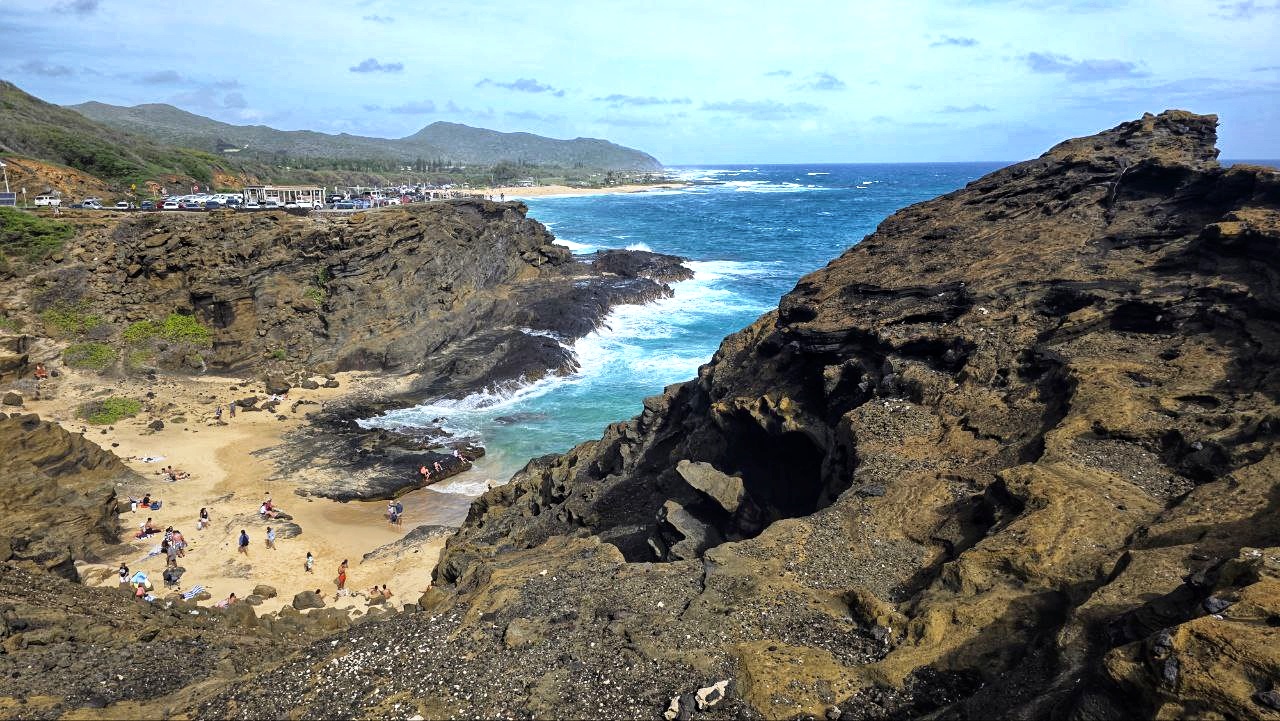
From Here to Eternity (lead photo).
The ultimate romance piece. The iconic beach scene. Hawaii is destiny, memory, and love rolled into one.
It may not be the Hawaii most visitors experience today, but it still hums beneath modern travel, especially for older generations who absorbed this kind of image early.

The White Lotus.
TV, not film, but impossible to ignore. No recent screen story has shaped how visitors see themselves in Hawaii more directly.
This is Hawaii as a mirror. Expectations are exposed. Privilege is uncomfortable. Visitors are not the heroes. That recognition works because it feels current, even if uncomfortable.
Hollywood got plenty right about Hawaii. It also left things out. Which movie taught you what Hawaii would be, and where did it turn out to be wrong?
Photo Credit: Beat of Hawaii at Halona Beach Cove featured in From Here To Eternity.
Get Breaking Hawaii Travel News






Aloha Shawn… the film you are referring to is “Honeymoon In Vegas”.
Nicholas Cage also starred in “Leaving Las Vegas” which won him a well deserved Academy award.
One of my favorite Kauai movies is “Six Days. Seven Nights” with Harrison Ford and Anne Heche. I bring my DVD copy with me on all my Kauai visits and watch it on our wedding anniversary!
What…no mention of “Leaving Las Vegas”, half of which was filmed in Kauai? Starred Nicholas Cage, Sarah Jessica Parker, and James Caan. One of the best movies filmed in Hawaii. And a very funny comedy to boot. “Is that Kapa – a or Kapa – a- a”?
As an old “boomer” who first visited Hawaii in 1965, it’s without a doubt “Blue Hawaii!” We stayed at the classic original Halekulani Hotel in Waikiki, and the beautiful historic “Coco Palms” on Kauai. To this day 60s years later it is my fondest memory of a much slower and peaceful Hawaii, filled with warmth and Aloha.
How about ‘Aloha’ with Bradley Cooper? I’d put it forth as another mirror.
What about “North Shore”?
My favorite line, ” he so haole he don’t even know he haole”