
There are things longtime Hawaii visitors tell us they used to do on virtually every trip without giving them much thought, from renting a car from arrival to departure and eating dinner out most nights to adding another island if there was enough time. They booked a few activities and stayed long enough that an afternoon with nothing planned didn’t feel like wasting vacation time.
Some of those habits have disappeared, though not for everyone and not all at once. It’s actually quite interesting, and we’ve noticed it in hundreds of recent reader comments, often when someone describes how they travel to Hawaii now and casually mentions something that used to be part of every trip.
State data is beginning to show some of the same changes. Clearly, Hawaii vacations are shorter, visitors are cooking their meals or short-cutting them, and on Oahu many aren’t renting cars for their entire stay. Put those changes together with what longtime visitors have been telling us, and today’s Hawaii vacation is starting to look surprisingly different from the ones many of us remember 10 or 20 years ago.
Longer Hawaii trips are becoming a rarity.
The clearest change is how long people stay. In July 2026, the average Hawaii visit fell from 8.83 days to 7.59 days compared with the previous year. Visitors to Maui, Kauai, and the Big Island each gave up more than one full day from the average stay.
We recently wrote about the nearly 30 hours that disappeared from the average Hawaii vacation. Travel days still take what they take, and changing islands can consume a substantial part of another day. When the trip itself gets shorter, many parts, including time spent packing, returning a car, flying to another island, and checking in again, become harder to take for granted.
That has put inordinate pressure on something visitors used to love: the two-island Hawaii vacation. UHERO found that 85% of air visitors visited only one island, while 15% visited more than one. That figure is now dated, meaning even fewer than 15% island-hop. Satisfaction research found that U.S. West visitors who stayed on one island were more likely to say their trip exceeded expectations than those who visited multiple islands, while the data didn’t establish that staying on one island caused the difference.
BOH readers have described the practical side countless times. Travelers who once thought nothing of splitting a trip between Maui and Kauai or Oahu and the Big Island now talk about time they’d rather spend where they already are. We’ve seen the other side too, with travelers still trying to fit multiple islands into a one-week Hawaii vacation and discovering how much of the trip gets consumed moving between them.
Trip-long car rentals aren’t automatic anymore.
Rental cars offer one of the clearest examples, although this one is largely an Oahu-related story. Among U.S. West Oahu visitors surveyed during the first quarter of 2026, only about 40% rented a car for their entire stay. That was down 10% in just one year. About 20% rented one for only part of the trip, while nearly 40% didn’t rent one at all.
Partial renters gave practical reasons for that choice. Nearly two-thirds said they needed a vehicle only on certain dates, 43.6% cited too expensive hotel parking, and 27% cited the rental cost itself.
That’s much harder for us to imagine on Kauai, Maui, or the Big Island, where a car remains essential for many trips. Honolulu offers far more alternatives, while leaving a rental car in a Waikiki garage for several days can add a hefty parking bill to a vehicle that’s going nowhere.
Accommodations are producing their own calculations and changes. BOH reader Nancy had been coming to Hawaii for more than 20 years when a $130-per-day Big Island beach club charge changed her plans. Her usual three-week trip split between Maui and the Big Island became ten days on Maui, and she told us she expected to travel elsewhere for the following two years.
We’ve heard similar stories about resort fees, parking, housekeeping, and amenities that visitors remember differently than on prior trips. Some decide the hotel or resort is still worth every dollar, while others change properties, switch islands or simply shorten the trip.
Eating in has become part of Hawaii trips.
Longtime Big Island visitor Dolores told us she would prefer to eat out half the nights but now prepares all her meals because restaurant prices and quality no longer work for her. Her comment caught our attention because it described a real change in how she travels, not just another complaint about Hawaii restaurant prices.
State research shows those choices often now go together. During the first quarter of 2026, 51.7% of U.S. West visitors reported fine dining, while 51.2% prepared at least one meal themselves. That fits what readers describe: keeping a favorite restaurant in the trip while replacing some routine meals with groceries, farmers-market food, or takeout, especially when they have a condo kitchen or even a hotel kitchenette.
We’ve heard this for years, but recently the conversation about what happened to the Hawaii restaurant experience has shifted from complaints about prices to what visitors actually do differently. BOH readers were telling us a decade ago that kitchens influenced their decision to choose vacation rentals over hotels, with restaurant prices, resort fees, and parking among the reasons.
Costco may be the most recognizable example. What started as a way to stretch a Hawaii vacation budget has become part of Hawaii vacation planning for many repeat visitors. The stop after leaving the airport isn’t just an emergency budget maneuver. It’s simply part of arriving in Hawaii.
A full activity calendar isn’t typical anymore.
Activities are harder to measure over time, so we’ll stay more cautious about calling this a broader visitor trend. But the change appears frequently in what readers tell us. Someone who once booked a luau, snorkel trip, zipline and dinner cruise may now pick one or two, especially after seeing what the current versions cost.
One BOH reader described loving Maui experiences including ziplining, Molokini, luaus and dinner cruises. When he priced them again for a return visit and found costs dramatically higher, his question was straightforward: which do you cut?
For repeat visitors, the answer can be different than it was on the first trip. They’ve already seen many of the places they once felt they had to see, and missing an attraction doesn’t necessarily feel like missing Hawaii. We’ve heard more readers talk about returning to the same beach, leaving a day open, or going back somewhere they discovered on an earlier visit.
Thinking back over what readers have told us, we’re struck by how many old routines have disappeared without any big decision to give them up. People still spend money on Hawaii, eat at restaurants, drive rental cars, and book activities, but not the same way as before.
If you’ve been coming to Hawaii for years, tell us what you used to do on virtually every trip that you no longer bother with. We’re especially curious about what replaced it, or whether you discovered you didn’t miss it at all.
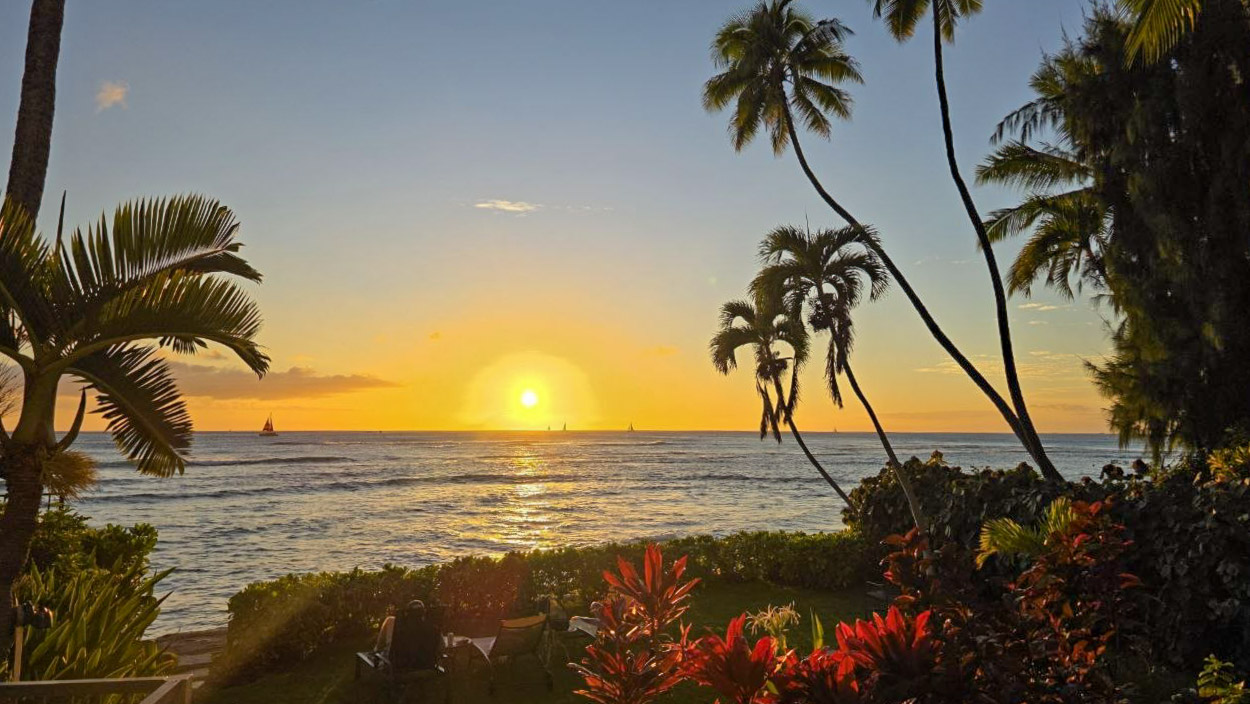
Lead Photo Credit: © Beat of Hawaii at Diamond Head Beach Hotel on Oahu.
By Rob and Jeff, Beat of Hawaii.
Some of Hawaii’s most meaningful parts are the ones visitors walk right past without knowing they are there. We’ve spent nearly 20 years finding them firsthand for BOH as full-time Hawaii residents reporting on travel, culture, and island life, and telling you what they mean for your trip. Join us →
Get Breaking Hawaii Travel News




I was born in Honolulu 80 years ago and we have been going to Hawaii for the past 40 years, mostly the Big Island but also the other islands. We stay in timeshare condos, never a resort as it is too expensive. We would do at least 2 “adventures” each trip but for the past 2 years, we haven’t as it’s just too expensive. We eat out twice or more per 8-9 day trip, otherwise we eat in. Next year we’re doing a cruise, possibly French Polynesia. The Hawaii vacation costs are only increasing year after year and I don’t see any changes or better management in the foreseeable future. We’re very sad as each trip has been like going home.
Oh, in some ways we were priced out of Hawaii years ago. But it has become enough a part of us we find a way almost every year.
We shifted to hotel-affiliated credit cards, and the points only go towards Hawaii. Length of stay and where depends on available points. (Which this year, providentially meant we were on another island when Lowell crashed the Kauai party). Usually that means 5-6 days at a nice resort on the points, instead of twice that in the past, along with a few paid buffer nights at an older, smaller, less luxe hotel or rental. Dropped Oahu completely.
High-end dining relegated to home, but eating small local is way more “local flavor” anyway. Few if any excursions or activities, and no luau. (I’m too old for a buffet anyway). But we still get the island fix for a few days.
My family has come to Kauai for the last 30/40 years. We went from hotels to rentals to timeshare condo for 7 wks each year. My hubby & I have started taking the bus everywhere we can and only rent a car if family come. Easier to do now that Walmart, Costco will deliver groceries to you. We spend our time at Poipu & other area beaches we can bus/walk to. We go to Puka dog a couple of times a week, instead of going to the bigger restaurants we go for smaller local ones to try out. we rarely do “tourist” attractions, however, if friends visit, we go to the Smith Family Luau and the Mountain Tubing Adventure. Then we drive around the island. We also like to volunteer time like picking up trash, telling visitors to not touch sleeping wild live (seals and turtles). Yes, it is getting more expensive to fly, rent a car, eat, or do almost anything but we can’t imagine not coming home to Kauai nor can the kids. We love the Islands & our Ohana families.
I booked our hotel for my wife and I along with our kid’s and spouses from 1 Dec to 18 Dec this year. After some planning, the kids are spending the majority of their time on Kauai and Maui. So we cut our time to 6-18 Dec. This will be the first time in a couple years we do not go to Paradise Cove Luau. Sad that they closed. But we still go golfing, drive around the island, and stop for lunch at food trucks. The one near Kualoa Ranch is really good. We visit friends and eat out for dinner each night. Our favorite is Ruth’s Chris. We have only cut some days from our visits to Hawaii. Hey, if you guys are in Honolulu 6-17 Dec, send me an email. Mai Tai’s on me. We can celebrate my 500th post!
Hi Joe.
Mahalo for the invite!
Aloha.
We used to always visit two or three islands in years past when we were much younger. Now we basically stay exclusively at our Princeville condo on Kauai and every couple of years take a few days to visit one of the neighbor Islands. Since we are now fully retired the rising costs have definitely made it impact on our travel budget and plans. We used to eat out lunch and dinner every day, but that day is over. Now we only venture out for dinner, and watch for Happy Hour specials. We’re blessed to be able to relax and enjoy daily the spectacular views of the North Shore and incredible Na Pali Coast.
Aloha to all.
I think some of it is “situation related”. When we first started coming to the islands 30 years ago, we filled every day with multiple activites; we couldn’t see, or do, enough. We soon figured out how much time is lost in a day when you do multiple islands. We eventually settled on Kauai and invested in a timeshare. I know that doesn’t work for everyone, but there are several advantages, includins no daily parking fees and if you have extra points, they can sometime cover some activies. Now older, and retired, we really enjoy the beauty and peace of our unit in Kauai, our full kitchen, and just being there. To us, it is still a unique, peaceful, and wonderful to relax. We have indeed cut some restaurants from our must-do list, but there is still enough there to make it more than worthwhile.
We have been vacationing in Maui for 20 years. We started out renting at a resort but eventually purchased a timeshare for two weeks. We no longer enjoy being there 2 weeks as things have changed. At this point we go just because we go. We don’t do tourist things and because of the high prices to park your car etc we don’t venture out except for dinner a few nights. We arrive, go to Costco, Target and Walmart & then head for the resort. Since the fires there is no Lahaina to enjoy so we mostly park the car and stay at our resort the entire time – or that’s what we did again this year. I’m talking to my family about trading our vacation time and exploring somewhere new. Many of the locals don’t like tourists. Short term rentals might be a thing of the past just like our ventures.
Our trips to Maui started in 1988 flying from LAX and visiting once a year. We have lived in Dallas for the past 9 yrs. We continue to visit every year but no longer book hotels m/ resorts and stay more economically in an Airbnb. Due to expense We have sadly stopped going to Luaus, sunset cruises, Hula Grill, and Dukes. The one hold out is Mamas.
This is where we splurge. It’s getting more and more difficult to even go to a beach since there is such a high cost for parking. Even the ABC chain is getting pricy. I have purchased the same sandals every year. We try to cut costs wherever we can but think of the locals as we cut back. Where is the win for any of them or us?
Starting 45 years ago I booked condos in Hawaii so I could cook at home, and I did garden rooms instead of ocean view. So I understand wanting/needing to save money. But I’m not actually convinced things are any more expensive after inflation. A 1BR ocean view condo on the BI was over $200 then. That’s $737 in today’s dollars. There’s a lot of 1BR condos less expensive than that now. Same is probably true of food and activities, even though food seemed to shoot up all of a sudden.
Aloha – I’ve going to Maui since 1974 and have owned a vacation rental for most of that time. The past few years the prices have just become too high for everything. The car rental rates have doubled and tripled, if you want to go a beach they charge $35 to park for all day or 10 minutes, the hotels charge you $55 a day for self park, a bottle of wine that sells at Costco for $10 is marked up to 60 to 80 bucks, they announced a couple weeks ago some beaches will charge to enter the beach along with the charge to park the car. The government have declared open season on tourists, their only major industry.
Cutting back on the number of days is one thing but people are still going & appear to be spending the same amount of money… however, maybe more attention should be paid to those who are not coming at all. I had an interesting experience the other day in the Denver area – I happen to be wearing a Maui t-shirt and while checking out at a retail store, the person behind the counter said “isn’t it a shame what Maui has become, especially the locals… we used to take the family every year – it was our ‘go to’ vacation spot but we haven’t been in years because of the negativity and don’t plan on going back”. The most interesting part is you could hear the anger and resentment in her voice, like something valuable had been taken away. Generally speaking, you reap what you sow…
We’ve been coming off and on to Kauai since 2003 as we have a timeshare in Poipu. A stop on another island is common, but less frequent, and when we did stop in Honolulu last year (for a marathon) we didn’t rent a car. We cook in more now but have ritualistic visits to specific eating spots, and we now try to act like locals more with plowing our time into things that help out, for example watching over the turtles at the beach as a docent. It’s funny how you fall into a routine–it’s like a second home town now.
I’ve been coming to Kauai since 1987 twice a year until hurricane Inki hit. Due to health issues I haven’t been back for 4 years. We were supposed to come to Kauai September 12 for two weeks, then hurricane Lowell hit and we quickly pivoted to the big island.
We use to take a boat ride to the Nepali coast but only do it when someone comes with us who has never been to Kauai.
We used to eat out more but we eat in for breakfast and a few dinners we make.
Now when we go we may do 1 activity vs doing a few.
It’s definitely more expensive to come to Hawaii but we still love it especially Kauai!
Aloha. As an expat I have the advantage of seeing my home with fresh eyes. I want to encourage Malahini who experience Hawai’i to consider the following experiences as part of their visit.
1. Iolani Palace: I recommend a docent’s tour of the Palace to every friend who visits Hawai’i for the first time. Even though I was born in Hawai’i and called it home for >50 years, I still experience something new every time I tour the Palace. It is an experience that you will treasure;
2. Mysteries of Hawaii: Very few people I know want to be a “bad” visitor. While Hawai’i is the 50th state, there are still many facets to its culture. This company has tours that can introduce you to some of the lesser-known aspects of the aina (Google it). The tours are fun, exciting and enlightening;
3. Bishop Museum: If the tour of Iolani Palace whetted your appetite for Hawai’iana, the Bishop Museum will satisfy your interest.
I’ve been traveling to Kauai for over 30 years. It started with resort stays at the Grand Hyatt in Poipu and morphed into condo stays. I am one of the many who now make the left turn into Costco from the airport. We eat out occasionally but find the food and drinks to be overly expensive and not that good. Meals and drinks prepped and made in the condo are so much better and you can just relax, grill while watching the sunset and enjoy the ocean. When we do it out we look for less expensive alternatives like food trucks and local establishments.
Yes Costco after the airport is practically a tradition for us. We don’t even think of it as trying to save money. We buy breakfast stuff, fruit, snacks, beverages and stuff for a few easy meals, then settle into our condo.
Interesting, but this hasn’t happened to us. We’ve been coming for more than 20 years and still rent a car the whole time, eat out most nights and usually book at least one boat trip or something else. We save specifically for Hawaii and still want the whole experience when we get there.
We’d already been to several luaus and eventually realized we would rather spend that evening on the beach or having dinner somewhere we know the food will be good. First-time visitors should absolutely go if they want to but after that, forget about it.
Island hopping is the one we gave up. Clearly when everything went through Honolulu that was a different time and made it a no brainer. And we used to think ten days meant we should do Oahu and Maui or Kauai. Now we fly direct and would rather spend all ten days on one island than lose time day packing, flying, dealing with cars, and checking in again.
The biggest change for us is restaurants. We once ate out two meals a day because we were “on vacation.” Now we make breakfast and dinner at the condo most days and save our money for one special restaurant we really love.
After dozens of trips to Oahu, we finally stopped renting a car for the whole time. We get one for two days at most, do the North Shore and Windward side, then return it. I never thought we’d travel Hawaii without a car sitting downstairs the entire time but it stopped making sense.
We’ve been coming to Maui since 1994 and this is exactly us. We used to have something planned almost every day. Now our favorite days are coffee on the lanai, a swim, lunch somewhere casual and absolutely nothing scheduled beyond that.
Pre-pandemic my wife and I would go to Oahu from anywhere from 10 – 30 days nearly every year, or at least every other for about 25 years. Since the pre-pandemic we have not been to Hawaii since. With the escalating cost of condos, meals out, car rentals, and to a lesser extent, airfare … costing out a Hawaii vacation makes the cost comparatively to going to many parts in Asia, where you can get a 4 or 5 star hotel for $130 or less. Food at Asian night markets are maybe $7 a person. I still want to go to Hawaii, but the price of a Hawaiian trip now competes with other locations that are just as nice an experience. Plus the amount of planning is now about the same to Asia vs Hawaii with all the reservations required in park and beach services in Hawaii makes it too much effort to have a leisurely vacation. Will we start going to Hawaii again? One option I am looking at is either coming or going to Asia, of taking a layover in Hawaii on the way back to the west coast.
I’ve been traveling to Hawaii for nearly 50 years. And of course, the things I do when I get here have changed over that time. I used to go lots of places, explore more things and just be busier. Now I value different things like meeting locals where they are, buying local, and just living in this amazing atmosphere that the people who live here have created, as well as what nature has created. I find that my expenses are very limited to airfare, housing.l and food. I stay in a rental in a fairly rural place. I buy food from the local market and explore as I see fit to explore. There are ways to come here and not be hit over the head with expense after expense. I understand that’s not how many people like to travel, but that’s how it works for me.
Went to Japan unstead of usual Maui/Big Island trip. Haven’t been back for 3 years. Used to go once a year. I lived on Maui 40 years ago, and my best friend from there has been on Big Island for 40 years, loved visiting him annually. He says stay away until things calm down.
It’s not the costs that bother me, its the attitude about them?