

We didn’t cover this story when it happened last year. A flight from Los Angeles to Honolulu was delayed in April 2024 and then canceled after the pilot made an unexpected announcement. That moment quietly disappeared until a TikTok video brought it roaring back into view recently.
Now the pilot’s words, captured on video and viewed millions of times, have reignited interest:
“They said the plane is good to go, but I’m not feeling it.” (American Airlines Pilot).
The pilot then added that he wouldn’t fly unless he was confident the aircraft was airworthy. Passengers applauded. The internet followed. And for Hawaii travelers, bound for five hours of trans-Pacific flying with no diversion points, the moment touches a nerve: what does it mean when your captain says no?
Why a Hawaii pilot’s honesty grounded the flight.
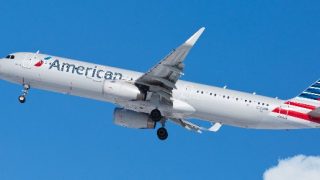
The airline was American, and the Airbus A321neo in question had already faced an engine issue earlier in the day. Maintenance cleared it, and operations expected the plane to continue to Hawaii. But the captain wasn’t satisfied. He cited engine oil pressure that was trending high, along with a fuel system filter that was flagged for replacement.
Instead of pushing ahead, he made the call to cancel. Then he explained it to passengers over the intercom: “I’m not going to leave the ground if I’m not completely certain that we have an airworthy aircraft.” His tone wasn’t dramatic. It was matter-of-fact. The moment ended with applause, and eventually, the viral video.
Why Hawaii flights are still different and riskier.
A five-hour flight from Los Angeles to Honolulu isn’t your average hop. It’s over water the entire way, with limited diversion options and zero margin for mechanical improvisation. If something goes wrong mid-flight, you don’t just turn toward a nearby airport. You turn toward hours of ocean, which is safe by design.
That’s why this decision hit differently. As one TikTok commenter said, “If my pilot isn’t feeling it, I’m not feeling it either.” Another joked, “Say less, Captain. Just point me back to the terminal.”
For Hawaii travelers, safety decisions don’t feel abstract. These routes are long, isolated, and still fresh in memory from other dramatic mid-Pacific incidents. A moment of hesitation from the pilot becomes a moment of clarity for the people in the cabin.
The real reason this Hawaii pilot said no.
While the pilot’s words, “I’m not feeling it,” may sound casual, the decision wasn’t. According to aviation experts we consulted, the symptoms he described could indicate a partially clogged fuel filter. Under normal conditions, fuel systems can tolerate some fluctuation. However, over the ocean, under load, and with no backup plan nearby, even minor irregularities warrant more caution.
One veteran pilot commented online, “The captain didn’t want to find out half-way to Hawaii that it actually was an issue. So he didn’t go.” Another put it more bluntly: “It wasn’t illegal to fly. But it wasn’t a good idea.”
It was an ETOPS-certified route, which means the flight was already operating under stricter maintenance and inspection requirements. Even so, the captain had the final word. And his judgment leaned conservative, not mechanical.
Should pilots share this way with passengers?
That’s where the story gets trickier. While most in the aviation world supported the pilot’s decision to cancel, some questioned the level of detail he provided. Telling 150 passengers that a fuel system isn’t behaving normally, and that you’re “not feeling it,” might create more concern than comfort.
Airline professionals we asked pointed out that the phrasing could raise unnecessary alarm or lead to ripple effects with refunds, rebookings, and social media panic. They argued it’s usually enough to say there’s a maintenance issue and the flight won’t depart until it’s resolved.
Others, however, defended the approach. They said it built trust by treating passengers like adults. In this case, the onboard reaction suggests the pilot struck the right balance. The applause came not just from relief, but from hearing the decision directly, and without spin.
Still, not every airline would be comfortable with that level of candor. What one captain sees as honest communication, another might see as a liability. And not every Hawaii-bound crowd would clap.
Why pilots are paid to say no.
This is the part most passengers rarely see. Behind every flight is a chain of sign-offs, including maintenance, dispatch, and scheduling. But once the door closes, the decision to go or not belongs entirely to the pilot in command. That’s not a courtesy. It’s a legal responsibility.
One comment circulating in aviation social media put it this way: “We’re not paid to fly. We’re paid to say no.” Another added, “Imagine the NTSB report if he’d flown anyway. That’s what every pilot has in the back of their mind.”
Even pilots who questioned the public messaging agreed that the call itself was valid. The aircraft might have flown just fine. But no one faulted the captain for deciding it wasn’t worth the risk.
Aviation culture often trains pilots to be stoic, efficient, and non-disruptive. But the ones who’ve been around the longest know something else too: gut instinct isn’t something separate from technical skills, it’s part of them.
What this flight tells Hawaii travelers.
This wasn’t a mechanical failure. It wasn’t turbulence, or smoke in the cabin, or an emergency descent to Honolulu. It was one person making a quiet decision to prevent a problem before it happened. That feels on the surface rare and revealing.
Hawaii flights don’t just require reliable aircraft. They require people willing to delay arrival in paradise for the sake of safety. And in a travel era where airline loyalty is unraveling, meals are disappearing, and seats keep shrinking, a clear-eyed, transparent decision like this one stands out.
It reminded travelers that airworthiness is more than a checklist. And that your pilot doesn’t need the FAA’s permission to say no go.
Maybe that’s why so many viewers clapped. Not just because the flight was canceled, but because the person flying it said, “not this time,” and meant it.
Please share your thoughts on today’s post.
Lead Photo – Beat of Hawaii on American Airlines.
Get Breaking Hawaii Travel News




Unkle cracked the code. He is taking care of O’hana.
Pilots don’t, or at least shouldn’t, operate in “feelings”.
They act, or at least should act, based on data .
The gut-feeling was in direct response to his read on the presented data regarding airworthiness. It’s completely reasonable to be particularly critical on a craft that was already under the microscope that same day. An aviator’s instincts are honed to save lives. We want their gut feelings to be sharp.
I agree with the pilot’s decision. He would have been blamed by the administration instead of being rewarded for taking responsibility for the trust placed in him by the passengers, not the corporation he works for.
Michael, what evidence do you have for your propositiin?
Absolutely respect the pilot’s instincts and integrity in this situation. This is how I trust someone else to safely get me to my destination. Kudos!
He made the right discision for the safety of his responsibility to protect lives and to provide the facts of his decision. That’s why he’s a captain
I whole heartly support this pilot for his message. I know what he means. Machinery has a soul and spirit. Gut level feelings can be expressed without verbage.
A message doesn’t need words but your gut can tell you nonverbally something
Is not right. Pilot should quietly rewarded with “good job performance.”
“I’m not feeling it” comes from the heart. You can trust the pilot. That’s why he got the applause. I don’t think he would have been applauded if he just said something like the plane has mechanical issues. In fact if he said something to that effect, the passengers probably would have deplaned grumbling.
As “pilots” and professional Aviators, we were not in it for the “applause” … guaranteed.
No one in any job is in for the applause whether you’re a plumber or a doctor. Being a pilot is no more special than a soldier. No soldier goes into battle seeking the Medal of Honor. We choose the profession we are in because we love the job satisfaction we get when have successfully completed our task. The only profession that’s in for the applause are entertainers.
Hooray for the pilot and his choice to not go. That’s the kind of pilot I want to be with on a flight. Common sense is hard to find today. Thankfully it was used in this instance. He should be commended on safety over just flying the route.
It would be nice to know the rest of the story. Were problems found? How long did the passengers have to wait to depart? Was there any disciplinary or corrective action by The company?
I applaud this captains choice to put the safety of his passengers at the forefront of his decision. American Airlines employees the too rated pilots and supports their decisions .Hats off to American !!
As a former B-747 Captain on the Mainland-Hawaii routes as well as flying all of the Pacific and ultimately “around the world” routes, I’ve seen a lot, done a lot, and been in a lot of “not-in-the-book” situations.
Do I think the Captain had the “right and responsibility” to refuse an aircraft he deemed “unsafe” or “not airworthy”? ABSOLUTELY. BTDT and never got any blow-back from the Company or the FAA.
It’s your job – You “sign for” the aircraft and you’re responsible for the safety of your passengers, crew, and the airplane in the trip from “Point A to Point B” ..
Would I have used the verbiage “I’m not feeling it” … no. It’s not professional and tells everyone absolutely nothing. Just say “the aircraft is not ready for the scheduled flight” or something similar -In Coordination with the Company.
Aloha ‘Oe
I want that captain on my next flight!
Bravo! The Airline Captain did exactly what he is trained to do.
The term “pilot in command,” means exactly that, the pilot who is in command of the aircraft! Questioning his word choice in communication is ridiculous and a waste of time.
Kudos to the pilot’s decision not to fly and his announcement to the passengers.
Congratulations to the pilot. Great decision. He wanted to live, just like the rest of us. As a driver of private planes I respect his integrity and intuition for the go/no go choice. Safety is the answer.
Personally, I give kudos to the pilot for his decision and how he handled it. The pilot is ultimately responsible for the plane and all the souls on board. And, I think it’s safe to say, they’ve had a lot of training and have the expertise.
If a pilot isn’t comfortable with how the plane is behaving, I’m inclined not to argue with them. Especially if the flight is going to be over a large body of water for a few hours. And I prefer to get the reason why directly from the person who made the decision.
Why I fly American.
Good for him! We got delayed once because the previous flight had not restocked enough air canisters on the flight. The chances of needing them were slim, but if there is a 1% chance, that was the right call. Pilots should never have the attitude of “it should be okay”. Flying over nothing but water for so many hours takes safety to a whole new level-literally.
No problem at all. A responsible pilot acting the past. Give him a salary bonus!