

If you are visiting Hawaii in 2026 or live here, there is a surprisingly new way to get ticketed that feels different from the usual parking mistake.
The spot looks fine. There is no warning sign. There is no red curb. There is no painted crosswalk. It is the kind of place people have parked for years without thinking twice. Last week, it would not have raised an eyebrow. Today, it can leave a $50 citation on your windshield. In reality, nothing about the street changed. Only the law did.
As of January 1, 2026, Hawaii changed how close you are allowed to park near intersections and crosswalks. The change is simple on paper and nearly invisible in real life. Parking is now illegal within 20 feet of an intersection or crosswalk, even when there are no markings to warn you.
For visitors and residents, this does not feel like breaking a rule. It feels like being penalized for something they were never told existed.
Prior to this year, enforcement leaned heavily on visual signals.
Red paint meant no parking. Signs made that obvious. Painted crosswalks created clear boundaries. If none of those were present, parking was often tolerated, especially on residential streets and near beaches.
That logic no longer applies according to the new law, Act 171. The rule is now enforced by distance, not by what you can see. If your car is within 20 feet of where an intersection or crosswalk exists, it can be ticketed, even if nothing on the street directly tells you that.
Twenty feet is harder to judge than most people think. It is roughly two car lengths. On many Hawaii streets, that eliminates curb space that still looks completely reasonable to park in.
There is no grace period or any pending future change. The rule is now active statewide. Citations can be written now.
Hawaii’s streets were not built with modern parking enforcement in mind.
Many of our neighborhoods predate standardized curb paint, consistent signage, parking meters, and clearly defined setbacks. Informal parking norms developed over decades, and people learned what worked by watching what others did.
That is the informal system that has long existed on the ground. Only now, the rulebook has changed.
In many residential and beach areas, curbs are unpainted. Crosswalk markings are inconsistent, faded, or missing entirely. Intersections blend into the street without obvious beginnings and endings. On narrow roads, there may be no visual cue whatsoever to indicate where an intersection officially begins or ends. All drivers in Hawaii are being held to a standard they often cannot see.
How unmarked crosswalks will be treated under the new rule for parking enforcement has not been clearly confirmed statewide. Hawaii law has historically recognized crosswalks at intersections even when they are not painted, but whether counties will apply that interpretation broadly when issuing parking citations remains unclear with this just introduced law.
That uncertainty is one part of the problem. When enforcement relies on boundaries that even local drivers cannot identify with confidence, even well-intentioned parking starts to feel like a gamble.
Who feels this first are visitors.
Visitors are the most exposed, particularly those driving rental cars. Residents on their own island tend to know instinctively which spots usually earn parking tickets and which ones are tolerated. Visitors, whether Hawaii residents or not, do not have that context. They park based on what looks reasonable, not on what changed in the statute books on January 1.
Rental car users are also far more likely to park on side streets, in residential overflow zones, and near beach access points where formal markings are rare. These are precisely the places where the new rule eliminates what used to feel acceptable.
Areas around Waikiki are especially vulnerable. Side streets fill quickly, and visitors often take the first open curb space they see without a no-parking sign, assuming that the lack of both a sign and red paint means they are in the clear. The same pattern plays out near popular beaches and neighborhood access roads across the islands.
Timing makes this even stranger. Visitors arriving now planned their trips before this rule existed. There is no briefing at the rental counters. No warning sign at the airport. Most people will only learn about the change when the ticket is already there or after reading this.
Yesterday’s normal parking spot is today’s $50 ticket.
This is the part visitors struggle with most. A space that felt fine for years did not suddenly become visibly illegal. It became illegal quietly, by measurement alone. You can now do everything you think is right and still get cited.
The $50 fine is not what lingers. What sticks is realizing the rules changed without anyone telling you. For many visitors, that moment feels more like a breach of trust rather than a financial hit.
Counties may vary in how aggressively they enforce the rule, but the authority exists statewide. This is not limited to one island or one city. Whether towing is used or citations remain the primary enforcement tool will depend on location and enforcement, but even a single ticket can sour a day that started out just fine.
What visitors can realistically do.
There is no perfect workaround at this time. If you are parking anywhere near an intersection, assume more space is off-limits than you think. What looks like one open curb space near a corner may now fall entirely within the 20-foot buffer, even if there is no sign, no paint, and no obvious warning.
Enforcement reality.
When rules shift without anything visible, enforcement feels arbitrary to those who get caught. For visitors already feeling worn down by added fees, new rules, and other changes, this reinforces the sense that Hawaii keeps moving the goalposts without ever clearly saying so.
This rule will not feel real to most visitors until enough tickets are written, word spreads, and more articles get out. Until then, many will keep parking the way they always have, because nothing on the street tells them not to.
Have you ever been ticketed in Hawaii for parking in a spot that looked completely legal? Did it catch you by surprise?
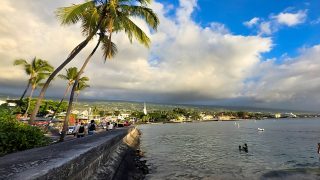
Photo Credit: Beat of Hawaii near Kealia Beach on Kauai.
Get Breaking Hawaii Travel News



This is obviously written by the person who thinks parking on the corner blocking the wheel chair ramp is perfectly fine. Trying to frame it as a tourist issue to garner support for not being responsible for having a space for your own vehicle.
Car Rental companies should print/post signage to inform tourists and neighbor island customers.
That would be the right thing to do. That way, no surprises.
Aloha. So, is an actual, paper ticket written and issued to your car on the windshield, or does the charge go straight to the rental company then you find out later?
My question is what defines an intersection according to Hawaii. Could this be someones driveway because it intersects with a neighboring street or any hotel or restaurant entrance too. I know generally the four way intersections are explainable but if these laws pertain to unmarked area’s then any trail or access point could be considered an intersection too. Does this pertain to back alleys that come in contact to streets also? I noticed it don’t explain exactly what intersections and if they are only traffic signal controlled or by stop signs etc. Entrances and exits could be considered unmarked intersections too. $50 dollars IMO just another money grab.
A somewhat analogous ironic comment. We lived in a ‘nice’ part of Waimea, Big Island for over 15 years and had to go to the mainland because of age and medical needs. The whole time there, old cars, trucks, wrecks were parked randomly on the streets. One neighbor in effect had a mini junkyard with the old wrecks parked in on the ‘parkway’ of an empty lot….years and years. Police did near zero. Not even a ‘ticket’. So probably you are addressing tourist type areas. Out ‘up country’ in neighborhoods…..tickets may not show up. This Did not spoil our neighborhood but it was kind of annoying.
I do not know where the people on this site live but everywhere I have lived the law was always 20 feet or in Canada where I live 6 meters. yes it would be nice to park wherever but this is normal. I guess someone got caught and contacted media.
California has had the same law in place since last year. It’s a good law for safety issues but the implementation is difficult. I don’t know how effective it is nor do I know of anyone who has been ticketed for parking too close to the crosswalk.
These new parking rules/laws will backfire spectacularly. With no warning, signage or marked curbs, it will set up not only residents, but visitors, especially, with no way to make sense of this. And where most people will follow the laws, this will feel again, like a sign (pun not meant) “you’re not welcome here.” Another money grab? We used to come the Islands yearly – no plans this year or the next.
Where I live in CA, the city has painted the curb red to let you know where ‘the line’ is. Seems an obvious solution to a near invisible measurement. Are the cities going to show how cheap they are by refusing to buy red paint or post signs (plus that would cut into the revenue they will gain from parking tickets)? To enforce this law in HI, do the parking enforcement folks get out their metal tapes and measure it off? Ah-huh! They parked only 19′, violation!
How do you measure the distance to an ‘invisible (unmarked) crosswalk’???
One thing is for sure, there is money to be made for the communities that rigidly enforce this new parking ordinance. And future court cases to fight it.
So they want to improve the line of sight. Start with hedges that are to tall and wide. How about the round about in Pahoa. They planted plants that block the line of sight.
Nothing but a money grab by the Hawaii government. If you get a ticket. Fight it.
Tell them to provide evidence posted that the area is illegal to park in. Hiw would a tourist or even a citizen know ?
Without documentation, the judge cannot enforce the law.
They must post a sign or red curb etc. If they make a law without posting illegal parking etc. Any good attorney will shred that in court.
I get the safety aspect of the law.
But it’s on them to post signs and red zone painting to enforce it.
I am a resident of Maui.
So much of this stuff is happening more amd more.
If you want people to respect the laws. Then post them. Dont just make up a law without the citizen or tourist being aware of a illegal parking area.
Use common sense.
Stop the dictator approach when making laws.
Ignorance of the law is not a defense.
The fine is 50 bucks because it’s low enough that any tourist isn’t going to fight it. Heck even locals won’t fight it because time is money.
Heck, even if I had a CCTV footage where it clearly shows I didn’t break the law I’d have to consider paying the fine e because I’d have to take off work to show up and hiring a lawyer is going to cost me way more.
The State knows exactly what they are doing. You lose by paying the fine or you lose even more fighting it even if you win.
Sounds to me like the State and Counties are trying to correct the haphazard and lack of firm rules. Maybe they thought that people would exercise common sense when thinking about parking close to an intersection. Apparently they were wrong in presuming that people would use common sense even though this law is common in many states. We’ve all lived with having to judge the distance from fire hydrants. There’s a good reason for these distance laws. Sorry but this article has an air of visitor privilege.
Aloha Deborah!
I absolutely agree with you on this!
More information below…
g.co/gemini/share/23fc9ee72023
Oahu is the most anti-car environment I have experienced anywhere in the U.S. you’ll be lucky to get hit with a $50 ticket for violating an invisible restriction. Most likely, your car will be towed and will be required to buy your car back from a shady operation on Sand Island for at least $205. I only park downtown when I know there is a designation garage that is directly associated with my reason for going there.
California instuted this same law last year. It purpose is to permit a better line of sight for drivers and pedestrians at intersections, so, I’m not really opposed to it, but trying to determine where the 20 feet is, especially in older neighborhoods, is kind of a judgement call. Also, if it was really instuted without much of a warning period, that doesn’t feel right.
Aloha! What other laws are they going to not tell tourists about? Once again, it would seem like this is maintaining infrastructure and should be paid for by the Green Fees. I guess it will give more tourists places to spend their money, so it’s ok. Now you’ll be able to buy tape measures in the Airport gift shops and ABC stores. It borders on brilliant to extract more money from people that they are trying to entice coming back with the new TV commercials. Why not give the homeless an old truck, some helpers, a tape measure and red paint and have them drive around and mark curbs? Does anyone know how much money is in the general fund to cover this? Mahalo.
Many states on the mainland already have this law. Colorado’s law is similar- no parking within 20 ft of a crosswalk, nor 30 ft from a stop sign or traffic signal, nor 15ft from a fire hydrant. These are rarely enforced however, but it is still the law. I have no problem with Hawaii’s new law.
Aloha Rob!
I absolutely agree with you on this!
More information below…
g.co/gemini/share/23fc9ee72023
What a sad and pathetic attempt to screw over your lifeline. Not even California has ever stooped this low to extract money out of people. This is clearly aimed at discriminating towards tourists. I’m willing to bet any amount of money that the locals will rarely if ever have their cars ticketed. Why? Because it’s so easy to distinguish between a car that is a rental in Hawaii vs. a car that belongs to a native.
Sorry King R, but California passed basically the same law (AB413) in 2024 and started issuing tickets in 2025 after the 1 year grace period.
Thanks for letting us know. We’ll pass the word. What brought us back to Hawaii so many times wasn’t the beautiful island, though it is gorgeous, but the aloha of the people and the true feel of it there. I hope this isn’t the beginning of all that changing.
As a native of a Florida city no one cared much about — that has exploded with people and changes in the past 10 years — I have seen how those small breaches of trust add up to change the feel of a city.
Thanks for your integrity in journalism.
We have been coming to Hawaii for over 20 years because we love the people, their culture and the islands’ beauty. We are to arrive in 2 weeks for our 7 week stay. All these new laws and taxes make us rethink our future plans. Will we be allowed to park here, go to the beach or our church without extra fees and restrictions? Who is going to be monitoring this and where is the money going?
Hmmmm. $50 for a prime spot close to the beach may be worth it occasionally.
In many small tourist towns on Maui, they have striped, parallel and diagonal parking spaces that go right up to the marked sidewalk crossings. Are those spaces that now within 20 feet of the crossing illegal?
How is the state of Hawaii going to collect a $50 parking ticket from a tourist who is back home in, say, Kentucky? Through the rental car agency?
Do you think that -tourists-, because they are from another state, don’t have to pay parking tickets, because they left the state? The state Will get their money from the parking ticket ! They collect the fine from the car rental agency. Then the car rental agency adds a fee to the fine and charges the car rental customer. This applies to highway tolls also. This is all outlined in your car rental agreement.
Show me a picture of my illegal parking or it didn’t happen. Part of my job is occasional security, and we’ve had to start taking pictures because people will complain and argue like you are taking their first-born. And our notices cost $0 and we don’t tow.
They collect it via the rental car company who has all your contact info as well as your credit card info if you ignore them when they notify you of said ticket, and oh by the way the rental car company will also tack on a $15-$25 “administrative fee” for their troubles.
Yes, typically through the rental car agencies. They have your credit card and charge you for the ticket and they generally charge you their own fee for having to process your ticket. That $50 ticket becomes a lot more expensive.
Yes. The ticket goes to the rental agency, who then bill the renter.
They will send the fine to the rental car company who already has your credit card information and they will charge your card without asking. They’ll also probably charge you an extra convenience fee just like the do with turnpike tolls