
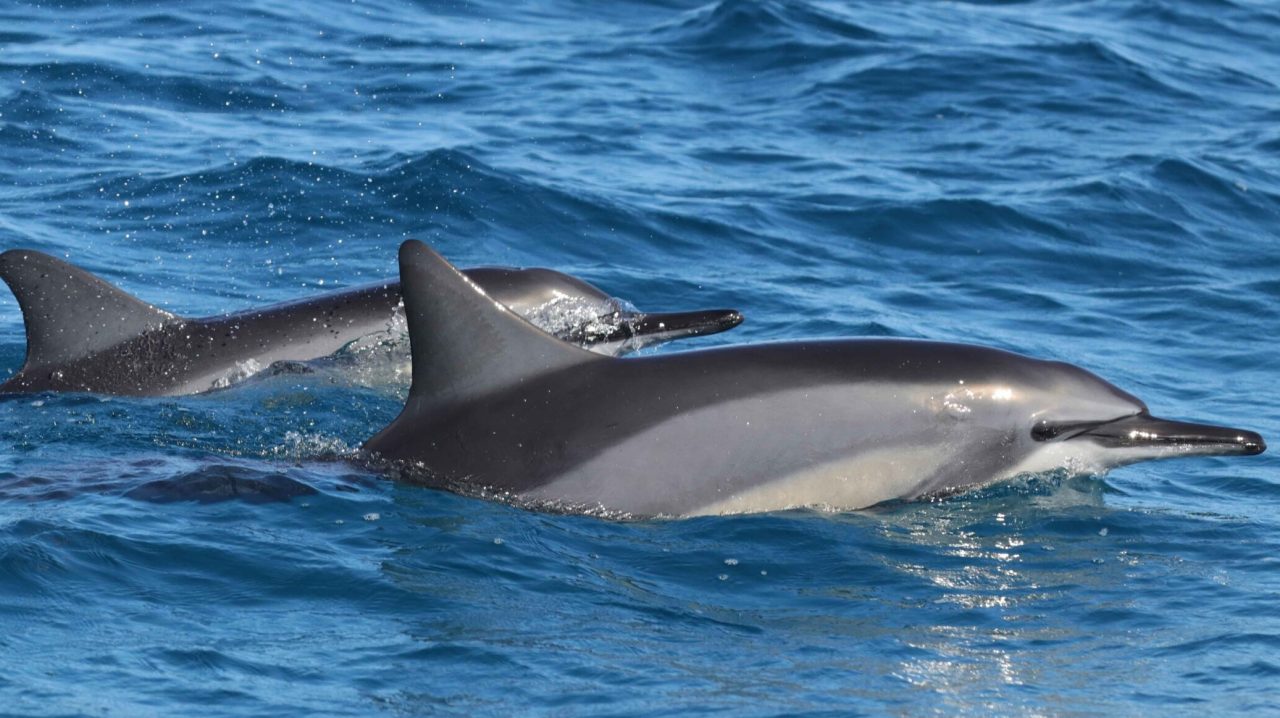
Some of you came to Hawaii hoping to see dolphins in a natural setting. Maybe you booked a snorkeling trip or a dolphin tour because it sounded like one of those unforgettable experiences that felt like a must-do.
But what many do not realize is that those same encounters may be contributing to a growing problem scientists have just reported that is now showing up in the dolphins. A newly published University of Hawaii study found one of the clearest signs yet that Hawaii Island’s spinner dolphins may not be replacing themselves fast enough. Researchers point to years of repeated human disturbance during the animals’ daytime resting hours, exactly when many visitors head out hoping to see them.
That does not mean you should stop looking for dolphins. It does mean many of us need to rethink what a respectful wildlife encounter looks like and how to pursue it.
The warning scientists say Hawaii visitors need to hear.
The new research, published in the journal Endangered Species Research, found that spinner dolphin calves make up only about 9% of the Hawaii Island population, roughly half of what researchers would expect to see in a healthy, stable population.
Researchers now say this is one of the first population-level signs that years of chronic human disturbance may now be affecting reproduction and calf survival. Their concern is not a single boat or one group of swimmers, but the cumulative effect of thousands of encounters over many years.
According to the University of Hawaii Marine Mammal Research Program, this population of spinner dolphins experiences the highest levels of human disturbance ever documented for dolphins worldwide.
Why daytime dolphin swims create the biggest problem.
The issue surprises many visitors because it seems backward. Spinner dolphins spend most of the night offshore feeding, then move into shallow, protected bays by day where they rest, socialize, and recover before heading back offshore after sunset.
Unlike people, dolphins cannot simply go into a deep sleep for hours. They rest using only one half of the brain at a time while continuing to surface to breathe, which means daytime is not playtime. It is their recovery period.
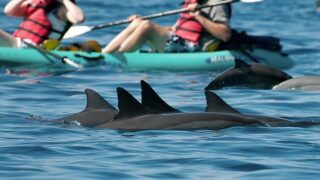
Scientists say dolphins in some of Hawaii’s most popular resting bays are exposed to potentially disruptive human activity for about 82% of daylight hours, often getting only about 10 minutes between encounters before another swimmer, kayaker, paddleboarder, snorkeler, or boat arrives.
Seen that way, even visitors trying to be respectful become part of a much larger pattern.
The law changed, and now the science has caught up.
Many travelers still do not realize that swimming with Hawaiian spinner dolphins is no longer simply discouraged. Since 2021, federal regulations have prohibited swimming with, approaching, or remaining within 50 yards of Hawaiian spinner dolphins throughout the main Hawaiian Islands.
The rule applies not only to swimmers but also to boats, kayaks, paddleboards, drones, and other watercraft. When the regulation was adopted, it sparked debate over whether such protections were even necessary.
That legal challenge has now been resolved, and the rule remains in effect. This latest study gives researchers their strongest population-level evidence yet that repeated daytime disturbance may be affecting the dolphins themselves.
Respecting dolphins is also about respecting Hawaii.
For many Native Hawaiians, spinner dolphins, called Nai’a in Hawaiian, hold cultural significance beyond wildlife viewing. They are regarded by some as aumakua, family guardians or spiritual protectors.
Whether visitors share those beliefs or not, understanding that cultural connection helps explain why respectful encounters have long been encouraged here. The conversation is no longer just about getting a great vacation pic, but about treating Hawaii’s wildlife with respect.
You can still have an unforgettable dolphin experience.
None of this means you cannot enjoy seeing dolphins during your trip to Hawaii. It means choosing experiences that allow the animals to remain wild.
We, too, understand why these tours are popular. Seeing spinner dolphins in Hawaii can be unforgettable, and for many visitors it feels like the kind of encounter they’ve dreamed of for years before ever getting here.
What has changed is our understanding of what repeated encounters do when hundreds of people repeat them day after day in the same resting bays. We have watched how crowded some of Hawaii’s most loved ocean places have become, and how quickly a magical wildlife moment can turn into a cluster of boats, fins, cameras, and people trying to get closer.
The better experience is often from shore or from a boat that keeps a respectful distance and lets the dolphins decide where they want to go. A responsible operator should talk first about federal distance rules, resting behavior, and observation, not about getting you in the water with a dolphin pod.
If an operator promises close contact, encourages swimmers to slide in ahead of dolphins, or treats the 50-yard rule like a technicality, that’s not the experience we would choose. The right kind of tour sounds less like a chase and more like patient wildlife viewing. That may not produce the closest selfie. It often produces the most authentic memory.
As we learn more about how to help protect Hawaii’s marine life, the goal is not to stop people from experiencing it. The goal is to help make sure future visitors have the same chance to watch spinner dolphins thriving in Hawaii’s waters decades from now.
Have you ever seen spinner dolphins in Hawaii? Did your experience change how you think about responsible wildlife encounters?
By Rob and Jeff, Beat of Hawaii.
The rules around Hawaii’s wildlife and access to it keep shifting. We’ve spent nearly 20 years tracking those changes and more as full-time Hawaii residents reporting on travel, culture, and island life, and telling you what they mean for your trip. Join us →
Get Breaking Hawaii Travel News


I was lucky enough to see dolphins pass by while watching the sunset at the North Kaanapali beach, but it has been a while …Mahalo for educating us about their behavior. I was wondering when they sleep …However, I would think that the worst offenders are speed boats or any other motor boats …
Thanks for this oh so important public service message.
We took a sunset catamaran tour that didn’t include swimming, and on our return from the Na Pali coast, the spinners were right beside the front hulls and appeared to be racing with the boat. I was fortunate to be at the front, leaning over and watched them. Unforgettable! Beautiful, majestic, and all the other adjectives apply.