
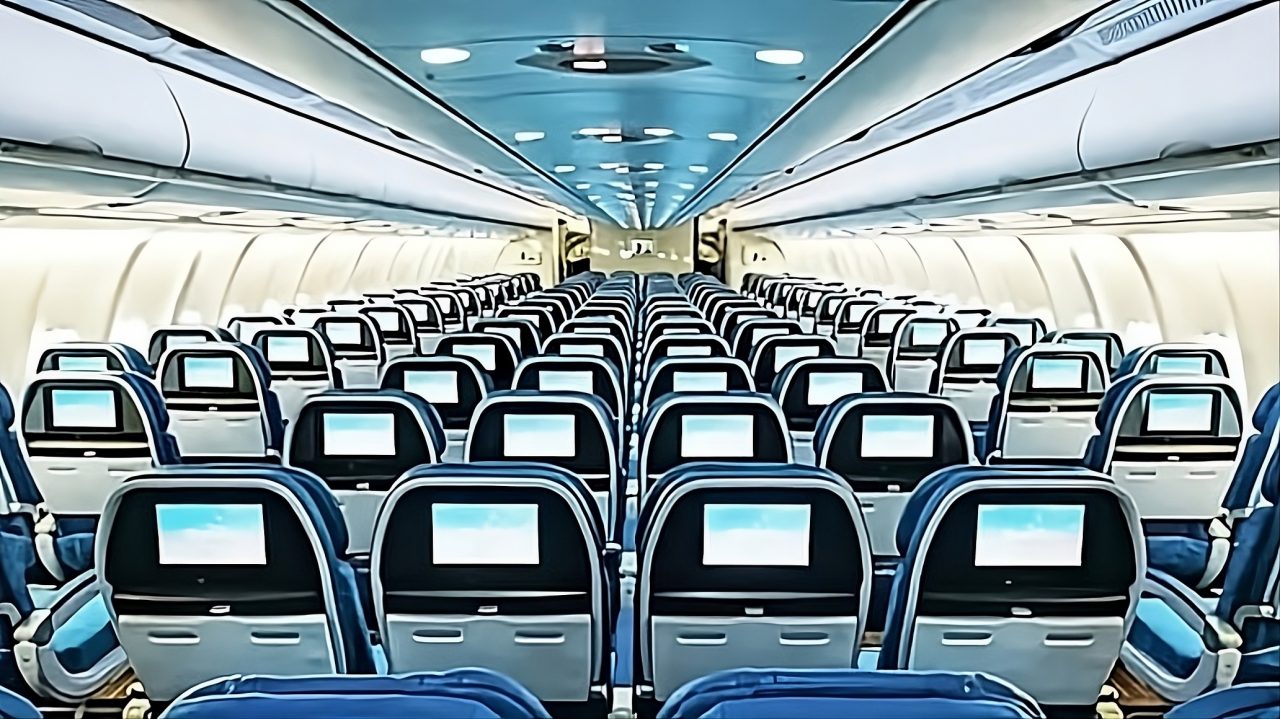
For the past two years, one of the nicest surprises about flying to Hawaii has been how quickly free in flight Wi-Fi has changed. Instead of slow connections, expensive passes, and complicated login screens, Starlink arrived with a much simpler promise. You connected, and you were online. No payment screen. No loyalty account. No hoops to jump through.
We probably got used to that faster than we should have.
Recent developments have just shown what many passengers assumed could never happen. We so trusted the airlines about how this would be like water or the lavatory – free forever. And it doesn’t mean your next flight to Hawaii will suddenly come with a Wi-Fi bill. It clearly shows, for the first time, that airlines using Starlink are no longer locked into offering it free to everyone.
What made Starlink feel different.
When Starlink first appeared on commercial aircraft, starting here with Hawaiian Airlines, it stood apart from almost every inflight internet system that came before it.
The connection was fast enough to stream video, make video calls, and work much like broadband internet at home. Just as important, airlines adopting the system generally chose not to charge for it. Whether access required nothing at all or simply a free loyalty signup, the experience felt dramatically easier than the paid WiFi most travelers had grown accustomed to.
For Hawaii travelers, that change was especially noticeable. Long flights across the Pacific suddenly became far more connected, and Hawaiian Airlines became the first major U.S. airline to offer free Starlink service on transpacific routes, both domestic and international. Those aircraft are now part of Alaska Airlines following the merger, with Starlink continuing to expand across the combined fleet, including Alaska’s Boeing 737 planes.
For many travelers, free high-speed internet quickly stopped feeling like a promotion and started feeling like the new normal. That was our mistake, especially given what we know about the airlines’ capricious tendency to charge for everything that isn’t nailed down.
One airline just broke the pattern.
That assumption changed this month when Copa Airlines, based in Panama, activated its first Starlink-equipped aircraft on July 6. Unlike every previous Starlink airline rollout, Copa chose to charge most passengers for access.
Free connectivity is limited to business class passengers, top-tier frequent flyer members, and travelers who already subscribe to Starlink Residential or Roam service. Everyone else purchases access through the onboard portal.
By itself, one airline’s pricing decision would not normally matter much to Hawaii travelers. Copa operates a fleet of Boeing 737 aircraft and actually had no in flight Wi-Fi before adopting Starlink, making it a very different business case from airlines replacing an existing internet product.
The significance is that an airline has demonstrated that another model now exists. Free Starlink is no longer the only way airlines can choose to offer the service.
Why the timing is getting added attention.
The announcement came only weeks after SpaceX became a publicly traded company. According to its prospectus, Starlink generated $11.39 billion in revenue during 2025, about 61% of the company’s total revenue. It was also the company’s only profitable business segment.
Now SpaceX has public shareholders watching the business that generates most of the company’s profits, and one airline has shown that carriers using the system can sell access rather than offer it free to everyone. Until now, every Starlink airline rollout had followed some version of the free model much as we’ve experienced on Hawaiian Airlines. Whether that reflected SpaceX’s commercial strategy, airline preference, or both, the result was the same. Most of us came to think free Starlink was simply how Starlink worked. Obviously that is no longer the case.
Hawaii travelers are already seeing a different version of this.
Even before Copa’s announcement, free inflight WiFi had already become more complicated than it first appeared.
Southwest offers Starlink free to Rapid Rewards members, while charging everyone else $8 per device. United provides free Starlink to MileagePlus members on equipped aircraft, while older aircraft using different WiFi systems continue charging $8 for members and $10 for nonmembers.
The trend in the United States has generally moved toward free connectivity tied to loyalty programs rather than charging every passenger. That benefits travelers, who avoid paying directly, but it also gives airlines something increasingly valuable in return. By asking passengers to sign in, join loyalty programs, or pass through branded portals, airlines gain customer data that can be used to personalize offers, strengthen loyalty, and support more targeted onboard advertising and marketing, before, during, and after the Hawaii trip.
Copa’s approach is different. Instead of asking most passengers to exchange their information for access, it asks them to exchange money. Either way, the days when fast inflight internet simply came with the flight are beginning to look less certain.
What this could mean for Hawaii flights.
Competition among U.S. airlines remains intense, particularly on Hawaii routes where carriers increasingly advertise onboard amenities as part of the travel experience.
That is why we are not predicting that Hawaii flyers are about to see new Starlink charges. It’s unknown at this point. Free internet has become a selling point, and airlines know passengers notice when a flight to Hawaii includes fast service over the ocean.
But Copa just proved the free version is a choice, not a rule. And Hawaiian Airlines managed to ditch free meals under Alaska’s rule, which is seemingly another version of what was once free now coming with an additional charge.
That changes how we look at one of the few genuinely good things to happen to flying in the past decade. Fast, reliable internet over the Pacific may still be free on many Hawaii flights, but it now has a visible shelf life because the pay for play business model is no longer theoretical.
The next shift may not look like a bill on your boarding pass. It may look like more portals, more loyalty sign-ins, more data collection, or a free version, depending on which airline, aircraft, fare, or membership you have.
We read the fine print on Hawaii flying, so these changes reach our subscribers before they reach the seatback. This is exactly the kind of shift that can show up on a portal screen months before anyone announces it.
Have you started expecting free WiFi whenever you fly to Hawaii, or do you still see it as a bonus when it is offered?
By Rob and Jeff, Beat of Hawaii.
Some of the most meaningful parts of Hawaii are the ones visitors walk right past without knowing they are there. We’ve spent nearly 20 years finding them firsthand for BOH as full-time Hawaii residents reporting on travel, culture, and island life, and telling you what they mean for your trip. Join us →
Get Breaking Hawaii Travel News


When cell phones arrived they were considered a luxury. In time, they became necessities… and so it goes.
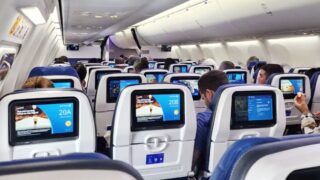
Hawaiian aka Alaska Airlines already changed this for Hawaii flights with an interstitial video ad that we previously didn’t have to be annoyed with. But, as much as I find it annoying, I’d rather tolerate a subsidized Starlink; because of said ad – than start paying or it. Albeit, all my flights are 1st class (my only vice) so I’ll continue to expect it for free, but for everyone else I suspect various paid tiers might be coming.
Copa probably has to do this to offset costs – more so than some huge US conglomerate or major International carrier like Lufthansa, so I’d be cautious overhyping the impact of Copa comparative to other airlines in other economies.