
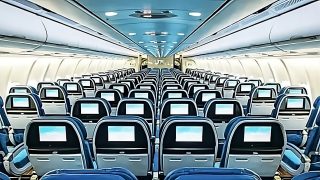
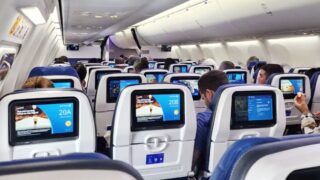
We never really notice the cabin when we sit down. We notice it when someone tries to get out, when a shoulder turns sideways, a hip brushes the armrest, and the person waiting for the lavatory has nowhere to stand and no ability to pass the person heading the other way.
A backpack swings into the row and hits you from across the aisle, the cart is coming from the other direction, and suddenly the whole cabin feels less like transportation and more like a weird experiment held in a narrow hallway with seats bolted on.
That is what flying has become for a lot of people now, and on a five to six hour Hawaii flight, this impacts us a whole lot more than on shorter jaunts. That’s not because the airlines are terrible or because every seat is unbearable, but because the cabin has become a place where movement itself feels just too tightly rationed.
We have flown more miles than we can count, including hundreds of long overwater flights to and from Hawaii, where comfort is the difference between arriving ready to start a trip and arriving already beaten down. What keeps standing out for us now is not only legroom, seat width, or recline, but also the aisle, the cart, the lavatory line, the mini-lavatory itself, and the growing sense that there is no easy way to move once the flight is loaded. If that sounds like Hawaii flight claustrophobia, you’re spot on.
The perks are getting better while the cabins keep getting worse.
That is what made this week’s airline news feel so familiar. Alaska and Hawaiian announced new onboard drink upgrades, including complimentary cold brew coffee, sparkling wine in premium cabins, and other new beverage touches meant to make the flight feel more polished, and we’d concur perks like that are not meaningless on a long flight over water to and from Hawaii.
A better drink or a better service moment helps, but none of it is the thing we actually need once the doors close. Not at all.
Hawaiian also deserves real credit where it is due. It delivered early free Starlink Wi-Fi fleet-wide (A330 and A321) and became the first major airline in the world to fly with it. For years, travelers on all the airlines were told better connectivity was coming someday, and Hawaiian actually made that happen.
The airline pouring Champagne this week is also the one that delivered that Wi-Fi promise, while the larger cabin trend across the industry keeps going the other direction everywhere. More movies to watch, more to stream, more to drink, more to buy, more to bundle, and less room to move around the aircraft once everyone is on board. And much of this defies even buying extra legroom seats.
The aisle is where the change shows up first.
Airlines usually talk about seats. Travelers complain about the same seats. Regulators are supposed to measure seats. But the aisle is where the current flying experience becomes utterly impossible to ignore.
Two people cannot pass, one person can barely stand aside, and the path to the lavatory becomes a stalled line of bodies in the middle of the aircraft. Flight attendants, who often take the brunt of the blame for the discomfort passengers feel, are stuck at the back in the midst of the same shrinking space. They are behind the cart, or in their galley, trying to work safely and politely while people squeeze around them. For everyone, there is nowhere to go.
That is not a service problem; it is a design problem that began long ago to deliver the cheapest possible flights. On Hawaii flights, in particular, the issue is amplified because passengers are on board longer than almost every domestic flight. People need to get up, stretch, use the lavatory, and reach for bags. Travelers may need time to stand and steady themselves without hitting their heads, and families have to move in and out of rows. The cabin is not just a place to sit; it is a place where people need to function for five or six hours.
The more airlines pack into narrowbody cabins, the more every ordinary movement seems to become a negotiation.
Dense cabins still do keep fares down.
There is a fair argument on the other side. Dense cabins help airlines spread costs across more passengers. That can keep fares more affordable, especially on competitive Hawaii routes where travelers are already watching every dollar. Many people would rather pay less and accept a tighter flight. The perks are equally real too. Wi-Fi that works and is moving towards mostly free, better drinks, streaming entertainment, seat-back USB power, and premium upsells can all improve parts of the journey.
But the tradeoff is not only comfort, but it is also movement, and sometimes safety. Gary, a Beat of Hawaii reader, put it this way: “FAA needs to look carefully at what seat separation honestly impairs evacuation of real people, including the many older fliers, rather than just healthy young people.”
The question is not whether a healthy test group can clear the cabin under controlled conditions. It is what happens on a full flight with older passengers, kids, carry-ons, larger bodies, and layouts where even normal movement already feels constrained.
Narrowbody Hawaii flights make this more visible.
The narrowbody future of Hawaii flying is no longer theoretical. The A321neo and Boeing 737 MAX have made it possible to add more Hawaii routes to all the islands without the economics of a widebody. That has reshaped how airlines think about cost and frequency.
That can often be good for travelers, since it means more nonstop options and more efficient service, but it also means more Hawaii flights may feel like a long-haul trip inside a short-haul plane.
And that is where the aisle outweighs perks. Once the doors close, every passenger shares the same narrow path. The lavatory line, the service cart, the person trying to stretch for even one minute, the person who needs help standing, and the flight attendant trying to do their job all occupy the same so narrow strip of aisle space.
Airlines can improve the experience around that strip. They cannot make two people pass within it.
Wi-Fi is improving faster than the cabin.
The connectivity race is nearly won. Hawaiian became the first major airline to deliver free Starlink across its A330 and A321 fleets. Delta, American, and Southwest have all made free connectivity central to their customer sales pitch, with American switching it on for AAdvantage members in January. United is the slow one, with Starlink on roughly 25% of daily departures and full rollout not expected until the end of 2027. The technology kept improving. At the same time, the cabin kept getting tighter.
We want reliable Wi-Fi, and we use it, and many travelers do too, especially when a flight becomes a working or trip coordination day or the only chance to handle plans before landing.
But the contrast is large. Airlines are solving the connected-flight problem faster than they are solving the movement problem. You may soon have faster internet than at home, better drinks, more entertainment, and more ways to pay for comfort. What you may not have is a clear path to the lavatory or to stretch.
Perks can be sold, branded, announced, and photographed. Space is harder, and once it is gone it isn’t coming back.
Flight attendants are caught in the middle.
Travelers direct a lot of cabin frustration at the people working the flight, and that aim is clearly off. Flight attendants are trapped in the same geometry passengers are.
They are expected to deliver more service in less space, manage more passenger needs, work around more carry-ons, and keep moving through an aisle that was never generous to begin with. When the cabin feels tense, they clearly feel it too.
When passengers cannot pass, they have to pause the cart, back up, ask people to move, and manage the irritation that follows. The shrinking cabin has made their work harder and made passengers more impatient.
That is not fair to them. It is also not fair to passengers who simply need to stand up during a long flight to Hawaii.
The Hawaii traveler stake feels different.
A shorter mainland flight is one thing; a long overwater flight is another. For visitors to Hawaii, the aircraft is not a brief hop between mainland cities. It is often the first and last chapter of the trip. For residents, it is the lifeline to medical care, family, work, and the mainland.
We can handle a cabin that feels manageable for even three hours, and that feels very different than five hours. A blocked aisle is not an annoyance when someone needs to move. A lavatory line with nowhere to stand is much harder to avoid. A service cart can divide the cabin in a way that makes passengers feel emotionally, if not physically, pinned in place.
The airline industry keeps telling us travelers to focus on the product. The seat category. The bundle. The loyalty benefit. The drinks. The Wi-Fi. The IFE screen. But our bodies notice something simpler: can we even move?
This is about not being able to move when it counts.
We’re not going to reject every perk, and we won’t pretend flying had a golden age it never had. Better Wi-Fi is welcome. Better drinks too. But the extras have started to feel like compensation for something more basic that’s gone.
The perks will keep improving. The screens will get better, the Wi-Fi will finally work, the drink will be nicer. But if the aisle still feels blocked and the lavatory still feels unreachable, then the worst version of this is beyond discomfort.
Do you think airlines have found the right balance between adding amenities and maximizing cabin space on Hawaii flights?
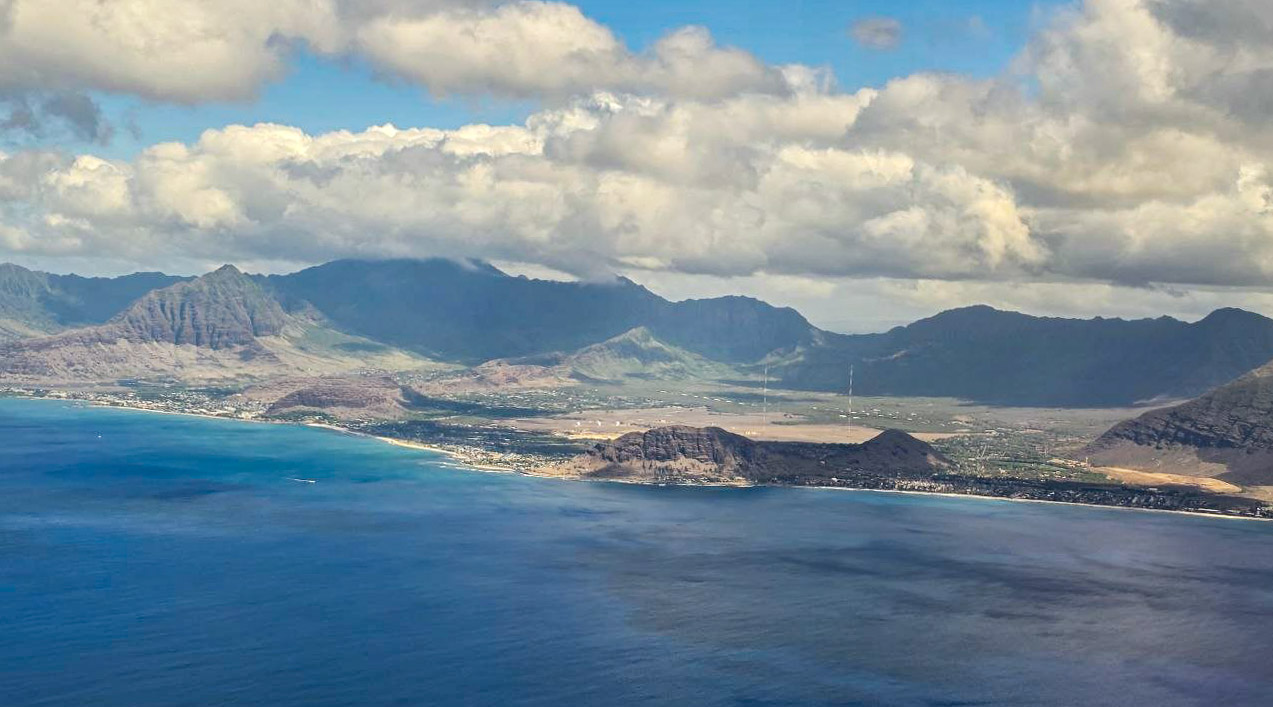
Lead Photo Credit: © Beat of Hawaii landing on Oahu.
By Rob and Jeff, Beat of Hawaii.
Some of the most meaningful parts of Hawaii are the ones visitors walk right past without knowing they are there. We’ve spent nearly 20 years finding them firsthand for BOH as full-time Hawaii residents reporting on travel, culture, and island life, and telling you what they mean for your trip. Join us →
Get Breaking Hawaii Travel News


Spot on for a/c design. 3.5-4hours is fine for flights with single aisle but trying to get more revenue per seat on a flight of 4.5-6+ hours is putting the passengers at a disadvantage. We already see it with AS and other carriers blocking the middle seat for long range a/c inorder to stretch the time for flights from JFK-ANC. or SEA-KEF. Be honest, without blocking seats, payload and fuel will restrict the a/c from accomplishing the distance. Nothing is for passenger comfort or safety for these long flights. Unfortunately, to keep the cost down or to travel the distance/range for the a/c types, something has to give…
I follow all of your comments but this one really hit a nerve. Thank you for speaking on our behalf. The safety, discomfort, lav issues and tempers are significant now. Unfortunately no one asked us before the planes were put into production and eventually on the tarmac. I sure hope it won’t take a flight disaster to prompt some real change in cabin design.
The backpack problem could be solved by airlines requiring people take them off their backs and carry them in front of them Before entering the boarding queue. No more hitting people with it as you stroll down the aisle and no more slowing the boarding process by blocking the aisle while wriggling out of it carelessly when you get to your seat and whacking people in the process.
This whole ‘sardine can’ flying problem is something the FAA needs to seriously look at. As you guys have stated, in the real world, can these aircraft be evacuated in a Real emergency according to FAA standards??? I doubt it. From what I’ve seen in the past, before the 3 and 3 seating arrangement came into play, the aircraft manufacturers ‘self-certified’ that a full aircraft could be evacuated fully in 90 seconds or less by FAA standard. Do today’s pax truly believe, barring those pax trying to open bins and take their carry-ons with them, that their 737 or 321 could possibly be evacuated in that time??? I think not! Which means that, in the name of making a profit, the airlines are knowingly risking the lives of their passengers for a buck!
All the perks just make passengers foie gras geese: board and stay in your pen until it’s time to deplane. My wife and I fly from Lihue to SOCAL and back 3-4 times a year and our inflight objective is to never leave our seats. I sit on the aisle to shield her from the elbows, swinging backpacks, people who can’t get their carryons into or out of the overhead compartment, beverage carts, etc. Despite constant vigilance I have been struck numerous times. The flight is something to be endured, not enjoyed, another price we must pay to visit loved ones.
As a boomer, what I have experienced flying over the decades is more than tragic. Before 9/11 flying used to be fun. Plenty room to move around and lots of upgrades and perks. The airline attendants had a great job and everyone was happy. No “karen’s” loosing it all over everyone either. No TSA inspecting every inch of your body and sometimes stealing your stuff from the belt. Now we are each suspected criminals before boarding … and then reduced to Spam in a Can (quote from The Right Stuff). Flying is not fun anymore. But I guess if one is young and never knew anything else, then all of this is now what’s normal.
First, the shrinking aisle isn’t just a comfort issue. It’s a safety one. Egress standards exist for a reason, & this belongs in front of not just the FAA but Congress.
Second, flight crews absorb frustration that belongs in the boardroom. They also belong to one of the more powerful unions in American labor. If conditions are untenable, the leverage exists. Using it is overdue.
Third, the aisle is only part of it. I’m an average-sized person & the lavatory on a standard domestic flight is functionally unusable. I won’t pretend to know what that’s like for someone elderly or heavier, but I don’t need to in order to recognize it’s unacceptable.
Passengers are the most captured of captive markets. Airlines have decided we’ll absorb whatever they offer because the alternative is not flying. Maybe it’s time to test that assumption. One coordinated day without passengers would be a pointed reminder of exactly who this industry exists to serve.
Aloha~ it is a simple equation. if you spend more, you get more. The airlines are not an egalitarian entity, they are profit driven. In a free market economy, you can vote with your feet and your pocketbook. Back in the days of regulation, the Airlines all had to meet minimum standards by the CAB, but those days are gone. It is up to you to choose what you want from an airline, if they will not provide it, find another. And btw, seats have gotten tighter, however, the aisle are the same as they have always been. And lastly, change is inevitable. Mahalo
I question your comment about the width of the ailes, unless you were born in this century? Having flown airliners for over 60 years, from DC-6s and 707s, to the current sardine cans, I can state that ‘back when’ you could walk, not ‘shuffle’, down the isle and not bump heads and shoulders with your fellow pax. Look at the width of the carts the attendants push, they are no more than half the width of the old ones and carry less product. You can’t add two more columns of seats and say nothing has changed in space or comfort.
Hi Dennis~. I did check aisle width and they come in at: B707-20in, B737-20in, A321-18in. Of course, airline configurations could tweak those, but they are essentially the same. Having not ridden the propeller era extensively, i leave that observation to your experience. My thoughts on why the aisle seems thinner/crowded revolve around more passengers, higher density seating and not an inch of extra space. No ability to step into an empty aisle as you could when 60% load factors were the norm. Reduction of room in the bulkhead rows and maximized use of space. I agree with experience, but do not believe the aisle width is the issue. Cheers