
Visitors checking the forecast before a Hawaii trip often see a number that looks surprisingly familiar. It may say 85°, exactly what the weather app says at home, and nothing about that number suggests what’s actually waiting on the other side of the aircraft boarding doors will feel so different.
Then you arrive in Hawaii, and it does. The air is warm, but it is moving briskly. Palm trees are bending, clouds are moving across the mountains, and the same temperature that felt oppressive somewhere else suddenly feels comfortable. The forecast wasn’t wrong. It just left out the part that may have the most to do with your entire trip. For a broader look at our seasonal patterns, rainfall, trade winds, and typical temperatures, see our guide to weather in Hawaii.
The number itself tells you less than you think.
Most of us have learned to judge the weather by the predicted high. We see 85° and assume we already know intuitively what the day will feel like.
In Hawaii, that number can describe two completely different experiences. One day may be breezy enough that you barely think about the heat. Another may be still and humid enough that you start thinking about air conditioning when you first get started.
The temperature can and does remain almost identical while the experience changes completely. The difference is often a few things visitors never thought to look for before they left the mainland or arrived in the islands.
You notice it as soon as the aircraft door opens.
The real first clue will come far before you’ve ever reached your rental car. The door slides open, the air starts moving across your face, and the temperature immediately feels remarkably less important than it did in any forecast.
That is still the Hawaii arrival many visitors remember. One that is hard to ever forget. The air has warmth in it, but it does not feel trapped around you. There may be salt in it near the ocean, clouds overhead, and enough movement to make standing outside feel completely different from walking across a mainland parking lot on a hot August afternoon. It can feel as though the entire day has been air softened, even though the number on your phone has not changed.
The trades can decide how the whole trip feels.
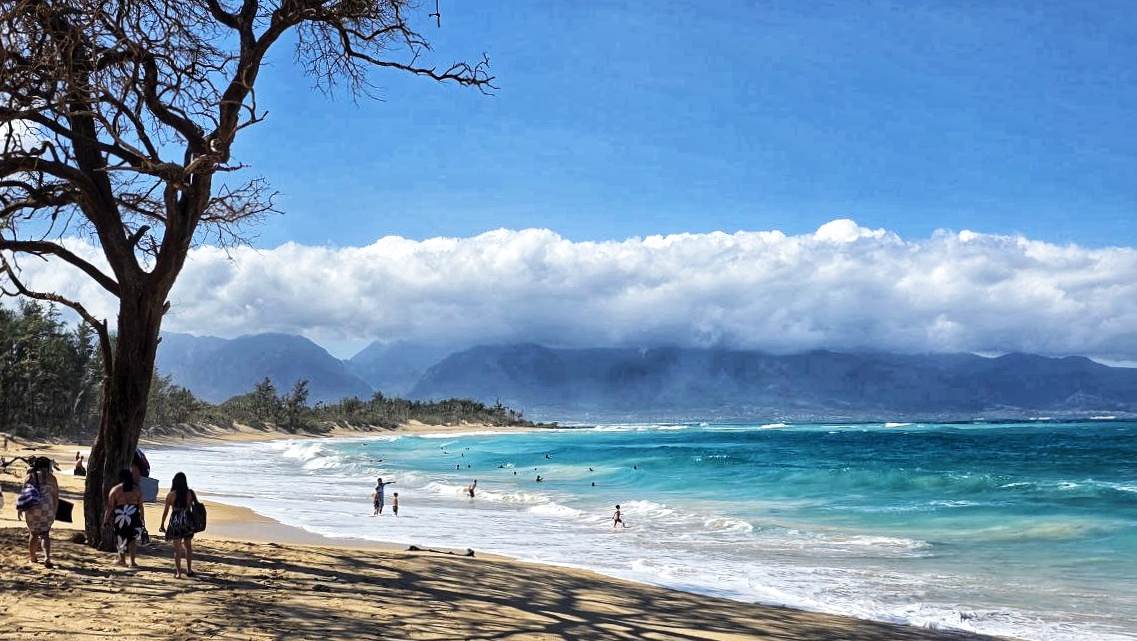
We have been reminded of that again on Kauai this week. When the trade winds started running stronger, it felt as though someone had switched the air conditioning back on.
The thermometer barely moved, but sitting outside changed immediately. Walking felt easier, shade felt cooler, and the afternoon stopped pressing down in the same way.
Visitors who remember Hawaii as having perfect weather may have arrived during a strong trade-wind stretch without realizing how much work the wind was doing. The same island, at the same temperature, can feel very different when that air movement weakens.
That is the part the weather app rarely explains, and it can shape almost every memory of a Hawaii vacation.
Shade can feel like another forecast.
Direct sun in Hawaii can be intense. Sand gets hot, cars heat quickly, and an exposed walk around midday can feel every bit as warm as the forecast suggests.
Then you step beneath a monkeypod tree, onto a covered lanai, or into the shade beside the beach. With the air moving and the sun off your shoulders, the afternoon can change almost instantly.
The temperature did not drop, but your experience of it did. That is one reason visitors can move between feeling overheated and completely comfortable within the same few minutes.
Concrete, grass, sand, pavement, and shade each create a different version of the day. A single number cannot tell you which one you will be standing in.
The ocean is always part of the experience.
In Hawaii, the ocean is rarely just scenery. It affects how the air feels, how quickly the day changes, and how much heat seems to remain after the sun begins dropping.
You notice it while walking near the coast, sitting outside for dinner, or returning to the beach in the late afternoon. The warmth remains, but it often feels less fixed than it does in places where roads, buildings, and parking lots have been holding heat all day.
The ocean does not guarantee a cool afternoon, and it does not rescue every windless day. It does help create the feeling many visitors recognize immediately even when they cannot quite explain it.
Evenings are where the difference becomes obvious.
Many visitors remember the first Hawaii evening more clearly than the afternoon. The sun goes down, people stay outside, and the day seems to loosen its grip.
That may mean walking Waikiki after dinner, sitting on a lanai in Kihei, or watching the light fade over Hanalei Bay. The air is still warm, but it often feels inviting rather than exhausting.
In many mainland destinations, the pavement and buildings continue releasing heat long after sunset. In Hawaii, an evening breeze can make the same daytime temperature lead to an entirely different night.
That overnight relief is one of the biggest reasons 84° in Hawaii often does not feel like 84° somewhere else.
Hawaii can still feel brutally hot at times.
None of this means Hawaii always feels comfortable. Especially at sea level, every island can be very hot and August and September especially can have light or no winds and feel heavy.
Leeward areas may sometimes feel much warmer than windward ones, and even a normally breezy location can become uncomfortable when the trades disappear as they do perhaps 15-20% of the time. Beaches bring their own combination of heath and moisture, while higher elevations may still be far cooler than visitors packed for.
The point is not that Hawaii escapes heat. It is that visitors are often surprised by how much the same temperature can change from one place, hour, or wind pattern to another. And just how different that temperature can feel from the same number on the mainland.
The weather forecast doesn’t quite tell you which version of Hawaii weather you’ll get.
Checking the temperature before a trip can still be useful generally, but it cannot tell you how the air will move, what the shade will feel like, or whether the evening will be cool or balmy. Here’s the weather in Hawaii that visitors can expect throughout the year.
Forecasts can’t tell you whether the trades will follow you through the week or disappear just as you arrive. That one detail may have more influence over how your Hawaii trip feels than the predicted high temperature ever will.
Has Hawaii weather ever surprised you? Did the forecast prepare you for what it actually felt like after you arrived?
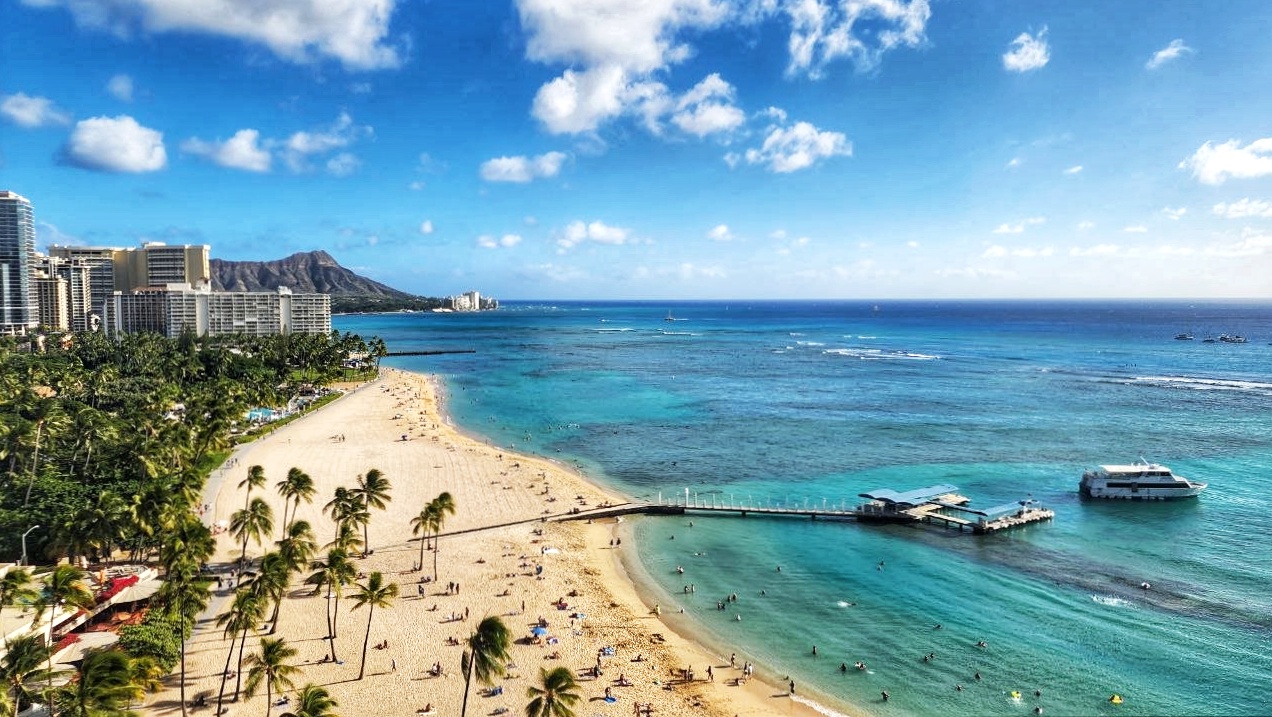
Lead Photo Credit: © Beat of Hawaii. View from Hilton Hawaiian Village, Ali’i Tower.
By Rob and Jeff, Beat of Hawaii.
Some of the most meaningful parts of Hawaii are the ones visitors walk right past without knowing they are there. We’ve spent nearly 20 years finding them firsthand for BOH as full-time Hawaii residents reporting on travel, culture, and island life, and telling you what they mean for your trip. Join us →
Get Breaking Hawaii Travel News

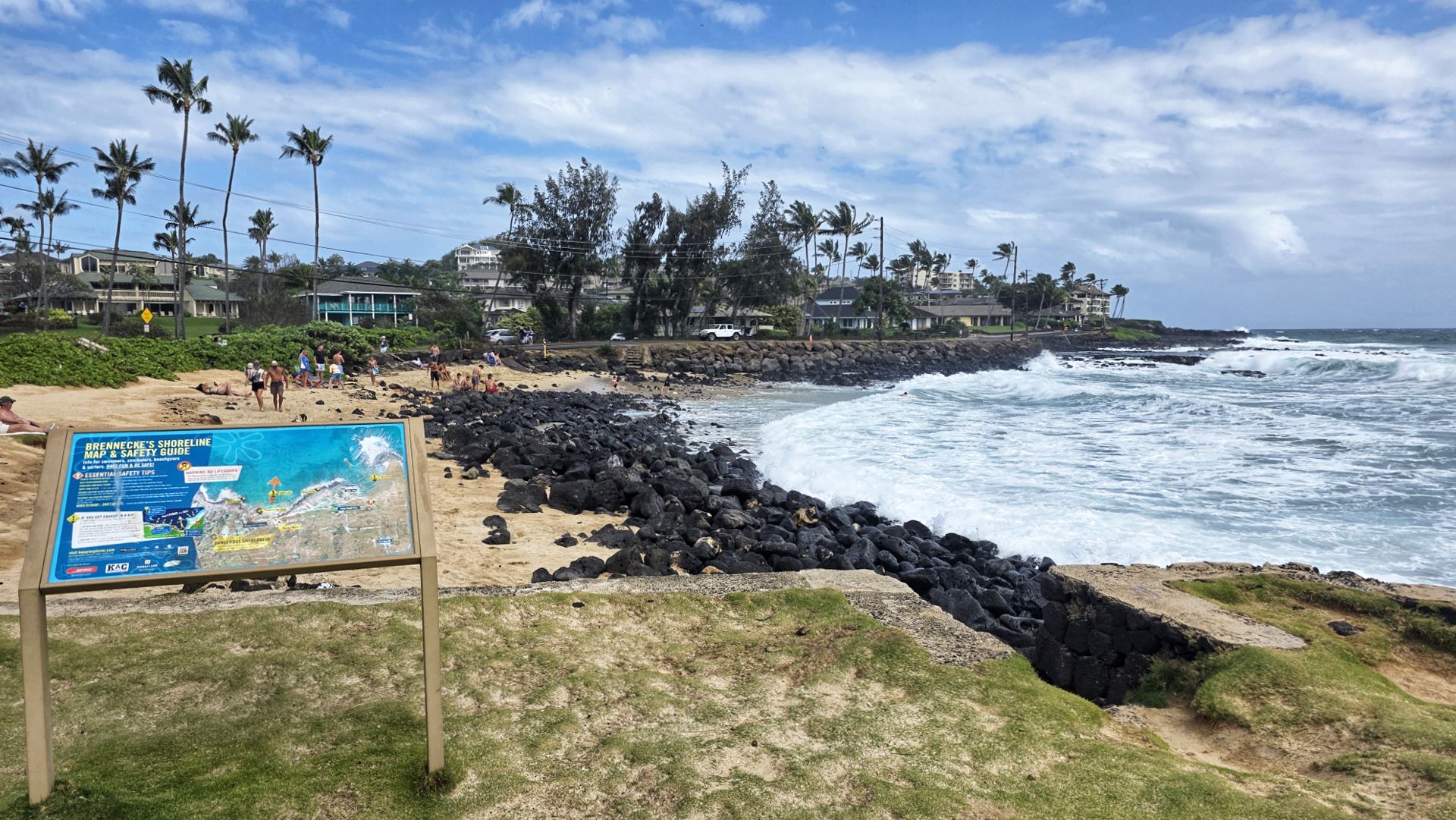




Most visitors care more about rainfall than any seasonal or even daily temperature variations, because rain can easily ruin a well-planned vacation. Where it gets tricky is rain forecast because 90% of the time they’re wrong, unless it’s about a major wet front that typically affects all islands.
Different weather patterns and rainfall can be different even on the same side of the island, let alone windward vs leeward due to typical island microclimate.
Because of this, long-term forecast models can hardly ever get it right, so if you’re looking at Google weather forecast for 7-10 days chances are it’s not going to happen. The best thing to do is check the weather forecast every morning and specifically for the part of the island you intend to visit that day. It will give you the most accurate idea what to expect.
True story: December 27th, 1979. Wife and I living in Nashville TN, w our 10 month old son, while doing my residency. Grandparents had retired in Hawaii in ’58. G-father had died and grandma was here alone. She had a small stroke, and I had always been close to her, so I decided I wanted to see her before she too died. So managed to get vacation over the holidays and put us all on the plane to Hawaii. We arrived on a evening flight that landed around 9 PM. We were beat, groggy and barely thinking but deplaned, got the baby into the stroller and started down the jetway and concourse. You briefly walk through a covered but open air section. At that point my wife stopped, said, “there has been a horrible mistake. I was meant to have been born here.” Two years later me moved here. :-). 20 yrs later we had to leave because of work, but made it back and have been here for another 13 years.
I just had this conversation with someone who is heat sensitive and worried about being too warm in Hawaii. Tried to explain how 80-85 there is the perfect temperature, because of the trade winds during the day. In Kona we also get cold air coming down from the mountain during the night, so I’m downright cold sometimes at night. I’m always reminding my guests to bring a sweater and at least one outfit that isn’t shorts and t’s.
That said, microclimates… I remember (not fondly) my last trip to Kauai. It was very humid and the air must have been still then. I did not like that at all.
Regarding the weather report / prediction…
“Chance of rain 60%”
1. Better make sure you know what side of the island the 60% is forcasted for.
2. It might rain 15 min and the rest of the day is perfect
Aloha!