
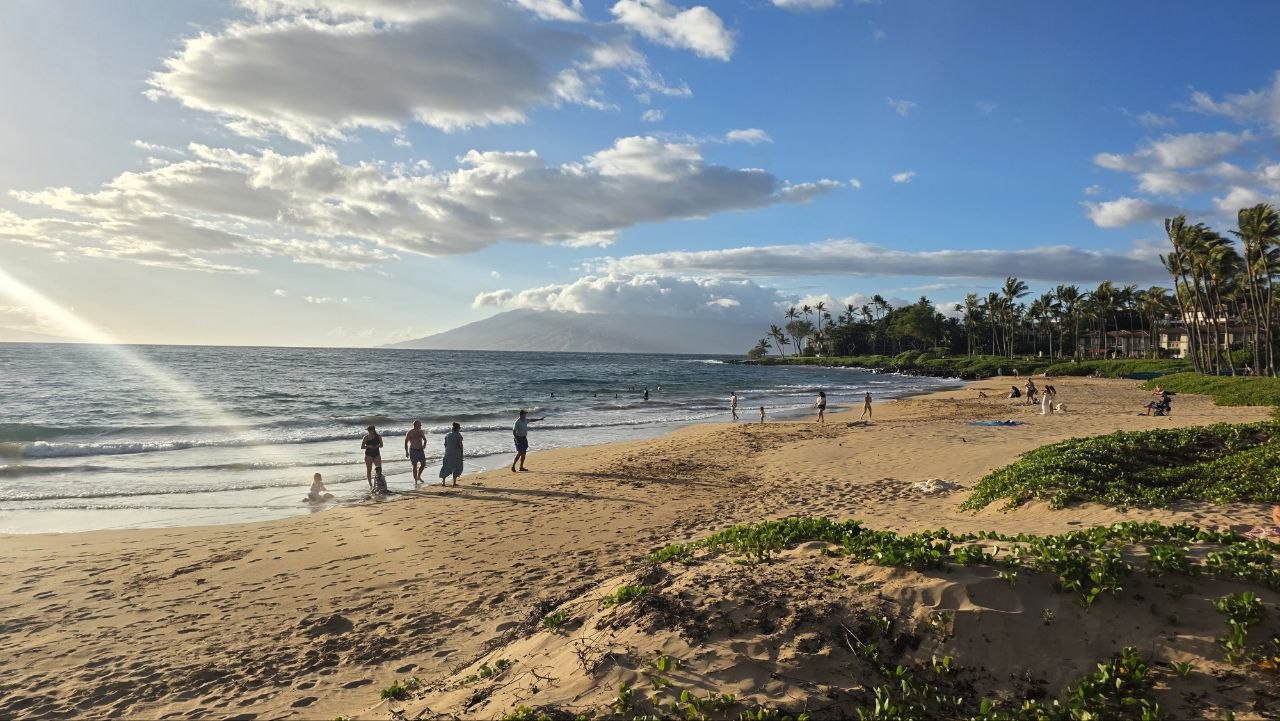
Glenna’s children are now between 38 and 43. After more than 20 years of owning Hawaii timeshares, she already knows they have no interest in inheriting them or buying their own. “Unlike us, they don’t want to go to Hawaii every year, or anywhere else every year,” she told us in a Beat of Hawaii comment. Their parents built a Hawaii habit that lasted decades, but the children grew up wanting something very different.
What happens to the timeshare is only the visible part of the story. After years of bringing children to Hawaii and making the islands part of family life, those children eventually decide whether Hawaii becomes part of their adult lives too.
Growing up with Hawaii does not mean choosing it later.
For many longtime BOH readers, Hawaii became part of childhood through repetition. The same island vacation came every year or two, along with favorite beaches, restaurants, condos, drives, and other family routines. Parents can easily assume all of that will be passed down, but eventually the child is no longer taken to Hawaii. As an adult, they decide where to spend precious vacation time and money.
Glenna’s children made their choice. They don’t want an annual commitment to Hawaii, and they don’t want one to any other destination either, for that matter. Their childhood memories are still part of their family history without becoming the same travel pattern their parents loved.
Another family reached the opposite answer.
Michele described almost the mirror image in the same BOH discussion about younger Hawaii timeshare owners. She and her husband own at Westin Nanea on Maui, return every year, and regularly invite their children and grandchildren. Her children are comfortable inheriting the timeshare because they enjoy Hawaii and expect to keep using it. In that family, what the parents started appears more likely to continue.
Both families spent years making Hawaii vacations an integral part of family life, yet their adult children reached different conclusions about what they wanted to continue. Those differences become clearer once the younger adults are making the plans and decisions themselves.
Timeshares force a decision other families can avoid for years.
A Hawaii timeshare eventually puts the question to the test. Is this something the children want to inherit, or something the parents valued far more than they do? Glenna remains happy with what she and her husband bought more than two decades ago, even though they know their children don’t want it. Michele’s children, meanwhile, seem ready to continue what their parents began.
Parents may carry more of the tradition than anyone sees.
As long as Mom and Dad choose the island, reserve the condo, use the miles, pay for part of the trip, or provide the reason everyone gathers there, Hawaii can remain part of a family’s life for decades. The clearer test comes when they stop putting it together. Do their adult children book Hawaii on their own and take their own children?
The answer seems to have little to do with whether they loved Hawaii growing up. An adult child may still love Maui and marry someone whose family goes to Mexico every year, have children who want Asia, or decide to spend limited vacation time seeing places nobody in the family has ever visited. Childhood island trips can remain some of the family’s best memories without becoming a part of the adult children’s travels. Loving those trips and choosing to repeat them are not necessarily the same thing.
Some BOH readers have Hawaii histories stretching across 3-4 generations.
The person who started it may have been a grandparent, a parent, someone once stationed here, or someone who took one vacation decades ago that unexpectedly became a lifetime of returning.
What follows can take several forms. Some children carry the same attachment forward closely, others remake Hawaii on their own terms, and some leave it behind once the choice becomes their own. For parents who spent decades building those family memories, the result may be surprising either way.
When your children or grandchildren began planning and paying for their own vacations, did they keep choosing Hawaii?
Photo Credit: © Beat of Hawaii on Kauai.
By Rob and Jeff, Beat of Hawaii.
Some of the most meaningful parts of Hawaii are the ones visitors walk right past without knowing they are there. We’ve spent nearly 20 years finding them firsthand for BOH as full-time Hawaii residents reporting on travel, culture, and island life, and telling you what they mean for your trip. Join us →
Get Breaking Hawaii Travel News






My wife and I first came to Hawaii in 2009 to celebrate our 15th anniversary. We returned with our son seven times from 2010 through 2019. We returned five more times without him.
Recently, we offered to cover our son and his fiancé, who has never been to Hawaii, to get married and honeymoon in Hawaii if they didn’t want to do a traditional wedding. Thus far they haven’t accepted as he wants to go somewhere he hasn’t been.