
For years, Americans who loved Hawaii have looked at the cost of coming back and decided to go somewhere else. Europe became one of the most appealing alternatives, with longer vacations, nicer hotels for the money, and plenty to see and do. We’ve heard from readers who discovered they could spend a month overseas for what they were paying for two weeks in Hawaii.
Now Europe has its own problems. Demonstrations, transportation strikes, and occasional violence have disrupted travel in parts of France, Germany, and Italy, while Portugal has seen protests of its own.
The savings that drew Americans overseas haven’t necessarily disappeared, although prices are certainly rising; travelers planning for 2027 have another reason to think carefully about where they’re going. Meanwhile, the Hawaii prices that sent them looking elsewhere haven’t improved either.
Why longtime Hawaii visitors started choosing Europe.
Debbie described the problem exactly in August after pricing the Kihei condo where she usually stays. “I was looking at the total for two weeks in our usual Kihei condo and realizing we could spend a month in Europe for about the same cost. That is hard to reconcile.”
Andrew had visited Maui and Kauai for decades before deciding Europe and the Cook Islands offered better value. He described finding four- and five-star European accommodations for the price of a rundown Kihei condo, along with cheaper rental cars, healthier food options, and better access. Despite the longer flights, language and other differences, he said he saw no reason to return to Hawaii.
Joni made a similar comparison when planning 22 nights in Spain and Portugal. Her hotels averaged $140 a night, and she was looking forward to another summer of European architecture, food, history, and culture. Ruben told us he’d priced Hawaii repeatedly before booking Europe instead, expecting to get more out of his vacation for roughly the same money.
Europe’s problems are reaching American travelers.
Recent demonstrations and strikes in France, Germany, and Italy have complicated travel, without a doubt. Some Paris attractions have temporarily closed or restricted access, and transportation disruptions have affected visitors. For anyone arranging a trip through several European cities, a canceled train can mean missing a hotel reservation in the next city, while a museum closure can wipe out a visit planned months earlier. Finding another way to get somewhere at the last minute can also get expensive quickly.
There’s also a new airport complication unrelated to the protests. Europe’s Entry/Exit System now requires American visitors to provide fingerprints and a photograph when entering, potentially adding time at passport control, particularly for travelers making connections. Brussels Airport reported last week that the EU’s new biometric Entry/Exit System has made passport checks substantially slower. We encountered the same thing with long queues at Barcelona.
Alan R. put it plainly in an October 28 comment on our recent Maui-versus-Paris article: “With the political unrest in France & Europe, Maui has that in its favor. Now if a couple can afford it, is another?”
Some travelers have reportedly postponed European vacations, including trips planned for summer 2027, according to travel advisors interviewed in late October. Others are concerned but keeping their reservations, and there’s no indication yet of any widespread cancellations.
Some BOH readers were already questioning the European bargain.
In June, Kevin M. challenged the idea that Europe was automatically a better alternative to Hawaii. “Then they get to Europe and find equal costs, bigger crowds, taxes and fees, housing fights, and even worse tourist fatigue there too.”
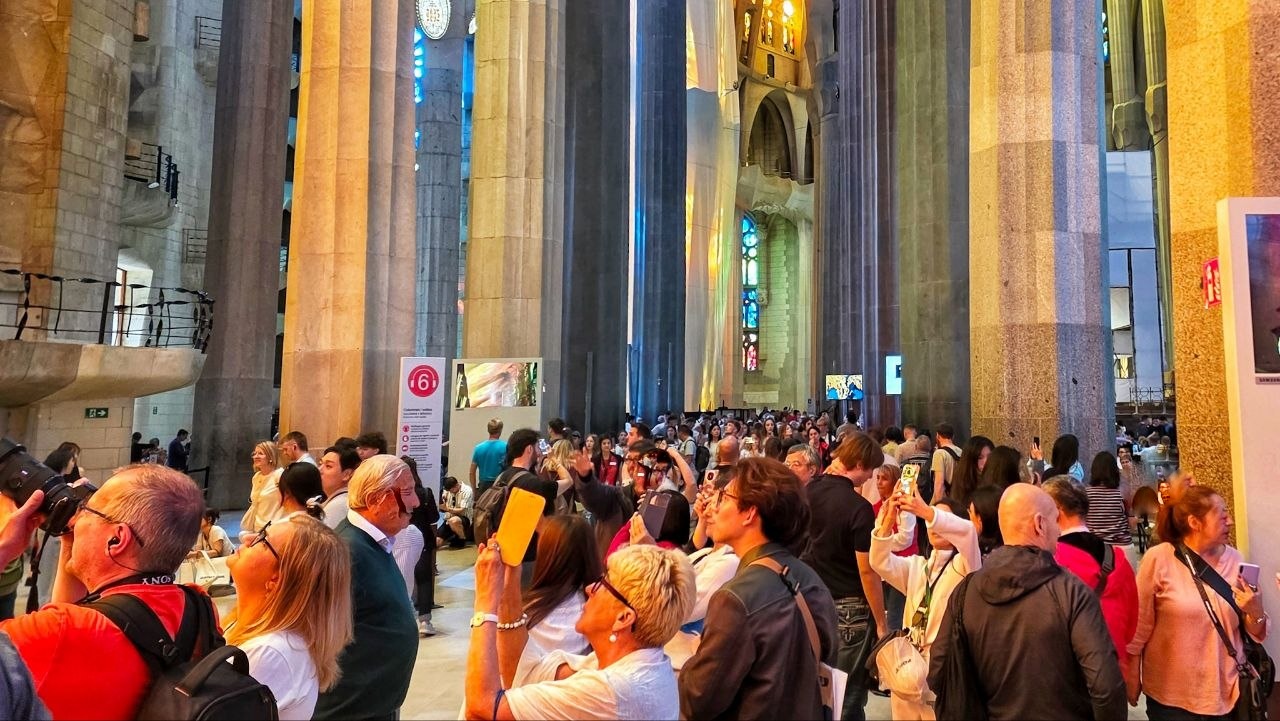
Popular European destinations have their own crowding problems, as we reported firsthand from Barcelona, where we found Sagrada Familia (featured image) and Park Guell packed with visitors, along with rising tourist taxes, advance timed reservations, and growing resentment toward overtourism. Hawaii has plenty of similar frustrations, particularly at popular beaches and attractions, which makes the comparison less straightforward.
A couple who can spend three weeks in Europe for what a shorter Maui vacation costs may still prefer Europe despite the possibility of demonstrations or transportation problems, no matter how remote. They can visit smaller cities, avoid the busiest months, or choose destinations where the latest disruptions haven’t affected visitors. Hawaii has to compete with those options, not simply with the headlines coming out of Paris or Milan.
What would bring these travelers back to Hawaii?
For mainland Americans, particularly those on the West Coast, Hawaii still offers a far easier trip in many ways. No passport requirement, no foreign currency, no electrical or phone issues, and no need to move between cities to enjoy a week or two away. Repeat visitors making the far shorter flight to Hawaii can return to familiar beaches and places to stay without spending months arranging an itinerary.
But Hawaii has become complicated in its own ways. Restaurant prices, accommodation taxes, rental cars, parking charges, and reservations for places visitors once accessed more easily can take some of the pleasure out of returning. We’ve written before about why travelers swapping Hawaii for Europe might regret it, but the costs that drove many of them away remain.
After the Maui fires and the difficult months that followed, Maleko and his family stopped making their usual twice-yearly visits and instead traveled to Europe and Asia. They found cheaper trips and felt more welcome, but eventually admitted they still missed their beloved Hawaii.
Maleko has returned twice in three years, far less often than before. He remains critical of Hawaii’s prices and what he feels he’s lost, yet he also found that a beautiful vacation was still possible by adjusting his expectations and seeking out the places he remembered enjoying.
Other longtime visitors may feel that same pull without being ready to pay what Hawaii now costs. Europe’s recent troubles could make a familiar Hawaii beach more tempting, but getting back to that beach still means accepting the hotel and restaurant costs that persuaded many travelers to leave in the first place.
If you swapped Hawaii for Europe recently, which one will you go to next time?
Get Breaking Hawaii Travel News