

A Seattle visitor accused of throwing a rock at an endangered Hawaiian monk seal off Lahaina is now part of a federal investigation, and the video that spread across Instagram is not even the only monk seal story Hawaii is dealing with this week.
Two monk seal cases landing in the same news cycle is unusual and something Hawaii travelers should understand before they ever step near the shoreline.
The Lahaina rock throw and what came next.
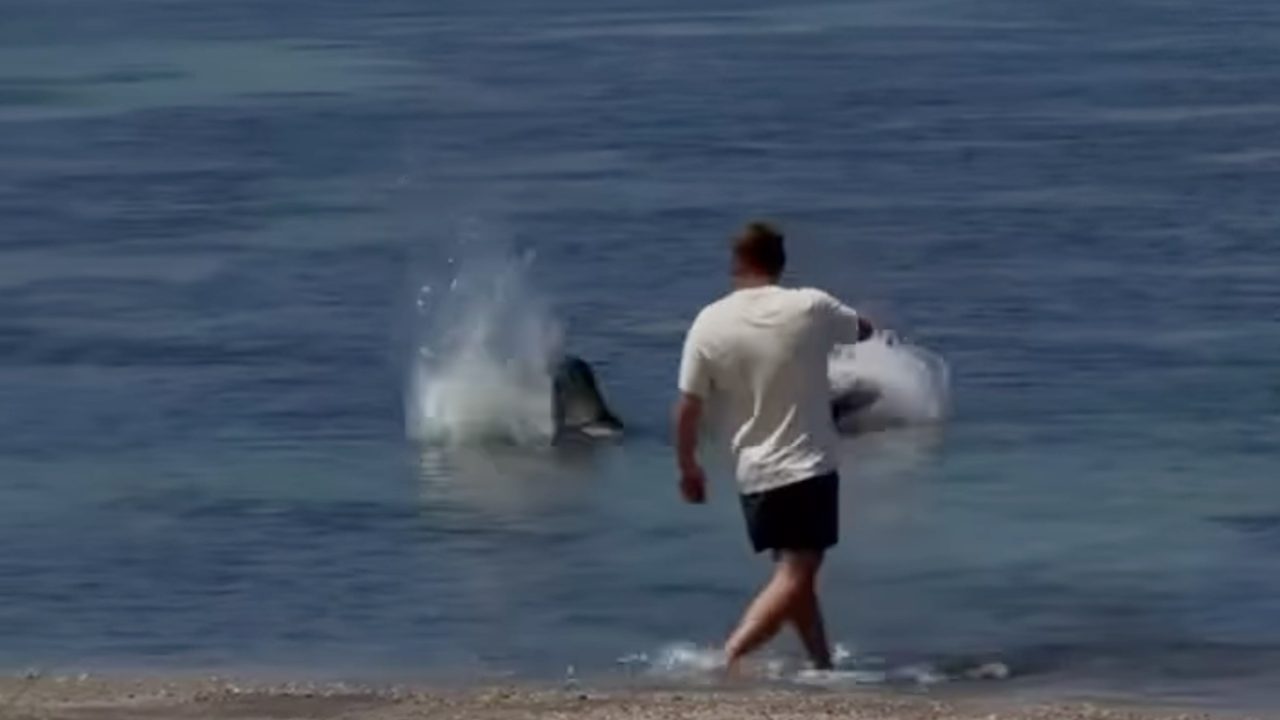
DLNR’s conservation enforcement officers were notified on Tuesday after the Maui police dispatch received a report of monk seal harassment off the Lahaina shoreline. The Instagram video shows an adult male throwing an object toward a monk seal swimming near shore, narrowly missing the seal as it rears back in response.
A DOCARE officer contacted the reporting party, obtained a description, and located a 37-year-old visitor from Seattle who matched the description. DLNR said the man was detained, identified, advised of his legal rights, and declined to make a statement after requesting an attorney.
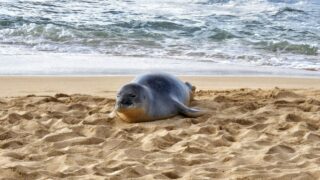
The seal involved is Lani, a Hawaiian monk seal that regularly frequents the Lahaina area. The state investigation is being turned over to NOAA’s Office of Law Enforcement under the federal Marine Mammal Protection Act. The man has not been criminally charged, and DLNR said it will not release his identity at this time.
The Kaimana Beach monk seal situation officials want visitors to know about.
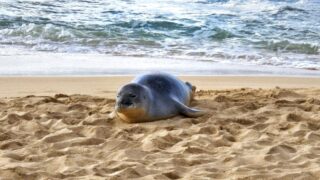
The same DLNR update also flagged Kaimana Beach on Oahu, where Kaiwi, also known as RK96, gave birth to its pup on May 3. Temporary tall orange fencing marks the resting area for the pair, and the posted warning tells beachgoers the area is unsafe to swim because nursing seals are present and protective mother seals may bite.
DLNR said there have already been several reports of people breaching that fence. DOCARE Chief Jason Redulla called this a crucial time in the pup’s life and said getting too close is dangerous for both people and seals.
In 2022, at the same beach, a swimmer suffered lacerations to her face, back, and arm after a mother monk seal perceived a threat. That prior case is one reason officials are again urging people to avoid the seals or choose another beach during the nursing period.
What the comment section shows.
The Lahaina video drew the expected fury and hundreds of comments, but the comment thread is more useful even than that. Commenters were not just condemning the man in the video. Visitors were working to separate themselves from him.
Some visitors wrote that they were not from Hawaii and were horrified by what they saw. Others said the signs were already clear where they were staying, and there was simply no excuse. Residents expressed something broader than anger at one person, with frustration directed at a familiar pattern of visitors crossing lines around animals, beaches, and protected areas on the islands.
The split is a fascinating data point, as visitors were not defending this behavior. They were disavowing it, and that may be the most telling part of the public reaction to this. This news cycle has a different edge because other visitors seemed so eager to say, “This is not us.”
What travelers need to know near monk seals.
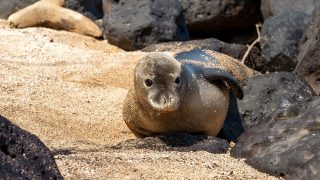
NOAA’s monk seal viewing guidance: Stay at least 50 feet from all Hawaiian monk seals, whether resting on land or in the water. For mothers with pups, the distance is 150 feet, both on land and in the ocean.
Travelers should also stay behind posted signs, cones, and barriers, such as the Kaimana Beach fence; keep dogs leashed and away from seals; avoid swimming near mothers and pups; and use a camera zoom instead of approaching. And obviously, if there is a fence, the answer is not to step over it for a better look.
Hawaiian monk seals are protected under the federal Endangered Species Act and Marine Mammal Protection Act, as well as Hawaii law. Under Hawaii state law, too, intentionally or knowingly taking a monk seal is a Class C felony with a possible fine of up to $50,000. Past visitor cases involving touching or harassing monk seals have resulted in lesser $500 fines after videos surfaced on social media.
Why this week’s incidents feels different.
The Lahaina case had all the elements of a social media viral story. That includes a known endangered animal, a visible act, a beach setting, a man visiting from out of state, and a video that made the public feel like it had witnessed the offense directly. DLNR is not treating this incident as a one-off.
Putting the Lahaina investigation and Kaimana fence breaches in the same update gave the week a different frame than prior incidents. This is not only about one visitor and one rock. It’s about how people behave around endangered wildlife including sea turtles when signs, fences, laws, and common sense are already in place.
The open question is whether Hawaii’s visitor population is actually policing itself more visibly. The Instagram thread suggests some travelers know exactly how bad this looks and do not want to be grouped with it. Whether that translates to better behavior on the beach is something Hawaii will find out one incident at a time.
Have you witnessed visitor behavior around Hawaii wildlife that crossed the line, or seen the new fencing and warning signs at Kaimana Beach yourself? Tell us what you saw and what you think Hawaii should do next.
Get Breaking Hawaii Travel News


Mike S, I understand your point of view, the main difference in the two stories is, one was cruel and mean spirited, the other was, out of kindness and compassion, trying to save an animal. I’ve read many stories where humans have saved animals. Bottom line, take your pick.
On my FB page, I use a photo of me on Maui with turtles lounging on the beach in the background. However, in the background, there’s another tourist about 4 feet from the turtles.
Most people don’t watch the video which explains any rules or info, they’re just to consumed with themselves and can’t be bothered. So, what’s the best way to tell anyone to respect the wildlife? Who knows?
There’s posted articles on tourists getting to close to bears, bison, deer, etc. And suffering from attacks due to their negligence.
Would it be better, for Hawaii at least, to include on the Akamai form to remind passengers to respectfully distance themselves and observe the wildlife instead of interacting with animals? At the very least, it will burden any adult with responsibility and consequences
This was especially painful and triggering because we just haven’t caught a break on Maui. First the fires, then the Kona lows and some brutal winters. I was not surprised at the reaction, as we were all incensed and outraged. Then, to add insult to injury, was the arrogant comment and reaction to being called out.
Glad he got some cracks, truth be told, because the wheels of justice in Hawai’i are slow..
Aloha? Why come to the Hawaiian Islands and show disrespect? Never should this be allowed, and the punishment must fit the crime. This is why visitors, mainlanders, are not welcomed so easily, as the disrespect continues as it did early on when HI was a territory. What was done to Natives and their land and resources is far from Aloha. This person should never be allowed to come back. His name should be revealed, and travelers/visitors and transplants must sign something prior to coming to the islands that holds them accountable.
While I wholeheartedly agree the rock throwing tourists needs to be held accountable, this kind of bad behavior happens all over. In my home state of Montana a buffalo calf in Yellowstone National Park had to be put down, because 2 Hawaiian men attempted to help it out of the river. It’s mothers would not nurse it after they had touched it. So, nobody is perfect. And in all cases, all parties should be held accountable. I don’t know why people can’t jut admire from a distance! The fact you got to see a Monk seal would be amazing. Been to Hawaii 5 times have never seen one. We always bring friends with us and we always educate them on the wild life and not to touch especially the turtles.
This is awful and as a repeat visitor I am angry. However be thankful that people care and so does the law. I live in an area where the sea beds are decimated regularly and no one cares. If someone tries to talk about it they will be the bad guy. Thankfully a vast percentage of locals and visitors who go to Hawaii care. Punishment and severe will help stop this.
I “babysat” a monk seal on one of my yearly trips toMaui and staying at Napili Shores. It decided to come take a long nap by the tide pools. I called someone at NOAA and sat up on the grass above it( About 25 ft away) and was very much a “mama bear” in keeping everyone away from it until the NOAA people arrived to cordon it off. It was a new one that season and called F9 -F is for Maui( I don’t know why) and 9 because it was the 9th one spotted that year. It was my privilege to kukua this beautiful, magnificent creature for the 10+ hours I did.
The AH that threw the rock at Lani must be held accountable and prosecuted and fined to the fullest extent possible !!! I also love the local justice he got!!!
Absolutely unacceptable behavior. As a passionate visitor to the community islands this makes me sick and breaks my heart. It is unfortunate that these horrible people are causing the locals to have disdain for all tourists. We will be visiting Maui again in September and plan to volunteer some time protecting sea turtles. Please do not lose Aloha for all visitors based on the bad behavior of these entitled narcissists.
They should let us know the guys name. I have a cousin who lives near Seattle, he can go deliver this guy some beef, since he obviously likes it.
Internetizens know who he is. Look there.
This visitor has no sympathy for those people. There is absolutely no excuse for harassing and/or harming wildlife. The rock thrower and people who cross the boundary lines should be prosecuted to the full extent of the law. No exceptions.
“The man has not been criminally charged, and DLNR said it will not release his identity at this time.”
Why has he not been criminally charged???!!!
What is wrong with Hawaiian law enforcement?
People who encroach upon, harass, injure, maim, ar kill any animal, wildlife or domestic, in Hawaii or any where in the world should be fined, jailed, prosecuted or imprisoned depending on the situation. This applies to tourists and local residents. Basic rules and regulations should be posted in hotel rooms, condos, rental homes, hostels, and any business that caters to people being exposed to wildlife in that area.
As a reminder to parents: Please do not lead your kids up to turtles laying on the beach. They need their rest, to warm their bodies, and digest their hopefully full bellies. Also, keep an eye your child when around any area with wildlife. They are quick. What may seem non-threatening to a child at the time may end up in a world of hurt if they get too close or actually reach and touch the animal.
Thank you for posting this, I don’t know where it is ok to throw rocks at animals, especially endangered animals, but not in Hawai’i.
This whole thing is absolutely disgusting!
Human behavior in such situations is inexcusable and is deserving of not only strong heavy fines, but jail time that is commensurate with the crime. Yes, this is a crime! Cruelty to any animal is a crime! People that would disturb sea life in such a way do not deserve the benefit of the doubt! They are criminals and should be treated as such! This type of behavior is sickening! Just reading this article makes me sick to my stomach and heart as well!
I have not seen anything like this. I am from Missouri and have been visiting Hawaii since i was 12 years old. I am now 76. I hope the courts give the maximum punishment for this. If not this act will repeat itself over and over.
It’s not just Hawaii that has this problem between sea life and stupid/entitled people. While we don’t have the turtles on the mainland west coast, we have seals and sea lions that come on shore. And mothers also leave their young for nursing. I’ve confronted people who get too close and always have my phone taking their picture while doing so. I’ve done that here & when I’ve visited Hawaii. I’m not intimidating – just a 76 year old grey haired woman who cares. Sidenote: my experience with the honu & distance in the water – the darned things swim right towards you & you can’t swim fast enough to keep a safe distance. Oh well, I try.
Several years ago, we allowed several young ladies to swim ashore and relax on a secluded beach. Although the beach was vacant at the time, while sitting and sunning themselves, a monk seal decided to join them. It came up to about 25′ from them, looked at them and then turned over. Fortunately, they remained motionless and then after a few moments, they quietly got up and moved down the beach before swimming back out to the boat. They didn’t panic, they didn’t yell or scream at it, they simply let it have it’s way as this beach wasn’t theirs, it belonged to the seal. I’m sure they’ve had many great stories to tell about the experience without the need to harass and scare the seal. I had decided to Not take any pictures of the situation as those could end up in social media where they could have easily been misinterpreted. The experience was enough. Too bad some people seem to think they have to control everything around them and yet seem to be ignorant of the consequences.
Why? Would you want a visitor to your state to purposefully injure your states protected animals? Why is it so hard to just leave things alone? That makes no sense to me at all. Hawaii is, in my personal opinion, as a resident of California, “God’s most perfect place” that, like any new place one visits, should be enjoyed, respected and left as found
Tourist or local? Both are just as wrong and bad
Yes, mandatory fines (the stoning suggestion seems a tad …medieval). And by all means, the airlines should have to show a video, and as part of the current entry form, visitors should have to attest that they understand the rules about giving wildlife a wide berth.
We are frequent visitors to Kauai, and my husband calls me the “Beach Bitch” because I give anyone bothering seals or turtles holy heckfire.
As a frequent visitor to Maui and life long surfer, I visit the Westside and Southside a lot. During my visits I discovered that there is an organization that asks for reports of monk seals on the island when anyone spots one. Here is the number to call to report a siting. The Marine Mammal Center on Maui. 808-292-2372. We non-local visitors need to assume responsibility, police ourselves and care for the land and sea.
In case people have a hard time with distance. Make a thumbs up gesture and extend your arm out towards the seal. Turn your thumb parallel to the ground. Then move back until your thumb completely covers the seal. This should be about 50-60 feet away.
I know you guys didn’t mention his name. But it’s out there on the internet. This dude is in for some life changing events. It also looks like he’s been beaten up by a local who took a severe exception to his actions. He shouldn’t have been beaten up. But I’m not surprised that it happened. The entitlement of this dude was off the charts.
The story from multiple witnesses was that the man who threw the rock at them seal then shoved a local woman who verbally took him to task, and then was punched by her boyfriend
There is also a video of a local giving him what he deserved later that afternoon. Rumor has it that he left island that day. His name and info are all over social media now, and I’m sure he will regret this (Although at the time he sure didn’t)
The rock throwing incident is appalling, I would bet that man abuses animals regularly. One of many who think that animals are only useful if they serve humans in some way and are disposable.
I have witnessed people getting way too close to sea turtles, especially in the water, even touching them. I have seen a lot of people standing on the coral heads at Lani Kai.
I think more signage, more DLNR officers patrolling the beaches, and immediate very heavy fines should be implemented.
Would love this rock throwing man to be banned from Hawaii as well, doesn’t deserve to be here.
My biggest pet peeve is with tourists and turtles. At the beach we frequent there are often hono’s that swim in to feed. Once some people see them they surround the poor creatures and stick their cameras in the hono face to take photos while the hono has no unblocked way to get away. I have seen groups follow them all the way along the beach. When I can I try to say to watch out as the turtles like to nibble toes and fingers in hopes that they give the poor animals some space. Doesn’t always work that way. There are signs when you enter the beach to leave the turtles alone but I guess nobody reads them or thinks the rules applies to them. Even the lifeguards are frustrated as they have to watch to save lives and can’t run down to tell people to stay away. Next time I might take photos of the offenders and send to DLNR to hopefully they take action and protect the hono !!
It’s honu.
why can’t the punishment fit the crime? throw rocks at monk seals, get rocks thrown at you
I frequent a beach that’s strictly locals-only. Tourists don’t like it because there is no easy water entry. Last week we were enjoying the beach and a monk seal hauled out and was sunning itself in the sand. There was no commotion, there was no rush to take photos. Families kept their kids and animals at a distance and still managed to enjoy themselves. It was nice not having to stress over ignorant behavior. By comparison, a popular tourist beach just 2 miles further down the road is a constant scene of lifeguards chastising tourists to keep their distance from sea turtles and dolphins that swim into the bay. Despite a phalanx of warning signs posted along the walk from the parking lot to the beach, tourists simply refuse to obey the rules. Sadly, all too many think the money they paid to visit entitles them to help themselves to anything they want.
I’ve seen two Monk seals on my many visits to Hawaii. I considered it a special, sacred moment.
There are only 1500 on the planet! I hope this man is prosecuted to the fullest extent.
After lots of rain last February I saw a monk seal right below our lani and a huge turtle. I was so excited until I saw a girl( in the muddy ocean!) grabbing and starting to get on top of it. I yelled down at her to get the hell off that turtle. So ignorant. Muddy ocean. Grabbing and trying to ride the turtle. Alone in the water. Why are tourists not educated? I love the idea of a video on flights. At the very Least.
Last Saturday, just south of the Lahaina Harbor, we were watching a seal swimming close in, seemingly looking to come ashore. We also saw a man with a young child and an off-leash dog walking towards where the seal was. He totally ignored our shouts “Leash your dog!”. We watched him continue south, and then actually gesture towards the seal, and his dog gave chase. The seal turned and swam away, the dog didn’t reach him.
This was disturbing on so many levels- in addition to what happened to the seal, this man was modeling selfish, entitled & dangerous behavior for his child. Also distressing because he could have been a resident- very few tourists bring dogs. Only mentioning it because it’s the attitude & behavior that needs to be condemned, not a class of people.
PACT, while showing a mandatory video may make YOU feel like something is being done, it does nothing. These idiots are not going to watch the video just as they don’t read the sign. I think the signs should include a phone number or qr code that an observer can contact with a photo or video of the offender. With that information, Hawaii needs to enforce mandatory fines that are significant
When I saw the video I was appalled. Whether tourist or resident there is no excuse and that guy was not even in danger. That seal was minding its own business. It did look like a coconut not a rock. Please make sure reporting is not extreme just for the clicks!
I also watched this video in horror. We have seen similar behavior with people walking around turtles, stopping them from coming on shore or selfie. We have stopped many events, even going up to people directly.
I think every flight should have an ocean safety video and animal rules that shows before take off.
Stupidity knows no bounds. Similar problem in my area with nesting sea turtles and tourists tearing down fencing. These violators need to be prosecuted to the fullest extent and used as examples to alert others of the ramifications. Book ‘em Danno!
Well, maybe the guy didn’t know better. So maybe just 60 in jail and a $25,000 fine would help educate him!
“Possible” fines need to be changed to “Mandatory” fines and the fines raised significantly. Signs should also have the contact info visible so even tourists can call in to report. Animal abuse needs tougher penalties.
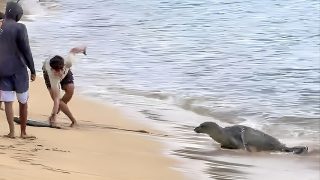
A few years ago, I noticed Rocky the monk seal resting on Waikiki. A family nearby spotted the seal, and their teenage daughter ran straight toward her. I yelled for her to get away, but her parents just stood there, acting like it was no big deal that their daughter was about to pet a seal. I saw Hale Koa security on the walkway and immediately alerted them. They stayed nearby until a volunteer arrived & coned off the area to protect Rocky.
On another occasion, I was relaxing on Paradise Cove Beach on Oahu when I noticed a honu swimming close to shore. A group of families surrounded the turtle, trapping it so it could not swim away. I kindly asked them to back away so the honu could escape. They looked at me and asked, “Why?” I reminded them that there is a sign posted at the entrance to the beach explaining the laws protecting honu and seals. Eventually they did back away. As they left the beach, they walked past me and made a comment about my “Karen” behavior.
I once purposefully swam through a circle of people who had surrounded a turtle and were preventing in from moving or surfacing. The turtle escaped by swimming out below me as I plowed through the group – Whoopsie! It was so worth the insults I heard behind me as we swam away. Keep up the good fight, Lizzie; where would the world be without us Karens interrupting idiot behavior?
I was at Lava Lava Beach Club in Waikoloa a couple years ago when I discovered a Honu resting on the beach. I took his picture politely with my zoom from quite a distance. Unfortunately, Asian tourists happened a long and showed the Honu no aloha. I watched as the woman squatted next to the turtle and placed her hand on his back as the husband took her smiling photo. I was very upset by what I witnessed and I gestured with my hands to back away from the turtle as I wasn’t sure they understood English. They didn’t listen and the husband kept snapping photos of her. In retrospect, I should have taken their photo and reported it but I wasn’t as aware back then as I am today as to who to contact.