
We now know how much Hawaii’s private parking operators keep when visitors pay to enter four state parks and scenic stops. The answer, found in permits approved by the Land Board on November 14, 2025, is far less than many visitors probably assume.
Two nonresident adults arriving in one vehicle pay $20: $10 for parking plus $5 per person. The payment goes through a private parking operator, but the permit gives the company only a small fraction of the net operating income remaining after expenses are deducted.
That same structure applies at three other Hawaii parks. The state keeps between 93.1% and 99% of the net operating income, while the operators receive between 1% and 6.9%.
There is one significant catch. Those percentages are calculated after operating expenses, and the permits do not disclose what those expenses are.
The state keeps nearly all of what remains.
The permits split what is called net operating income, which is the money left after the parking company covers its own costs. That distinction is significant because the operator’s expenses come first, and only the remainder is divided between the company and the state.
On that remainder, the state’s share is large, and the operator’s is small. The pattern is consistent across all four permits, with only the operator’s slice changing from park to park.
At Wailua River State Park on Kauai, State Parks receives 99%, and Republic Parking Northwest receives 1%. At Wailuku River State Park on Hawaii Island, the state receives 95.3%, and Diamond Parking receives 4.7%.
At Puu Ualakaa State Wayside on Oahu, the state receives 93.5%, and Pro Park receives 6.5%. At Kekaha Kai State Park on Hawaii Island, the state receives 93.1%, and Diamond Parking receives 6.9%, the largest operator share among the four permits.
Those figures look lopsided in the state’s favor, and that’s true for the amount being divided. What they do not show is how much came off the top first, before there was anything left to split.
So who checks the math?
The percentage split applies to net operating income after deducting the parking company’s expenses. That raises an obvious question: what documentation does State Parks receive, and who verifies the costs taken out before the remainder is divided?
The four board submittals don’t answer that question. The attached permit forms identify no specific expense-reporting standard, independent audit requirement, or public disclosure provision covering the operator’s costs.
The missing calculation could materially affect what the percentages actually mean. Running a paid parking operation incurs costs for staffing, equipment, payment processing, and administration, and each expense reduces the amount left to divide with the state.
A reader looking through these permits can’t determine what was reported as expenses, what records supported those deductions, or whether anyone independently reviewed them. The public permit record shows the percentage split but not the process used to verify the actual amount being split.
That does not definitively establish that no review occurs. State Parks may require invoices, monthly statements or other documentation that was not included in the public Land Board packets.
The net income model itself is not new. Hawaii used a related structure at Haena State Park on Kauai in 2021, although that community-management agreement worked differently from these parking permits.
The Haena permit provided a 90%/10 % split of net operating income only when the community group was not operating the shuttle. When shuttle service was being provided, DLNR said State Parks would receive all entry fees as rent.
Kauai received the best split of the four.
Only two companies submitted proposals to operate the Wailua River system. Republic Parking Northwest offered State Parks the highest percentage of net operating income and received the permit.
That proposal gave Kauai the strongest split among these four locations. State Parks receives 99% of the net operating income, while Republic Parking Northwest receives 1%.
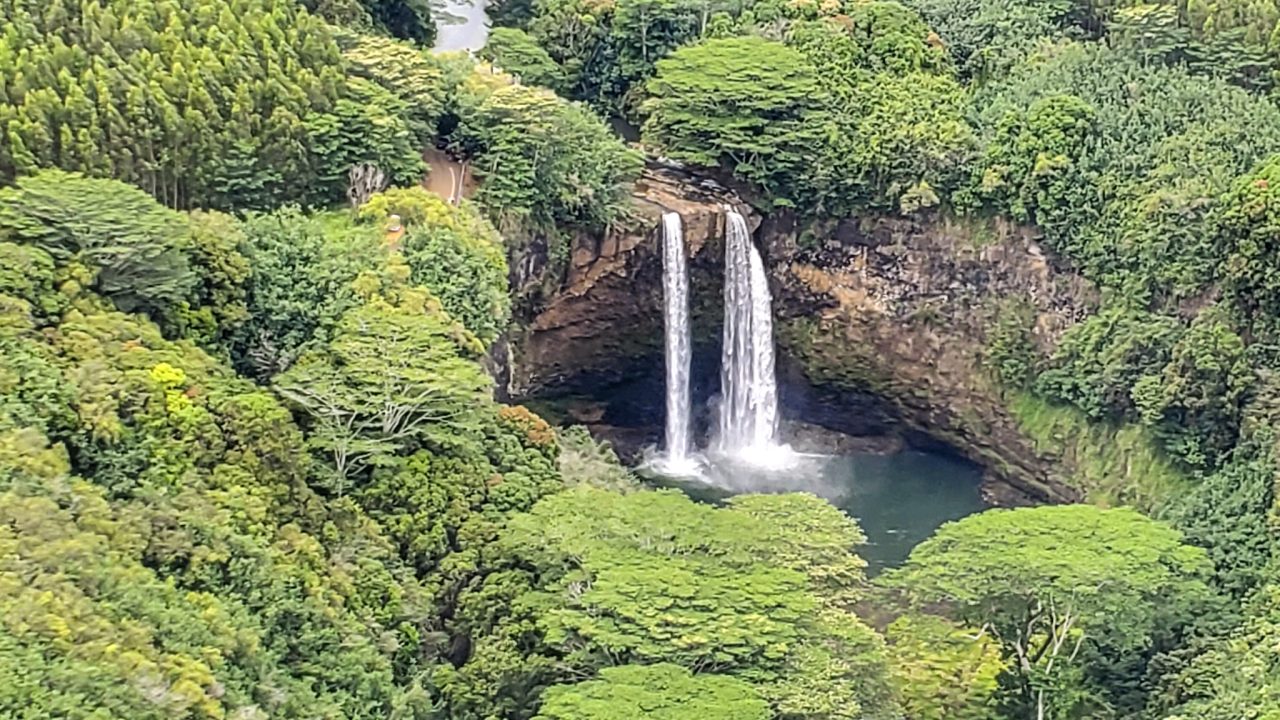
The Wailua permit covers far more than two waterfall overlooks. It includes Wailua Falls, Opaekaa Falls, Fern Grotto, Wailua Marina, the Wailua River Valley, and important cultural sites including the Wailua Complex of Heiau. The permit describes the park as more than 1,000 acres managed across seven separate sections.
The permits are also more temporary than the growing parking system might suggest. Each operates on a month-to-month basis and is authorized for a maximum term of one year.
The Land Board can revoke a permit for any reason with at least 30 days’ written notice. The state also retains the authority to increase or decrease the rent with 30 business days’ notice.
A small group now operates much of the system.
Republic Parking Northwest, Diamond Parking, and Pro Park appear repeatedly across Hawaii’s expanding state park fee system. The permits show that each company already manages parking or visitor services at other state parks.
Republic Parking provides similar services at Kokee and Waimea Canyon, Iao Valley, Waianapanapa, and Hapuna Beach. Diamond Parking operates at Akaka Falls, Makena Beach, and Nuuanu Pali, while Pro Park manages the commercial transport and visitor parking operation at Diamond Head.
That concentration of vendors doesn’t mean those companies control the fees or park policy. State Parks selects the operators, establishes the fee structure, and directs its share into the State Parks Special Fund.
The Kekaha Kai permit also suggests where the system could expand next. It says the Mahaiula section is not currently targeted for fee collection because relatively few nonresidents use it, but parking and entrance management could be extended there if visitor use increases.
The fee still needs to match the visitor stop.
The permits answer one question but not another, the larger value one. A visitor may feel differently about helping pay for a major Hawaii state park than paying a similar amount for a brief roadside waterfall photo stop.
We know the locations well. Wailua Falls and Opaekaa Falls are beautiful and culturally significant, but many visits amount to parking, walking a short distance to an overlook, and leaving within minutes.
That does not mean the stops should be free or that managing them has no cost. It does mean visitors will continue asking whether the price they pay reflects what each location actually offers.
The permits describe the fees as a way to manage growing visitation, support park operations, protect resources, and improve facilities. Hawaii residents continue to receive free parking and entry under the current state fee structure.
What the permits simply don’t indicate is how much is spent before the remainder is split. That single missing figure is the difference between knowing the operators keep little and knowing exactly where each $20 visitor’s pay actually goes.
Does an operator’s share of 1% to 6.9% feel fair if the state receives the rest of the “net” operating income? Should Hawaii publish its operating expenses and explain how those costs are verified, so visitors can see how much of their payments actually reaches the intended parks?
Subscribe to Beat of Hawaii for our continuing look at Hawaii’s changing access fees, parking rules and visitor costs before you reach the gate.
By Rob and Jeff, Beat of Hawaii.
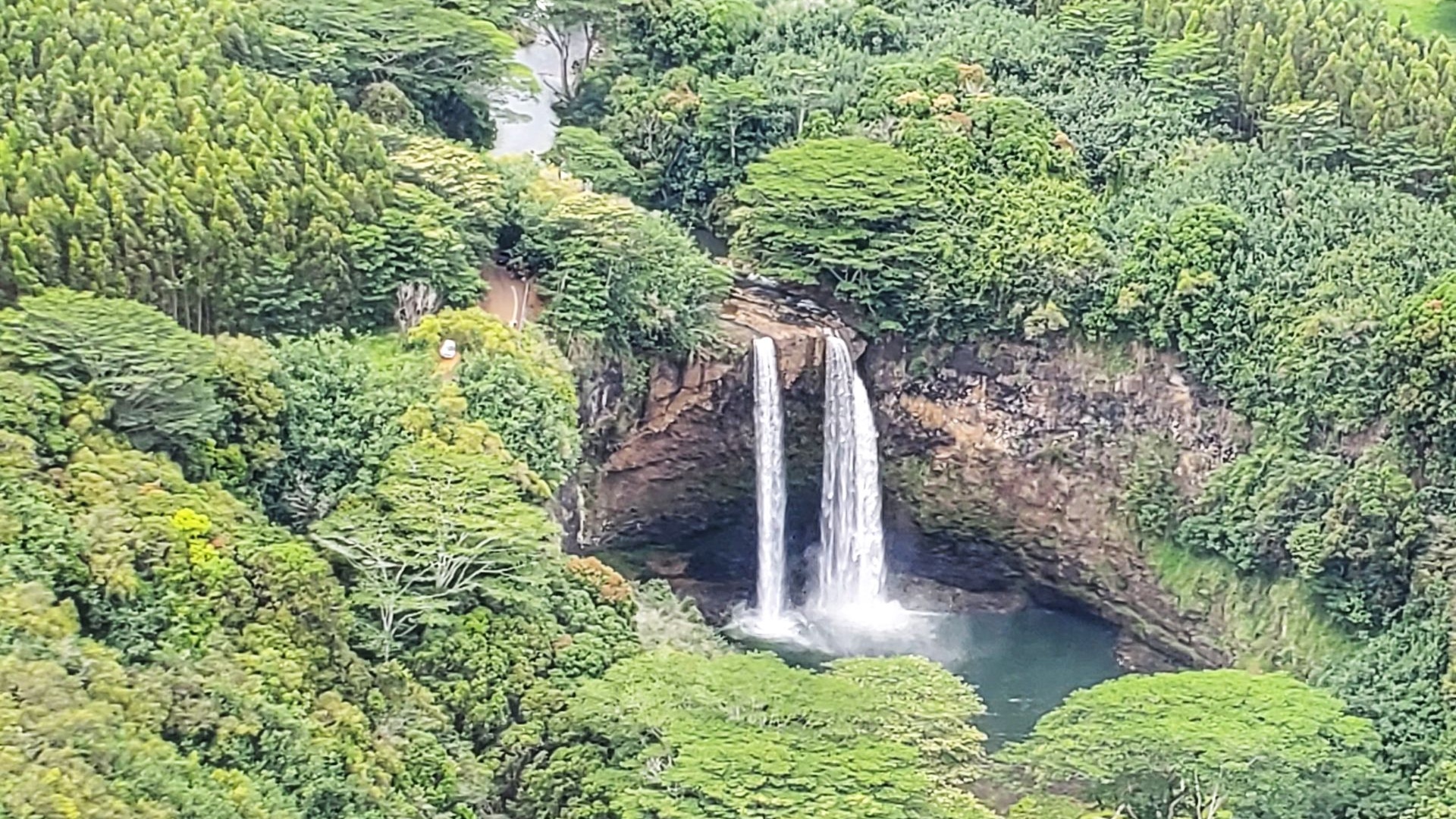
Lead Photo Credit: © Beat of Hawaii, Wailua Falls from the helicopter.
Get Breaking Hawaii Travel News


Another question: Does Hawaii use all the money it receives to maintain the parks, or is it added to some general fund?
Spending $20 or more to see two waterfalls for 5-10 minutes is ridiculous. My suggestion to guests is to go to Wailua Falls, Ōpaeka’a Falls, the Fern Grotto tour or kayaking & Smith Family luau on the same day to make the cost worthwhile.
Matching up to Visitor Stop: The operating companies are not getting paid a fair shake in the deal!
They have to clean up the trash these disrespectful people leave in the parking lots, including soiled child’s disposable diapers! (Biohazard)
In my opinion, they should be assigned a parking space & it needs inspection upon departure before “final charges” are applied to their permit!
Many of these “waterfall overlooks” have become baby diaper changing stations & those who use it as such, use the parking facility as a soiled diaper disposal site.
If The State of Hawaii is going to allow that, let every user of the lot pay for that level of biohazard maintenance!
Otherwise, the individuals identified & confronted with the fines for being not accountable for their actions!
People who feel “entitled” have spoiled this for multitude of others!
The Cockroach has spoken!
Even Hawaii Volcano National Park’s fee is $30, good for everyone in the car & for 7 days. You can spend days exploring our Park. Go down to Rainbow Falls. Family of 4 pays $10 to park, plus another $20 to get out of the car & spend 15-20 minutes there. Good for 1 visit. Tell what’s worth $30 at Rainbow Falls, especially if it’s at a trickle & not roaring after a rain.
I live in British Columbia Canada and go to Hawaii twice per year. I have been to many of the supposedly great waterfalls such as Opaekaa Falls. To pay to see these is a joke. Go to British Columbia and see the falls there at no cost. They make Opaekaa Falls look like a trickle and there are many . To pay to fight to see a trickle called Opaekaa falls was bad enough but to pay is just bad.
I have been mightily impressed with the amount of water flowing over ‘Ōpaeka’a Falls after the rains Kauai has had this year. Still not worth paying to see it though.
So basically whatever operation said it would kick back the highest percentage to the government won the permit? I suspect Al Capone would be perfectly happy in Hawaii. Probably wouldn’t even have income tax problems.
I wonder what would happen if the whole system were audited?
Great job BOH! The government fraud and abuse is disgusting.
No company would operate for 1% share of the profit after expenses.
The total revenue and total payouts are the facts that are being hidden.
I bet the salaries of the parking owners are outrageous.
Visitors I meet at Kua Bay say the fees left such a bad taste in their mouths that they’ll never come back. Some families with kids are paying $50-60+ just to take their kids to the beach after spending thousands getting here and paying for a hotel. But that’s fine. It’s not like our entire economy depends on tourism…
For sure. Maui’s economy would be just fine without tourists. Only 80% of their economy is directly or indirectly paid by tourism. Should be a great life without us.
I get the need but how about a 7 day permit for them all, say $100-$150 if you don’t want to pay at each one. Maybe even require the fee upon rental car pick-up or hotel or condo booking. Don’t make visitors feel like they’re getting nickle and dimed to death at each place.
Ka-Ching!!!
There are no reputable businesses signing up to manage parking for net 1% profit. They are obviously baking in profits to their “operating costs”. The fact that these fees have absolutely no transparency to the taxpayers shows the corrupt system the government has created to rip off the guests who enjoy these natural attractions for a few minutes. Sadly there doesn’t appear to be any end in sight to the state’s greed to extract every dollar they can out of visitors they are entirely reliant upon for their survival.
Perhaps you need to make an official freedom of information act request instead of just asking the information officer. The information likely must be disclosed if you fill out the FOIA paperwork.
As for the value: the quick falls visit isn’t worth it. They need some form of a weekly pass instead.
I am at Koke’e state Park and the Wailua River State Park at least 10 times a month. The fee for Waimea canyon and Koke’e is understandable, there’s a lot to manage but the fee at the Opeakaa falls is a complete rip off in my opinion. It is a stop in the parking lot and a short walk to the river lookout. The kicker is then the state put up slats in the fence to block any chance if a decent view of the Opeakaa falls. I don’t stop at the falls anymore and as a resident who uses Kuamoo rd as my route home I miss the view myself. Not right state of Hawaii!