
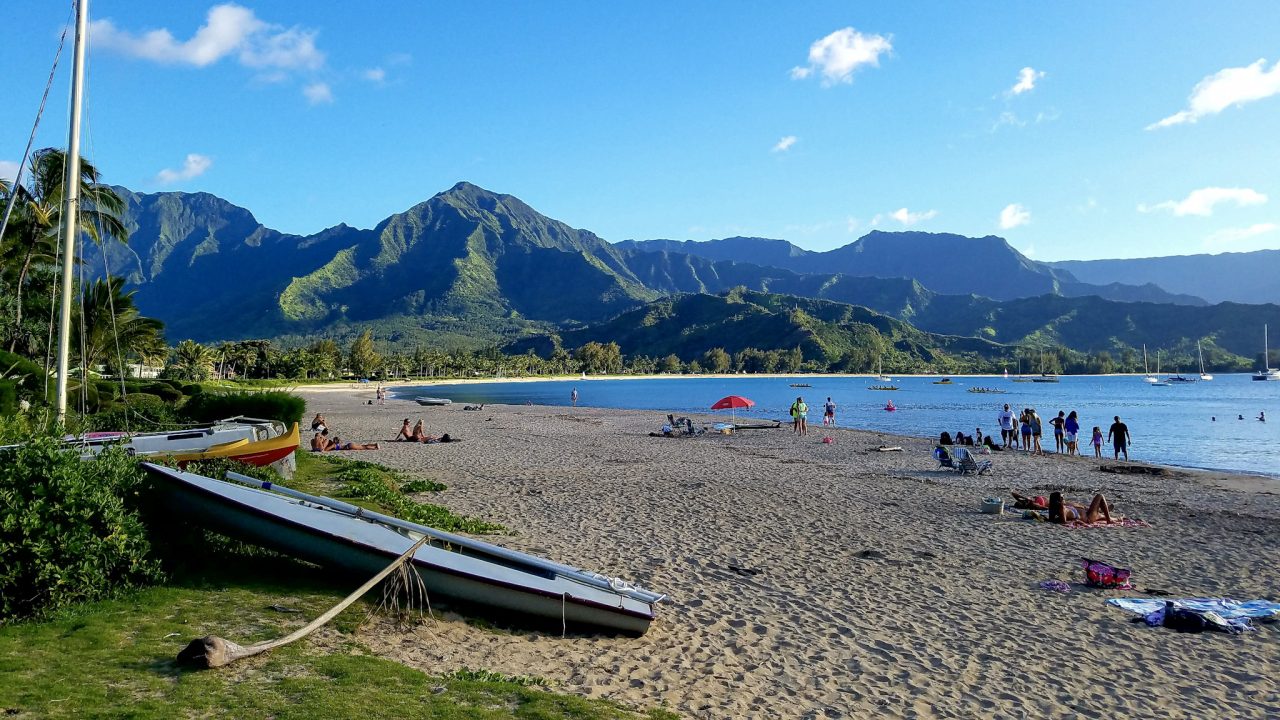
When you go to a beach in Hawaii, you may have seen bright yellow rescue tubes, roughly four feet long, hanging from a post. They blend into the landscape, and most visitors either don’t notice them or never stop to read the instructions printed on their sides. Now Hawaii plans to add hundreds more of them at beaches across the islands.
On July 2, 2026, at China Walls on Oahu, bystanders grabbed one of those tubes after a man injured his arm in the water. They used it to help keep him afloat and assist him back to shore while Honolulu Ocean Safety responders were on their way. It was exactly the kind of situation these rescue tubes were designed for.
Why the tube protects the rescuer too.
Most people assume the tube is there for the person in trouble. That’s true, but it isn’t the whole story.
Someone who is drowning isn’t thinking clearly. They’re trying to survive, and instinct often takes over. A panicked swimmer may grab onto the nearest person with enough force to pull both underwater. That’s one reason lifeguards are taught never to enter the water without flotation.
BOH editor Jeff, a former lifeguard, says that lesson wasn’t theoretical. “The scariest part was never swimming. It was that the person I was trying to save was also trying to pull me under, without meaning to. We had to be careful rescuing them without becoming a second person who needed rescuing.”
A rescue tube changes that equation by giving both people something to stay afloat with. Instead of relying on each other to remain above water, the tube provides buoyancy for both the rescuer and the person in trouble while they wait for professional help or make their way toward safety.
A peer-reviewed study published in the journal Injury Prevention examined fatal rescuer drownings before and after public rescue tubes were introduced on Kauai. Before the program began, Kauai accounted for 12 of Hawaii’s 20 rescuer drowning deaths during the study period.
During the following decade, Hawaii recorded eight rescuer drowning deaths statewide, and only one of them occurred on Kauai. Researchers found no comparable change elsewhere in Hawaii, although they cautioned that the study showed an association rather than proving rescue tubes alone were responsible.
Researchers found no comparable change elsewhere in Hawaii drownings, where public rescue tubes were largely absent during those years. They described the findings as an association rather than proof of cause, making it one of the strongest independent examinations of the program.
Hawaii is expanding the program statewide.
The recent state funding isn’t really the story. What’s more interesting is why ocean safety officials believe additional tubes belong in more places.
Honolulu Ocean Safety Chief Kurt Lager said earlier this year that Oahu plans to at least triple its current number of rescue tubes. His department isn’t simply adding them wherever there’s room. Lifeguards are surveying shorelines, documenting locations where they call an “off-duty rescue tube” warranted, and explaining why.
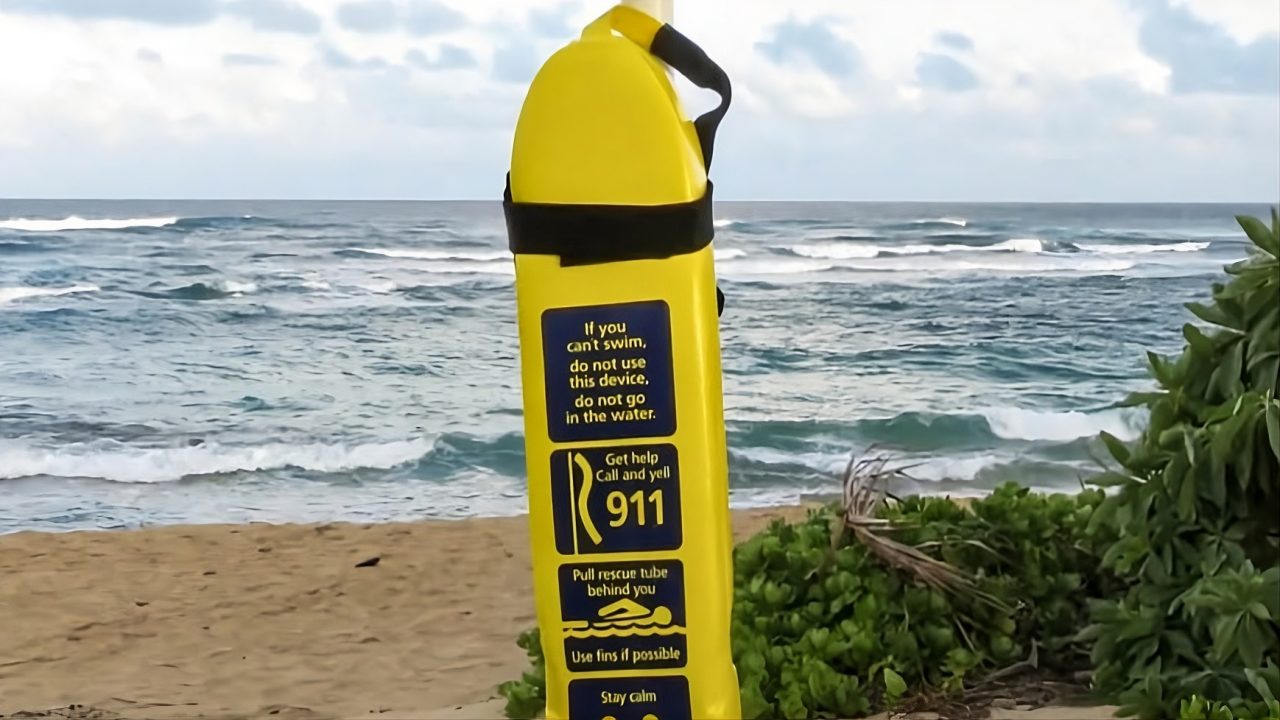
Not every dangerous shoreline has a lifeguard tower. Some locations draw experienced surfers, cliff jumpers, or visitors despite repeated warnings. Other beaches have lifeguards during the day but not in the evening. Rescue tubes help bridge those gaps by providing flotation where professional responders may not be immediately available.
The Legislature recently appropriated $200,000 to help expand the program through the Department of Land and Natural Resources, which will administer the funding. According to the Honolulu Star-Advertiser, approximately 200 rescue tubes are currently posted on Kauai, about 130 on Maui, 50 on Hawaii Island, and 30 on Oahu, with roughly 300 more planned statewide.
What you’re actually supposed to do with the rescue tube.
Every rescue tube carries simple instructions, but they’re worth reading before an emergency instead of during one. Call 911 first. Don’t enter the water if you can’t swim. Tow the tube behind you as you swim out, rather than pushing it ahead, so you have flotation the entire way there and back. The Kauai Lifeguard Association’s rescue tube guide has more detail if you want it.
None of this is intended to encourage visitors to take unnecessary risks. Hawaii’s safest beaches remain those protected by lifeguards, and trained responders should always be the first option whenever they’re available. Rescue tubes are there for the moments before those responders arrive or where no lifeguards are on duty.
The idea started at this unguarded Kauai beach.
The rescue tube effort traces its roots to Larsen’s Beach on Kauai, where the first public tube was placed and quickly proved its value in an early rescue. The Kauai Lifeguard Association and the Rotary Club of Hanalei Bay expanded the idea from there, and what eventually became the Rescue Tube Foundation was formally established as a nonprofit in 2010.
Earlier this year, we revisited Larsen’s Beach in Visitors Keep Making The Same Deadly Mistake At This Hawaii Beach, after another reminder that visitors continue underestimating conditions there despite one of Hawaii’s most sobering warning signs. The rescue tube effort grew out of that same stretch of coastline, reflecting the belief that while warning signs can only do so much, giving bystanders safe flotation addresses what happens when someone enters the water anyway.
The next time you notice one of Hawaii’s yellow rescue tubes, take a few seconds to read the instructions before heading into the water. It’s a simple step that may never become important, but if an emergency does unfold nearby, you’ll already understand why that bright yellow tube is there and why it was designed to help protect both the person in trouble and the person trying to bring them home safely.
Have you noticed rescue tubes at Hawaii beaches before? And if someone nearby got into trouble in the water, would you have known what the tube was for and when to use it?
Lead Photo Credit: © Beat of Hawaii at Hanalei Bay, Kauai.
By Rob and Jeff, Beat of Hawaii.
Some of the most meaningful parts of Hawaii are the ones visitors walk right past without knowing they are there. We’ve spent nearly 20 years finding them firsthand for BOH as full-time Hawaii residents reporting on travel, culture, and island life, and telling you what they mean for your trip. Join us →
Get Breaking Hawaii Travel News





Aloha BOH,
It’s funny that the example you provided happened at China Walls on Oahu, because we were there last year and like you said, one of the life tubes provided there had to be used to help out a young lady who had jumped in the water from the wall, unfortunately for her, she jumped in where the swells were breaking and started struggling almost immediately! What will stick in my mind though, is when a by-stander jumped in with the rescue tube and got her on it, she stated “Thanks, I’m not a very strong swimmer”!?!
Glad to know they’ll be at more location!!
Many years ago I was caught in a riptide and was pulled out to sea a ways. There was another girl near me. When the lifeguard came up to us the other girl was so panicked she kept holding on to him despite numerous pleas to let go of his neck. I had to help him calm her enough so she didn’t choke him to death and drown them both. It was an object lesson to a teenager on the need to listen to those who know what they are doing.
I don’t think there were tubes in use at that time (mid 60’s) in California