
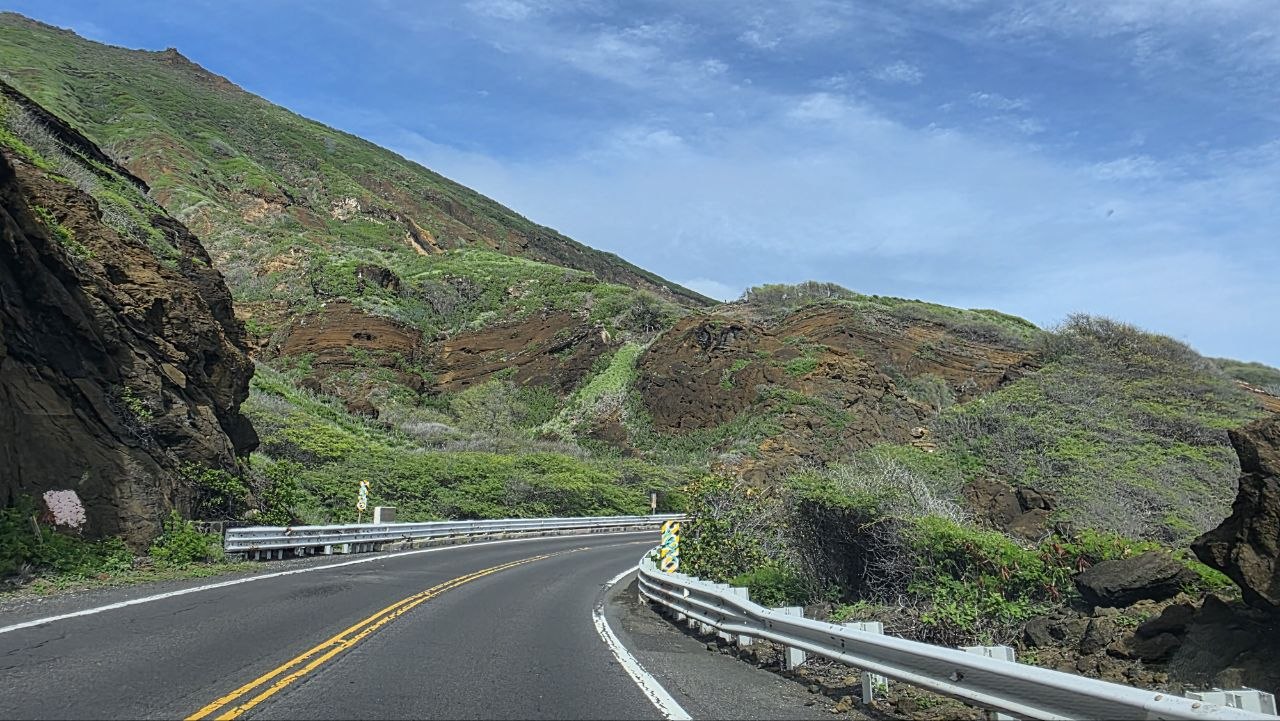
If you’re driving a Hawaii rental car on Oahu this year, more of your route is about to fall under speed camera enforcement, including roads visitors actually use like to the North Shore. A Verra Mobility contract describes this as the start of the first statewide camera program in the country, but state lawmakers have not authorized all of that yet, and only the Oahu expansion is currently law.
The surprise, if it comes, may not arrive until after you’ve flown home, when the rental company tracks you down with the citation and a fee of its own.
We know how strange that can feel because it happened to Rob while we were driving through a tunnel in Switzerland. Nothing interrupted the trip, and there was no traffic stop. The rental company contacted us later, long after that tunnel and the rest of the drive had faded into the background.
Hawaii’s system is not the same as Switzerland’s, but the delayed surprise can be. The camera records the vehicle, the citation goes to its registered owner, and when that owner is a rental-car company, the cost eventually makes its way to the person who rented it.
Hawaii speed cameras are moving beyond downtown Honolulu.
The Hawaii Department of Transportation expects to announce the next ten automated camera locations on Oahu by the end of August. West Oahu, Farrington Highway along the Leeward coast, and the North Shore have already been identified as likely targets, although the final locations have not been released.
The current cameras are concentrated at Honolulu intersections that many vacationers may never notice, but Farrington Highway and the North Shore are part of some of Oahu’s most heavily traveled visitor routes. Kamehameha Highway, the main road along the North Shore, is how most rental cars reach Haleiwa, Waimea Bay, Sunset Beach, and Turtle Bay.
The expansion will be gradual rather than a sudden blanket of cameras across Oahu. Current law allows HDOT to add no more than ten locations each year, with no more than two in any one state Senate district.
The new authority also goes beyond placing speed enforcement at intersections that already have red-light cameras. HDOT can select high-risk locations on state or county roads within Honolulu County, which gives the department a much wider map from which to choose.
A Hawaii camera citation goes to the rental-car owner first.
Hawaii’s speed cameras do not photograph the driver and issue a citation directly to that person. State law places responsibility on the vehicle’s registered owner, which means the notice for a rental car initially goes to the rental company.
What happens next depends on the rental agreement and the company’s procedure. A rental company may pay the citation and charge the renter, or it may provide the renter’s identifying information so the issuing authority can pursue the citation directly. Rental agreements also generally allow the company to charge an administrative or processing fee for handling traffic violations.
That company fee is separate from the citation itself. Hawaii currently lists a red-light violation at $97, while a speed-camera violation can range from $167 to $317 depending on how far above the posted limit the vehicle was traveling. A credit-card processing charge may also apply when the citation is paid.
The rental-car part is not entirely new to readers who have followed our earlier reporting on Hawaii driving costs and vehicle fees. What is changing is the likelihood that visitors will encounter these cameras outside central Honolulu and on drives they consider part of an ordinary Oahu vacation.
Sign up for our free emails for our latest reporting on Hawaii rental cars, driving rules, visitor fees, and other costs that can be easy to miss until after a trip is booked.
The larger Hawaii camera plan is not current law.
The long-range scale is much larger than ten additional Oahu locations. In February, Verra Mobility announced an approximately $160 million, ten-year contract that it said would expand Hawaii’s program from 17 locations to 187 dual red-light and speed-camera sites across the major islands. The company described the project as creating the country’s first fully statewide automated traffic enforcement program.
Hawaii lawmakers did not authorize statewide camera expansion this year. A broader measure that could have extended automated enforcement beyond Oahu died in the state Senate, while the authority that did survive applies to high-risk roads on Oahu.
The neighbor-island cameras described by Verra therefore remain a contract vision rather than something currently authorized to spread across Maui, Kauai, and Hawaii Island. For now, the expansion visitors need to watch is on Oahu.
Hawaii says the cameras are changing driver behavior.
HDOT presents the camera program as a safety tool rather than a way to maximize citations. The department says red-light violations have dropped sharply and that crash rates at equipped intersections have fallen by roughly half. It also points to fewer traffic deaths this year compared with the same period in 2025.
Cameras operate without a roadside traffic stop, can cover the same dangerous location every day, and may persuade drivers to slow down or stop running red lights even when no police officer is visible.
The money is directed into a dedicated safety fund restricted to running and maintaining the camera systems, according to HDOT, and Verra Mobility is paid under its government contract rather than per citation, which removes the most direct financial incentive to simply generate more citations.
Hawaii’s speed-camera program still faces questions.
Hawaii sent hundreds of thousands of speed warnings during the trial period, but enforcement initially concentrated on the highest speeds because the courts and administrative system were not prepared to process that volume of cases. HDOT said more than 500,000 warnings had been mailed before citations began in November 2025.
Only a small share of possible speed violations has therefore turned into prosecuted citations, making it difficult to compare the full cost of the program with the enforcement revenue and court workload it may eventually produce. The state is also committed to paying Verra millions of dollars under the new contract while lawmakers continue debating how far automated enforcement should be allowed to expand.
Defense attorneys have raised constitutional and evidentiary questions about citations generated by cameras rather than an officer who personally witnessed the violation. Those challenges will become more consequential as cameras move from a limited group of Honolulu intersections onto a wider range of Oahu roads.
The safety numbers may persuade some drivers that those questions are worth resolving as the program grows. Others will see a system that identifies a vehicle instead of a driver, sends the citation through the mail, and can leave a rental-car customer paying both the government fine and a separate company fee after returning home.
Have you received a Hawaii camera citation, particularly while driving a rental car? We would like to hear when it arrived, how the rental company handled it, and what the citation and added fees ultimately cost you.
Lead Photo Credit: © Beat of Hawaii driving on Oahu to North Shore.
By Rob and Jeff, Beat of Hawaii.
Some of the most meaningful parts of Hawaii are the ones visitors walk right past without knowing they are there. We’ve spent nearly 20 years finding them firsthand for BOH as full-time Hawaii residents reporting on travel, culture, and island life, and telling you what they mean for your trip. Join us →
Get Breaking Hawaii Travel News




As a full time Kauai I absolutely dislike this article. Speeding by entitled, get out of my way, I have my vacation day planned tourists drive me up a wall. I am routinely tailgated by these tourists. If the speed is 25 mph that’s not 45! If you don’t like that Stay Home. We have had several fatalities on our roads in recent years all related to speeding. Put up the cameras. Issue the citation in droves. No warnings. Do Not reward bad behavior.
Not looking forward to speed cameras on Maui. I think the average speed on the road from the airport to Kihei and Pilani Highway must be 10-15 mph above the speed limit, with the speed being driven up by locals more than tourists. We are honked at and tailgated by locals if we try and drive the limit on those roads, instead of keeping up with traffic flow. One wonders if the powers that be might lower speed limits to below what traffic flow would be, just to get more speed camera income, especially if the camera company is taking the “first dollars” from the fines. We have lived in places with similar cameras and the camera company always seems to do way better than the government from that equipment.
I know that locally an officer is supposed to verify the video of each violation before a citation is issued. That eliminates a lot of the “Defense attorneys have raised constitutional and evidentiary questions about citations generated by cameras rather than an officer who personally witnessed the violation.” questions.
I suppose it might be boring duty but it also might be an efficient position for someone on light or restricted duty. Just make sure the officer(s) know that having videos show up on the internet will carry draconian punishments…
Well, my 68 year old wife got her first ticket in over 40 years at the Lahaina speed trap. 38 mph in a 30 zone.
Ticket fee was around $250.00. She was told traffic school unavailable.
The insurance bill arrived last week- $800.00 more per year for the next three years.
Stick that aloha…
I haven’t gotten one in Hawaii, where we spend most of our time in Kauai. However, I’m familiar with how it works, as I have gotten a few in Italy where I’ve driven several thousand miles in the last four years. It takes a while in Italy, about 6 months from the violation until it arrives in your mailbox.