
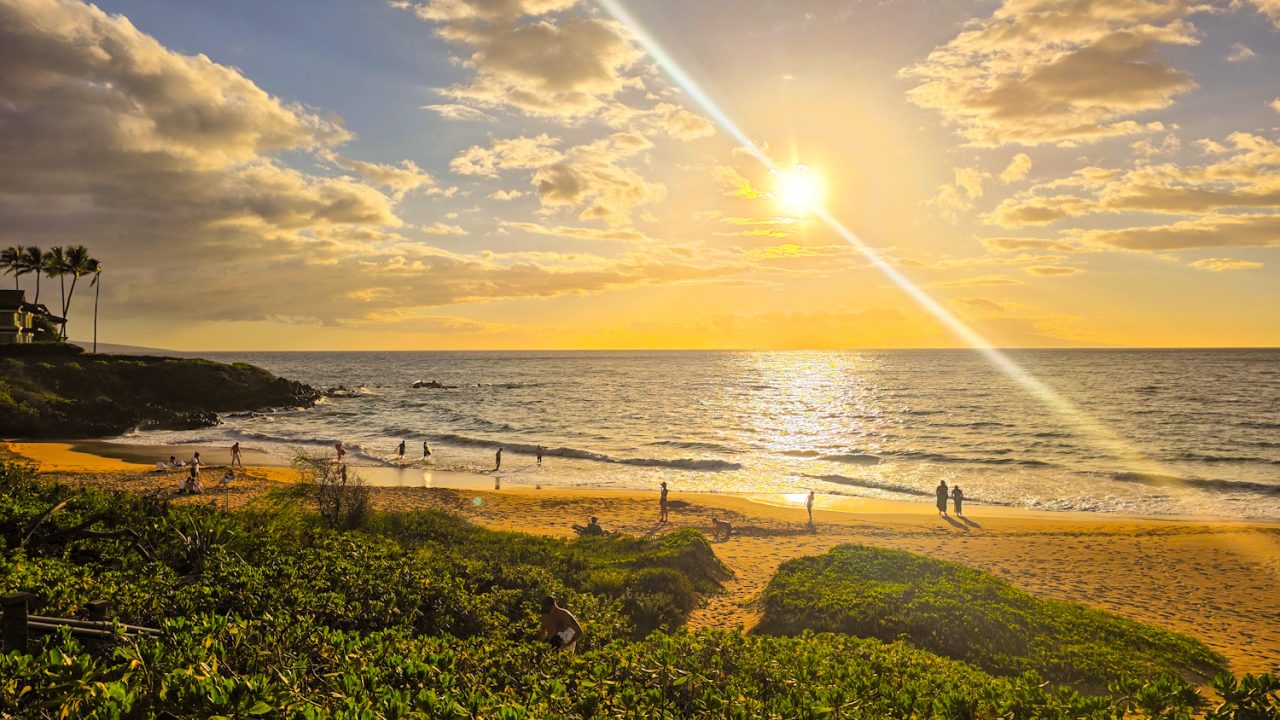
There was a time when half the pleasure of a big vacation was imagining it. You’d see photographs of extraordinary places, read about beautiful hotels and experiences, and start thinking about going someday. Hawaii could occupy a place in someone’s imagination, sometimes for years before they ever bought a ticket. Looking forward to the trip was a big part of the enjoyment.
We’ve been noticing a change in the international travel coverage we read every day. During COVID and the reopening years, aspirational stories seemed to be everywhere, filled with dream destinations and the excitement of finally traveling again. Now, on the cusp of 2027, much of that conversation feels entirely different.
Affordability, overcrowding, restrictions, disappointment, geopolitical complications, travel complexity and disruptions, and whether somewhere is worth going through it all to visit seem to occupy far more space. We haven’t measured how much travel coverage has changed, but the shift in tone has been hard for us to miss.
Then we came across something that made us look at the change much more closely. In August 2025, a social media agency reported a 60% decline in traditional aspirational travel hashtags, including #wanderlust and #instatravel, over the preceding year. Meanwhile, hashtags associated with imperfect travel experiences, including #travelfail, had more than doubled.
The agency didn’t publish enough methodological detail for us to establish how broadly the findings apply, and changing hashtags don’t necessarily mean people have stopped dreaming. But the way people present their vacations has changed, and it has caught our attention.
We’ve heard something similar from BOH readers, though it takes a different form. In You Still Love Hawaii. So Why Are You Staying Away?, longtime visitors described checking Hawaii webcams, watching airfares, and looking through old photographs while hesitating to return. The affection was clearly still there, sometimes decades after their last visit, but the prospect of another trip had become less straightforward and more daunting in multiple ways.
Hawaii still occupies a special place in people’s dreams.
Back in 2006, Gallup asked Americans where they would take their dream vacation if money were no object. Hawaii was the most frequently named individual destination, with 17% of respondents volunteering it in an open-ended survey. Twenty years later, Hawaii’s appeal remains substantial.
In a February 2026 state-commissioned survey of 1,788 nationally representative U.S. adults, 50% said Hawaii was a dream destination. The questions were different, so the results cannot tell us whether that appeal has changed over time.
What’s more surprising is what happens when people actually come. Hawaii’s second-quarter 2026 visitor satisfaction survey found that 96.1% of U.S. West visitors and 95.9% of U.S. East visitors said their vacations met or exceeded expectations. Although the proportion reporting that Hawaii exceeded expectations declined from a year earlier, nearly everyone surveyed still felt the trip delivered at least what they expected.
Those results come from visitors who made the journey, not people who decided against Hawaii beforehand. They also don’t mean every aspect of a vacation was wonderful or that travelers felt equally enthusiastic during the months leading up to departure. Still, it’s a stark contrast to the increasingly complicated discussion surrounding the destination.
The change is happening far beyond Hawaii.
The financial pressures are global, and they’re producing some seemingly contradictory results. Deloitte’s 2026 summer travel survey found that only 45% of Americans planned a summer vacation involving paid lodging, the lowest number in six years. Yet those who were traveling expected to spend an average of $4,069 on their longest trip, 17% more than the previous year.
People are still willing to spend substantial money on experiences they want, even as others are being priced out. Luxury travel and ambitious international vacations haven’t disappeared, and beautiful destination imagery still attracts audiences. What appears to be changing is the conversation around those experiences, with more emphasis on knowing exactly what you’re getting before committing.
Travelers can now encounter an enormous amount of information about virtually anywhere they might want to visit. Reviews, social media, AI, pricing comparisons, videos of overcrowded attractions, and accounts of vacations that went wrong are all available before a destination has had much chance to capture their imagination.
For Hawaii, that scrutiny comes with two particularly familiar complications. The first is the total cost of a vacation, which can now consume an entire year’s travel budget for some visitors. The second is the uncertainty prospective travelers encounter about whether they’ll feel welcome. Our own two-month examination of Hawaii’s anti-tourist reputation found a considerably more welcoming experience across four islands than the online conversation might suggest. Yet someone who hasn’t visited may have no way to know which version to believe.
The Hawaii vacation has more competition for people’s imagination.
The effects are already visible in some of the choices readers describe. Wayne, who spent years visiting Hawaii annually or every other year, told us that traffic, prices, changes in the visitor experience, and uncomfortable air travel had him considering cutting back to once every three to five years.
Daryl, another longtime visitor, acknowledged similar complications but described something stronger keeping him connected: “The lure of the islands and the deep friendships that we have developed with the Hawaiian people is too emotionally strong to resist,” he wrote, explaining why he continues to return.
Those are two genuinely different responses to a changing vacation experience. For Daryl, the personal connections accumulated over many visits outweigh the difficulties. Wayne’s comments suggest the qualities he originally sought in Hawaii have become harder to find. A first-time visitor contemplating a major trip doesn’t have those years of experiences or relationships to draw from, and may be more easily persuaded to consider somewhere other than Hawaii.
We’ve experienced the appeal of alternatives ourselves, particularly in comparing Hawaii and French Polynesia. Moorea offers experiences we love that Hawaii cannot duplicate, while Hawaii has advantages that become obvious when it comes to transportation, language, insurance, and beach access. Neither destination is automatically better or less expensive. But someone imagining a once-in-a-lifetime Pacific vacation now has plenty of extraordinary places competing for that attention, many presented through the same social platforms and travel coverage that once made Hawaii an automatic choice.
The long-held pleasure of looking forward to travel.
Being better informed can at least help prevent expensive disappointments, and few people would want to travel again without knowing exactly what they’re buying. But we’ve begun to wonder whether all that information has crowded out some of the pleasurable uncertainty that once made dreaming about a vacation such a big part of the enjoyment. It may be a change in how people approach travel rather than any basic loss of their desire to go.
Do you still feel that same excitement when you imagine your next trip, or has something changed in how you think about it?
Photo Credit: Copyright Beat of Hawaii at Wailea, Maui.
By Rob and Jeff, Beat of Hawaii.
Some of the most meaningful parts of Hawaii are the ones visitors walk right past without knowing they are there. We’ve spent nearly 20 years finding them firsthand for BOH as full-time Hawaii residents reporting on travel, culture, and island life, and telling you what they mean for your trip. Join us →
Get Breaking Hawaii Travel News






37 trips to Hawaii and with the exception of the last trip, I was already planning my next trip before I even left to get back home. Will I return before I pass? Probably but it is not longer a must do thing mostly because all of my Maui friends, save one, have passed on themselves so the trips have a much less feeling of need to go. Without a doubt I have had some of the best times of my life on the Hawaiian Islands and it with on Maui where I finally was able to get into what a real vacation was supposed to be all about.
We are coming in a couple of weeks. This will be about 50+ trips over the past 28 years. But even now, I keep telling my wife, “in 2 weeks we will be in Hawaii”. As we drive along Lake Michigan, I joke about “in 2 weeks that will be the Pacific ocean”. So yeah, I get excited coming to Oahu and seeing Ohana and some old army buddies. We always meet someone new while visiting, and then when we get home, we start thinking about when we can come again. Our 2 or 3 trips a year are now replaced with one. Lots of world to see!
Thanks BOH for this insightful article which is filled with much to reflect upon and contemplate. Quite frankly I’m more concerned about the concerns and impressions of Wayne than Daryl. Wayne seems to be reflecting a growing feeling of frustration with excessive costs, complicated logistics with airlines, rental cars, accommodations, and endless complicated reservations needed for Hawaii’s spectacular natural sights. Daryl is older, retired and long ago settled into a timeshare condo routine on Kauai, and has 60 years of memories to live on. There’s a big difference between the two IMHO.
Aloha To All
I always think about going to Kauai, eating great local food and listening to Hawaiian slack key music.
I agree with you Kauai D, but that experience that you and I have cherished and enjoyed over the years, seems to be harder to find for a first time Hawaii visitor who has no local Hawaiian contacts to show them the “real” Hawaii, so they get a “cookie cutter” package that barely shares the cultural and traditional Hawaii experiences that we long time Hawaii visitors know how to access. Then they return home with some negative or incorrect impressions.
Aloha!