Karen told us she would choose Hawaiian Airlines every time if the decision were based on how she feels about flying. In our discussion of Hawaiian versus Alaska, she described how Hawaiian’s warm welcome made her vacation feel like it began the moment she boarded. Honestly, that was also the airline’s plan. But she now flies Alaska nonstop from Portland to Kona because changing planes in Honolulu is too difficult when she needs wheelchair assistance. Her description of Alaska was hardly enthusiastic: “Well, it got me there, and that’s the main thing, I guess.”
That may be about as much airline loyalty as many Hawaii travelers can muster these days. Hawaiian, Alaska, and Southwest built their followings by offering distinctly different experiences, while United, American, and Delta operated more conventional mainland airline models. Now the differences are far narrower, and even passengers who still feel strongly attached to one airline are finding practical reasons to fly another.
Southwest is becoming the airline it once challenged.
Southwest didn’t need a first-class cabin to stand out when it arrived in Hawaii in 2019. Two free checked bags, open seating, flexibility, and unusually low introductory fares made it attractive to residents and visitors alike. It also gave Hawaiian some serious competition, with benefits that became easy to understand without studying fare categories or credit card rules.
Today, Southwest assigns seats, sells several seating categories, and charges for checked baggage on most fare types. Its cheapest Basic fares don’t even include advance seat selection for most travelers, with seats assigned at check-in. We’ve covered Southwest’s retreat from its original Hawaii advantages, but the result deserves attention as we look at what’s happening at its competitors.
Southwest still offers something valuable for qualifying Hawaii residents: two free checked bags on interisland flights when their Rapid Rewards number is included in the reservation.
And paying for extra legroom is an improvement for passengers who want the option. But Southwest once made simplicity part of its biggest appeal, while today much more depends on the fare purchased, loyalty status, branded credit card, and other qualifications.
Hawaiian is adding luxury while changing what comes with the ticket.
Hawaiian has taken a somewhat different route under Alaska’s ownership. In July, its complimentary economy sandwich disappeared on most mainland flights and was replaced with paid preorders developed with Maui chef Sheldon Simeon. We weren’t particularly sorry to see the old sandwich go, and the new meals may be much better, even at $17. A complimentary island snack and welcome beverages remain, but what was once included now generally costs extra.
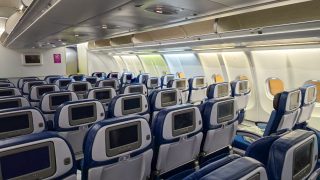
Hawaiian also retains advantages we still value. The A330’s two-seat side in economy is a genuine benefit for two people traveling together, and its free Starlink internet has been excellent. We’ve had wonderful flight attendants on Hawaiian, including aboard the Dreamliner, and wouldn’t suggest that its distinctive hospitality has disappeared entirely.
Alaska has surprised us too. When we compared Hawaiian first class with Alaska economy on consecutive trips last year, Hawaiian’s tired A330 premium cabin and disappointing meal contrasted with an exceptionally gracious crew. Three days later, Alaska delivered some of the best domestic economy service we’d experienced, complete with generous refreshments and a captain who walked through the cabin talking with passengers. Neither airline has a monopoly on good service, and we’ve had enough different experiences to know that a familiar brand no longer guarantees a familiar flight.
Meanwhile, Alaska Air Group is investing heavily in an increasingly expensive premium experience. Its October financial results showed premium revenue grew approximately 25% year over year and represented more than 36% of its total revenue. The company also reported that 54% of its operating revenue came from sources outside Main Cabin, reflecting growth in its premium, loyalty, and other businesses.
The next generation of Hawaiian’s A330 cabins will have about 40% premium seating, up from 30% today, as part of a major refurbishment set to begin in 2028. Alaska’s separate Aurora experience and Hawaiian’s Leihoku suites promise more luxurious travel yet, for a price, while a new Premium Reserve (premium economy) cabin will create another option between traditional economy and the front of the aircraft. Main Cabin interiors will also be upgraded, although the full results remain several years away and details are sparse.
There may eventually be excellent reasons to pay for those products. Alaska Air Group is investing big in these premium cabins as the familiar differences between ordinary economy tickets narrow.
Airline loyalty has become an impossible habit to justify.
Our readers have described this from both directions. Daryl H, commenting on our earlier Hawaiian-versus-Alaska comparison, said his family used to choose Hawaiian for mainland and interisland travel but had returned to United and American. American often offered better prices from Texas, while United provided another established Hawaii option. The acquisition had changed his family’s preferences, but the replacement airlines were familiar competitors rather than some newly discovered alternative.
Another reader, John, described approaching 300,000 miles with Hawaiian and remaining loyal because of tangible benefits. Upgrades, baggage allowances, award travel, and the expanded oneworld network still made sense for his family’s frequent trips. Status really does pay for some passengers, especially those who travel enough to earn and use the benefits regularly.
For the rest of us, loyalty has become an expensive habit when the airline giving you the benefits isn’t necessarily offering the best flight. We’ve largely abandoned choosing a carrier first and figuring out the trip afterward. We now compare the actual aircraft, fare, schedule, and comfort, sometimes using our three-economy-seats-for-two approach instead of paying for domestic first class. We bring our own food no matter the class of service or airline, and we’re perfectly willing to fly different airlines in each direction.
On an upcoming trip, we are departing Hawaii on Alaska and returning on United. It came down to the price and a nonstop daytime schedule. We don’t look forward to one more than the other. It’s a toss-up and a means to an end, pure and simple.
This isn’t because we’ve stopped appreciating a great crew or a comfortable aircraft. We still have some preferences, but increasingly little reason to pay more simply because a particular airline’s name is on the ticket or because we might accrue more miles with one or the other.
We’re curious how many longtime BOH readers have reached the same point. Have you stopped favoring Hawaiian, Alaska, Southwest, or another carrier after years of loyalty, or are you still getting something valuable enough to keep you?
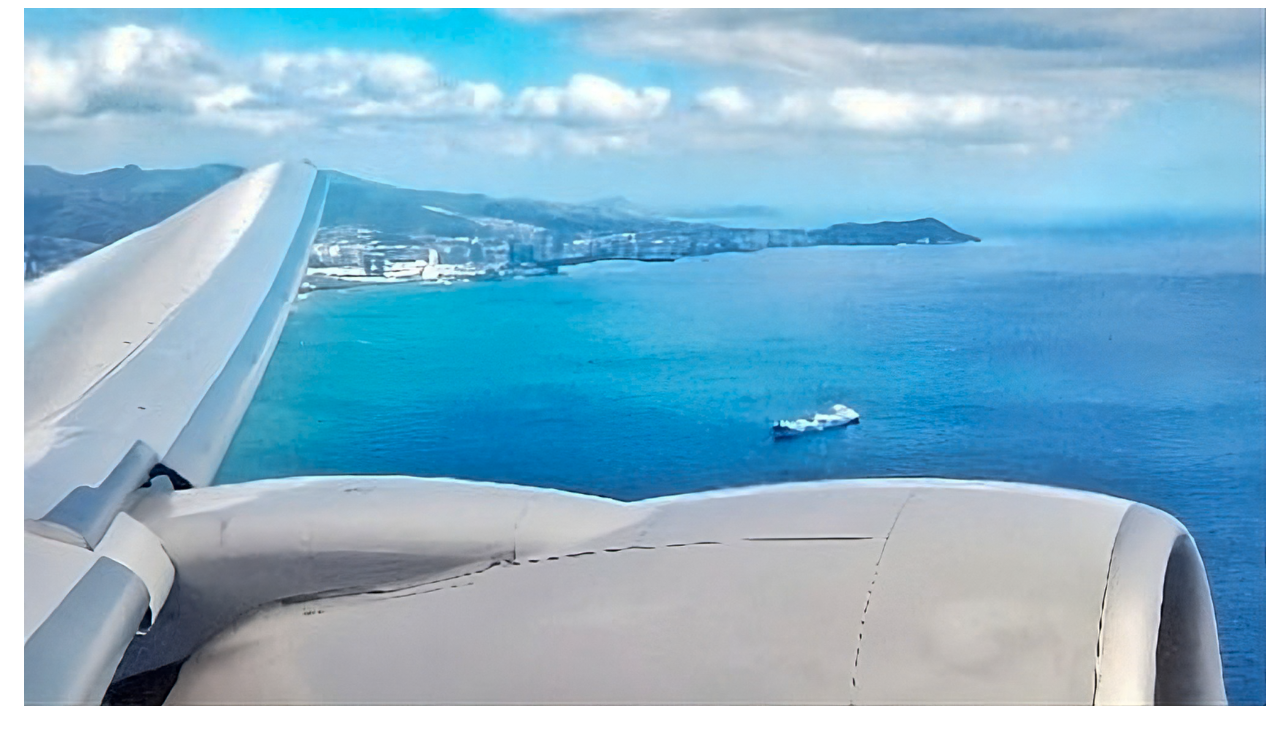
Lead Photo Credit: Honolulu from the air. © Beat of Hawaii.
By Rob and Jeff, Beat of Hawaii.
Some of Hawaii’s most meaningful parts are the ones visitors walk right past without knowing they are there. We’ve spent nearly 20 years finding them firsthand for BOH as full-time Hawaii residents reporting on travel, culture, and island life, and telling you what they mean for your trip. Join us →
Get Breaking Hawaii Travel News