Honolulu was named America’s best city to live in again this year. It’s a remarkable distinction, and one we wouldn’t argue with, but we know just how differently the city can look for someone spending a week on vacation. We’ve been returning to Honolulu for decades, and our visits have offered plenty of reminders of what a national ranking can never quite fully capture.
On an earlier visit last year, we found a small oceanfront rental near Diamond Head for $200 a night, including taxes and fees, and excellent meals for around $20. We also encountered aging infrastructure, graffiti, houselessness and a city that feels considerably less polished than the Hawaii many visitors imagine. Both experiences truly belong to Honolulu, and neither is particularly well represented by the usual best-cities headlines.
They got Honolulu right.
The Economist Intelligence Unit’s 2026 Global Liveability Index ranked Honolulu 25th worldwide, making it the highest-ranked American city once again. Its overall score was 93.2 out of 100, ahead of Seattle, Atlanta, Pittsburgh, and every other U.S. city evaluated. Honolulu slipped two places globally from 2025, but retained its position at the pinnacle of the American rankings.
The study evaluates 173 cities using more than 30 indicators covering stability, healthcare, culture and environment, education, and infrastructure. Honolulu received a perfect score of 100 for education, 96.4 for infrastructure, and 95 for stability. These are impressive results, although they tell you considerably more about the conditions of daily life rather than about what happens during a Waikiki vacation.
We recognize a lot of what makes Honolulu special. It’s a major American city with accessible public beaches, remarkable food, cultural institutions, and an outdoor life that remains possible year-round. We’ve spent countless hours enjoying its neighborhoods, swimming at its beaches, and finding reasons to return again and again that have little to do with Waikiki’s hotels.
There is real value in a lot of what the index measures, especially for people who depend on the city’s services and infrastructure every day. But living somewhere over decades and arriving for a week are two very different experiences.
The part no ranking measures.
The EIU’s categories don’t directly measure whether people can afford the city in which they live. That omission is particularly striking in Honolulu, where access to so many desirable things comes with some of the highest household costs in the country.
According to UHERO’s 2026 Hawaii Housing Factbook, buying the state’s median-priced single-family home requires earning more than 180% of Hawaii’s median household income. Only about one in five Hawaii households earns enough to meet that threshold. On Oahu, the median single-family home sale price was still $1.15 million in October.
The study can accurately recognize excellent living conditions while leaving out the financial strain involved in maintaining a life here. That’s a difficult contradiction for Hawaii residents, especially those who grew up here and increasingly struggle to afford the place they have always called home.
Visitors encounter a different part of that expensive economy.
Visitors aren’t buying homes, but they’re paying for expensive accommodations, food, transportation, and services in a place where the underlying costs of doing business and living are exceptionally high. The ranking offers nothing about what those expenses will add up to during a vacation. But we all know that already.
Honolulu’s vacation prices tell another story.
Honolulu isn’t necessarily the most expensive place to vacation in Hawaii, and for many travelers, Waikiki is substantially more affordable than the Neighbor Islands.
According to the state’s September 2026 hotel performance figures, Waikiki hotels averaged approximately $251 nightly, compared with $455 in Maui County, $343 on Kauai, and $372 on the Big Island. These are average room rates before taxes of 19% and other charges. We’ve examined Waikiki’s surprising hotel price advantage and experienced it ourselves.
Yet what sometimes looks like an apparent bargain can change dramatically once the rest of the vacation is factored in. In October, we found a week-long rental car for $259, while seven nights of parking at Hilton Hawaiian Village would cost approximately $530, including tax. Our comparison of Waikiki hotel parking costs showed that this problem extends well beyond one hotel.
There are ways around some of those expenses that aren’t available to visitors on every Hawaiian island. Waikiki is walkable, with beaches, restaurants, shopping, and public transportation close together. Renting a car only for the days spent exploring the North Shore or Windward Oahu can make far more sense than paying to keep one parked all week in a city where a car and parking can just be a hassle. (HNL CITY LIGHTS?)
But convenience has its own tradeoffs. Waikiki’s concentration of hotels, visitors, restaurants, and attractions means crowds and busy streets. Some visitors are still surprised that Honolulu doesn’t offer an uninterrupted resort experience and that the city isn’t organized entirely around vacationers.
What the ranking cannot see from the sidewalk.
One of the more curious parts of Honolulu’s high score is its infrastructure rating. We understand why the city performs well in a broad international comparison, but that doesn’t mean every visitor-facing part of Honolulu is in excellent condition.
We’ve written about Honolulu’s increasingly worn appearance, including aging streets, tired commercial areas, graffiti, and the visible contrasts between luxury development and ordinary city life. Those impressions aren’t a judgment on the people who live there. They are part of what visitors encounter when they venture beyond a carefully maintained hotel property.
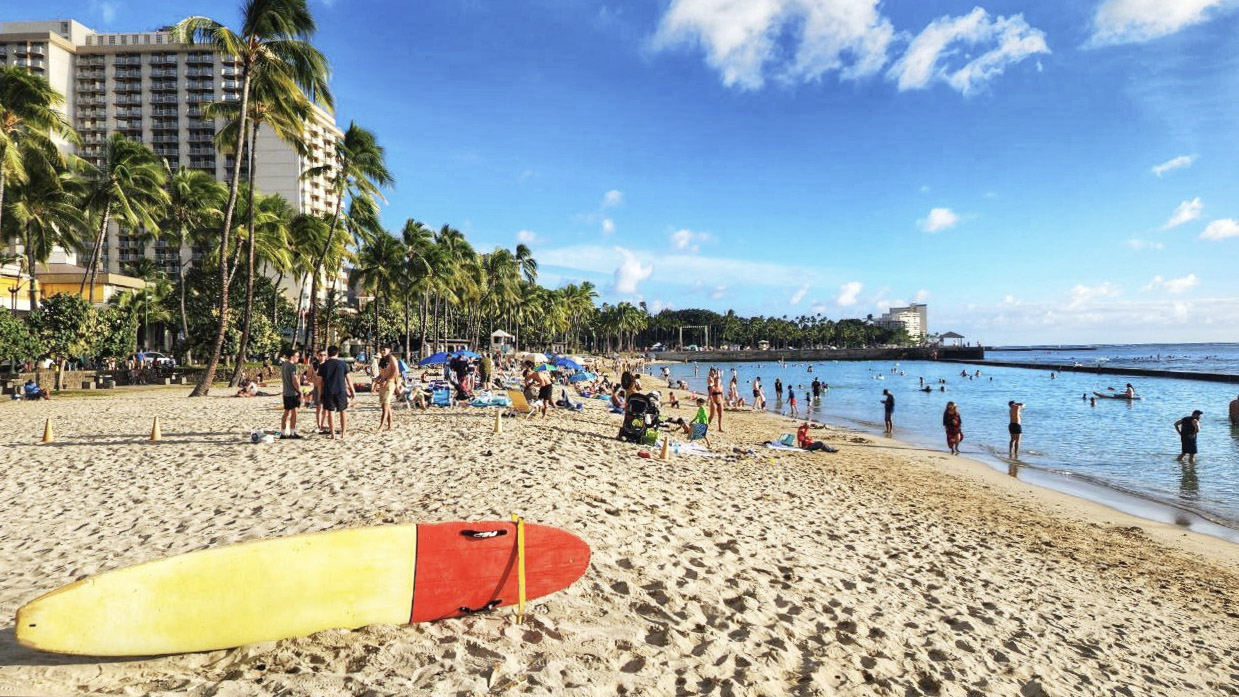
Even Waikiki Beach presents a contradiction. We’ve watched waves crash against the seawall below restaurant windows near Outrigger Reef, along a stretch where the usable beach has largely disappeared. Now, restoration estimates range from $30 million to $60 million, reflecting the extraordinary expense of maintaining a shoreline that many travelers assume is simply free and there for the taking.
And then there’s the Honolulu that keeps drawing us back. We can spend a morning exploring Chinatown, grab a memorable lunch in Kaimuki, and enjoy public beaches that don’t require staying at an expensive resort. We’ve found some of our favorite Hawaii meals and experiences in places that would never appear in any conventional luxury vacation itinerary.
Get Breaking Hawaii Travel News