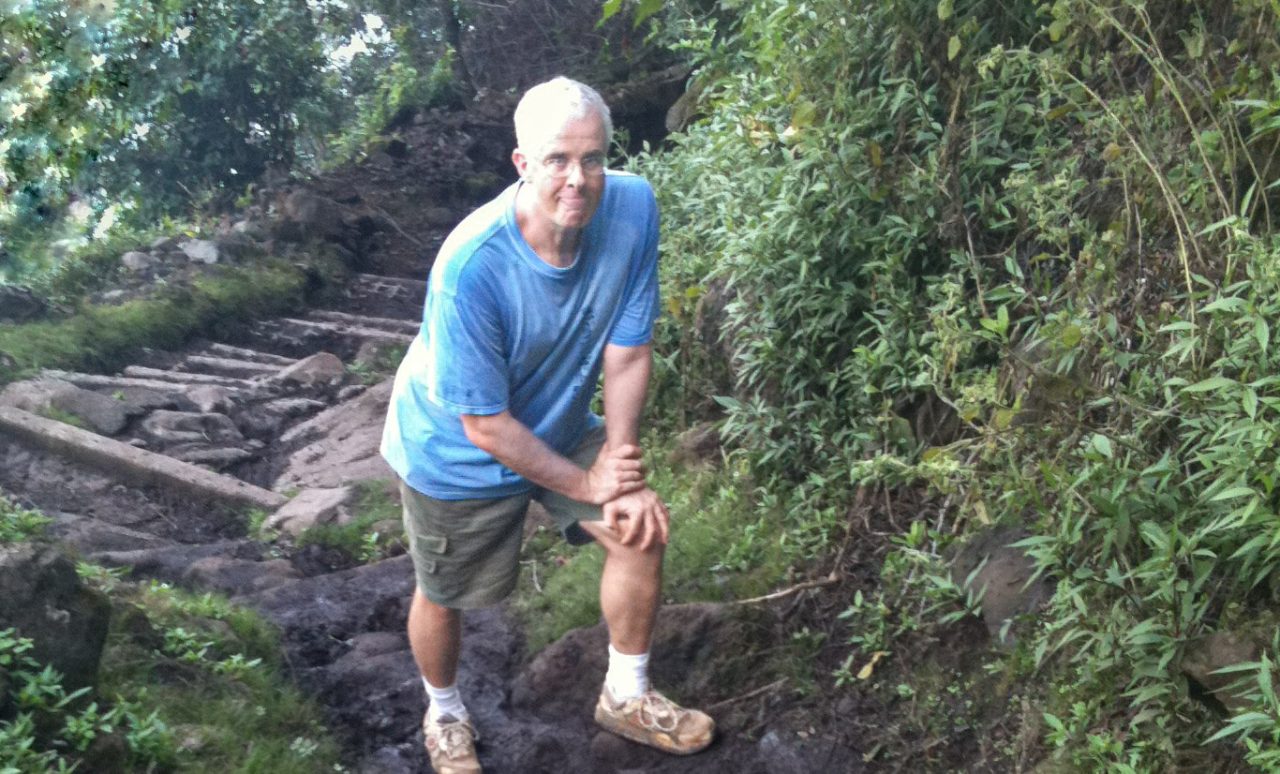
Public access to Kalaupapa is returning in a new form, and it answers the question many readers asked after Aunty Meli Watanuki died in May. Beginning July 9, the National Park Service (NPS) will lead guided hiking tours on the Pali Trail into the settlement for $21 per person. Paying the fee is the easiest part, as you’ll read in today’s post and see in our lead photo of BOH editor Rob as he tackles the 1,700-foot elevation change in mud. This new program replaces the $625 fly-in that briefly restored access last year and is no longer operating.
More importantly, it replaces the patient-resident sponsorship model that had determined whether the public could visit at all. Instead, the tours operate under a group permit issued by the Hawaii State Department of Health to the National Park Service, creating a different path into one of Hawaii’s most restricted places.
After Aunty Meli, Kalaupapa found a different path.
When Kalaupapa reopened in September 2025, it happened because Aunty Meli Watanuki stepped forward with the Kalaupapa Saints Tour. Her fly-in program restored public access after years of pandemic closure, but it also depended on a patient-resident sponsor. When she died in May, the obvious question was whether public access would disappear again.
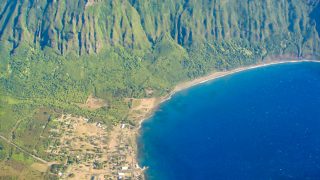
The new hiking tour answers that question differently. Rather than relying on a private concession, National Park Service staff lead visitors down the Kalaupapa Pali Trail, through the settlement, and back out again. Reservations are handled through Recreation.gov, and the permit is held by NPS rather than an individual patient-resident.
The $21 ticket is the easy part.
We have hiked the Kalaupapa Pali Trail ourselves, so the strenuous warning is not boilerplate to us — it is earned. This is not a hike for casual or occasional hikers. The descent fools you into thinking it is manageable; the climb back out, after a full day on your feet in the heat, is where it punishes the unprepared.
The full outing covers about eight miles in hot, humid conditions with limited shade. Anyone considering the tour should judge it first as a strenuous all-day hike and second as a sightseeing experience. Below is a short video we did on the trail in 2009. We remember lots of mud that slowed us down.
How reservations and access work.
The Kalaupapa Settlement Hiking Tour is booked only through Recreation.gov. There are no walk-up tickets, and reservations open in a rolling 30-day window and close 24 hours before the tour.
The ranger-led hiking tour runs twice weekly on Thursdays and Saturdays, with the first departure scheduled for July 9. Only July dates have been released so far. The opening dates and July 25 were already sold out as we checked, while some mid-July dates still showed availability.
What visitors need before they go.
Visitors must be at least 16 years old, as required under Hawaii law, and unauthorized entry into Kalaupapa remains prohibited. The settlement has a public toilet and a water refill station, but no food service, cell coverage, or emergency medical services.
Anyone going should bring lunch, hearty snacks, a refillable water bottle, sturdy shoes, sun protection, and enough physical margin for the climb out. Photography of Kalaupapa patient-residents is prohibited, and that rule is central to visiting a living community rather than treating the peninsula as another Hawaii attraction.
Getting to the trailhead takes planning.
The trailhead is near Pala’au State Park, about nine miles from Molokai Airport. Visitors need their own transportation, since Molokai has limited public transportation and no rideshare service.
The tour is not ADA-compliant because of the steep trail and stairs. For visitors who cannot do the hike, the Kalaupapa Overlook at Pala’au State Park remains the accessible way to see the peninsula from above.
Why does this access still feel different?
Kalaupapa has never fit comfortably into Hawaii tourism. More than 8,000 people, most of them Native Hawaiian, were exiled there after being diagnosed with Hansen’s disease, and the isolation law did not end until 1969. A small number of cured patient-residents still live there today.
What this new structure does not resolve is how the remaining patient-residents view it. Public access to Kalaupapa has always run through them, and a permit held directly by the Park Service is a real departure from that. Whether this is a temporary bridge or the long-term shape of access, especially as the number of patient-residents continues to decline, is the question the $21 ticket does not answer.
The new NPS program restores public access at a price that many more people can afford, but the physical and ethical thresholds remain high. Kalaupapa is open again, but only in a way that asks visitors to arrive prepared, move carefully, and remember where they are.
If you have hiked to Kalaupapa, please share your memories of the trail.
Photo Credits: © Beat of Hawaii hiking to Kalaupapa in 2009. Lead Photo is BOH editor, Rob, in the mud.
By Rob and Jeff, Beat of Hawaii.
Some of the most meaningful parts of Hawaii are the ones visitors walk right past without knowing they are there. We’ve spent nearly 20 years finding them firsthand for BOH as full-time Hawaii residents reporting on travel, culture, and island life, and telling you what they mean for your trip. Join us →
Get Breaking Hawaii Travel News