
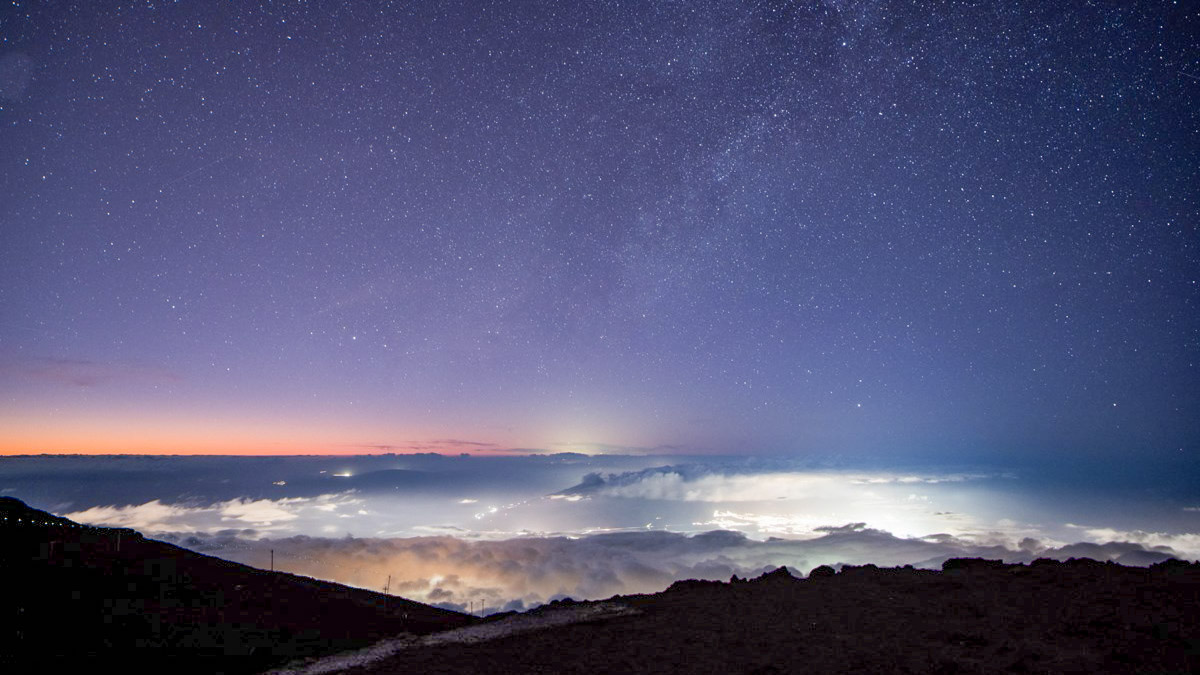
Hawaii visitors regularly spend thousands of dollars chasing the perfect beach day, the right sunset, and sometimes a sunrise that requires setting an alarm for 3 am. This week, one of the best shows in Hawaii won’t cost anything at all.
The Perseid meteor shower reaches its annual peak this week, and the timing for Hawaii is unusually good. The new moon arrives Wednesday morning, August 12, leaving Hawaii with an almost completely moonless dark sky. Then, just before dawn on Thursday, the Perseids reach their predicted maximum. For anyone willing to stay up very late, or get up very early, this could be one of Hawaii’s best stargazing nights of the year.
Hawaii gets unusually good timing this year.
The Perseids return every August as Earth passes through the debris left behind by Comet Swift-Tuttle. What changes from year to year is how much the moon interferes, and this year it almost couldn’t be any better, with the night sky having as little as 0.1% illumination.
Then comes the meteor shower itself. The predicted maximum frequency comes at 4:53 a.m. Hawaii time Thursday, August 13. The Perseid radiant will be high in the sky and easily visible. Having seen this ourselves countless times before, we can say this is a treat not to be missed in the islands.
Under ideal dark-sky conditions such as this, observers report seeing up to 90 meteors an hour or more near the Perseid peak. That doesn’t mean anyone in Hawaii should expect to count 90. Resort lights, passing clouds, haze, and where you’re watching from can dramatically reduce that number. Still, the combination of a major meteor shower and virtually no moonlight isn’t something we count on every year.
You won’t need a telescope.
This is one Hawaii experience where more equipment can actually make things worse. Meteors can streak across large sections of the sky, so looking through a telescope or even binoculars drastically narrows the area you can visualize. The best equipment is your own eyes, along with somewhere comfortable enough to keep looking up. BOH editors’ long-time favorite has been folding chairs up at Kokee State Park on Kauai.
Give your eyes 20 to 30 minutes to adjust to the darkness, and avoid checking a bright phone screen while you’re waiting. Our reclining beach chairs make a surprisingly big difference after an hour of staring upward, which otherwise tends to leave you with a very stiff neck.
The Perseids become more active as the night progresses. After midnight is better than early evening, with the hours before dawn offering the best chances to see the most meteors.
And even at the beach, bring another layer. Hawaii can feel considerably cooler than expected at 2 a.m. compared to what it did when you watched sunset.
You don’t necessarily need to drive up any mountain.
Maunakea is the obvious answer when anyone talks about premium stargazing in Hawaii. Its Visitor Information Station sits at 9,200 feet, is open daily until 9 p.m., and offers nightly stargazing activities when weather permits. There is no registration, entrance, or parking fee to visit the station. But visitors shouldn’t assume they need to reach the summit, or even Maunakea itself, to see the Perseids.
The most important factor is getting away from artificial light and finding a wide view of the night sky. A genuinely dark location even near sea level can provide an extraordinary view, especially during a moonless night like this one. That opens considerably more of the islands than just the famous observatory mountains.
Haleakala has one night advantage sunrise doesn’t.
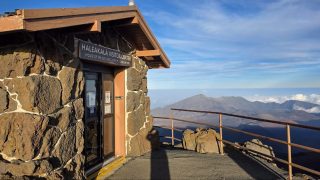
Maui visitors know how difficult a Haleakala sunrise reservation can be. Reservations are required to enter the summit district between 3 a.m. and 7 a.m., and the National Park Service says they frequently sell out within 15 minutes. But that restriction creates an interesting opportunity for the Perseids.
Haleakala National Park’s Summit District is open 24 hours. Outside the 3 a.m. to 7 a.m. sunrise reservation period, no sunrise reservation is required.
That means visitors should be able to head up late Wednesday evening, after the Haleakala sunset crush has passed, and watch the meteor shower from one of Hawaii’s most remarkable high-elevation environments. Once you’re parked and inside before 3 a.m., the sunrise reservation requirement doesn’t apply to you. It governs who can enter the gate during that window, not who’s already there.
Do keep in mind that at 10,023 feet, this isn’t anything like beach weather. Temperatures can be dramatically colder than at the resorts, and warm layered clothing is in order.
On Kauai, darker doesn’t always mean better.
This is where we’d resist some of the advice we’ve seen elsewhere. Western Kauai has exceptionally dark skies, and Kokee and the area around Waimea Canyon immediately come to mind.
Polihale is also frequently recommended online for stargazing. But the darkest point on a light-pollution map isn’t necessarily where we’d send a visitor unfamiliar with Kauai in the middle of the night.
Remote roads, changing weather, park access, and driving back all count. A darker stretch of coastline away from the lights of Lihue and the major resort areas can provide an impressive view without turning a meteor shower into a major nighttime expedition.
The same principle applies throughout Hawaii. On Oahu, getting away from Honolulu’s light dome is more important than gaining elevation. On Hawaii Island, the dark Kau coast area and those around Hawaii Volcanoes National Park offer alternatives to driving high onto Maunakea.
Maui has dark coastal areas as well as Haleakala. Sometimes the best stargazing location is simply the darkest practical place close-by to where you’re already staying.
Clouds are the wildcard Hawaii can’t control.
With the moon effectively removed from the equation this year, Hawaii’s biggest unknown is weather. Clouds can make the biggest difference between seeing dozens of meteors and seeing nothing at all. We’ve been clouded and rained out more than once. That’s especially true where conditions can be completely different on opposite sides of the same island.
We wouldn’t make a long nighttime drive based solely on a statewide weather forecast. Check conditions for the specific coast or elevation where you’re planning to watch before heading out.
There’s also no need to abandon the idea if Wednesday night doesn’t work. The Perseids stay active from mid-July through late August, and they don’t switch off after their predicted maximum is reached. Activity remains around the peak, although it drops afterward, making the nights on either side of this Wednesday worth trying too.
Hawaii looks very different after everyone goes home.
We’ve spent a lot of time looking at Hawaii travel during daylight hours. Beaches get crowded. Sunrise reservations disappear. Parking lots fill. Visitors race from one planned stop to another. At 2 a.m., almost all of that has already disappeared.
For one night this week, the attraction isn’t something Hawaii built, manages, or charges admission to see. It’s overhead, and 2026 happens to be giving the islands an unusually dark, premium front-row seat. The only real question is whether you’re willing to stay awake for it.
Have you ever watched the Perseids or another meteor shower from Hawaii? Where did you watch, and was it worth staying up?
By Rob and Jeff, Beat of Hawaii.
Some of the most meaningful parts of Hawaii are the ones visitors walk right past without knowing they are there. We’ve spent nearly 20 years finding them firsthand for BOH as full-time Hawaii residents reporting on travel, culture, and island life, and telling you what they mean for your trip. Join us →
Get Breaking Hawaii Travel News


Category One hurricane could make viewing interesting!
Such a lengthy article that fails to mention the key info – where to look? It’s mostly the North-Northeastern sky, IOW windward side is your best bet.
I thought the very same!
I remember as a keiki, my Tutu gathering all the kids around from the ranch and neighbors and we camped outside. They would talk story and tell us how important the stars were to the Hawaiians and would come wake us up when the “show was on”. Remember laying on our backs looking up….better, well almost, than fireworks. Makes me smile to reminisce.