
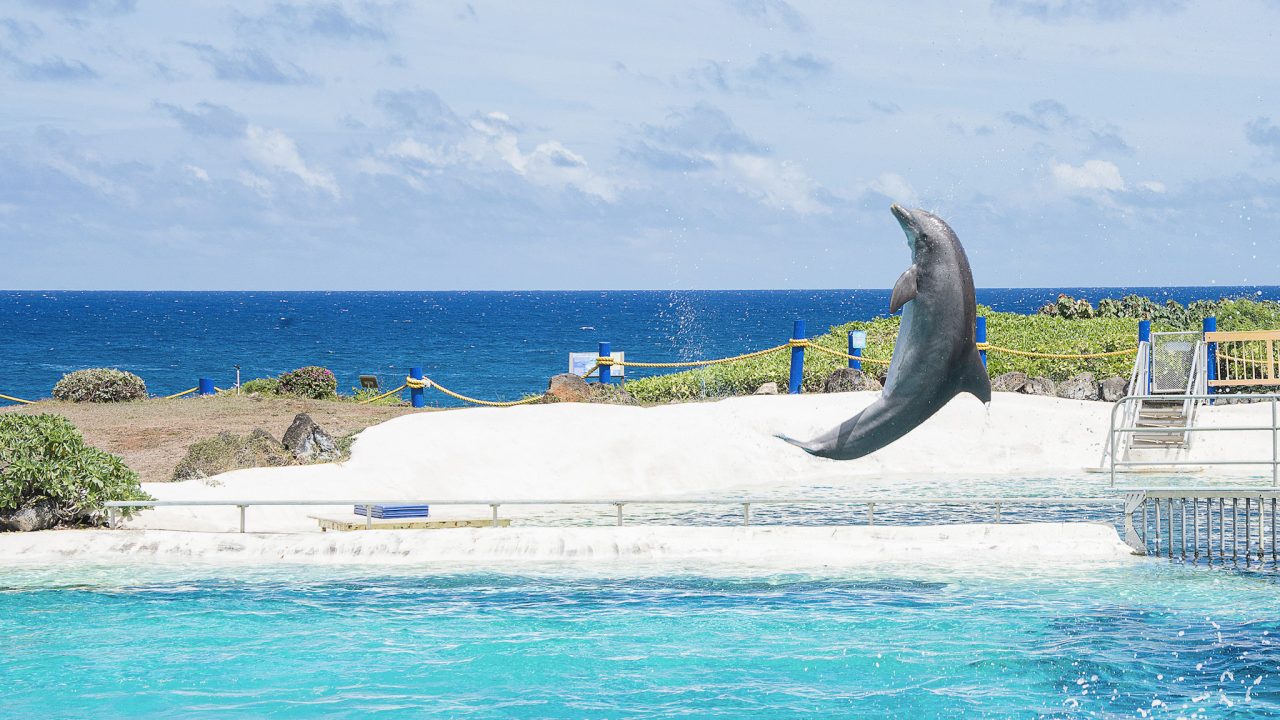
One of Oahu’s oldest visitor attractions has a new owner, but changing the name on the paperwork may turn out to be the easiest part of the deal. Sea Life Park Hawaii opened at Makapuu in 1964, and generations of Hawaii visitors have either driven right by it or stopped to remember the dolphins, sea lions, turtles, and spectacular setting beneath the Koolau cliffs.
Hawaiian Council acquired the park from Herschend Family Entertainment on August 11 for an undisclosed amount, putting it under Native Hawaiian ownership for the very first time. For visitors with reservations or annual passes, nothing changes immediately. Existing bookings and passes remain valid, operations are continuing, and no layoffs are planned. But what happens after that is far more interesting.
According to the Honolulu Star-Advertiser, Hawaiian Council CEO Kuhio Lewis plans to bring more Native Hawaiian cultural storytelling, education, hands-on demonstrations, native landscaping, and Hawaiian retail into the park.
Chef Roy Yamaguchi, whose recent Outrigger Kauai Beach Resort overhaul BOH covered firsthand, is expected to overhaul the food program here, and Lewis has suggested that Sea Life Park needs to become more than an attraction centered primarily on animal performances.
That leaves a much bigger question than who owns Sea Life Park. Can an attraction built for the Hawaii visitor of 1964 become somewhere that a 2026 Hawaii visitor wants to see? If so, this will take a massive turnaround.
Sea Life Park isn’t cheap to visit.
The economics are one place to start. Current online admission is $49.99 for adults and $39.99 for children ages 4 through 12. At the gate, those prices rise to $59.99 and $49.99, while parking adds another $18 plus tax.
That puts two adults and two children at roughly $200 just for admission and parking when tickets are purchased online, before anyone eats or buys anything else. By contrast, Sea Life Park’s basic adult annual pass currently costs $59.99, the same price as a single full-price adult admission at the gate.
Animal encounters change the costs completely. A dry-land Dolphin Aloha experience is $89.99 online and includes park admission. The Dolphin Encounter is $229.99, while Dolphin Exploration is $299.99, also including admission.
In reviews, those encounters also appear to change how visitors feel about the experience. Families with younger children frequently praise the dolphins, turtles, touch pools, employees, and beautiful setting, and some specifically like that Sea Life Park isn’t enormous and can easily be experienced in a few hours.
At the same time, another theme appears repeatedly. Visitors describe the park as small, dated, and in need of renovation, and some question whether the high cost of general admission delivers enough for the price. Sea Life Park still offers memorable experiences, particularly for families buying an animal encounter, but at roughly $200 just to get in, before food for a visiting family of four, simply walking through the gate creates a value question.
Google reviews add a rougher picture. Recent visitors repeatedly describe Sea Life Park as small enough to see in one or two hours, while others mention closed exhibits, restaurants, or attractions on the day they visited. Complaints about aging facilities go beyond appearances, with some reviewers describing algae, dirty-looking tanks or animal habitats they believe are too small. Those are visitor review observations rather than any independent findings about the condition of the animals, but the same themes appear repeatedly in reviews stretching back years and continuing into this year.
The dolphins are the exception. Even some visitors who criticize the rest of the park praise the dolphin show or paid encounters, and positive reviews frequently center on exactly those experiences. That leaves Hawaiian Council with the unusual challenge of wanting to offer visitors more reasons to come beyond the animal performances, while the animal experience most associated with the Sea Life Park still appears to be its strongest draw.
Sea Life Park once drew far more visitors.
Sea Life Park’s attendance history makes the ownership change more interesting. Shortly after opening, historical reporting put attendance at about 800 paid visitors a day, and by 1966 annual attendance was projected to reach 400,000. State records reflect Sea Life Park having 391,140 visits in 2017. That then dropped to 288,917 in 2018 and 265,665 in 2019.
Then the pandemic shut Sea Life Park for nearly a year. Attendance was just 41,392 in 2020, followed by 125,000 in 2021 and 190,915 in 2022. Comparable Sea Life Park attendance figures weren’t published as far as we could find in 2023 and 2024.
Lewis himself said that attendance went from thousands of visitors a day to hundreds. We don’t know why, and it would be easy to blame changing attitudes toward captive marine mammals, high prices, the aging attraction, competition for limited vacation time or simply changing visitor habits. What is clear is that Hawaiian Council is taking over Sea Life Park at a very different time from the one when nearly 400,000 annual visits occurred.
Some of the worst online reviews come from people who remember Sea Life Park differently. Repeat visitors describe returning after one or more decades and finding fewer attractions, a smaller experience, and a park that no longer feels like the same one they remember.
Sea Life Park’s larger redevelopment never happened.
This isn’t at all the first vision for reinventing aging Sea Life Park. Years before this sale, the previous operator developed plans for a roughly $30 million redevelopment that included a green sea turtle conservation center, a volcano-themed shark exhibit and restoration of part of the historic Kaupo fishing village.
The modest plan included changes to exhibits, entrances, walkways, parking and dining. The project received government review and approvals, but construction was postponed while the company recovered from its pandemic losses.
Former Sea Life Park general manager Valerie King said the previous operator had upgraded the park’s animal habitats even though remaining redevelopment did not go forward. And a $30 million plan needs perspective. For a 62-year-old marine park with specialized animal facilities, visitor infrastructure, restaurants, exhibits, buildings and extensive grounds, it wasn’t a wholesale redevelopment of Sea Life Park.
Hawaiian Council now inherits whatever remains of reinvestment needs. Whether pieces of the previously approved redevelopment survive or are replaced by an entirely different plan is unclear. But current reviews describe aging facilities, closed exhibits, and parts of the park some visitors believe need substantial renovation.
Hawaiian Council is taking on something very different.
Hawaiian Council has become increasingly involved in Hawaii’s visitor industry through cultural tourism, visitor education, retail, luaus and other visitor-facing businesses. That experience helps explain many of the changes already being discussed for Sea Life Park.
But Sea Life Park isn’t simply another cultural attraction by any measure. It is a highly specialized and animal-care-intensive operation responsible for captive dolphins, sea lions, sharks, sea turtles, birds, fish, and other marine life.
We haven’t seen evidence that Hawaiian Council previously operated any comparable animal facility. That doesn’t mean they won’t do a great job, and they have every opportunity to improve Sea Life Park. The park already comes with specialized people for animal care, and retaining that institutional knowledge will be particularly important during the upcoming transition.
Sea Life Park itself also comes into the ownership change with existing accreditations. The park received certification from the International Marine Animal Trainers’ Association in 2024, and it has long been affiliated with the Alliance of Marine Mammal Parks and Aquariums. Our understanding is that those credentials reflect the existing park operation and its staff.
Valerie King is the former Sea Life Park general manager who ran the park under previous operator Palace Entertainment. She retired from that role in 2023, and Hawaiian Council has now brought her back to lead the transition following the sale.
Animal welfare remains part of Sea Life Park’s story.
Animal welfare concerns surrounding the park aren’t new. A 2022 Civil Beat investigation examined animal deaths, previous federal citations and criticism of captive marine mammal attractions. Sea Life Park disputed significant parts of that criticism and has long pointed to its conservation, research and educational work. That controversy will be something the new owners will inherit.
Current visitor sentiment in reviews isn’t uniform. Many families continue to describe animal encounters as the highlight of their visit, while other visitors express discomfort about captive animals or the condition of some exhibits. Recent Google reviews include repeated complaints about pools or tanks that visitors believe look dirty, habitats they consider too small and facilities they say appeared poorly maintained.
Those comments aren’t independent findings, but they are relevant to the visitor experience because the same concerns continue to surface in recent reviews rather than existing only in Sea Life Park’s past.
Tripadvisor currently says Sea Life Park doesn’t meet its animal-welfare guidelines for certain bookable animal experiences, even while reviews on the platform include enthusiastic accounts from visitors who participated in dolphin encounters.
Lewis has talked about moving Sea Life Park beyond the traditional idea of visitors coming primarily for animal performances, with Hawaiian culture, education, and storytelling becoming a larger part of the experience. But nothing has been announced yet about potentially ending dolphin encounters or other animal programs, or changing the park’s animal operations.
For now, dolphins and other marine animals remain central to what Sea Life Park sells, as Hawaiian Council begins building a broader visitor experience around and beyond them.
The new Sea Life Park hasn’t arrived yet.
Visitors going soon shouldn’t expect to encounter an entirely reinvented attraction. The sale has just happened, but the larger transformation must wait.
Reservations and passes continue, the animals remain, and the existing visitor experience continues while Hawaiian Council begins deciding what comes next. Hawaiian Council bought one of Hawaii’s most recognizable legacy attractions, along with its animals, aging infrastructure, deferred redevelopment, a complicated history, and decades of visitor memories, both good and bad. It also bought a place with one of the most extraordinary settings of any visitor attraction on Oahu.
Sea Life Park is still an instantly recognizable name for generations of Hawaii travelers, including many who haven’t considered visiting in years. The question going forward is whether Hawaiian Council can turn that recognition into new reasons to return.
Better food will certainly help. Hawaiian landscaping and storytelling could make the experience feel more connected too. Education and conservation could become even more important, and meaningful capital investment could change everything.
If you visited Sea Life Park years ago, what do you remember about it, and what would have to change to make you go back?
By Rob and Jeff, Beat of Hawaii.
Some of the most meaningful parts of Hawaii are the ones visitors walk right past without knowing they are there. We’ve spent nearly 20 years finding them firsthand for BOH as full-time Hawaii residents reporting on travel, culture, and island life, and telling you what they mean for your trip. Join us →
Get Breaking Hawaii Travel News



I have never been to Sea Life Park.
I have no interest in seeing sentient animals kept in captivity for our entertainment. It’s well past due to move away from this type practice.
Hawaiian cultural shows, entertainment, education, conservation, etc. I’m all for.
I only visited Sea Life Park once in the 1990s and remember the dolphin show was quite impressive. Maybe it wasn’t just the dolphins but the beautiful view that struck me. In recent years I have wondered what happened to the Park. I never see it advertised and, frankly, thought it had closed after the pandemic. From the article, it sounds like the new owners are looking to create a cultural center with sea creatures. Chef Roy is also an odd choice for this type of establishment, in my opinion. But I do hope with enough time and money that the Park will be brought up to modern standards and once again provide an enjoyable experience.
Having seen what Native Hawaiian Council, recently Council for Native Hawaiian Advancement, has done so far in their wide-reaching ambitions that were fueled by Covid money, I am concerned for Sea Life Park. They tried to put a luau at Kapiolani Park which was not legal, they put a luau into a hotel and had a Korean-themed buffet, they are opening a semi-tent-city “makeke” in Lahaina. They use grant money to have “conventions” that donʻt seem to have a purpose. Always searching for ways to get grants, justify their salaries, expand expand using “native Hawaiian” as their foot in the door. So what Is their intent with Sea Life Park? Thatʻs a lot of animals and a lot of history to be responsible for, not something to mess around with like tents that can come down if it doesnʻt work out.
Remembering Fat Fred from many years ago!
Unless things have changed in the last year or so, the only dining at Sea Life Park is outdoors (it is under cover from the sun, has an “order and pay at the counter” rather simple menu, basic tables and seating, etc.). It will be interesting to see what Roy Yamaguchi could do with that space and set-up, or perhaps the plan is to develop an indoor or nicer outdoor-type restaurant there. He has a very nice outdoor (100% open to the air and great menu slections) restaurant (“GOEN”) in rather nearby Kailua. Also, among his other restaurants, he has one (the original Roy’s) on the other side of Sea Life Park in nearby Hawaii Kai.