
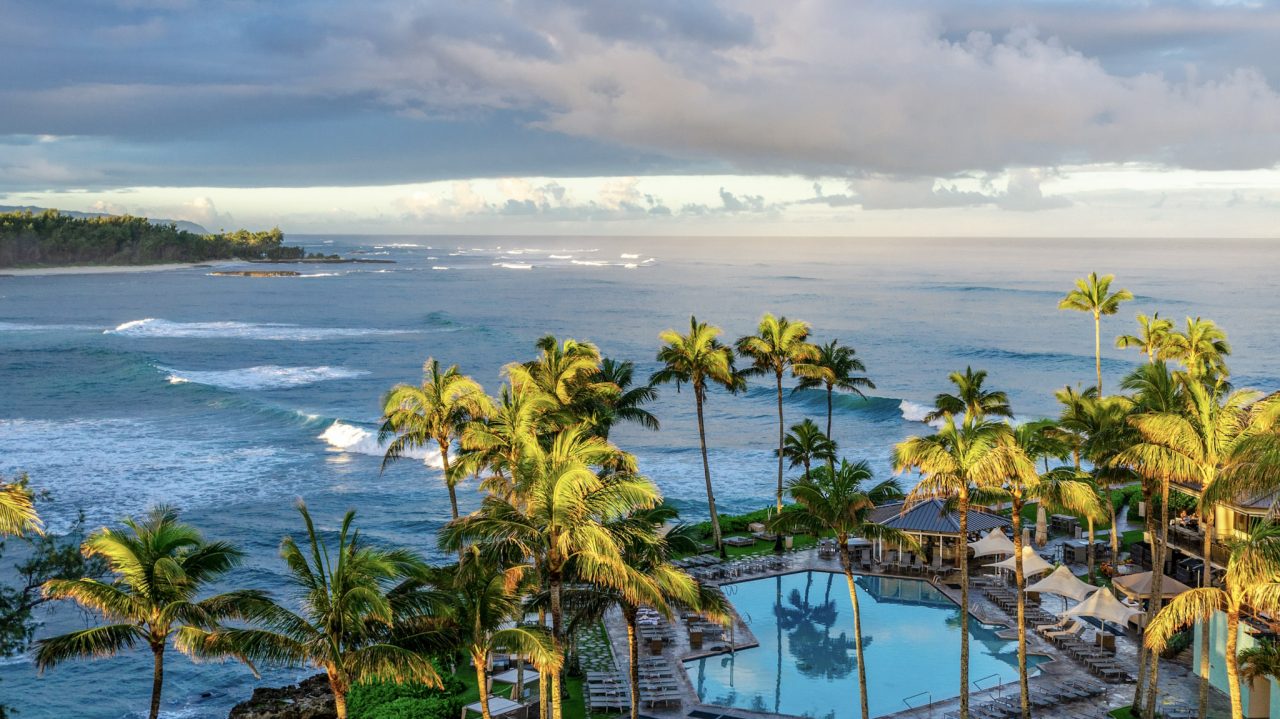
When visitors head towards the Ritz-Carlton Oahu, Turtle Bay, they see one of the last broad stretches of open coastline on Oahu’s North Shore. Few would know that a second 375-room hotel has already been approved next door at Kuilima, or that the approval still is based on an environmental study from 13 years ago.
This week, that long-running fight won its first round in court. A Hawaii judge ruled that the City and County of Honolulu can’t continue relying on that 2013 environmental review before allowing the proposed development to proceed. The project is now on hold until a supplemental environmental impact statement is completed.
Earlier this year, we wrote about the Turtle Bay lawsuit when it was filed and about what visitors still believe they are getting on Oahu’s North Shore compared with what was already approved next door. This ruling is the first major answer to that challenge.
That gap was exactly what Beat of Hawaii readers reacted to. One, Nora, told us she booked Turtle Bay specifically because it was marketed as protected and nature-focused, and had no idea another hotel was already approved next door. She said it absolutely would have factored into her plans. Another reader, Jim, stated the visitor stake clearly. If he is paying $1,000 a night for nature, he expects that nature to still be there.
A Hawaii native bee helped demonstrate why the old study was faulty.
One of the clearest examples involves the endangered Hawaiian yellow-faced bee, known as the Nalo Meli Maoli. The species was not federally listed as endangered until 2016, and that came three years after the environmental study the city had relied on.
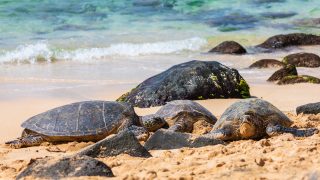
A Laysan albatross colony and increased monk seal pupping in the area are other examples of environmental conditions that have changed since the 2013 review. Judge Shirley M. Kawamura ruled that the city must require a supplemental environmental impact statement before permits for the proposed hotel can move forward.
Earthjustice attorney Dru Hara said this proves that Hawaii’s environmental review laws are more than just a rubber-stamp paper exercise for developers, and that the county must honestly assess the impacts on the Kuilima coastline.
The ruling affects only the proposed second hotel next door at Kuilima. The existing Ritz-Carlton Oahu, Turtle Bay, is not impacted by this decision.
The city kept relying on old studies.
The original environmental impact statement dates back to 1985. In 2010, the Hawaii Supreme Court required a supplemental review, which led to the 2013 study.
The city then relied on that same 2013 review again in 2022 to approve residential units, and again in its December 2025 approval of the proposed hotel. This week, the court said the city could no longer rely on that study in order to permit the hotel project to proceed. The question is, when does an environmental review become so old that it can’t support new construction on one of Hawaii’s most sensitive remaining coastlines?
The project is delayed, but not gone.
Host Hotels & Resorts, owner of Turtle Bay Resort, said it believes it complied with Hawaii law and is evaluating its options. The City and County of Honolulu said it is also reviewing the decision.
The ruling does not cancel plans for the proposed second hotel or erase its prior approvals. It requires a new supplemental environmental impact statement before permits for that project can move ahead, however.
BOH readers have been making a larger point since we first covered this. Bob commented that we complain about overtourism while we keep adding hotel rooms, and that Hawaii should either stop adding accommodations or stop moaning about visitor numbers.
Another, Elaine, said the North Shore used to feel truly different from the rest of Oahu, that the line is disappearing, and that there is not much left to save. Both comments drew more agreement than anything else on that earlier article.
For now, the same Oahu North Shore coastline we have watched be debated since the 1980s remains open, while the next phase of the project returns to a supplemental environmental review.
Residents and visitors are questioning whether any additional resort development should be permitted beside Turtle Bay. What’s your take?
By Rob and Jeff, Beat of Hawaii.
Some of the most meaningful parts of Hawaii are the ones visitors walk right past without knowing they are there. We’ve spent nearly 20 years finding them firsthand for BOH as full-time Hawaii residents reporting on travel, culture, and island life, and telling you what they mean for your trip. Join us →
Get Breaking Hawaii Travel News



I don’t agree with any further development on the North shore! Turtle Bay especially.. the environmental impact would be devastating and should remain untouched. Mahalo
I left Hawaii (Honolulu) in 1960, when it was still the “old, beautiful Hawaii,” but was on its way to becoming the very crowded and over-developed “paradise” it is today. If it weren’t for family still living there, I don’t think I’d visit there again because, in my eyes, the beauty of that state is ruined.
The beauty of Hawaii is in the eye of the beholder, I still and will always believe in the beauty of the culture, the people, and the land.
Thank goodness for the ruling that further environmental review needs to be done for the second Turtle Bay hotel project!
In addition to updated natural resource and wildlife impacts, updated traffic impacts are a must. All of the roads in the area are already above capacity.
However, I don’t understand how the waterfront homes currently being built were allowed to go forward! The forest and coastline destruction there is significant and within the monk seal, yellow faced bee and albatross habitat. Was destruction and development rushed forward before it could be questioned?!
We can all ask the questions, wring our hands and say how awful this continuing development is, but we also know that ‘money talks’, and when it comes to development, money rules. Hawaii has yet to say “Stop!” to development, and the Hawaiian population has not voted to make that happen. Those ‘smiling, hand-shaking slickers’ you keep electing are allowing it to happen. Do you really think that the people of the State of Hawaii have no control over development???? It’s at the ballot box, folks! Press your legislators to pass the laws that will help prevent the developers from ruining the beauty of Your islands for pure greed. Or else.
It always the money that drives the causes. And, if you get in the way of it & someone who is going to receive that money, bad things happen! Land development is one of the most treacherous offenders. I am watching it right now where a land attorney mysteriously, “took a jump off of the 3rd story of city parking garage”. He had some information to turn over & become “state’s witness”. He did not live to produce it. There are many whispers around my town about what happened, but nothing actionable for police.
Hot link to your earlier article?
Hi Donna.
Thank you. Done.
Aloha.