
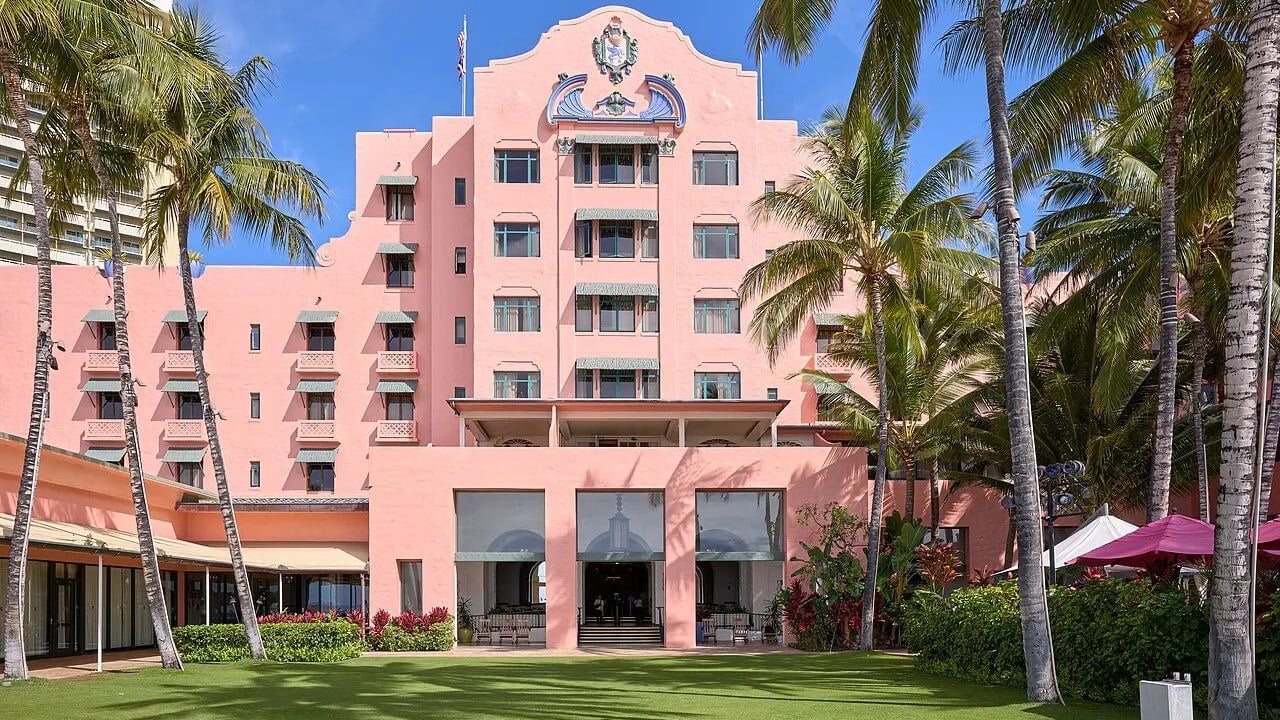
Your next Hawaii hotel check-in may come with a warning about the monk seal on the beach before you ever get to the sand. After a visitor was charged with throwing a rock at an endangered monk seal off Lahaina in May, the state’s answer isn’t more officers or more responders. Instead, it’s the resort’s front desk.
Now Hawaii’s answer is not just another warning sign, press release, or reminder to stay further back. Hawaii Marine Animal Response has launched a new Marine Stewards Program aimed at hotel staff, concierges, activity desks, tour operators, and others who may reach visitors before they ever hit the sand. If the state can’t be present at every beach, which is obvious, the people who welcome visitors will be the ones to carry part of the message first.
The bigger question is whether the timing is right. We just covered a NOAA-funded study that found the most effective turtle (and monk seal) messaging was not delivered days earlier, but at the moment visitors encountered wildlife. The research showed that signs illustrating how a photo taken from a safe distance could look just as good as one taken up close outperformed more traditional warnings and rules.
If that finding applies beyond turtles, it raises an obvious question: are visitors most likely to change their behavior at check-in, or when they are standing a few feet from the animal itself?
The rock thrown off Lahaina changed the conversation.
Federal prosecutors charged Igor Mykhaylovych Lytvynchuk, 38, of Covington, Washington, after he was filmed throwing a large rock at a monk seal off Lahaina in May. The rock missed, but the case drew national attention and put a spotlight on how visitors behave around Hawaii’s protected wildlife. Action came rather swiftly.
The new training arrives in the aftermath of something arguably more aggressive than ignorance. Hawaii has spent years telling visitors not to crowd seals, turtles, dolphins, and whales. But the Lahaina case exposed a more uncomfortable side of visitor behavior: some people do not just miss the message. Instead, they reject it in the moment, on the beach, when no responder is nearby.
What hotel staff are now being asked to do.
The new program trains hospitality and tourism workers to explain safe distances, recognize situations involving protected wildlife, answer visitor questions, and help redirect behavior before a problem develops.
Hawaii Marine Animal Response, or HMAR, has launched a new Marine Stewards Program aimed at hotel front desk staff, concierges, activity desks, tour operators, and others who may reach visitors before they ever set foot on the sand. HMAR describes them as the people positioned to best reach visitors before the beach encounter ever happens.
The program, which is a first, puts hotels and activity providers in a role that used to be considered official territory: prevention, education, and early intervention. It does not give them any enforcement authority and shouldn’t be confused with that. But it does acknowledge that the first useful conversation may now shift to the resort check-in, rather than after someone is already inside a roped-off area.
The beaches responders do not routinely patrol.
HMAR describes its response footprint as Oahu and Molokai, meaning the Lahaina attack occurred on an island outside its routine patrol coverage. That is one part of the gap related to the new hotel training.
Hawaii visitors often imagine our marine wildlife protection as a single statewide system, able to show up wherever a monk seal hauls out or a turtle rests. The reality is much more fragmented. Hawaii uses a mix of federal, state, nonprofit, and volunteer responders, and even together they can’t keep eyes on all of our long coastlines, busy visitor beaches, remote shores, and animals that don’t pick likely or convenient places to rest.
Sixteen killings and one conviction are behind this.
The Lahaina case did not happen in a vacuum. Prior BOH coverage of Sixteen Hawaiian Monk Seals Intentionally Killed Since 2009 And Only One Conviction already looked at the darker record behind monk seal protection. That record gives the hotel training a different edge. It isn’t just about helping visitors behave better around wildlife; it is juxtaposed against years of evidence showing how hard it is to investigate, prove, and punish harm after it has occurred.
Once someone has thrown the rock, crossed the rope, chased the turtle, or posted the video, the damage is already done. Enforcement still is important, and charges do send a message. Yet Hawaii’s coastline makes a uniform human perimeter around all of these animals impossible.
Kaimana showed what protection looks like when backed by resources.
The strongest recent contrast is Kaimana Beach. When monk seal Kaiwi gave birth there, federal, state, county, and nonprofit partners coordinated a visible protection effort because monk seal births in Waikiki draw crowds and require distance to ensure the safety of both people and animals.
That response is what focused protection looks like when one seal family is found in a high-profile location. There are signs, ropes, people watching, and a shared understanding that the situation needs active management. But the model cannot stretch across the islands. One beach can be surrounded. Hawaii’s coastline cannot.
Whether education can stand in for enforcement.
This new education may prove effetive when it is clear, timely, and designed around how Hawaii visitors actually show up. BOH has already seen that in the NOAA-funded honu research lane, where better-designed visitor cues can change how close people get to resting turtles. Done well, education can change behavior. The new training deserves a serious look, not summary dismissal as simply feel-good messaging.
At the same time, education is not enforcement, and a trained concierge or tour operator can tell guests what not to do. And a front desk clerk can explain that nearby resting monk seals are endangered and protected. None of them will be patrolling every beach, stop every bad actor, or replace the state should someone decide the rules do not apply.
Hawaii is asking the visitor industry to help protect animals that visitors increasingly travel here to see, photograph, and sometimes crowd. If anything, this move reveals the scale of the problem when the first line of defense for an endangered seal may be the person handing you a hotel room key.
When you check in, would a front desk wildlife briefing change how you act once you reach the sand? And should that job fall to hotel staff at all, or to the state? Or do you like the Amazing from Afar sign below that was part of the NOAA-funded study? Tell us what you’ve seen at the desk and on the beach.
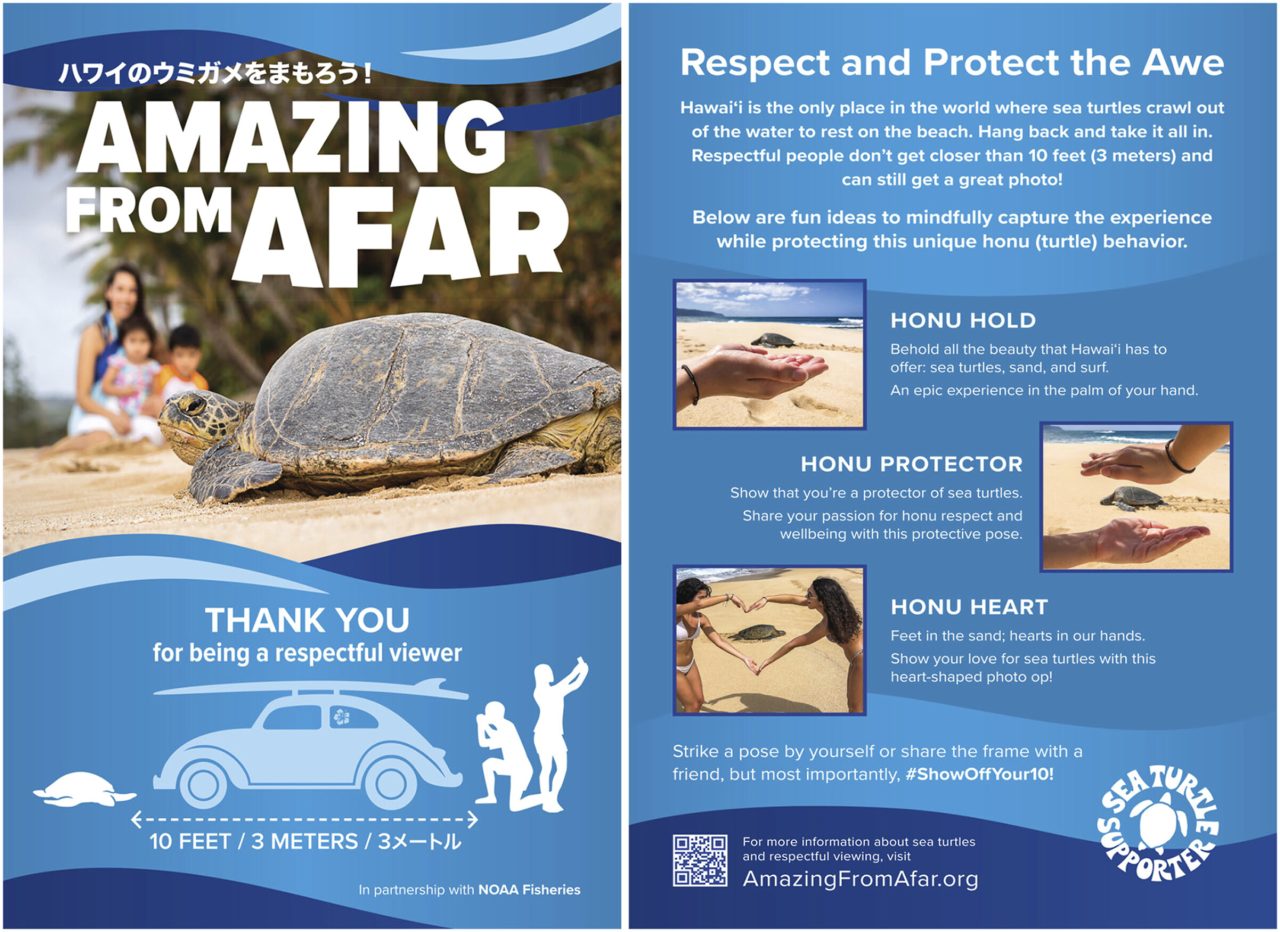
A different idea from the NOAA-funded study is this sign near wildlife that shows ways to photograph them from a distance.
Get Breaking Hawaii Travel News




IMO, typically the ones doing the most harm are the ones that don’t stay at resorts and are unhinged. But maybe if the ones being briefed can be more aware, therefore, immediately spot someone doing harm will respond. And agree with one commentor … Before folks arrive, add to the list they need to check off … our strict do not harm wild life rules.
Tourists all arrive by air. Passengers already sign a waiver that they’re not bringing certain items to the islands. Why can’t the airline also pass out a document created by HMAR or some other organization educating passengers about protecting endangered species that passengers would have to sign that they understand the consequences. Just a thought. Mahalo BOH for keeping us informed.
Living on Maui, I seriously think all of the above is necessary. Since we now have a case as an example (hoping he will get the maximum penalty which is prison time and fines), It’s a great idea having the front desk and/or concierge/tour-operator warn their guests what would happen if they harmed a protected animal…….with all the publicity that the seal monk incident received, I saw teenagers at Kaanapali Beach throwing large stones into the ocean. So, I asked them if they want to be the next guys having to appear in court , if a turtle was injured by them …of course, they said they were not throwing stones at turtles and I asked them “how do you know?” They are only visible when their head pops up …so, unfortunately, all of us need to educate tourists. We don’t have life guards nor beach watch of any kind and too many tourists ignore the signs. I also saw them walk with their cocktails from the pool to the beach (in a plastic glasses, of course!) This is Not Cancun!
This new system is great, but it has one major flaw, more and more people are opting to short term rentals, they are more affordable and you’re able to avoid the high cost of food by cooking your own. This system works only if you’re taking a guided tour, or checking into a hotel, there isn’t anything that indicates short term rentals and/or time share units are responsible for their guests and/or tenants.
we stay in a bungalow across the street from baby beach. i’ve seen first hand how non informed tourists act around turtles and monk seals. in april a juvenile monk seal decided to take a break and bask in the sun at baby beach. tourists went crazy knelling next to it for photo ops and children throwing sand at it. i tried to stop the mayhem but my pleas fell on deaf ears. i didn’t know who to call. it finally was scared off with tourists in tow. this also happened a few evenings later when a couple of sea turtles hauled out onto the sand. same chaos with beach goers touching them and kicking sand at them. i was mortified. i say do an advertising blitz and post framed prints of “amazing from afar” in every rental: condo, hotel, vacation rental. hand out pamplets of the same to every person boarding planes to hawaii and also show a video during the flight to enlighten all passengers to the fragile ecosystem and protected and endangered wildlife.
You can always call 911. Harassing them is a crime and they’ll send someone. Any and all warnings are a great idea. There’s never enough. This is a great step. And like somebody else said, maybe if more educated bystanders are around, they can help prevent some of the harassment from happening.
Honestly, showing the video of the rock thrower getting beat up might be the best deterrent!