

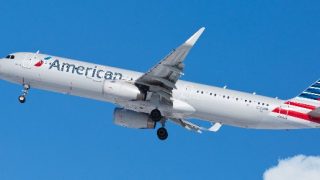
The same jet that carries thousands of people to Hawaii every day just sent an American Airlines crew racing back to Los Angeles when toxic fumes filled the cabin. Seven passengers felt sick, complaining of a metallic taste and dizziness. No one was hospitalized, but the incident grounded the plane and raised new questions about a model that Hawaii travelers board more than any other.
Why this plane matters so much for Hawaii travelers.
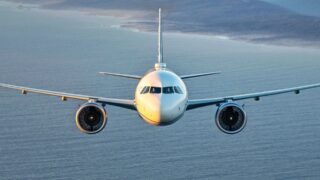
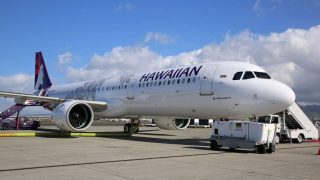
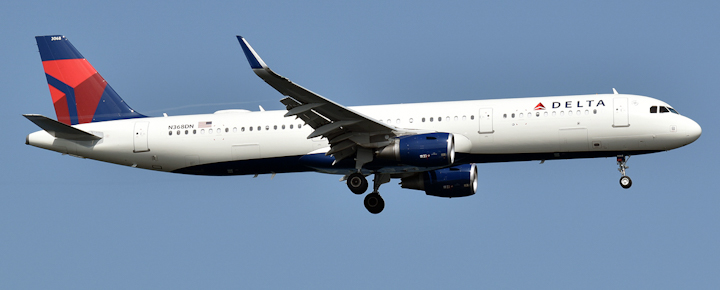
If you have flown Hawaiian to Maui, Delta from Seattle, or American from Phoenix (just examples), you have almost certainly been on the narrow-body Airbus A321neo. It has become the backbone of Hawaii’s air travel system.
Hawaiian/Alaska operates a large fleet of these for mainland to Hawaii routes, and Delta and American also rely on the same jets out of west coast hubs, including Los Angeles and Seattle. United flies them now, too, although not to Hawaii yet.
That leaves only Southwest without these very planes that are so popular with airlines. So what’s the issue?
When fumes forced a crew to don oxygen masks and return to LAX this week, it was a reminder that this ubiquitous aircraft connecting Hawaii to the mainland has its own set of challenges that most travelers hope to never hear about.
What we know about the incident.
The American A321neo flight in this case was headed the opposite direction, to New York, when the crew reported a strange smell and possible toxic fumes shortly after takeoff. They stopped climbing and returned to Los Angeles within minutes. Medical staff checked passengers, and a replacement jet eventually continued to New York eight hours later. The grounded aircraft is still under inspection.
The A321neo in Hawaii skies.
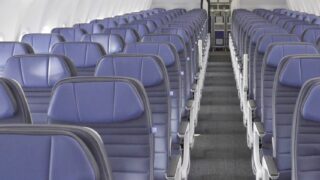
Airlines love the economics of the fuel-efficient plane. Some passengers love the quiet cabin and new interiors. Others bemoan the tight, narrow cabin. But behind the scenes, pilots and mechanics have long discussed air quality concerns in some A320-series aircraft. Studies cited by the Wall Street Journal last year found that these jets report cabin fume events more often than others, often tied to oil-seal leaks in the engine’s air-pressurization system.
What makes the A321neo stand out is how its cabin air is produced. Like most jets, it pulls compressed air from the engines to pressurize the cabin. But on the A321neo aircraft, certain engine and APU seals have been linked to small oil leaks that can contaminate the air, leading to the fume events sometimes reported.
When that happens, even a small amount of oil vapor can make its way into the air ducts, creating the odor or taste that passengers sometimes notice. Other aircraft types use similar systems, but this plane family has recorded more of these events over time.
When something smells wrong.
Every flyer knows that moment when the air on board does not smell quite right. It might be a faint chemical note or a whiff of hot oil that disappears as quickly as it came. Most times it is nothing. But sometimes, as this week’s American Airlines flight showed, it can be the start of what is called a fume event.
Flight attendants are trained to take it seriously. The symptoms can sneak up fast, including headaches, nausea, and dizziness, which is why crews have oxygen at the ready. Several frequent Hawaii flyers have told us they have caught that odd mechanical smell right after boarding or during aircraft climb out. The flights went on as planned, but the thought lingered with them.
What travelers can do.
You can make sure a fume event gets noticed. If something in the air smells wrong or makes you feel off, tell a flight attendant right away. Make a quick note of the flight details, date, and where you were sitting. The FAA accepts air-quality reports directly from passengers through its Aviation Safety Hotline, and those reports help show patterns that might otherwise be missed.
Airlines rarely publish details of what they find after these events. Still, every report helps regulators connect the dots and push for fixes that make flying safer for everyone heading to or from Hawaii.
The manufacturer and airline response.
Airbus maintains that cabin air on its jets meets safety standards and notes that the air is refreshed every few minutes through hospital-grade filters. American Airlines said it is inspecting the plane involved and has not found any sign that the problem extends to other aircraft in its fleet. Hawaiian, Delta, and other carriers fly the A321neo with no reports of similar issues recently.
The Association of Flight Attendants-CWA, which represents crews at Hawaiian and other major U.S. airlines, has called for stronger FAA oversight of these fume events, saying no one should get sick because cabin air becomes contaminated. The union has pushed for fixes to engine and air-bleed systems for decades, citing what it calls the very real health consequences for flight attendants and pilots.
Earlier this year, a Delta A321neo that had regularly flown Hawaii routes returned to Boston after haze was reported in the cabin. The same Delta A321neo, registration N535DN, also experienced a separate fumes-in-cockpit incident last November. That aircraft regularly operates Delta’s Hawaii routes, showing that these events are not limited to one airline or one set of conditions.
Airbus’s own internal emails mentioned in earlier reporting show that seal leakage in some engines has been known for years. That history is what makes every new event worth tracking, especially when the same aircraft type carries so many Hawaii travelers each day.
The takeaway for Hawaii.
The A321neo has transformed travel between the islands and the mainland, bringing more nonstop narrow-body routes that operate direct to neighbor islands and with better fuel efficiency. But like every aircraft, it carries trade-offs that travelers rarely see. Cabin air events remain uncommon, yet they are reminders that safety and maintenance never rest, even in the most familiar planes.
If your next trip to Hawaii is on one of these jets, at least you can take comfort in knowing that crews are aware of and train for these situations and that diversions, while inconvenient, are always made out of caution. But the next time you smell something odd at boarding, it might be worth remembering this story.
Have you ever noticed strange smells on a flight to or from Hawaii?
Get Breaking Hawaii Travel News

It just took me three days and five hours to book 2 seats from Hilo to Honolulu on Alaska. You cannot use your Huakai’ number for more than one passenger you must book separate tickets and that discount code has to be under your profile in your Alaskan mileage account. You cannot see a Hawaiian seat map until after you purchase your ticket because Alaska does not have them!! meaning if you wish to book a family together you have no idea if A, there are seats or B, there anywhere you want to sit and C, together.
If you happen to have a Hawaiian Airlines Mastercard booking separate leave for your family means they do not receive the benefit of your luggage allowance. If you cannot make the Huakai’ codes work you don’t get that free bag.
Alaskan reservation agents I were not able to offer solutions, maybe more by November 1. I explained they can expect 2 types of Hawaiian travelers those accessing Alaska flights to mainland and those only flying inter-island, Guam, etc.
Would you kindly research this matter for me. Today, I tried booking a round trip flight from HNL-LAS and back and was surprised @ what is going on w/Hawn Air and their seat process. My husband and I are both handicapped and always pay extra for Seats 11A&B w/no problems in the past. As of today, you will need to finalize your booking (whether a pay or miles process) as you’re not able to view seat availability in advance. I have a back problem and like this area as I need to stand and move around every so often to alleviate the back pain from prolonged sitting so am able to do this in this small alcove area. We’re no longer allowed to walk the aisles so these seats are a good, private alternative. Another dumb move by Hawaiian (or possibly Alaska). I’m hoping this is only a temporary setback!!!!!
I do the same thing for the same reasons and rely on getting certain seats for my trips to the Islands. I have been frustrated with trying to book future flights on Hawaiian. I was hoping that this problem was just because of the combining of the system with Alaska and they would fix it. Now I’m not sure. It seems that every time I log in to book, something has changed. One thing for sure, they are making sure any flight in future are going to cost you more and that trying to get the seats you would like are going to be difficult.
I’ve been flying to Maui for 41 years and my motto is this: If it’s not a Boeing, I’m not going.
This has been a problem for many years and currently the Boeing 787 Dreamliner is the only plane that uses air that cannot be contaminated by engine seal leakage. Oil fumes have a musty sock odor while hydraulic fumes will usually have an acrid odor. Both are toxic with the hydraulic fumes much worse. Pilots and flight attendants have reported several issues with some having to end their careers. After reading a journal article in 2020, I started packing a mask with an organic filter in my carryon that is not stored in an overhead bin. TSA sometimes doesn’t like a mask in my carryon but after calmly explaining what it is for they allow me to have this. I know that Europe regulators are trying to find substitutes that are less toxic.
Wow! I’ve flown between the mainland and Hawaii on four different aircraft so far: Airbus A330-200, Boeing 737 MAX 9, Boeing 787-9, and Boeing 777-200 with no problems. But I’ve just booked flights for January on the A321neo with Delta! I have already flown twice on one of their neos between Seattle and LAX with no issues in 2023 and 2024…back then I hadn’t even heard about any odor or fume problems…. So hopefully I’ll get lucky in January when I take my first flight over the Pacific on the A321neo!
My wife is flying to the mainland on an AA 787, we’ve been avoiding the A321neo’s for a while now, if we can. I suppose it’s going to take a catastrophic event (hopefully not), a huge lawsuit, a giant payout, before Airbus will take action.
Of course, Boeing with their own problems like manufacturing issues where parts were left inside of 787’s during the manufacturing process, makes them just as bad in a different way.