
Hawaii’s long-standing interisland jet is aging, and the question of its replacement has moved from aviation circles into every aircraft aisle. The plane most of us have flown between Honolulu, Lihue, Kahului, Kona, and Hilo for a quarter century is nearing the end of its useful life.
The impact on passengers is easy to miss, that is, until you count the seats. If Hawaiian’s 2×3 seat Boeing 717 cabin gives way to a 3×3 seat Boeing 737, the number of middle seats on an island hop roughly doubles. Before giving any thought to schedules, fares, or other details, that is the one change most passengers will feel the most.
The Boeing 717 you fly between islands is timing out.
The Boeing 717 has been Hawaii’s interisland bus for so long that many travelers barely notice it anymore or remember when it came here. It boards quickly, does fast turns, climbs out, levels ever so briefly, and starts back down almost as soon as the drinks and trash bags move across the aisle.
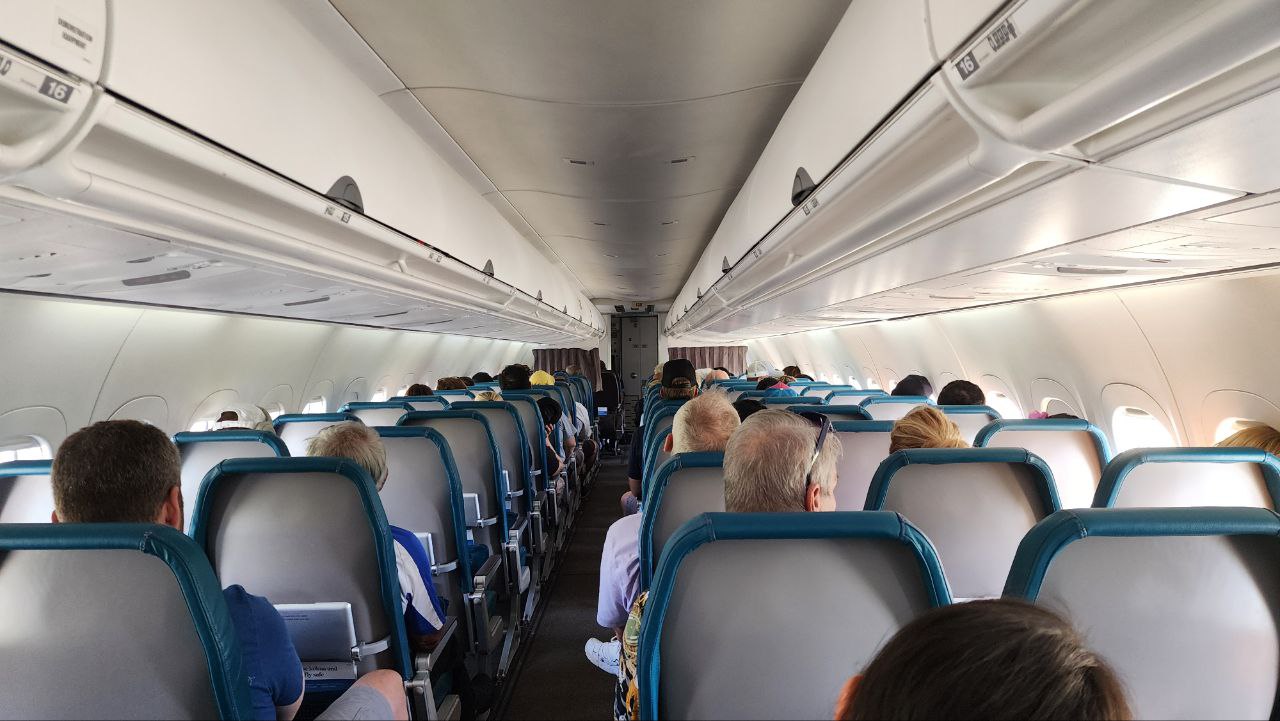
Part of why people like it is the unusual cabin. In the main cabin, the 717 is arranged 2-3, which means only one side of the plane has a middle seat. Couples can easily get the two-seat side, and solo travelers can still hope for an aisle or window seat without feeling swallowed by mainland-style narrow-body three-across seating.
That comfort has become part of the interisland experience, even if most passengers don’t ever think about the aircraft type itself. The 717 is small enough to feel suited to a 30- or 40-minute hop, but large enough to move a real volume of passengers all day long. Alaska’s own fleet page lists 19 Boeing 717s at an average age of 23.7 years, all operating just in Hawaii.
The 717 has 120 economy seats and just 24 middle seats.
That means just 1 in 5 economy passengers is sitting in a middle seat, which is one reason the interisland cabin has long felt different from the narrowbodies most visitors are used to.
The 737-800 that might replace it for Hawaiian interisland service would likely carry roughly 147 economy seats. In a 3-3 cabin, that means about 49 middle seats, roughly twice as many as today’s 717 on the same island hop.
The flight may still be short, but anyone who has been wedged into a middle seat from Honolulu to Maui knows short does not make it entirely pleasant.
The question now is whether Alaska picks the plane that many Hawaii flyers would choose, or the one that fits Alaska’s fleet. Our bet is on the fleet.
The new boss just tipped his hand.
Shane Tackett, Alaska Airlines’ incoming president, pointed the discussion toward Boeing 737 in a June 6 interview at the IATA Annual General Meeting in Rio. He said the default at this point is most likely 737s as the eventual 717 replacement, while also making clear the change is still not imminent.
There is no confirmed order, retirement date, or announced aircraft type. Alaska’s filings still keep the 717 fleet flat through 2028. But the comment is the clearest public signal yet from Alaska about where this is probably headed.
The variant mentioned was the 737-800s, which Alaska owns and has rebranded in Hawaiian livery.
Why is 717 difficult to replace?
The 717 was virtually perfect for Hawaii because it was built for short, frequent flying, with quick turns and heavy daily use. That is exactly what interisland service demands, and few if any aircraft can do it cleanly without giving up something else.
These are not normal domestic routes. Honolulu to Kahului, Lihue, Kona, or Hilo can mean 30 to 50 minute stage lengths, high takeoff and landing counts, rapid turns, and constant exposure to salt air. Some aircraft can see up to roughly 16 flight segments a day.
The reality is that aircraft age differently under that kind of use. Cycles, not just hours, become the problem. Every pressurization, landing gear extension, braking event, and turnaround adds stress.
The FAA recently added another reminder of the 717’s reality.
A recent airworthiness directive requires repeated inspections of Boeing 717 upper lock link assemblies for cracking. It does not mean the plane is unsafe, but it does show how an aging, high-cycle fleet becomes harder and more expensive to keep moving.
The replacement contenders, and what each costs you.
The 737-800 is the easy answer because Alaska already has the aircraft, pilots, training, maintenance systems, and parts. They have been flying these for many years. It can be placed into Hawaiian colors without creating a new fleet type, which is exactly the kind of simplicity airlines tend to favor under the circumstances.
Passengers will pay for that choice in the cabin and elsewhere. It is a bigger 3-3 airplane on routes where many travelers already feel packed in. On less in demand routes, the bigger 737 may also mean fewer frequencies in order to adapt. The new 737 MAX 7 that Southwest plans to use for Hawaii is closer in size to the 717 while also retaining Boeing commonality.
Other aircraft may be the best technical fit.
The Airbus A220 is close to the 717 in size, is modern and efficient, and retains the 2-3 cabin layout with only one middle seat per row. For travelers, that is the comfort winner. But it breaks Alaska’s Boeing simplicity, bringing another aircraft family with all that implies. For an airline still integrating Hawaiian while simplifying overall operations, that seems like an unlikely solution.
The Embraer E175 and E195-E2 are also sometimes mentioned in the discussion. Horizon already flies E175s, which gives Alaska some regional jet experience inside the group.
Then there is the only other 717 operator: Delta.
Some recent reports indicate that Delta now plans to move up the retirement timing for six of its oldest 717s, which are 26 to 27 years old, by about 4 years.
That is not Delta exiting the plane entirely. Delta will keep flying the rest, but the pulled-forward timing is still another new signal for Hawaii, because Alaska and Hawaiian hold the only other 717 fleet in the U.S.
If the oldest frames are becoming less favorable economically sooner than schedules once suggested, the same clock is now running for Hawaiian. That does not mean Alaska has to do anything sooner than it planned, necessarily, but it makes the replacement question harder to push off.
So here is our call. A mix of 737 planes.
Our analysis points to a mix of all 737 aircraft as the most likely replacement, not because it is the best Hawaii aircraft, but because it is the easiest Alaska aircraft option. The best fit for the mission may be something smaller, newer, and closer to the 717’s 2-3 seating comfort. The most likely fit for the airline is something already near and dear to the fleet that makes stronger economic sense.
That mix would not need to match the 19 dedicated 717s Hawaiian kept based in the islands. Some 737s would stay in Hawaii for the heavy interisland frequencies, while others would fly the pattern Hawaiian already runs with some of its A321neos, a hop or two (or more) between the islands before continuing east to the mainland. We looked at that flow-through idea when we asked whether Alaska might move toward a more Southwest-style operation in Hawaii, and the A321neo already shows the model works on real schedules.
What it means for your next island hop.
If the 737-800 becomes the 717 replacement, travelers can expect more middle seats, a denser cabin feel, and the end of the interisland 2-3 layout many passengers prefer. There could also be schedule consequences. A larger aircraft can move more people at once, but it can also reduce the need for as many departures on some routes that currently have high, convenient frequencies. Turn times may change. Less trafficked markets could feel that first.
For now, nothing has happened. The 717 remains the workhorse, and Alaska has said the change is not imminent, at least for a few years. The direction, however, is becoming clearer as the fleet ages and the replacement choices narrow.
The plane Hawaii has relied on for a generation is aging out. The replacement may be chosen more for Alaska’s fleet than for Hawaii’s short hops, which is why the aircraft passengers would bet on, and the one they would want to fly may not be the same.
Which aircraft would you bet on for the replacement, and which one would you actually want to fly?
By Rob and Jeff, Beat of Hawaii.
Some of the most meaningful parts of Hawaii are the ones visitors walk right past without knowing they are there. We’ve spent nearly 20 years finding them firsthand for BOH as full-time Hawaii residents reporting on travel, culture, and island life, and telling you what they mean for your trip. Join us →
Get Breaking Hawaii Travel News




I switched from Aloha Airlines to Hawaiian Airlines when Hawaiian put their new B717s into service. Aloha’s planes were old. The choice as a customer was obvious. As good a workhorse as they are, it’s time for AS to replace the 717s.
BTW Hawaiian and Delta retire 717s because they are useful for parts.
When you include the predicessor DC9 and MD-80, that aircraft is approaching 50 years as a mainstream island hopping aircraft.
I sure would prefer either the A220 and the E195-E2. Both are a nicer aircraft to ride in.
They’re also a bit better at handling short cycles.
Middle seat for a 30 min flt? No big deal for me at least.
re: 717 Replacement
I think you guys are missing the elephant in the room: Horizon Air, which is the regional partner for Alaska Airlines, flying mainly short-haul West Coast routes. Alaska probably is already sizing up how Horizon could come out to Hawaii and take over most inter island flying using the Embraer 175 or possibly the E2. Then Alaska 737-800s could supplement Horizon for peak loads between mainland turn flights, just as Southwest now does. If the 737 is too big for a given inter island flight, just drop in an Embraer to do the job. Meanwhile, all of those HNL-based 717 pilots would migrate to SEA to fly the 737. Simple solution. Don’t overlook the obvious.
Horizon signed a contract for 15 E195-E2s two weeks ago.
Maybe they’re headed to the islands?
Do you have a source for this order, as I can not find any news on it on-line. It is not on the Alaska website. I do see that Azorra a US lessor signed an order for 15 E195’s but there was nothing in that says they are going to Horizion.
Choosing the 2 seat configuration is the reason I choose the Hawaiin flight for long distance but for an island hop it would not matter to me nearly as much.
I hope they at least keep plenty of frequency and varied times of day between the islands. That’s more important to me than the aircraft actually or the middle seats getting added. Sometimes already the choices just aren’t adequate. I’m not sure if there are already fewer flights or it just feels like it.
Airlines always choose what makes operational sense. I wouldn’t expect comfort to win this one. Luckily the distances and flight times are so short.
Avoiding the middle seat is the main reason we choose to fly Hawaiian instead of Southwest. If that is gone, it’s hard to find any distinction when choosing other than the time and price. Thanks for heads up.
On a half hour flight?