
Most mainland clocks turn back on Sunday, November 1, while Hawaii keeps its clocks as they are. There’s nothing new there. But legislation passed by the House this year could give Hawaii a choice: keep its current time or move every clock forward permanently. For visitors, that could mean winter sunrises after 8 a.m., sunsets after 7 p.m., and a different time relationship with the mainland year-round.
On July 14, the House passed the Sunshine Protection Act by a 308-117 vote, advancing legislation that had been stalled when we last covered Hawaii’s daylight saving debate in November 2025. The bill is now in the Senate Commerce Committee, so nothing has changed for upcoming trips to Hawaii. But the legislation includes a specific provision allowing states already exempt from daylight saving time, including Hawaii, to keep their existing clocks or adopt the new time standard.
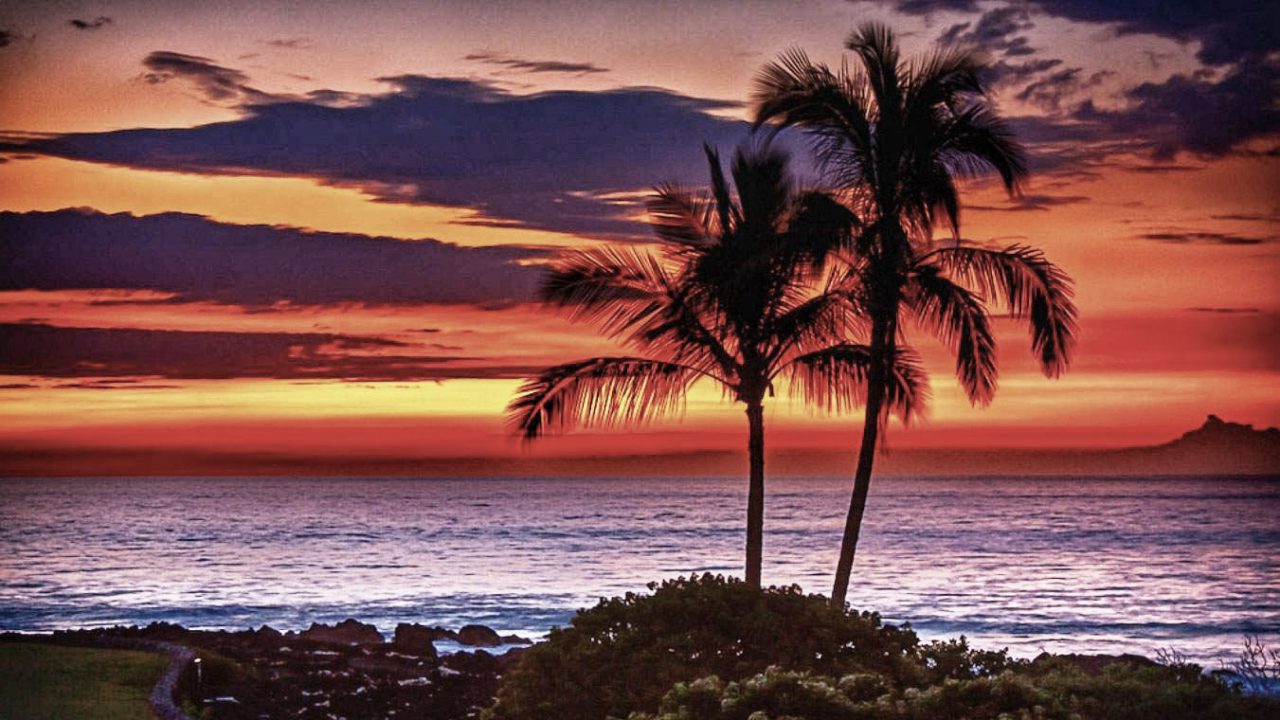
A winter sunrise at 8:18 a.m. on Kauai.
We checked Lihue’s January sunrise and sunset figures to see what advancing Hawaii’s clocks would actually look like. On January 15, sunrise is about 7:18 a.m., and sunset is around 6:15 p.m. If Hawaii adopted the one-hour advance, those would become 8:18 a.m. and 7:15 p.m., with precisely the same amount of daylight.
Imagine heading out at 7 a.m. for an early airport departure, a boat excursion, or a hike and finding that sunrise is still more than an hour away. The other side could be far more appealing, however, especially for visitors who like lingering at the beach, taking an evening walk, or enjoying dinner outdoors while there’s still daylight. Sunrise-dependent tours could adjust their departure times, but anyone with a fixed early-morning schedule would experience a noticeably darker start to the day.
For many Hawaii visitors, the hours around sunrise and sunset are among the most memorable parts of a vacation. Moving the clocks wouldn’t create more time for either, but it would rearrange those experiences around the hours used for flights, reservations, meals, and on-island activities.
Your time difference with home could become permanent.
For travelers from California or New York, another change is possible. After the mainland turns its clocks back Sunday, California will be two hours ahead of Hawaii and five hours ahead of New York. When daylight saving time returns next spring, those differences will increase to three and six hours, something we deal with every year and have covered repeatedly as Hawaii stays off the mainland’s clock.
Under the House-passed legislation, most of the mainland would remain on daylight saving time year-round. If Hawaii kept its present clocks, California would stay three hours ahead and New York six hours ahead, even in winter. If Hawaii advanced its clocks, the differences would remain two and five hours year-round.
That changes when visitors call family, coordinate plans with people back home, or try to work remotely during a Hawaii trip. We’ve experienced that confusion ourselves. When daylight saving time began in March 2022, Rob’s phone started ringing at 6 a.m. with birthday calls from mainland friends. Eliminating the seasonal change would remove that particular complication, although the time difference itself wouldn’t disappear.
Why Hawaii’s representatives opposed the change.
Both Ed Case and Jill Tokuda voted against the Sunshine Protection Act, according to the official House voting record. Honolulu Civil Beat reported that Case argued Hawaii would be better served by staying closer in time to the mainland throughout the year, especially for families and businesses communicating across time zones. Tokuda also cited concerns about the longer mainland time difference, along with medical recommendations favoring permanent standard time over permanent daylight saving time.
The choice of time zones wouldn’t be made in Washington alone. Hawaii law sets the state’s time at ten hours behind Greenwich, so moving Hawaii’s clocks ahead would require addressing that law. The federal proposal would give Hawaii the option, but wouldn’t require the state to use it.
Hawaii has actually changed its clocks before, despite its longstanding reputation for refusing to follow the mainland. On June 8, 1947, while still a territory, Hawaii advanced its clocks by 30 minutes, changing from ten and a half hours behind Greenwich to the ten-hour difference we use today. This was a permanent adjustment, not the seasonal daylight saving change Hawaii later rejected.
If Hawaii eventually faces this choice, we’d be interested in what visitors think. On your next winter Hawaii vacation, would you rather have more daylight before those early-morning activities, or a sunset that arrives an hour later on the clock?
By Rob and Jeff, Beat of Hawaii.
Some of the most meaningful parts of Hawaii are the ones visitors walk right past without knowing they are there. We’ve spent nearly 20 years finding them firsthand for BOH as full-time Hawaii residents reporting on travel, culture, and island life, and telling you what they mean for your trip. Join us →
Get Breaking Hawaii Travel News





There is nothing is broken, ergo, there is nothing to fix.
Does Hawaii time even involve a clock? I remember only 2 times that people really care about. Sunrise and sunset. Anything in between not many people even noticed or cared about. When you slow down and relax you just wonder where the time went. At least that is what Hawaii Time is all about. I don’t even think that 1 hour difference would make any big deal.
No surprise. One can easily see whom the snakes are in our HI gov.
Most people today weren’t alive or don’t remember the late 1973 debacle in when DST was extended year-round to somehow fight the Arab Oil Embargo.
That was a disaster, to say the least. States on the western end of time zones had sunrise later than 8:30am with school children forced to travel to their schools in the dark. (I remember teaching an 8:00am college course at the time and immediately saw a significant drop in attendance!) And if I recall correctly, there was indeed an increase in morning traffic fatalities and accidents involving children.
That “experiment” went so well that it lasted only that winter and the next year we went back to the annual shift from standard time to daylight time and back. How quickly we forget!!
Ironically, since Hawaii is closer to the equator than the other 49 states, the alleged “benefits” of daylight time are much less in magnitude than elsewhere in the US.
(If I had my druthers, we’d abandon Daylight Savings Time entirely!
The mainland needs to stay on the time that Hawaii and Arizona use so it’s only 2 hours difference to west coast time for the whole year.
If Hawaii went to permanent daylight saving time I would move there. Sunshine until 7:00pm would be great. Getting dark at 4:40pm where I live now is the worst.
Hawaii should stay on Standard time!! I didn’t like daylight savings time when I lived on the mainland.
The mainland should leave time alone. Hawaii time works well here. It’s great living in a beautiful place that sense.
As someone who has been visiting Hawai’i for over 35 years I see little advantage from the mainland. What makes more sense to me is standardized mainland clocks, not changing Hawaiian ones
Seems most herein are turning and burning (churning ??) over 1 hour +/- change in their daily routine and how it may affect their lives or interests – sorry, but I just don’t see the conundrums …
I crossed the Pacific for 50+ years starting as a kid in the ’50s, as a US Naval Aviator, and as a commercial airline B-747 Captain until I retired 2 decades ago. Since then, I’ve been around the Pacific Rim beaucoup times – but these days it’s just for “fun and pleasure”.
Crossing 15 +/- time zones in a day were a “de rigueur” part of the job in the airlines, and while exhausting after 13 back-to-back days, it never really altered my life – ‘cept perhaps for shortening it a little bit.
Sit back, chill, and enjoy that extra Mai Tai.
Aloha
Please don’t adopt permanent DST. Hawaii doesn’t need it and doesn’t stand to gain anything vs the status quo.
We are coming up on our time of year when there is only a 2 hour time difference between us and the West Coast – Yeah! I seriously hope that Hawaii can continue to stay the same and that the mainland changes to one time period – one that lets us stay at only 2 hour difference or 5 hour difference to the East Coast.
Changing to later AM daylight will put a huge crimp in the already reeling Hawaii golf industry. Tee times generally start at 7AM will now move to 8:15 or so. That’s about 8 prime tee times each day and courses will still want carts in by 6:30PM or earlier. The loss of 8 prime tee times daily will mean a loss of $1.17M to courses with an average daily AM rate of $100. For muni’s, it could mean about half that much, but a real intense scramble for tee times. For resorts it could mean $2.63M. There have been 18 courses shuttered over the past 18 years. This could mean losing 5-10 more, less maintenance spending and higher green fees through 2:30PM (instead of twilight rates at 12N or 1PM). It will also chase away golf travelers from Hawaii since an 8:30AM tee time can be 2:30PM (ET) or 11:30AM (PT) on body clocks. Many other activities also commence well before 8:00AM. If Hawaii wants to chase away more higher spending visitors, this is a great way to do it and they will never return.
Aloha! If still the same amount of daylight regardless which system used I would suspect golfers would still have slots. Perhaps closures of courses occur for other reasons. Either way, I support a unified approach to time regardless of whether the changes are on the continental US or in Hawaii.
Totally agree that it sucks with the later start for tee times under daylight savings time. We live with it here in Alberta, Canada, and now our province has changed to permanent daylight savings time. It’s going to really suck during the winter months.
As an early morning riser and golfer, it’s really hard trying to get to sleep at 9:30PM, with not only the strong sun still up, but tons of people still out, such as buskers blaring music with their amplifiers, and families with their young kids who should be in bed sleeping on a school night.
As we have grown older we much prefer the later sunset times. More time to enjoy the spectacular Kauai North Shore sunsets, and an additional Mai Tai to enhance the experience.
But, it really doesn’t matter because the famous wild Kauai roosters are crowing at 3AM no matter what the sun is doing.😀
Aloha to all.