Nearly 15,000 fewer visitors were on Oahu on an average day in September compared with last year, the sort of decline that sounds promising if you’ve priced a Waikiki vacation lately. You’d think that would give travelers some additional bargaining power, but that may not always be the case.
Across Hawaii, the latest visitor report counted 26,224 fewer people physically present each day, a 13.7% drop. More than 90% of that reduction occurred on Oahu and Kauai, although their hotel markets moved in opposite directions. Maui actually welcomed more arrivals, and its resort hotels had a considerably stronger September.
Big Island was considerably steadier, with almost no change in daily visitor numbers. Even there, hotels were somewhat fuller and room rates higher, especially along the Kohala Coast.
Waikiki hotels keep holding their ground.
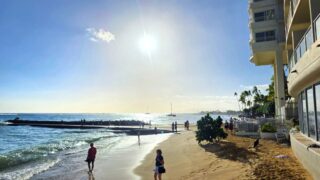
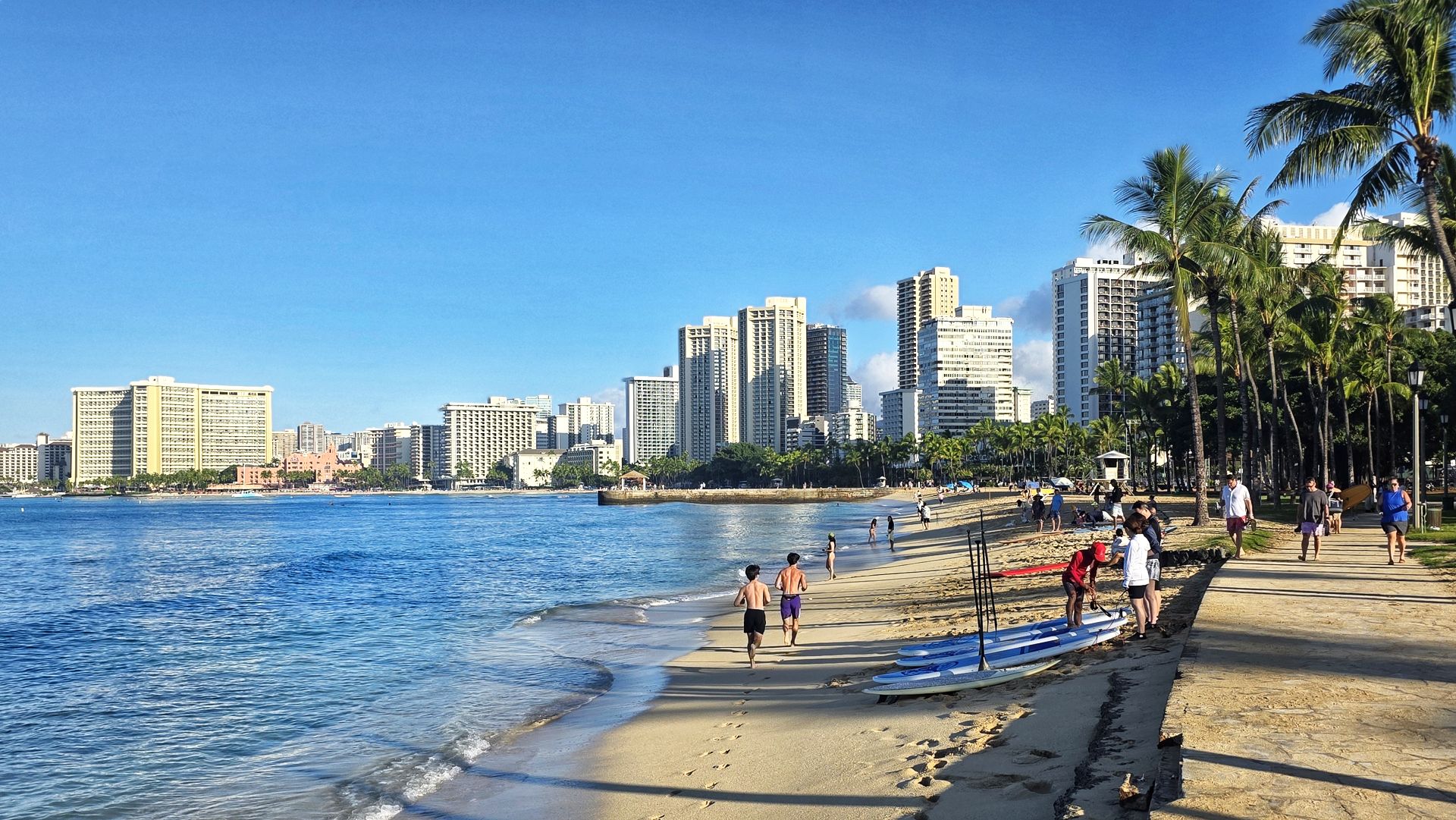
In Waikiki, hotels were still filling about three out of every four rooms, slightly more than last September. Their average nightly rates also edged higher, according to the state’s hotel report. Someone searching for an oceanfront room with a particular view might never notice that Oahu’s daily visitor count had fallen so sharply.
Part of the disconnect comes from how the state defines a visitor. Someone in a hotel, a family sharing a condo, and a visitor staying with relatives all contribute to the state’s count, but they affect hotel bookings very differently. And Oahu’s visitors aren’t all staying in Waikiki, so an islandwide decline doesn’t necessarily leave rooms empty along the most desirable beachfront.
Vacation rentals weren’t getting any cheaper either. On Oahu, their prices rose, and yet there was no clear sign that travelers had more places to choose from.
Whether Waikiki Beach itself felt quieter is hard to say. The same goes for restaurant reservations, Diamond Head, and the places where visitors might actually appreciate having fewer people around. Hotel occupancy tells us how rooms are selling, not whether someone could find an empty lounge chair or enjoy a favorite stretch of sand without the usual crowd. Our take is that Waikiki is somewhat slower, but that can vary greatly day to day.
Some of those missing visitors simply went home much earlier.
The number of people arriving in Hawaii actually changed surprisingly little compared with the dramatic drop in daily visitor count. What changed much more than ever before was the length of their vacations, which has now shortened by more than 20 hours on average.
Someone can still fly to Hawaii, rent a car, stay at a resort, visit the beaches, activities and restaurants, but spend one less day doing it. Multiply that across thousands of trips, and the number of people here on an average day falls considerably, with no comparable reduction in arrivals.
We’ve already written about what travelers are giving up as Hawaii vacations get shorter. UHERO economists have also questioned whether the unusually large gap between arrivals and visitor days is fully reliable. They haven’t established that the official counts are wrong, but there’s still reason to be cautious about interpreting every missing visitor as someone who decided against a Hawaii vacation.
Maui was moving in a whole other direction.
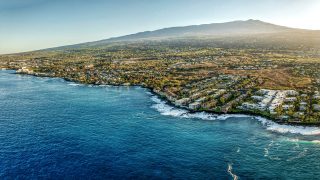
More travelers arrived on Maui in September than a year earlier, and the island’s major resort areas were filling rooms much better. Wailea was especially strong, with higher occupancy and room rates averaging more than $600 nightly. That aligns with the new higher spending visitor paradigm. West Maui hotels also saw improvements in both occupancy and rates.
We’ve just spent time in both resort areas during this summer’s Maui BOH research trip. At Royal Lahaina Resort in Kaanapali, we booked an ocean-view room for about $375 a night, including taxes and fees, plus parking. Hyatt Regency Maui was about twice as expensive when we checked, and the luxury Wailea resorts we’d considered were even higher.
We liked Royal Lahaina more than we expected, especially its oceanfront setting, beautiful sunsets, complimentary outdoor concerts, and the ability to explore so much of West Maui. We wrote about that in our firsthand comparison of Kaanapali and Wailea, where the price gap was only part of what changed our minds.
The beach was another surprise. At Royal Lahaina, we enjoyed a broad stretch of sand, while at Hyatt Regency Maui, where we’ve stayed before, we found almost no usable beach in front of the property when we visited on August 25. We’ve since documented how different the Kaanapali beachfront can be from one resort to another.
Anyone comparing two oceanfront resorts could easily assume the higher-priced property would offer the better overall experience. What we encountered challenged that assumption even for us, especially when a beach vacation is the whole reason for going. That’s also why we’d rather compare the places we’re considering than make our choices based on the average cost of a Maui hotel room.
Kauai’s quieter September came at a high cost.
Kauai had the most dramatic visitor decline of any major island, with its daily visitor population nearly cut in half following Hurricane Lowell. Flights were disrupted, roads and major attractions closed, and travelers postponed or changed plans as the island dealt with widespread damage. And it isn’t over yet.
Hotels experienced a severe loss of occupancy, and average room rates fell, unlike what happened on Oahu and Maui. But even on Kauai, vacation rentals didn’t exactly follow the same pattern. Their average rates actually increased despite fewer booked nights, showing how differently the two accommodation markets behaved during the disruption.
We live on Kauai and have been watching as familiar places reopen in stages. Haena State Park is accessible again, including Kee Beach and the hike to Hanakapiai (but not beyond), while Waimea Canyon has also reopened, but only to the first overlook. For now, the upper Waimea Canyon, Kokee State Park, and the coastal Kalalau Trail beyond Hanakapiai will remain closed, and no reopening date has been announced. We’ve detailed those differences in our latest Kauai reopening report.
For someone whose plans center on the beaches and places already accessible, a well-priced Kauai hotel might be appealing. Someone who has dreamed of hiking the Kokee trails or seeing Kalalau Valley from the overlook faces a different decision. The same lower room rate could mean very different things depending on the kind of vacation they want.
If you’ve returned to the same Hawaii hotel, beach, or resort area recently, we’d like to hear how it compared with previous visits.
Are you finding more space, easier reservations, or better prices, or are the places you know still feeling much the same despite reports that thousands fewer visitors are here?
Photo Credit: © Beat of Hawaii at Waikiki.
By Rob and Jeff, Beat of Hawaii.
Some of Hawaii’s most meaningful parts are the ones visitors walk right past without knowing they are there. We’ve spent nearly 20 years finding them firsthand for BOH as full-time Hawaii residents reporting on travel, culture, and island life, and telling you what they mean for your trip. Join us →
Get Breaking Hawaii Travel News