
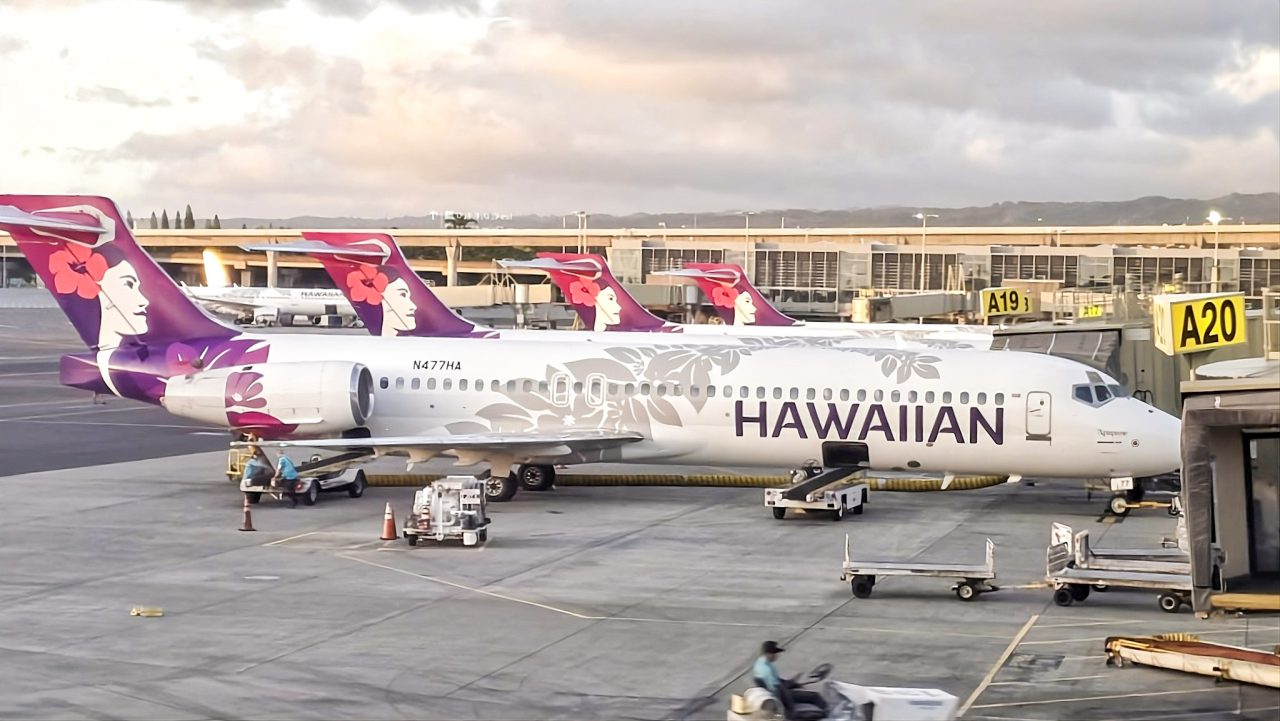
Hawaii has emerged as a remarkable exception during the nationwide FAA ground stop on Friday, November 13 that has disrupted air travel across the country. Interisland flights have remained active, Hawaiian and Alaska Airlines have confirmed that West Coast flights will resume, and Alaska’s own travel advisory specifically identifies Hawaii and Alaska as excluded from the nationwide restrictions.
The Hawaii Department of Transportation confirmed the developments in a series of updates Friday afternoon, most recently at 1:05 p.m. Hawaii time. For visitors already in the islands, those preparing to fly home, and those heading to Hawaii, the announcements offer considerable reassurance, although individual flight delays remain possible. So far today, there have been 85 delayed flights at HNL, and 9 cancellations. OGG has seen 42 delayed flights, and KOA and LIH each have had 22 delayed.
Hawaii and Alaska are exceptions to the nationwide ground stop.
At 12:40 p.m., Hawaii transportation officials reported that the FAA was allowing flights between Anchorage, Oakland, and Hawaii to operate. Just 25 minutes later, the state announced a broader development.
“Hawaiian/Alaska Airlines have confirmed all west coast flights will resume. All inter island flights remain active,” HDOT reported at 1:05 p.m., urging passengers to continue checking with their carriers.
Alaska Airlines’ official travel advisory provides further confirmation of Hawaii’s unusual position. It states that the FAA-mandated ground stop is affecting flight departures in the United States, “excluding Alaska and Hawaii.”
During a CNN interview Friday, Homeland Security Secretary Markwayne Mullin said two areas of the United States had not been affected by the nationwide disruption, but declined at that time to identify them. We heard the exchange ourselves, and while Mullin did not name the locations, Alaska’s advisory specifically identifies Alaska and Hawaii as exceptions to the FAA ground stop. That strongly suggests these were the two areas he was referring to, although he did not confirm it.
For travelers watching alarming national headlines, the Hawaii exception is particularly encouraging. West Coast gateways such as Los Angeles, San Francisco, Seattle, Portland, and San Diego account for a substantial share of flights to the islands, and the authorization for service to resume means those routes are not necessarily subject to the same restrictions affecting much of the mainland.
However, permission to operate does not guarantee an on-time departure. Flights may still be delayed because of aircraft positioning, crew availability, or disruptions elsewhere in the overall airline network.
And realistically, how could passengers not be confused by all of this? National headlines are reporting a complete nationwide ground stop, while Hawaii officials are saying flights are continuing and airlines are announcing exceptions. Travelers may receive conflicting information depending on where they’re looking, and airport confusion and chaos are still entirely possible even where flights are technically permitted to operate.
What visitors flying to and from Hawaii should do.
The most important thing right now is to check the status of your specific flight rather than assume the nationwide ground stop means it has been canceled. Hawaii’s unusual operating circumstances mean a flight that might appear affected by the national restrictions could still be authorized to depart.
Travelers already in Hawaii should avoid automatically changing their plans based solely on national coverage. If your airline continues to show your flight as scheduled, follow its normal check-in instructions and keep monitoring updates before leaving for the airport. With airline phone lines likely overwhelmed, getting through to a representative could be difficult or impossible. Your best bet is to check your flight status online or through the airline’s app rather than spend hours on hold.
For visitors connecting through a mainland airport, the picture is more complicated. A flight leaving Honolulu, Kahului, Kona, or Lihue could operate normally while a subsequent connecting flight remains delayed. Travelers returning to the East Coast or elsewhere beyond the West Coast should pay particular attention to their entire itinerary, not simply the first flight leaving Hawaii.
There is also the possibility of disruptions continuing after the ground stop ends as airlines work through aircraft and crew scheduling problems. A departure that operates normally today doesn’t guarantee that subsequent flights using the same aircraft will avoid delays.
Alaska Airlines has announced a flexible travel policy for eligible Alaska Airlines and Hawaii Airlines tickets purchased by November 13 for travel that day. Qualifying passengers can change flights without additional airfare charges for travel through November 16 in the same cabin, or cancel for future travel credit, subject to the airline’s conditions. Changes or cancellations must be made before the original flight departs, and the waiver applies to flights on both airlines.
Passengers whose flights are canceled or significantly changed should check their refund and rebooking options before purchasing replacement tickets. Under federal rules, travelers generally qualify for a refund when their flight is canceled or significantly changed and they choose not to accept the alternative offered.
There’s another unpleasant possibility for Hawaii visitors who get stranded. Because an FAA ground stop is outside the airlines’ control, carriers generally aren’t required to pay for extra hotel nights, meals, rental cars, or other expenses that can quickly add up in Hawaii. Travelers may be entitled to a refund if their flight is canceled or significantly changed, but that doesn’t necessarily help when they still need to get home. Travel insurance may be the best protection against those additional costs, although coverage for FAA disruptions and air traffic control failures varies by policy. We’ve experienced both how trip insurance saved us more than $600 and how difficult collecting an approved insurance claim can become. Some credit cards offer trip-delay coverage as well, but passengers should check the specific terms before assuming they’ll get reimbursed.
For current conditions, check your airline’s app and the FAA’s National Airspace System Status. Hawaii’s Department of Transportation is also posting updates through its official social media accounts.
The stakes for interisland travel.
Hawaii’s interisland air service is more than a convenience for vacationers. Residents depend on those flights for medical treatment, family obligations, work, and other essential travel, while visitors frequently rely on short connections between islands to complete their vacations.
An interruption to that network can quickly affect hotel reservations, rental cars, tours, and mainland connections. During previous Hawaii flight disruptions, we’ve seen how even relatively brief airport ground stops can produce problems lasting well beyond the original interruption.
For visitors with multiple island stops, the state DOT’s confirmation that interisland service remains active is especially reassuring. Those with upcoming flights should nevertheless check their reservations, since individual airline delays or cancellations remain possible.
Are you flying to, from, or between the Hawaiian Islands today? We’d like to hear whether your flight is operating normally, running late, or has been canceled.
Get Breaking Hawaii Travel News






This is all mostly like due to the SMART system (AI Air Traffic Tool) the the FAA implemented yesterday to optimize flight time across the US to save the airlines fuel and time and cut the human jobs needed as part of ATC to monitor our skies. Regional spaces like Hawaii and Alaska flight were not impacted as they are not part of the main stream of flights that cross the continental US.
My husband left the mainland from a Denver flight just as the ground step occurred. They had to drop in altitude. I thought the plane might be turning around, but it continued on. It should land in Maui in a couple of hours then hopefully he’ll make his jump flight to Hilo. I am told our region the Pacific is on a different satellite than mainland US.