
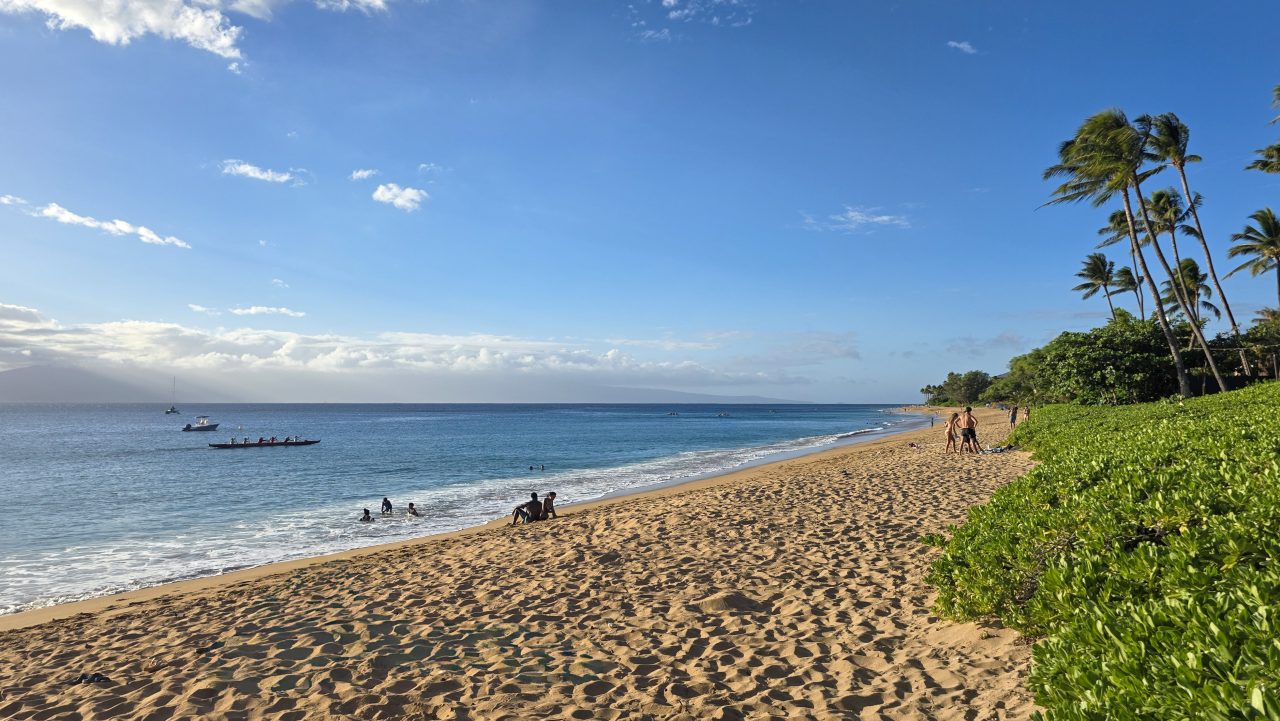
Nichole’s three-year-old daughter was sitting at Kamaole II Beach on Maui when a jellyfish stung her. The child screamed in pain, her father was stung trying to remove it, and their first vacation day ended with the family considering a few days at the pool instead. She wasn’t snorkeling offshore or swimming in the ocean. She was sitting where the waves barely reached the sand.
We’ve heard from many Hawaii visitors about jellyfish encounters, and their experiences don’t always match what the official calendar would suggest. Some were stung on beaches far from Waikiki, others encountered them on organized snorkeling excursions, and a few got into trouble without ever going swimming. With the 2027 jellyfish calendar already available, their stories are worth revisiting before next year’s Hawaii vacations begin.
Some visitors followed the calendar while others got a surprise.
Jan, who lives in Honolulu and regularly swims near Diamond Head, told us she always checks the calendar before going into the ocean. It’s become part of her routine, and something she recommends to visitors planning their swim days.
Sherry spent ten days swimming and snorkeling at Kaanapali and Kahekili beaches on Maui, including during the predicted jellyfish periods. “Lots of people in the water; I didn’t get stung, and I didn’t see anyone else get stung,” she wrote. Anela had the opposite experience at Palauea Beach on Maui, where she reported being stung by a small jellyfish with nearly invisible tentacles. Her encounter happened “not within those most common dates.”
The experiences become even more unpredictable once visitors leave the beach on various organized excursions. Kyle was on an Oahu shark-snorkeling trip when everyone aboard began complaining about tiny jellyfish. Fortunately, he described the stings as more annoying than painful. Johannes wasn’t as lucky during a sunset snorkeling cruise along Kauai’s Napali Coast, where several passengers were stung, and the crew ordered everyone out of the water.
Drea told us about a particularly painful encounter during a nighttime manta ray excursion off the Big Island, with sting marks on her face, neck, chest and arms. We’ve also covered jellyfish stings that disrupted the Kona Ironman, another reminder that these encounters aren’t confined to Hawaii’s most familiar beaches.
Even staying out of the water wasn’t always enough.
JulieAnn described visiting Hapuna Beach on the Big Island when swimming was restricted because of Portuguese man-of-war. Her brother-in-law ignored the warning and went swimming without incident. She and her husband followed the lifeguard’s advice and stayed on the beach, only to have a washed-up creature wrap around her husband’s foot during their walk.
Other readers have described days when stings seemed to be happening all around them. At Bellows Beach on Oahu, one reader told us her niece was the 16th person stung that day, according to the lifeguard. The girl refused to return to the water for the rest of her vacation. At Waikiki, Mary witnessed a young girl being stung repeatedly while swimming near shore, with the family initially unaware of what had happened.
We’ve also heard from some readers who wondered why their hotels or resorts hadn’t warned them. Others felt checking the calendar and talking with lifeguards was the visitor’s responsibility. Both reactions are understandable, especially when someone has saved for a Hawaii vacation and a beach day suddenly becomes an unpleasant memory.
Why the official calendar doesn’t cover every encounter.
The Waikiki Aquarium calendar is based on a well-documented pattern involving Hawaiian box jellyfish, which tend to appear near shore about eight to ten days after a full moon. University of Hawaii researchers found that changes in nighttime darkness help trigger mature jellyfish to swim toward shore to reproduce.
The predictions apply best to Waikiki and other south and west facing Oahu beaches, including the Ala Moana area. They may not be equally reliable forecasts for Kauai, Maui or the Big Island, even though readers have regularly reported stings on all three. Nor can the calendar predict exactly how many jellyfish will appear at a particular beach on a particular day.
Portuguese man-of-war are another concern entirely. They’re not true jellyfish, and their appearances are more closely tied to winds and ocean conditions than to the monthly lunar pattern. Readers have reported them at Kailua, Bellows, and other beaches, sometimes with long tentacles that were difficult to see in the water. It shows that a visitor can encounter stinging marine life on a day when the calendar shows little expected box jellyfish activity, or swim without incident during a predicted high-probability period.
The official 2027 Hawaii jellyfish dates.
The Waikiki Aquarium’s official 2027 calendar identifies the following high-probability dates, marked in red. These are estimates, not guarantees of sightings.
January: 1–2 and 30–31; February: 1 and 28; March: 1–2 and 30–31; April: 1 and 28–30; May: 28–30; June: 26–28.
July: 26–28; August: 24–26; September: 23–25; October: 23–25; November: 21–23; December: 21–23.
For New Year’s travelers this year, the first high-probability period actually begins December 31, 2026, and continues through January 2, 2027. The calendar also identifies lower-probability days surrounding these periods, so it’s worth checking first, before planning several consecutive days in the water.
We wouldn’t cancel a Hawaii vacation because it overlaps one of these periods. But if you’re staying in Waikiki and have some flexibility, scheduling a snorkeling excursion or a swimming day outside the predicted dates makes sense. Check current conditions with lifeguards and Hawaii Ocean Safety too before entering the water, regardless of what the calendar says.
What readers have learned about treating stings.
Our comment archives contain nearly every imaginable remedy, from vinegar and hot water to meat tenderizer, ammonia and urine. Some readers reported quick relief, while others described pain lasting hours or symptoms recurring days later. Personal experiences aren’t reliable evidence that a particular treatment is safe or effective, especially when the species responsible is unknown.
For suspected Hawaiian box jellyfish stings, frequently suggested and established first-aid guidance includes vinegar to help prevent additional stinging-cell discharge, careful removal of remaining tentacles without bare-hand contact, and comfortably hot, non-scalding water for pain relief. Portuguese man-of-war require different care, generally beginning with a seawater rinse rather than vinegar. Avoid fresh water, rubbing the area, and unproven home remedies, and seek lifeguard assistance whenever possible.
Difficulty breathing, chest pain, fainting, or other severe systemic reactions require emergency medical attention. Several BOH readers have described reactions far beyond ordinary skin irritation, including vomiting and breathing problems, and those aren’t symptoms to wait out at the beach.
We’re curious how you handle it. Do you check the jellyfish calendar before planning your Hawaii vacation, and have your own experiences matched what it predicted?
By Rob and Jeff, Beat of Hawaii.
Some of Hawaii’s most meaningful parts are the ones visitors walk right past without knowing they are there. We’ve spent nearly 20 years finding them firsthand for BOH as full-time Hawaii residents reporting on travel, culture, and island life, and telling you what they mean for your trip. Join us →
Get Breaking Hawaii Travel News




Thank you for this information. We’ve had our ocean swimming interrupted the past 2 Hawaii vacations by jellyfish. The link to the jellyfish calendar is much appreciated!
I’ve swam and snorkeled all over the islands and never encountered a jellyfish. Sharks, turtles, monk seals, plenty of fish, but no jellyfish yet. Interesting how different everyone’s experience with these can be.
I got stung once visiting family on Maui and the pain was unbelievable. Now I pay a little more attention. No swim is worth going through that again if I can help it.
I was surprised how many people have been stung on Maui. I always associated this with Waikiki and assumed the other islands weren’t really affected to any significant degree.
I live on Oahu and have seen plenty of days when the calendar predicted jellyfish and nothing showed up. I’ve also seen the warning signs go up unexpectedly. The lifeguards and your eyes are what to stay focused on.
Dumb question but why aren’t the jellyfish dates on a little sign near the beach access? Seems like something visitors would appreciate knowing.
Not that big a deal and I wouldn’t change an entire vacation because of three days on a calendar. We usually have plenty of other things planned anyway. If the lifeguards say stay out, we just find something else to do.
Our daughter was stung while playing in shallow water. She wasn’t even swimming. I think that’s what surprised us most, that something like this could happen with her sitting right beside us.
We’ve been coming to Maui for 30 years and I’ve never once checked a jellyfish calendar. Never been stung either. Maybe we’ve just been lucky.
I try to remember to check the jellyfish calendar before booking. It’s just one more thing to look at along with airfare and hotel prices. I’d rather know ahead of time than spend my vacation wondering whether it’s safe to swim.
Aloha! After decades of going to various islands, i finally got stung at Polo beach in Maui over a year ago. It was within the calendar dates, but a storm surge was also bringing the little nasties closer to the beaches.
The resort beach staff quickly acted and put vinegar on a paper towel and put it on my sting. They also told me to go sit in the hot tub for at least 25 minutes.
Si de I am allergic to venom, I knew I had to act quickly. I put a ready tab allergy pill under my tongue(which I always carry) and kept the paper towel on until I got to the hot tub.
The first ten minutes I felt really sick, but after that started feeling better. The hot water pulls out the venom, and it works!
Went back to the room and took another allergy pill and used allergy cream. The next day I woke up congested, but ok.
If you see air bubbles floating on the water, that’s them!!
Always ask beach staff or guards about water conditions and jellyfish conditions.
Use vinegar or even urine – acidic – to reduce sting