
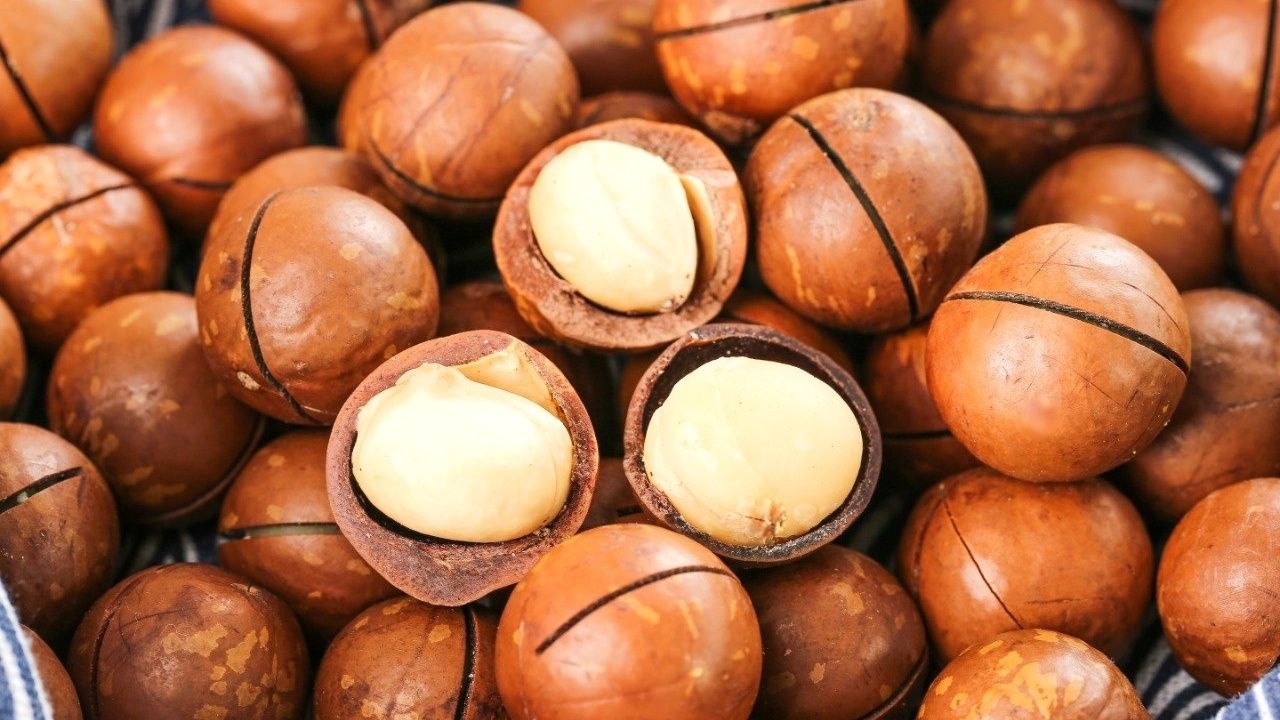
Hawaii’s oldest macadamia nut chocolate maker just produced its last batch. If you have ever brought home a box of Menehune Mac chocolates, the kind you grabbed without thinking on the way to the airport, that whole category of Hawaii souvenir is changing faster than most visitors realize.
The souvenir you expected to find on its last run.
The final batch has already been produced. Milk chocolate, dark chocolate, and pineapple snow mac nuts are sitting on shelves at the company’s Kalihi store and nowhere else. When those boxes sell through, that is it.
Hawaiian Host, Big Island Candies, and Mauna Loa are all still making mac nut chocolates. What ended now is the oldest maker and the only one still hand-scooping, which was exactly the part that did not scale.
Menehune Mac has been a fixture since 1939, making it the oldest existing macadamia nut candy producer in Hawaii. For decades, this sat in the standard return-home lane for visitors, something picked up for family, coworkers, or to bring back for yourself without giving it much thought. It held largely the same place as airport lei stands and mac nut samplers, a reliable end to a trip that people assumed would always be there, time and time again.
What made these different was how they were made. These were not mass-produced pieces coming off a line at scale. The chocolates were hand-scooped, with workers controlling temperature, texture, and timing by feel. That process is a dying breed. The brand may continue in other forms, but the product people actually recognize is ending with these last batches.
There was a time when Menehune Mac was not just a local staple but even a major Hawaii export, especially to Japan, where Hawaii gifts carried a different kind of meaning. That demand has clearly shifted over the years, and fewer Japanese visitors today also change what moves off shelves and what does not. That, in part, is reflected in what is still being made and what is not.
Why this souvenir is ending.
The short answer is labor, but not exactly as people usually think about it. This is not just about higher wages or fewer workers, but rather about a very specific type of skill that fewer people have or want, and that fewer businesses can afford to recruit or train.
Hand-scooping chocolate sounds simple until batches start failing. Temperature must be closely controlled, and the process leaves no room for error. Training someone to do it well takes time, and mistakes also cost product. That is no longer the kind of work you can easily scale or rotate through new hires here in Hawaii.
The company that owns Menehune Mac also runs a taro chip operation next door, and workers were being pulled between the two. That hurt both sides. Chips slowed down while chocolate-making became harder to keep consistent, and the whole setup stopped working as a single, cohesive operation.
The part that tends to be thought about as rising costs is more structural than that. Small manufacturers in Hawaii are trying to run labor-intensive products in a place where labor is limited, very expensive, training is slow, and competition from cheaper, simpler alternatives is a no brainer. Menehune Mac is one example of where that bespoke edible souvenir breaks down.
The bigger pattern visitors do not notice.
The chocolate macadamia shelf is changing, and most visitors do not realize it until something they expect is gone. Hawaii-made and Hawaii-themed are fast drifting apart, and show up in souvenirs like this.
The closest parallel may be Hawaii lei. Most of the orchid lei visitors now buy are imported from Thailand, not grown in Hawaii, even though they are sold in the same places and presented the same way as when they actually were from Hawaii. Efforts at the state level to shift toward locally grown flowers have largely failed, with one bill not passing and another still moving as a study of what local supply can actually support.
Pricing on lei reflects the pressure. Some lei, like a three-strand pikake lei, reached about $150 last Mother’s Day, and estimates suggest a fully local supply could push some lei into the $100 to $200 range more consistently going forward. Large florists have pushed back, saying those prices would shrink demand, while rising costs on imported orchids have narrowed the gap with local flowers.
The same pressure shows up in restaurants. Local farms are decreasing, and restaurants still committed to local ingredients are paying a premium that most kitchens cannot absorb. The math behind every Hawaii-made product has shifted in the same direction. Fewer growers, fewer skilled workers, higher costs, while easier imports are waiting to fill the gap.
We have covered that shift in Hawaii gutted its lei industry and Can Hawaii’s iconic lei tradition survive on imported flowers. The product looks familiar, but the context is different, and its origin is no longer what most visitors assume.
Menehune Mac also fits in the same pattern. The handmade version people remember required a kind of production that is becoming harder to sustain, and what mechanically replaces it will almost certainly be easier to produce, easier to scale, and less tied to the original.
What is still actually made in Hawaii?
The question gets harder to answer because there is no clean line between what counts and what does not. Macadamia nuts are still grown in Hawaii, lei are still made here, and food products are still being produced locally. None of that is disappearing.
What is changing is how much of what you are buying is actually from Hawaii versus assembled, branded, or finished here. That distinction is getting bigger than it used to be, and it is not always obvious on the shelf.
Local growers and producers are dealing with these same constraints. Labor costs are high, skilled workers are scarce, and imports are cheaper even after shipping is factored in. Branding can fill the gap, and a product can feel local without being entirely local. Most visitors do not have the time or reason to sort that out while they are on vacation.
That does not mean there is nothing real left to find in Hawaii, but it does mean that the search is no longer automatic. The Hawaii souvenirs that used to be everywhere are now more specific, sometimes limited to certain stores, fewer producers, or a short window.
What this means for souvenirs from your next Hawaii vacation.
If you want Menehune Mac as you remember it, the remaining batches are at the Kalihi store, but will be gone in days. After that, keep in mind that the name may continue, but it will no longer be the same product.
It is worth looking a little closer at what you are buying when you pick up gifts on your way home. Labels can tell you where something is grown or made, but not always how much of it actually comes from here. It means default assumptions about classic Hawaii items always being there no longer hold, and more are moving in that direction.
Which Hawaii souvenirs do you still look for on every trip, and which ones have you already noticed changing or disappearing from the shelf?
Get Breaking Hawaii Travel News
Interesting… so while the few remaining local industries (mac nuts, leis, local food production) are failing because of global economic realities, the wise leaders of the state, instead go after the one big advantage Hawaii has over the rest of the world – it’s location, climate, and beauty. They continue to add bogux taxes and fees to the visitor and tourist, who’s dollars are the only sure thing left on the islands. When the golden goose tires of having it’s neck wrung dry and all it’s golden eggs removed, it will fly away, never to come back. What industry do you have to pick up the displaced mac nut or lei workers? Please stop with gouging the visitor every chance you get, before it is too late. The kind, hard working locals in the Visitor industry deserve better from you. Don’t destroy their livlihoods too.
Thank you! Very well said!
Mahalo Nui
Glad to find out that Menehune Water Compnay is still operating.
Love the great Menehune Ads with the silly voices and humor.
I live in Hilo. With all that we have here, geographically, it seems impossible that collectively, we can’t seem to identify and/or develop businesses that could produce an array of things that could be special to Hawaii. It’s all here, but nobody has found a way. People are constantly working on it, but the infrastructure (permitting, etc.) is dated and slow. I think one thing that understandably gets in the way here in Hilo is the fear of Big Business moving in and changing things, or taking advantage, like on other islands. We need to figure out a community of businesses that locals and malihini alike would be attracted to, and that people from around the world would come to see. We don’t need to develop more hotels or things for tourists only. Make it for the locals and if it’s good, it will bring the rest.
wow. Hawaii is really going down the drain. All good things, businesses closing. all become cheap chinese imports. Hawaiian workers getting displaced by imported workers. Hawaii was a much better place back in the 30s-60s. except for the wars, the world was a better place back then in most cases. My sister always wanted to go there, its was her bucket list, but the Hawaii she thinks off is no longer alive.
Not sure what to think. For months the news since around Halloween has said there is a shortage world wide of cocoa beans to make into chocolate. Hershey’s even stated there was a shortage so if you don’t grow cocoa beans this might be part of the reason. I myself thought chocolate was hard to deal with because it melts real fast in the hot weather. You have to rush any purchases to a refrigerator or air conditioned environment so they don’t melt. I felt coffee was a better choice because it didn’t melt. I did purchase chocolate covered macadamia nuts at Costco because the ABC stores were asking a premium price. If there is a cocoa bean shortage I guess the other manufacturer’s may suffer the same result.
My all time favorite mac nuts were Mauna Loa Kona Coffee Glazed Macadamias. I would run to the store and stock up the minute I arrived on island. I even ordered them from Amazon when I was back on the mainland. Apparently these delicious macs no longer exist. I haven’t found any that are comparable.
I would like to underscore “not from here” macadamia nuts.
I went to a Hilo parade (probably Merrie Monarch) over a year ago and Mauna Loa was tossing nicely packaged salted macs. I wondered what they were thinking to distribute these soft, spongy, tasteless imported (my guess) small samples. I know what a good local mac tastes like, and this was not. Interestingly, this year’s Merrie Monarch Mauna Loa parade vehicle didn’t appear to pass any out.
When I get local nuts, they do taste buttery, crunchy, fresh. I do see some degradation in local nuts quality on occasion (such as discolored – they should be as creamy white for the best ones).
Are locally produced macadamia nuts available to purchase online? And what are the brands?
Mahalo
The times, they are a changing! ~ Bob Dylan
yep, to the cold un-emotional nonlife, and towards all thing machine.
So very sad to hear this news. This seems to be just another nail in the coffin of the wonderful memory-filled, experiential heavy, traditional and sentimental Hawaiian vacation we all took and looked forward to with great anticipation back in the day. We certainly will miss the delicious Menehune Mac chocolates that we enjoyed for many decades. Another iconic brand and tradition disappears just like the wonderful Hawaiian lei stands at the Honolulu Airport that greeted your arrival with the fresh smell of plumeria and orchids. Aloha to all.
If these are the ones in the yellow box, yep. Everyone’s had these.